

Spot Quality Jewelry Before You Buy With FTC and GIA Backed Workflow
Quality jewelry is defined by documented materials, secure construction, and honest disclosure, not by how much a piece sparkles under store lighting. Look for a clear metal stamp paired with the maker’s trademark, a gemstone backed by written identity and treatment disclosure, tight joints and settings, and a seller who puts return terms in writing. For anything expensive or sentimental, an independent appraisal or lab report settles what the naked eye cannot.
TL;DR:
- Jewelry with documented materials and clear hallmarks is more reliable than relying solely on appearance or store lighting.
- Look for stamps indicating metal purity and check construction quality, weight, and secure settings before purchasing.
- Demand written confirmation of gemstone origin, treatment, and certifications, especially when buying online, and review seller reputation carefully.
- An independent appraisal is recommended for insurance or resale, but it is separate from laboratory grading reports verifying stone identity and quality.
- Curated collections from trusted vendors often provide verified pieces, reducing the need for extensive on-site checks for everyday or gift jewelry.
Table of Contents
- How Do You Spot Quality Jewelry Fast?
- Metals and Hallmarks: What the Stamps Actually Tell You
- Reading the 4 Cs and Grading Reports Before You Buy a Diamond
- Craftsmanship and Construction: The Details That Outlast the Sparkle
- What to Require Before Buying Jewelry Online
- When Is an Independent Appraisal Worth the Cost?
- A Buyer Workflow You Can Use Every Time
- Why Documentation Beats a Pretty Photo
- Where to Start if You Want Vetted Pieces Already Checked
- Sources
- FAQ
How Do You Spot Quality Jewelry Fast?
Run through this before you swipe your card or hand over cash at a counter.
- Look for a karat or fineness stamp (10K, 14K, 18K, 925, PT/PLAT) next to a maker’s trademark.
- Pick the piece up. Real weight in metal usually feels different from a hollow, light casting.
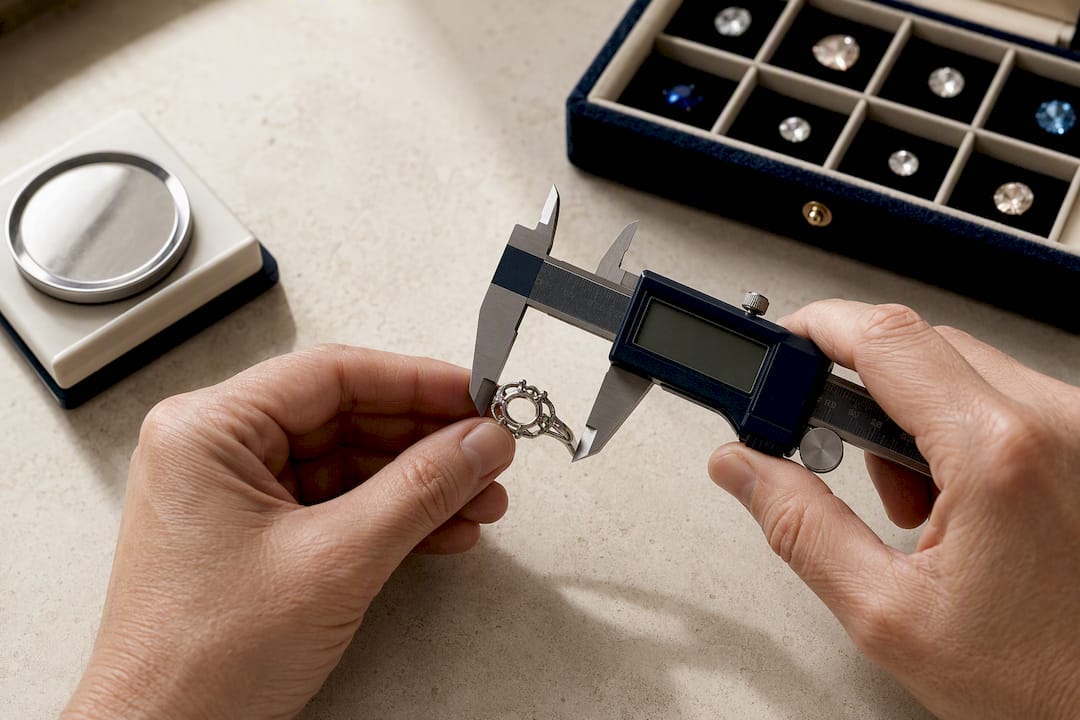
- Check clasps, prongs, and jump rings under good light for gaps, thin spots, or uneven soldering.
- Ask the seller, in writing, whether stones are natural, lab-created, or treated.
- Confirm the return window and read the seller’s lowest-star reviews for repeat complaints.
- Screenshot the listing, description, and any disclosures before you buy online.
Pro Tip: When shopping online, ask the seller for a close-up photo of the hallmark area and a short video of the piece in motion. Stamps can be faked or worn smooth, and a video shows how the metal and stones actually catch light instead of relying on one flattering angle.
Metals and Hallmarks: What the Stamps Actually Tell You
Karat measures gold purity out of 24 parts. A piece stamped 14K contains 14 parts gold to 10 parts other metal, while 24K is as close to pure gold as jewelry gets. That’s different from carat, which measures gemstone weight, not metal purity, and the mixed usage online trips up a lot of buyers.
Platinum can only be marketed as “platinum” if it’s at least 95% pure, and pieces below that threshold need a qualifying number next to the stamp, according to FTC guidance on buying gold, platinum, and silver jewelry. The FTC also requires a manufacturer’s trademark near the karat mark, since a lone number with no traceable source is a red flag.
Plated and filled items use their own vocabulary, and the difference matters more than it sounds:
- Gold-filled means a thick layer of real gold bonded to base metal, meant to last for years.
- Gold overlay or rolled gold plate describes a thinner gold layer than filled, still legitimate but shorter-lived.
- Vermeil is sterling silver plated with gold, common in fashion jewelry.
A stamp is a claim, not proof. A magnet can screen for obvious fakes since gold, silver, and platinum aren’t magnetic, but plenty of counterfeit alloys aren’t magnetic either, so treat any home test as a first filter, never a final answer.
Reading the 4 Cs and Grading Reports Before You Buy a Diamond
Cut, color, clarity, and carat determine what a diamond is worth, and cut does more of that work than most buyers assume. A well-cut stone bounces light back at the eye in a way a poorly cut one, even with better color or clarity, simply cannot match. GIA’s grading standards evaluate clarity under 10x magnification and record carat weight to the hundredth, which is why two “one-carat” diamonds from different sellers can look and cost noticeably different.
A GIA (or equivalent) grading report documents the stone’s identity, its 4 C measurements, any treatments, its proportions and finish, and a plotted diagram of internal characteristics. That report carries a unique number you can check against the physical stone before you pay. A stone can photograph beautifully and still perform poorly in daylight, so compare it under a few different light sources, not just the seller’s studio shot.
Before buying, get these answers in writing:
- Is the stone natural or lab-created?
- Has it been treated, and is that treatment permanent?
- What are the exact carat weight and measurements?
- Which lab issued the report, and what’s the report number?
FTC rules on buying gemstones and pearls require sellers to disclose origin and treatment status. A carat, by the way, equals one-fifth of a gram, split into 100 points, so a “50-point diamond” is a half-carat stone.
Craftsmanship and Construction: The Details That Outlast the Sparkle
Flip the piece over before you fall for the front view. Clasps, solder seams, prongs, and jump rings tell you more about durability than any amount of shine.
Run your finger along the setting and check for these warning signs:
- Loose stones that shift when you gently press them.
- Uneven polish or visible seam lines from careless casting.
- Stretched or misshapen chain links, which suggest heavy prior wear.
- Prongs that look thin, bent, or worn down to a sharp point.
Plating wears first at friction points: the inside of a ring, the back of a clasp, the underside of a bracelet. If that spot looks brassy or discolored while the rest shines, you’re likely holding plated metal rather than solid.
Pro Tip: Weight is a clue, not a verdict. A ring that feels suspiciously light for its size often signals a hollow casting or thin plating, while unusual heaviness in what should be a delicate piece can mean base metal underneath a gold or rhodium finish.
What to Require Before Buying Jewelry Online
Photos alone can’t prove quality, and GIA’s guidance on evaluating diamonds makes that point directly: a listing needs real documentation behind the pictures.
- Get written confirmation of metal type, purity, and construction method (cast, hand-fabricated, filled, plated).
- Ask for the stone’s identity and treatment status in writing, not just implied in the product title.
- Request clear close-up images or a 360° view, and ask for a short video if none exists.
- Read the lowest-star reviews specifically. Patterns like tarnishing within weeks, weak clasps, or photos that don’t match the delivered item show up there first.
- Confirm the return window, restocking terms, and whether a written warranty or repair option exists.
Save screenshots of the listing and any seller messages before checkout. Prices, descriptions, and even photos on a live listing can change, and the deal you agreed to matters if what arrives doesn’t match it. A seller who won’t answer a direct question about metal content or stone origin before you buy usually won’t answer it after, either. That reluctance is worth noticing on its own, and it pairs with resources like Diamonds by Daisy’s guide to buying fine jewelry online safely if you want a deeper walkthrough.
When Is an Independent Appraisal Worth the Cost?
An independent appraisal earns its price on anything headed for insurance, resale, or a value you’d fight for in a dispute. A lab or certified appraiser verifies identity, treatment, and precise measurements in ways a seller’s word can’t, since FTC guidance recommends independent verification whenever authenticity or value is genuinely in question.
Skip the acid, heat, or ceramic scratch tests you’ll see suggested online. They can permanently damage a piece and still leave you guessing, and thermal testers commonly used for diamonds routinely misread moissanite as diamond, so that shortcut doesn’t hold up either.
Bring any existing paperwork, the seller’s receipt, and the piece itself to a certified appraiser or gem lab. Know the difference going in: a grading report documents what a stone is, while an appraisal assigns it a dollar value, and you may eventually want both.
A Buyer Workflow You Can Use Every Time
A carefully developed sourcing process can work just as well for a shopper standing at a counter or scrolling a listing at midnight.
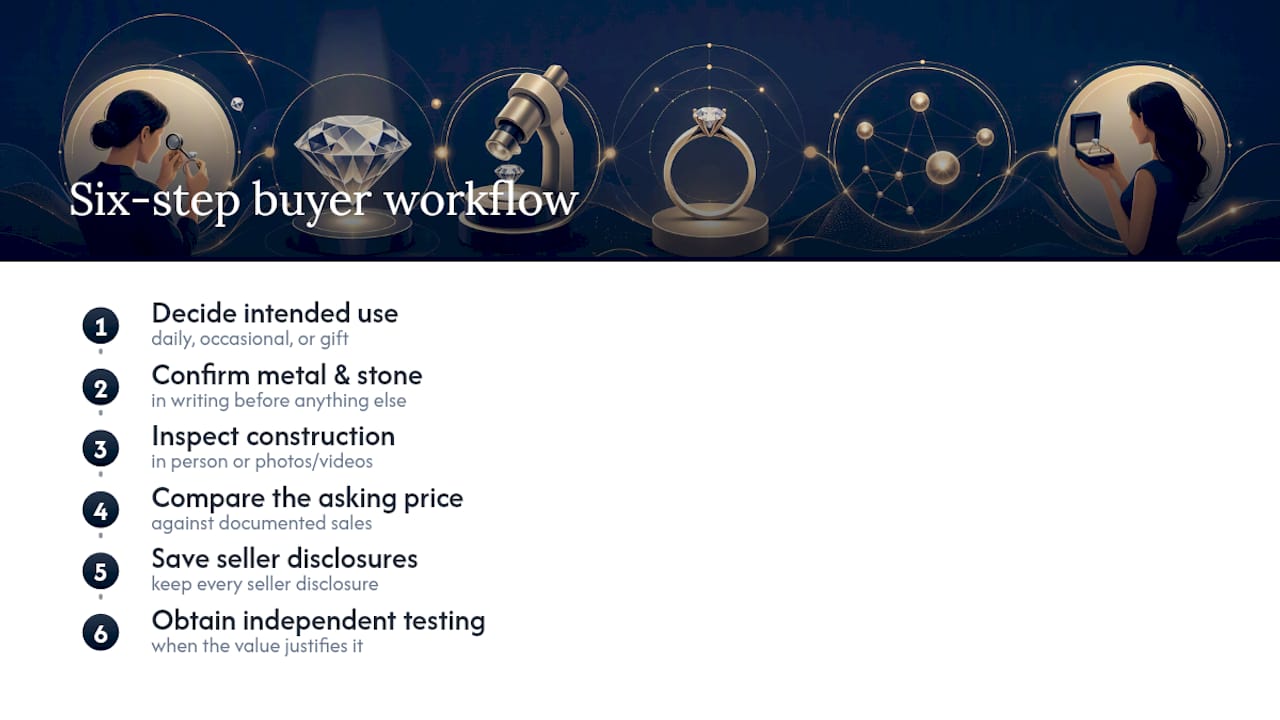
Start by naming how you’ll actually wear the piece daily, occasionally, as a gift. Then confirm metal and stone identity in writing before anything else. Inspect construction and hallmarks in person or through requested photos and video. Compare the asking price against similar documented sales, not just similar-looking listings. Save every disclosure the seller gives you. Finally, get independent testing when the value justifies it.
For deeper reference, Diamonds by Daisy’s guides on the 4 Cs of diamond quality, what to look for in certification, and identifying high-quality gemstones walk through each step in more detail.
Why Documentation Beats a Pretty Photo
Photos flatter almost everything. A written disclosure doesn’t have that luxury, which is exactly why it protects buyers more reliably than a stunning product shot ever will. The pieces that hold up over years of wear are the ones where the hallmark, the seller’s description, and the actual construction all agree with each other under a loupe. When they don’t line up, that mismatch is the whole story.
For readers who want to go further, Diamonds by Daisy’s team has written extensively on certification and resale value for anyone treating jewelry as more than a one-time purchase.
— Georgia
Where to Start if You Want Vetted Pieces Already Checked
Running every check yourself takes time, and not every gift deadline allows for it. Diamonds by Daisy curates its jewelry and accessories with clear material disclosures and care instructions built in, so the verification legwork this article walks through is already reflected in how each piece gets selected.
That doesn’t mean you should skip comparing disclosures and reports elsewhere; it means you have a shortcut when you’d rather not start from zero. Browse the Jewelry & Elevated Accessories collection to see documented pieces built for everyday wear and gifting, and compare what’s disclosed against anything else you’re considering before you decide.
Sources
- Buying platinum, gold, and silver jewelry | Consumer Advice
- How GIA grades diamonds | GIA 4Cs
- GIA — about the 4 Cs and cut
FAQ
What Are the 4 Cs of Diamond Quality?
The 4 Cs are cut, color, clarity, and carat, and cut has the biggest effect on how much a diamond sparkles. GIA’s grading system evaluates all four and documents them in a formal report you can check against the physical stone.
How Can I Tell if Gold Jewelry Is Real?
Check for a karat stamp (10K, 14K, 18K, 24K) next to a manufacturer’s trademark, since FTC rules require both together. A magnet test can rule out some obvious fakes, but a worn or fake stamp requires a jeweler’s verification to confirm purity.
What Should Sellers Disclose About Gemstones?
Sellers must state whether a stone is natural, lab-created, or an imitation, and disclose any treatment that affects durability or value, according to FTC gemstone guidance. Get this in writing before purchase rather than relying on a listing title alone.
Is a Grading Report the Same as an Appraisal?
No. A grading report from a lab like GIA documents what a stone is: its identity, 4 Cs, and treatments. An appraisal assigns a dollar value and is a separate service, often needed for insurance or resale.
Does Diamonds by Daisy Sell Certified Jewelry?
Diamonds by Daisy curates pieces with clear material disclosures and care instructions rather than issuing its own certifications. Current pricing and product details are listed directly on the Jewelry & Elevated Accessories collection.