

What to Look for in Diamond Certification
Table of Contents
- Why Diamond Certification Matters
- Understanding the 4Cs in a Diamond Certificate
- How to Read a Diamond Grading Report
- GIA vs IGI Diamond Certification: Which Matters More
- Diamond Appraisal vs Certification: Understanding the Difference
- Verifying Diamond Authenticity and Certificate Security
- Lab-Grown vs Natural Diamond Certification
- Frequently Asked Questions
Last Updated: September 1, 2026
Why Diamond Certification Matters
Without proper diamond certification, you're taking someone's word for it. A certificate from a reputable gemological laboratory transforms a subjective purchase into an objective, verifiable one. A diamond graded as VS1 clarity versus SI1 can differ substantially in price, yet the difference might be invisible to the naked eye. A certificate removes the guesswork and documents exactly what you're buying.
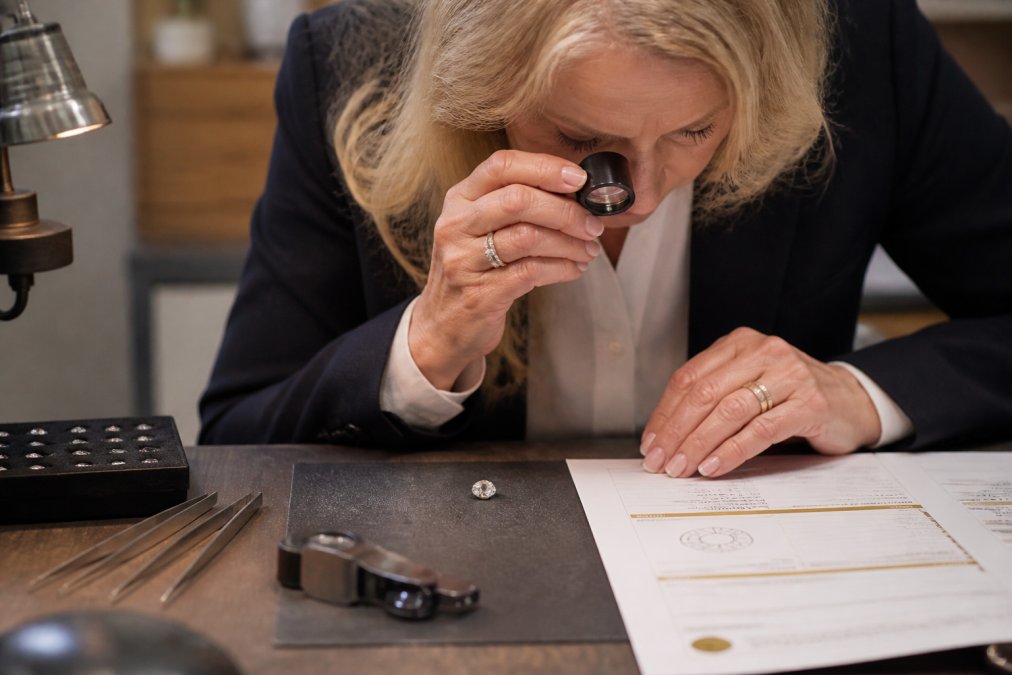
At Diamonds by daisy, we understand that trust is everything when buying fine jewellery. Diamond certification also matters for resale value, insurance claims, and inheritance purposes, that certificate becomes your proof of authenticity and quality when you need it most.
Understanding the 4Cs in a Diamond Certificate
Cut, Colour, Clarity, and Carat Weight
The 4Cs form the foundation of diamond grading. Every professional diamond certificate evaluates these four characteristics.
Cut refers to how well the diamond has been shaped and faceted. This isn't about the diamond's shape (round, emerald, cushion), it's about the quality of the cutting work itself. Cut affects how light reflects through the stone, determining its brilliance and sparkle. A poorly cut diamond will look dull regardless of other qualities.
Colour measures the absence of colour in a diamond. The colour scale runs from D (colourless) through Z (light colour) (gia.edu). For most buyers, diamonds graded H to J offer excellent value, the colour is imperceptible without professional equipment, yet the cost is significantly lower.
Clarity refers to the presence or absence of inclusions and blemishes. The clarity scale ranges from Flawless (FL) through Included (I). Most diamonds contain some inclusions; the question is whether they're visible to the naked eye. A VS1 diamond might have inclusions, but they won't affect your viewing experience. An I1 diamond might be eye-clean as well, offering significant savings.
Carat Weight measures the diamond's weight. One carat equals 200 milligrams. Carat weight influences price dramatically, particularly at certain thresholds. A 0.99 carat diamond costs noticeably less than a 1.0 carat diamond, even though the visual difference is negligible.
How to Read a Diamond Grading Report
Key sections of a grading report
A diamond grading report is a detailed technical document. Understanding its layout transforms it from intimidating to informative.
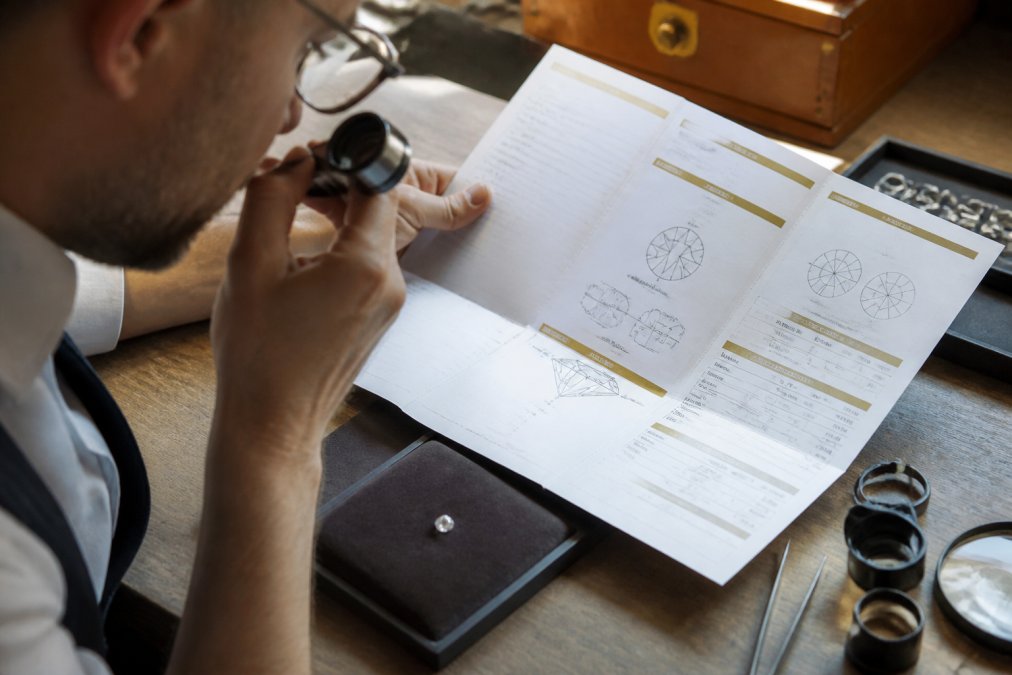
The report header identifies the laboratory, the report date, and the unique report number. This number is critical, it's your reference point for verification. Many diamonds also have a laser inscription matching this number, etched onto the girdle of the stone itself.
The 4Cs grades occupy the central section. Below these, you'll find the fluorescence rating, whether the diamond glows under ultraviolet light. Most diamonds show no fluorescence or faint fluorescence, which is ideal.
The plot diagram is a two-dimensional representation showing the location and type of inclusions within the diamond. If you're examining a VS1 or SI1 diamond, the plot helps you understand exactly where those inclusions sit. Some buyers use the plot to identify eye-clean stones within lower clarity grades, a valuable strategy for budget-conscious purchases.
The measurements section provides precise dimensions: diameter, depth, and table percentage. These specifications matter for setting compatibility and for verifying that the stone you receive matches the documentation.
Laser inscription and verification
Laser inscription links your physical diamond to its certificate. The laboratory uses a laser to etch the report number onto the diamond's girdle, the widest part of the stone. This inscription is permanent, microscopic, and invisible to the naked eye without magnification.
To verify a laser inscription, you'll need a jeweller's loupe or a gemologist's microscope. Once magnified, you can read the report number directly on the stone. This proves the diamond hasn't been switched after certification and provides an additional layer of authenticity verification.
Modern certificates from reputable laboratories almost always include inscription. When you're purchasing a diamond, asking whether it's laser inscribed is a reasonable question.
GIA vs IGI Diamond Certification: Which Matters More
The Gemological Institute of America (GIA) and the International Gemological Institute (IGI) are the two most widely recognised diamond certification laboratories globally.
GIA is often considered the industry standard. Their grading standards are rigorous and consistent. GIA certificates command respect in the secondary market; if you ever need to sell or insure your diamond, a GIA certificate carries significant weight. Their grading tends to be conservative, meaning a GIA-graded diamond is often considered slightly more valuable than the same stone graded by another laboratory at the same grade.
IGI is also reputable but has historically been viewed as slightly more lenient in grading. This doesn't mean IGI certificates are unreliable; it means a diamond graded as VS1 by IGI might receive a VS2 from GIA. For budget-conscious buyers, this can work in your favour. An IGI VS1 diamond might offer better value than a GIA VS2 of similar specifications, though the GIA stone would command higher resale value.
When comparing diamonds from different laboratories, account for this grading variance. A GIA SI1 and an IGI VS2 might be more similar in actual quality than their grades suggest. Examining the plot diagram helps you see past the letter grade to the actual characteristics of the stone.
Diamond Appraisal vs Certification: Understanding the Difference
Diamond appraisal and diamond certification serve different purposes. Conflating them can lead to costly mistakes.
Diamond certification is a detailed grading report from a gemological laboratory documenting the 4Cs and other characteristics. It's objective, standardised, and reproducible. Certification documents what the diamond is.
Diamond appraisal is a valuation document prepared by an appraiser, typically for insurance purposes. An appraiser examines the diamond and assigns a monetary value based on current market prices, the 4Cs, and other factors. The appraisal answers: "What is this diamond worth?" This is subjective and varies based on market conditions and the appraiser's expertise.
You need both for complete protection. The certificate tells you what the diamond is. The appraisal tells you what it's worth. Insurance companies typically require an appraisal before they'll insure your diamond.
An appraisal is only valid for a limited time, typically 2-3 years. A certificate, by contrast, is permanent. The diamond's characteristics don't change, so the certificate remains valid indefinitely.
When purchasing from a reputable retailer like Diamonds by daisy, you should receive a certificate with your diamond. If you're planning to insure the piece, you'll need a separate appraisal.
Verifying Diamond Authenticity and Certificate Security
Red flags to watch for
Not every certificate is legitimate. Counterfeit or altered certificates exist, and knowing what to look for protects you from fraud.
First, examine the certificate's physical quality. Legitimate certificates from established laboratories are printed on security paper with watermarks, holograms, and other anti-counterfeiting features. If the certificate looks like it could have been printed on a home printer, it probably was.
Second, verify the report number independently. Every major laboratory maintains a database where you can check whether a report number is genuine. Visit the laboratory's official website and use their verification tool. If the database shows no record, the certificate is likely fraudulent.
Third, check for consistency between the certificate and the diamond itself. The measurements listed should match the stone's dimensions. The laser inscription should match the report number. If these don't align, something is wrong.
Fourth, be suspicious of unusually steep discounts. If a seller is offering a certified diamond at significantly below-market pricing, question why. Extreme discounts often indicate the diamond doesn't match the certificate or the certificate itself is questionable.
Fifth, watch for pressure to buy quickly without verification. Reputable sellers encourage independent verification. If a seller discourages you from having the diamond examined by a third party, this is a major warning sign.
Lab-Grown vs Natural Diamond Certification
Lab-grown diamonds are chemically identical to mined diamonds but created in a laboratory rather than formed over billions of years underground. Certification practices differ between the two.
Natural diamonds are graded using the 4Cs framework. Their certificates document their mined origin and natural characteristics. Lab-grown diamonds are graded using the same 4Cs scale, but their certificates clearly state "laboratory-grown" or "lab-created" at the top. This designation is permanent and non-negotiable.
A lab-grown diamond should never be certified as natural, and this is well-policed by reputable laboratories. GIA, IGI, and other major laboratories have systems to distinguish lab-grown from natural stones.
The price difference is substantial. A lab-grown diamond of identical 4Cs grades costs roughly 40-60% less than a natural diamond (peer-reviewed research). For many buyers, this represents excellent value. For others, the natural origin matters for investment purposes or personal preference.
When you're purchasing a diamond, verify whether it's natural or lab-grown. The certificate will state this clearly. At Diamonds by daisy, we're transparent about diamond origin; every piece in our collection comes with clear documentation of whether it's natural or lab-grown.
Investing in a diamond is a significant decision that extends far beyond the initial purchase. The certificate transforms that investment from a leap of faith into a documented, verifiable asset. By understanding what to look for in diamond certification, from the 4Cs through security features and laboratory reputation, you protect your investment and ensure you know precisely what you own.
When you're ready to purchase, seek out sellers who prioritise transparency and independent verification. Diamonds by daisy is committed to this standard, providing every customer with comprehensive certification and the confidence that comes with knowing your diamond has been rigorously evaluated by respected gemological laboratories. Our 30-day satisfaction guarantee means you can purchase with complete peace of mind, knowing your investment is protected.
| Element | What It Tells You | Why It Matters |
|---|---|---|
| 4Cs Grades | Cut, colour, clarity, carat weight specifications | Determines quality and value |
| Plot Diagram | Location and type of inclusions | Helps identify eye-clean stones |
| Laser Inscription | Permanent link between diamond and certificate | Prevents diamond switching fraud |
| Laboratory Name | Which gemological institution graded the stone | Affects market value and credibility |
| Report Number | Unique identifier for verification | Allows independent authenticity checking |
Frequently Asked Questions
Q: What is the difference between a diamond certificate and an appraisal?
A: A diamond certificate is an independent gemological assessment that grades the diamond's 4Cs and documents its characteristics. An appraisal assigns a monetary value for insurance or resale purposes. Certification verifies quality; appraisal determines worth. Both are valuable, certification for authenticity, appraisal for insurance coverage. Many buyers request both to ensure confidence in their purchase.
Q: Which is better, GIA or IGI diamond certification?
A: GIA is widely regarded as the industry standard and commands stronger resale value recognition. IGI is also reputable but generally considered slightly more lenient in grading. For premium pieces, GIA certification typically provides greater assurance and market acceptance. Your choice depends on your priorities: GIA for maximum confidence and resale potential, IGI for competitive pricing on quality stones.
Q: How do I verify a diamond certificate online?
A: Most major laboratories offer online verification through their websites. You'll enter the certificate number and laser inscription details to confirm authenticity and view the full grading report. Check the laboratory's official site directly, never follow links from third parties. Verification typically takes seconds and confirms the stone's specifications match the physical diamond you're examining.
Q: What should I look for to tell if a diamond is high quality?
A: Focus on the 4Cs: cut (how light performs), colour (absence of tint), clarity (absence of inclusions), and carat weight (size). A well-cut diamond with VS1 clarity or higher, colour grade H or better, and appropriate carat weight indicates quality. Fluorescence should be none to faint. Check the grading report for polish and symmetry ratings, which affect brilliance. Request certification from a reputable gemological laboratory for verification.
This article was written using GrandRanker