

What to Look for in Diamond Jewelry: A 2026 Guide
Table of Contents
- Understanding the 4Cs of Diamond Quality
- Diamond Certification UK: Why It Matters
- How to Spot a Fake Diamond
- Choosing the Right Metal and Setting Style
- Lab-Grown vs. Natural Diamonds
- Ethical Sourcing and Conflict-Free Diamonds
- Common Mistakes When Buying Diamond Jewelry
- Maintenance, Care, and Long-Term Value
Last Updated: August 8, 2026
Understanding the 4Cs of Diamond Quality
The 4Cs framework, Carat, Cut, Color, and Clarity, provides a standardised way to evaluate diamond quality and value. This system emerged from the Gemological Institute of America (GIA) as a universal language for diamond grading. Each C plays a distinct role in determining the stone's appearance and price, though cut typically has the most visible impact on how a diamond looks when worn.
Carat Weight and Diamond Size
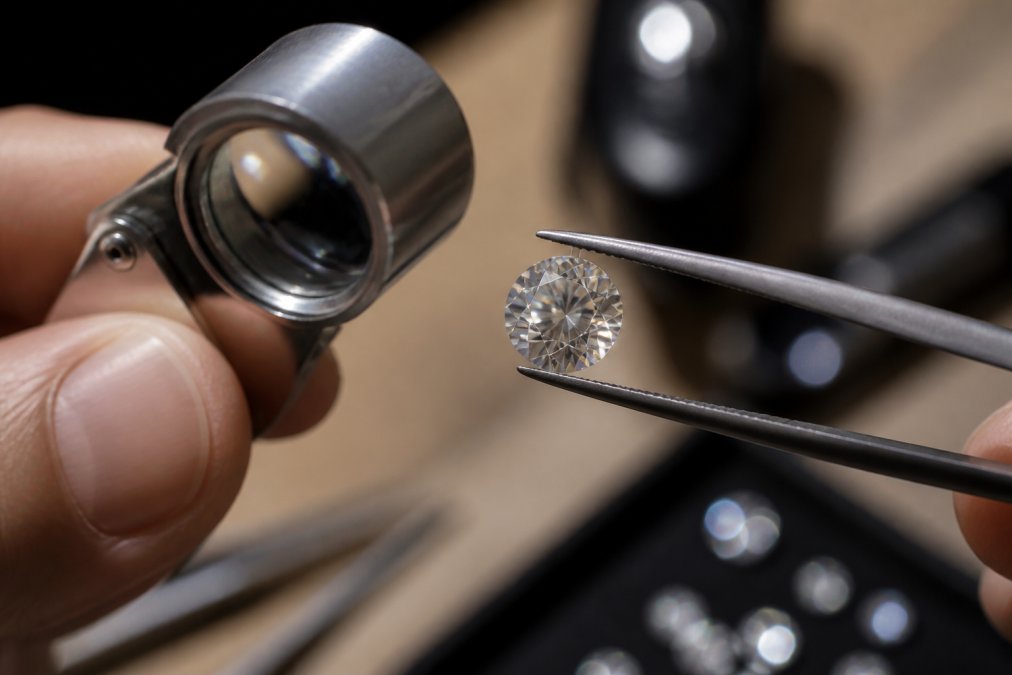
Carat weight measures the mass of a diamond, with one carat equalling 200 milligrams. A one-carat diamond and a 0.9-carat diamond can look nearly identical to the naked eye, yet the price difference may be substantial due to how the market values certain weight thresholds. Carat weight matters most when comparing stones of similar quality across the other three Cs. Some buyers deliberately choose slightly smaller stones with superior cut and clarity, finding them more visually striking than a larger stone with mediocre proportions.
Cut: The Most Important C
Cut refers to how well a diamond's facets are proportioned and aligned, not the stone's shape. The pavilion angle, crown angle, table percentage, and girdle thickness all influence how effectively the diamond captures and reflects light. A well-cut diamond will appear brighter and more lively than a poorly cut stone of identical carat weight, colour, and clarity. This is why cut is often considered the most important C for visual impact, you can see the difference between an excellent cut and a good cut with your own eyes.
Color Grade and What It Means
Diamond colour grades range from D (colourless) to Z (light colour), though differences between adjacent grades are nearly invisible without professional comparison. Diamonds graded D through F are colourless, G through J are near-colourless, and K onwards show visible colour to the naked eye. A near-colourless diamond (G-J) often represents excellent value because the colour difference isn't apparent when set in jewellery, particularly in white gold or platinum settings.
Diamond Clarity Chart Explained
Clarity measures the presence or absence of inclusions and blemishes visible under 10x magnification. The scale progresses from FL (flawless) through IF, VVS1 and VVS2, VS1 and VS2, SI1 and SI2, to I1, I2, I3 (included). Inclusions invisible to the naked eye don't affect a diamond's beauty or durability. Many jewellers recommend VS1 or SI1 clarity as the sweet spot, high enough to ensure eye-clean stones but not so high that you're paying premium prices for characteristics you'll never see.
Diamond Certification UK: Why It Matters
A certified diamond comes with a grading report from an independent laboratory that documents its characteristics, providing objective proof of what you're purchasing. In the UK market, the most widely recognised certification body is the GIA, whose rigorous grading standards are accepted globally. Other respected laboratories include the International Gemological Institute (IGI) and the Antwerp Diamond High Council (HRD). At Diamonds by daisy, each piece includes documentation of the gemstones' quality, ensuring you know exactly what you're acquiring.
GIA and Other Certification Standards
The GIA remains the gold standard for diamond certification. Their grading reports include detailed information about the 4Cs, fluorescence characteristics, and a plotted diagram showing the location of any inclusions. GIA certificates are accepted worldwide and maintain consistent grading standards that allow buyers to compare diamonds across different markets. The IGI operates similarly but is sometimes considered slightly more lenient in grading, while HRD certificates are particularly valued in European markets.
Reading Your Diamond Grading Report
A diamond grading report includes the stone's shape and cutting style, precise measurements, the 4Cs grades, fluorescence, and a plotted diagram showing the exact locations of any inclusions or blemishes. The plotted diagram is particularly useful, it shows you exactly where any inclusions sit within the stone. An inclusion near the edge affects durability less than one near the centre, helping you evaluate whether an SI1 clarity diamond is eye-clean.
How to Spot a Fake Diamond
The diamond market includes convincing imitations like cubic zirconia and moissanite. Learning to spot fakes protects you from overpaying for imitation stones masquerading as genuine diamonds.
Moissanite vs. Cubic Zirconia vs. Natural Diamond
Moissanite is a lab-created silicon carbide compound that closely resembles diamond but displays excessive fire under magnification compared to natural diamond. The refractive index differs, meaning light bends differently through the stone. Moissanite is significantly more durable than cubic zirconia, lasting decades with normal wear, but less durable than diamond.
Cubic zirconia is relatively soft and scratches easily, becoming cloudy over time as the surface accumulates microscopic scratches. While appropriate for costume jewellery, it's unsuitable for engagement rings or jewellery worn regularly for years. A natural diamond remains the most durable option and maintains its optical properties indefinitely.
Simple Tests You Can Perform
The fog test is a basic check: breathe on the stone and watch how quickly the condensation clears. A real diamond disperses heat efficiently, so the fog clears almost instantly. Cubic zirconia retains heat longer, and the fog lingers noticeably.
The loupe test requires a 10x magnification loupe. Under magnification, a well-cut diamond shows precise, sharp facet edges. Moissanite displays distinctive doubling of facet edges under magnification, while cubic zirconia often shows softer edges. Professional testing using thermal conductivity testers and specific gravity tests is always more reliable than home tests.
Choosing the Right Metal and Setting Style
The metal you choose influences both the appearance of the diamond and the overall durability of the piece. Different metals suit different skin tones and personal styles, while the setting style affects both aesthetics and practical considerations like durability and ease of cleaning.
Metal Purity and Hallmarks
In the UK, precious metal purity is regulated and marked with hallmarks. Gold is marked by its fineness: 375 (9 carat), 585 (14 carat), 750 (18 carat), or 916 (22 carat). 18 carat gold contains 75% pure gold and is considered the sweet spot, durable enough for daily wear whilst remaining affordable. Platinum is marked 950, 900, or 850, indicating the percentage of pure platinum. It's naturally white, hypoallergenic, and extremely durable, making it an excellent choice for diamond settings, though significantly more expensive than gold.
White gold is yellow gold mixed with other metals and plated with rhodium to achieve a white appearance. Over time, the rhodium plating can wear away, requiring periodic replating every 2-3 years with normal wear. Silver is softer than gold and platinum and isn't recommended for diamond engagement rings.
Setting Styles: Prong, Bezel, Halo, and Pavé
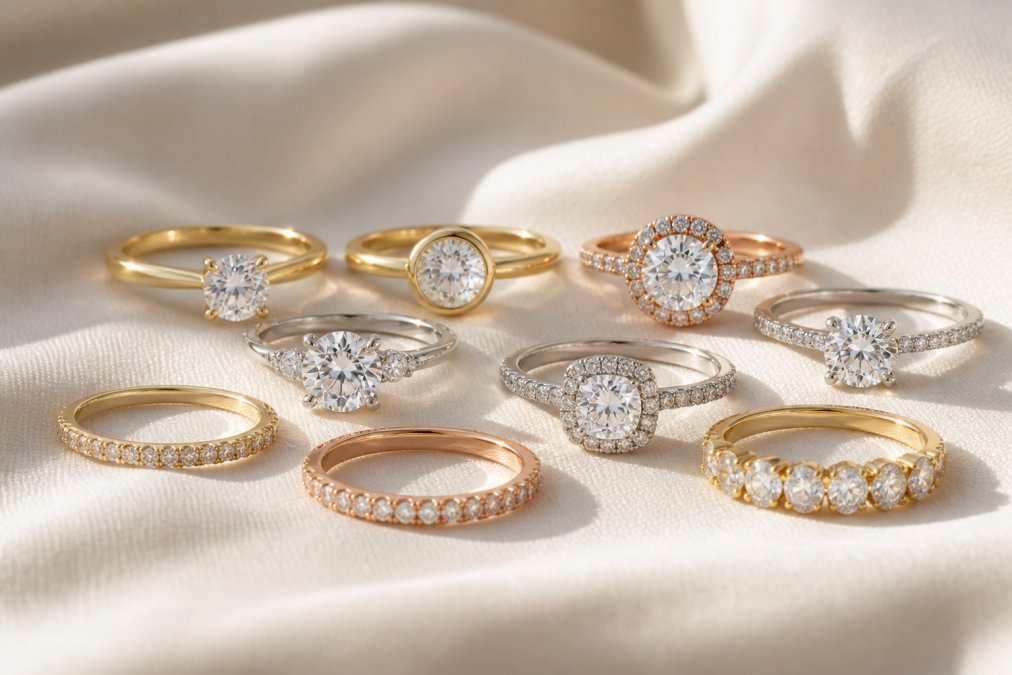
A prong setting uses small metal claws to grip the diamond, holding it elevated above the band and maximising light entry from underneath. This classic style showcases the diamond's brilliance, though the stone sits higher and is slightly more vulnerable to catching on clothing.
A bezel setting surrounds the diamond's perimeter with a metal rim, holding it flush with or slightly above the band. This style offers more protection and a modern appearance, though it can make a diamond appear slightly smaller.
A halo setting surrounds the central diamond with a circle of smaller diamonds or gemstones, making the centre stone appear larger and adding extra sparkle. Halo settings are popular for engagement rings but are more complex to clean.
A pavé setting features small diamonds set closely together along the band, creating a continuous line of sparkle. This style adds significant visual impact but requires careful maintenance as small stones can loosen more easily.
Lab-Grown vs. Natural Diamonds
Lab-grown diamonds are chemically identical to natural diamonds, both are crystalline carbon with the same optical and physical properties. Natural diamonds form over billions of years deep within the Earth. Lab-grown diamonds are created in laboratories using high-pressure, high-temperature (HPHT) processes or chemical vapour deposition (CVD), completing the same crystalline structure in weeks or months.
From a durability and longevity perspective, lab-grown and natural diamonds perform identically. Lab-grown diamonds typically cost 30-40% less than comparable natural diamonds, making them attractive if you want a larger stone within your budget. However, lab-grown diamonds don't hold resale value as well as natural diamonds. Some buyers prefer the romantic notion of a natural diamond formed over geological time, while others appreciate the ethical and environmental advantages of lab-grown stones. At Diamonds by daisy, we work with both natural and lab-grown diamonds, ensuring our clients can choose stones that align with their preferences and budgets.
Ethical Sourcing and Conflict-Free Diamonds
The term "conflict-free" refers to diamonds that haven't been used to finance armed conflict. The Kimberley Process Certification Scheme was established to prevent conflict diamonds from entering the mainstream market, though it has significant limitations and doesn't address environmental damage from mining or labour practices in diamond-producing regions.
If ethical sourcing matters to you, look beyond just the conflict-free label. Ask your jeweller about the diamond's origin, the mining practices used, and whether the company has traceability systems in place. Lab-grown diamonds eliminate mining concerns entirely. Reputable jewellers, including those offering pieces from Diamonds by daisy, prioritise transparency about their stones' origins. Your purchase supports the practices you're willing to fund, so understanding where your diamond comes from matters.
Common Mistakes When Buying Diamond Jewelry
The most common mistake is prioritising carat weight above all else. A smaller, well-cut diamond will always look more brilliant than a larger stone with mediocre proportions. Another frequent error is ignoring the importance of certification, leaving you vulnerable to misrepresentation about quality.
Many people also overlook the metal choice and its long-term maintenance requirements. Choosing white gold without understanding that it requires periodic replating can lead to disappointment when the ring's appearance changes. Similarly, selecting a complex pavé setting without recognising the maintenance demands can result in loose stones going unnoticed.
Buying based solely on photographs is another pitfall, as lighting and angles can make stones look dramatically different from how they appear in person. Finally, many buyers rush the decision. Diamond jewellery is a significant investment, take time to educate yourself, compare options, and ensure you're making a choice you'll be happy with for decades.
Maintenance, Care, and Long-Term Value
A diamond is forever, but the jewellery holding it requires ongoing care. Regular cleaning maintains the stone's brilliance. A simple solution of warm water and mild dish soap works well; soak the piece for a few minutes, then gently brush with a soft toothbrush. Professional jewellers offer ultrasonic and steam cleaning services for more thorough cleaning.
Periodic inspections ensure the setting remains secure. Prongs can loosen over time with normal wear, and most jewellers recommend annual inspections, particularly for pieces worn daily. Replating white gold every 2-3 years maintains its appearance. These routine maintenance steps are relatively inexpensive and prevent costly repairs down the line.
Natural diamonds hold their worth better than lab-grown stones, typically retaining 50-70% of their original purchase price if resold within a few years. However, if you're buying jewellery to wear and enjoy rather than as an investment, resale value matters less than personal satisfaction. Insurance is worth considering for significant pieces, as most homeowner's or renter's insurance policies have limited coverage for jewellery.
Choosing diamond jewellery involves navigating multiple decisions, each with real implications for how you'll feel about your purchase years from now. Understanding the 4Cs, certification, metal choices, and ethical considerations transforms you from a passive buyer into an informed decision-maker. When you invest in pieces from Diamonds by daisy, you're choosing jewellery backed by meticulous curation of gemstones and precious metals, designed with the refined aesthetic that elevates your personal style. Our 30-day satisfaction guarantee means you can purchase with confidence, knowing that if a piece doesn't resonate with you in person, the process is straightforward. Explore our collection and discover the diamond jewellery that captures your unique brilliance.
Frequently Asked Questions
What are the 4Cs of diamonds and why do they matter?
The 4Cs, Carat, Cut, Color, and Clarity, form the universal standard for evaluating diamond quality. Carat measures weight; Cut determines brilliance, fire, and scintillation; Color grades absence of tint (D-Z scale); Clarity assesses inclusions and blemishes. Together, they define a diamond's rarity, beauty, and value. Understanding each helps you prioritise what matters most for your piece and budget.
How can I verify a diamond's authenticity in the UK?
Request a certification report from a recognised authority such as GIA (Gemological Institute of America). In the UK, look for diamonds accompanied by grading documentation that details the 4Cs, fluorescence, and polish. Certified diamonds come with a unique report number. You can also request a loupe examination or thermal conductivity test to distinguish natural diamonds from moissanite or cubic zirconia. Reputable retailers like Diamonds by Daisy provide certification details upfront.
Is VS1 or VS2 clarity better for diamond jewellery?
Both VS1 and VS2 are eye-clean grades, meaning inclusions are not visible to the naked eye. VS1 (Very Slightly Included 1) has fewer and smaller inclusions than VS2. For most jewellery wearers, VS2 offers excellent value, the difference is imperceptible without magnification. Choose VS1 if you prefer maximum peace of mind or plan to inspect with a loupe regularly. Either grade ensures your diamond looks flawless in daily wear.
What's the difference between lab-grown and natural diamonds?
Natural diamonds form over billions of years under earth pressure; lab-grown diamonds are created in weeks using high-pressure/high-temperature or chemical vapour deposition methods. Both are chemically identical and score identically on the 4Cs. Lab-grown diamonds are typically 30-40% cheaper and are conflict-free by design. Natural diamonds hold stronger resale value and carry the prestige of rarity. Your choice depends on budget, ethics priorities, and investment intent.
How do I know if a diamond is ethically sourced?
Look for diamonds certified as conflict-free by recognised schemes such as the Kimberley Process or, better still, third-party audited traceability programmes. Ask your retailer for documentation proving origin and supply chain transparency. Reputable UK jewellers like Diamonds by Daisy prioritise ethical sourcing and can provide proof of provenance. Lab-grown diamonds are inherently ethical as they eliminate mining concerns entirely.
What should I prioritise: cut or colour when buying a diamond?
Cut is the most critical factor, it directly affects brilliance, fire, and scintillation, which determine how sparkly your diamond appears. A well-cut diamond of lower colour grade will look more beautiful than a poorly cut, colourless stone. Most buyers prioritise Excellent or Very Good cut, then select colour within D-J range depending on budget. Clarity and carat follow. A diamond's visual impact depends far more on cut quality than on colour alone.
Will I lose money if I resell a diamond later?
Natural diamonds hold resale value better than lab-grown, typically retaining 50-70% of purchase price depending on the 4Cs and market conditions. Certified, high-quality diamonds (Excellent cut, D-H colour, VS1-SI1 clarity) resell more readily. Vintage and heirloom pieces often appreciate. Resale value is not guaranteed and depends on demand, condition, and certification. If investment potential matters, focus on quality 4Cs and certification rather than treating diamonds as liquid assets.
This article was written using GrandRanker