

How to Identify High Quality Gemstones
Table of Contents
- The Four Cs of Gemstone Grading
- How to Test Gemstones at Home
- Natural vs Synthetic Gemstones
- Gemstone Certification UK and Authentication
- Essential Tools and Resources for Gemstone Identification
- Common Mistakes to Avoid When Assessing Gemstone Quality
- Conclusion
Last Updated: August 10, 2026
The Four Cs of Gemstone Grading
The Four Cs framework, color, clarity, cut, and carat weight, forms the foundation for assessing gemstone quality. Developed by the Gemological Institute of America, this standardised system helps collectors, jewellers, and buyers make informed decisions globally. At Diamonds by Daisy, we apply the Four Cs rigorously to every piece, ensuring each stone meets our exacting quality benchmarks.
The Four Cs work together as an interconnected system. A gemstone might excel in one category whilst being modest in another. Your priorities determine which Cs matter most for your purchase. A vivid ruby with minor inclusions, for example, may command higher value than a flawless but pale specimen of the same weight.
Understanding Color Saturation and Hue
Color encompasses hue (the actual colour itself) and saturation (the intensity of that colour). A deep, saturated red differs dramatically from a pale, washed-out red, even though both are technically red gemstones.
Hue refers to the primary colour you observe, red, blue, green, yellow, or combinations thereof. Saturation describes how vivid or muted that colour appears. The most valuable gemstones display rich, saturated colour without appearing muddy or overly dark.
Pleochroism, the property where gemstones display different colours when viewed from different angles, affects colour perception. Gemologists use a dichroscope to detect this optical property during assessment.
Evaluating Clarity and Inclusions
Clarity measures the presence or absence of inclusions, internal characteristics that affect transparency and light transmission. Inclusions are not necessarily flaws; many natural gemstones contain them. The key distinction is whether inclusions are eye-clean (invisible to the naked eye at normal viewing distance) or visible.
Some inclusions actually prove a gemstone's natural origin, distinguishing it from synthetic alternatives. A gemstone with no inclusions whatsoever may warrant suspicion, as most natural stones contain some internal characteristics.
Clarity grading uses 10x magnification as the standard. Professional gemological laboratories use standardised lighting conditions and magnification levels to ensure consistency in clarity assessment.
The Importance of Cut and Symmetry
Cut determines how effectively a gemstone reflects and refracts light, directly influencing its brilliance and sparkle. Cut quality depends on facet symmetry, proportions, and polish. A poorly cut gemstone wastes light, appearing dull despite excellent colour and clarity.
Facet symmetry refers to how precisely each facet aligns with its counterparts. Even minor asymmetries can diminish brilliance noticeably. Different gemstone shapes, brilliant cut, cushion cut, emerald cut, require different cutting approaches, each with ideal proportion ranges that maximise light return.
Carat Weight vs. Physical Size
Carat weight measures gemstone mass, with one carat equalling 200 milligrams. Many buyers assume carat weight directly correlates to physical size, but this relationship is more complex. Gemstone density varies significantly by type.
A one-carat ruby appears noticeably smaller than a one-carat sapphire of the same cut, due to ruby's greater density. Understanding specific gravity, the ratio of a gemstone's density to water's density, explains these size differences.
Carat weight influences price disproportionately. A two-carat gemstone typically costs significantly more than twice the price of a one-carat stone of equivalent quality. When evaluating value, consider the complete Four Cs picture rather than fixating on carat weight alone.
How to Test Gemstones at Home
Home-based testing provides non-destructive methods to assess gemstone authenticity and quality. These techniques complement professional certification and help you develop confidence in identifying high-quality stones.
Basic Visual Inspection with a Loupe
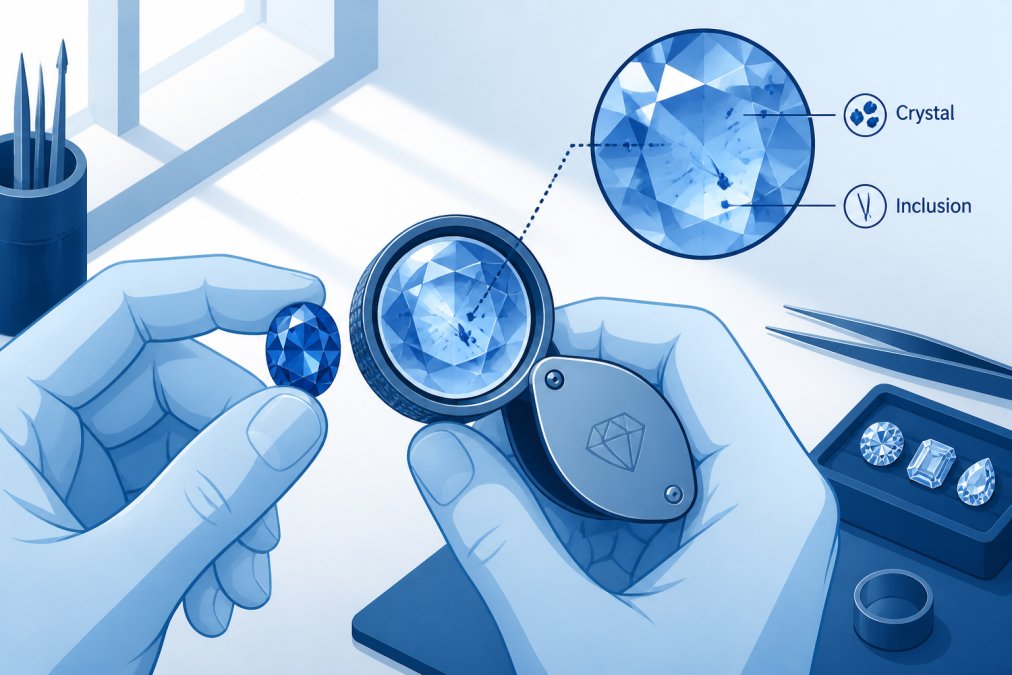
A jeweller's loupe, a 10x magnification handheld lens, reveals details invisible to the naked eye. Hold the loupe close to your eye, then bring the gemstone toward it until the stone comes into focus. This reveals inclusions, fractures, and surface characteristics that indicate authenticity.
Natural gemstones display characteristic inclusion patterns. Synthetic gemstones often contain gas bubbles or show unnaturally perfect clarity. Feathery inclusions, three-phase inclusions (containing liquid, gas, and crystal), and colour zoning patterns indicate natural origin.
Surface examination reveals polish quality and potential treatments. Scratches or uneven polish suggest lower-quality cutting. Pitting or erosion might indicate acid treatment or chemical enhancement.
Thermal Conductivity and Refractive Index Tests
Different gemstones conduct heat at varying rates. A thermal conductivity test uses a specialised pen that detects how quickly heat transfers through the stone. Diamonds conduct heat rapidly, whilst most imitations conduct heat poorly, distinguishing genuine diamonds from simulants like cubic zirconia.
Refractive index describes how much light bends as it passes through a gemstone. A refractometer measures this property, providing numerical data that identifies gemstone type. Birefringence, the degree to which a gemstone splits light into two rays, provides additional identification information.
Specific Gravity and Density Checks
Specific gravity compares a gemstone's density to water's density. A gemstone that sinks rapidly in water has high specific gravity; one that floats or sinks slowly has lower specific gravity. This simple observation provides preliminary identification information.
Professional specific gravity testing uses a hydrostatic scale or heavy liquids. By weighing a gemstone in air and then submerged in water, you calculate precise specific gravity values. Density testing also reveals whether a gemstone has been treated with fillers or resins.
Natural vs Synthetic Gemstones
The distinction between natural and synthetic gemstones matters profoundly for value, durability, and ethical considerations. Natural gemstones form over millions of years through geological processes. Synthetic gemstones are created in laboratories, often in weeks or months.
How to Spot Synthetic or Fake Gemstones
Synthetic gemstones possess identical chemical composition to their natural counterparts, making identification challenging without specialised equipment. However, characteristic differences emerge under magnification. Synthetic gemstones often display unnaturally perfect clarity, lacking the inclusion patterns typical of natural stones.
Gas bubbles appear frequently in synthetic gemstones, particularly older laboratory-created stones. Natural gemstones contain different inclusion types, mineral crystals, three-phase inclusions, or fractures, reflecting their geological formation.
Colour distribution differs between natural and synthetic stones. Natural gemstones typically show colour zoning, areas of varying colour intensity. Synthetic gemstones often display uniform colour throughout. Spectroscopy reveals fluorescence patterns unique to laboratory-created stones.
Enhancement and Heat Treatment Disclosure
Heat treatment represents the most common gemstone enhancement. Heating removes colour impurities or intensifies existing colour, improving a gemstone's appearance dramatically. Ethical gemstone selling requires transparent disclosure of heat treatment.
Other enhancements include fracture filling (using oils or resins to hide fractures), irradiation (altering colour through radiation exposure), and coating (applying thin surface layers to improve colour). Each enhancement method affects durability, maintenance requirements, and long-term value differently.
Professional gemological laboratories disclose enhancement methods in certification reports. A beautiful gemstone with disclosed enhancement costs considerably less than an unenhanced equivalent, reflecting the difference in durability and permanence.
Gemstone Certification UK and Authentication
Professional certification provides independent verification of gemstone quality and authenticity. Certification documents create objective records of a gemstone's characteristics, protecting both buyers and sellers.
Understanding GIA and Gemological Laboratory Reports
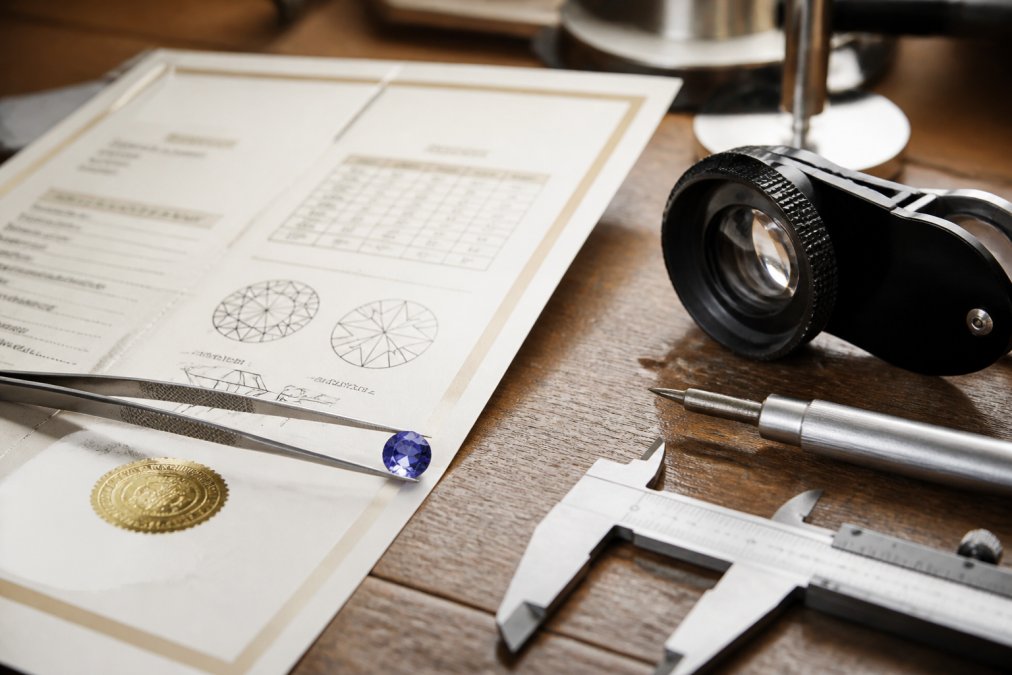
The Gemological Institute of America (GIA) provides the most widely recognised gemstone certification globally. GIA reports document the Four Cs assessment, identify the gemstone type, and disclose any treatments or enhancements.
GIA certification involves detailed examination under controlled conditions. Gemologists assess colour under standardised lighting, evaluate clarity using 10x magnification, measure carat weight precisely, and evaluate cut quality systematically.
Other reputable laboratories include the American Gem Society (AGS) and the International Gemological Institute (IGI). UK buyers should verify laboratory credentials and reputation before relying on certification. Diamonds by Daisy sources gemstones from certified suppliers, ensuring every piece comes with verifiable quality documentation.
Ethical Sourcing and Origin Verification
Ethical sourcing encompasses responsible mining practices, fair labour conditions, and environmental stewardship. Many conscious consumers prioritise gemstones sourced ethically, avoiding regions associated with conflict mining or exploitative labour practices.
Origin verification traces a gemstone's geographic source. Certain regions produce gemstones with distinctive characteristics. The Kimberley Process Certification Scheme attempts to prevent conflict diamonds from entering mainstream markets. Reputable dealers disclose their sourcing practices transparently, allowing informed purchasing decisions aligned with personal values.
Essential Tools and Resources for Gemstone Identification
Professional gemstone assessment requires specific tools. A basic gemstone identification kit includes a 10x loupe, refractometer, thermal conductivity tester, and specific gravity scale, costing between £50 and £300 depending on quality.
A spectroscope reveals characteristic absorption patterns unique to each gemstone type. Fluorescence under ultraviolet light provides additional identification information. Digital scales measuring to 0.01 carat precision ensure accurate weight determination.
Durability and the Mohs Hardness Scale
The Mohs hardness scale ranks gemstone durability from 1 (softest) to 10 (hardest). Diamond rates 10; corundum (sapphire and ruby) rates 9; topaz rates 8. Hardness directly affects wearability and maintenance requirements.
Gemstones below 7 on the Mohs scale scratch easily in jewellery worn regularly. Opal rates 5.5-6.5, making it suitable for protective settings like pendants rather than rings. Durability extends beyond hardness; toughness, resistance to fracturing, matters equally.
Common Mistakes to Avoid When Assessing Gemstone Quality
Overemphasising carat weight at the expense of other Cs leads to poor purchasing decisions. A two-carat gemstone with poor colour and visible inclusions provides less visual appeal than a one-carat stone with excellent colour and clarity.
Neglecting to request certification creates unnecessary risk. Professional certification costs modestly compared to gemstone value and provides crucial documentation. Reputable sellers, including Diamonds by Daisy, provide certification as standard practice.
Assuming eye-clean clarity means flawless clarity introduces confusion. Eye-clean gemstones contain inclusions invisible at normal viewing distance, yet visible under magnification. This distinction matters for value; eye-clean stones cost considerably less than flawless equivalents whilst appearing identical to casual observation.
Ignoring gemstone enhancement disclosure creates future disappointment. Enhanced gemstones require specific care to maintain their appearance. Transparency about enhancement allows appropriate maintenance planning.
Purchasing without understanding gemstone type leads to inappropriate expectations. Each gemstone type has unique properties affecting suitability for different jewellery applications. Ruby's hardness suits everyday rings; opal's softness suits protective pendants.
Selecting high-quality gemstones requires knowledge, patience, and access to reliable information. The assessment methods covered here, from the Four Cs framework to home-based testing techniques, help you make confident purchasing decisions aligned with your values and preferences. When quality matters, professional certification provides the objective verification that transforms subjective impression into documented fact. Diamonds by Daisy's 30-day satisfaction guarantee ensures you can purchase with confidence, knowing that every meticulously handpicked gemstone meets rigorous quality standards and arrives with complete documentation of its characteristics and origin.
Frequently Asked Questions
How can I tell if a gemstone is good quality at first glance?
High quality gemstones display brilliant colour saturation, minimal visible inclusions to the naked eye (eye-clean), excellent cut symmetry, and appropriate carat weight for their size. The Four Cs, colour, clarity, cut, and carat weight, form the foundation of quality assessment. A gemstone that scores well across all four is typically considered high quality. However, professional certification from a gemological laboratory provides the most reliable verification of quality and authenticity.
What's the best way to test gemstones at home without special equipment?
Start with visual inspection using a basic jeweller's loupe (10x magnification) to examine clarity and identify inclusions. Check for colour saturation and hue consistency. You can perform a simple thermal conductivity test by touching the stone to your cheek, genuine gemstones conduct heat differently than glass or synthetic alternatives. Examine the cut's facet symmetry and how light reflects through the stone. For more definitive results, professional testing using refractometers, dichroscopes, and spectroscopy is recommended.
How do I know if a gemstone is natural or synthetic?
Natural gemstones often display characteristic inclusions, colour zoning, and fluorescence patterns that synthetic versions rarely replicate perfectly. Lab-grown stones may show too-perfect clarity or uniform colour, which can indicate synthesis. Spectroscopy and dichroscope testing reveal the internal light-absorption characteristics unique to natural stones. Professional gemological certification is the most reliable method, as laboratories use advanced equipment to detect synthetic gemstones, heat treatment, and other enhancements that affect value and durability.
Why is gemstone certification important when buying fine jewellery?
Certification from a reputable gemological laboratory provides independent verification of a gemstone's quality, authenticity, and any treatments or enhancements. It documents the Four Cs grading, confirms whether a stone is natural or synthetic, and establishes provenance, crucial for ethical sourcing and resale value. In the UK, certification also supports insurance claims and protects you against misrepresentation. When purchasing investment-grade pieces, certification offers peace of mind that you're receiving exactly what you've paid for.
This article was written using GrandRanker