

Platinum vs White Gold for Engagement Rings
Table of Contents
- Platinum vs White Gold: Metal Composition and Purity
- Durability and Wear Resistance for Daily Wear
- Hypoallergenic Properties of Engagement Ring Metals
- Maintenance and Rhodium Plating Maintenance
- Hallmarking Requirements for Precious Metals
- Price, Investment Value, and Long-Term Cost of Ownership
- Which Metal Is Right for Your Engagement Ring?
- Frequently Asked Questions
Last Updated: September 2, 2026
Platinum vs White Gold: Metal Composition and Purity
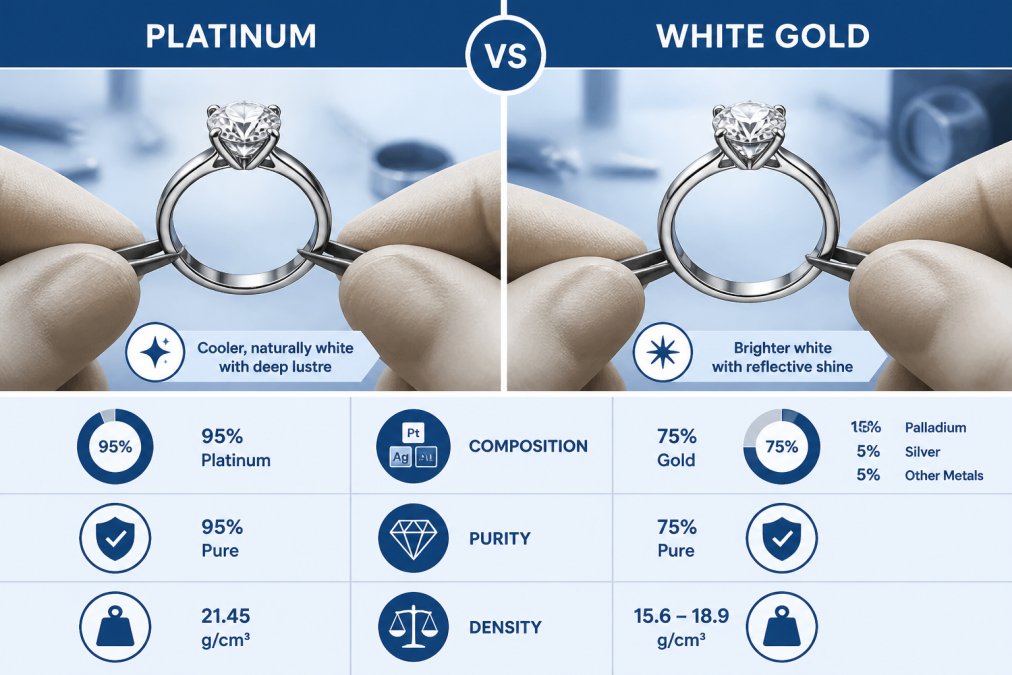
Platinum and white gold are fundamentally different precious metals, despite their similar appearance. Platinum is a pure precious metal that typically contains 95% platinum with minimal alloy content, whereas white gold is an alloy, usually 75% pure gold mixed with metals like palladium, nickel, or silver to achieve its white colour.
This compositional difference shapes everything from durability to maintenance requirements. Platinum's density is nearly twice that of white gold, meaning a platinum engagement ring will feel noticeably heavier on your finger. The metal's natural whiteness requires no coating, whereas white gold often needs rhodium plating to achieve that bright, silvery finish you see in jewellery displays.
Understanding these fundamentals matters when choosing between platinum and white gold for engagement rings. At Diamonds by daisy, we work with both metals to help clients understand which aligns with their lifestyle and aesthetic preferences. Platinum's composition makes it naturally resistant to oxidation and discoloration, whilst white gold's alloy nature means it can develop a slightly yellowish patina over time without regular maintenance.
The purity standards differ significantly as well. Platinum engagement rings are hallmarked at 950 or higher, indicating at least 95% pure platinum. White gold typically carries hallmarks of 750 (18-karat) or 585 (14-karat), meaning 75% or 58.5% pure gold respectively. These hallmarking requirements for precious metals exist to protect consumers and ensure you know exactly what you're purchasing.
Durability and Wear Resistance for Daily Wear
Platinum's hardness and density make it exceptionally durable for daily wear engagement rings. The metal sits at 4.3 on the Mohs scale, making it softer than some gemstones but far more resistant to scratching and denting than white gold. Its tensile strength, the ability to resist breaking under stress, is superior, which is why platinum settings hold diamonds more securely over decades of wear.
White gold, being an alloy, behaves differently. It's typically harder than pure platinum due to its alloy composition, but this hardness comes with a trade-off: white gold is more brittle and prone to cracking under extreme stress. For engagement rings worn daily, this means white gold prongs can occasionally crack if the ring receives a hard impact, whereas platinum prongs are more likely to bend and retain their grip on the stone.
The scratch resistance tells another story. Platinum scratches more easily than white gold, developing a matte patina over time. Many people find this aesthetic appealing, the patina gives platinum a vintage, lived-in quality. White gold resists scratching better initially, but without regular rhodium plating maintenance, it yellows and loses its bright lustre.
For suitability for daily wear, platinum wins on longevity and security. A platinum engagement ring can be worn continuously without concern for metal failure. White gold requires more attentive care, particularly if you want to maintain its white appearance. The metal's density also matters: platinum's weight provides a substantial, luxurious feel that many prefer, whilst white gold's lighter weight appeals to those who prefer less noticeable jewellery on their hand.

Hypoallergenic Properties of Engagement Ring Metals
Platinum is naturally hypoallergenic due to its pure composition and chemical inertness. It doesn't react with skin chemistry, making it ideal for those with sensitive skin or nickel allergies. The metal's density and non-reactive nature mean it won't leach into your skin or cause discolouration around the band.
White gold presents a more complicated picture. Because it's an alloy, the metals mixed with gold determine its hypoallergenic properties. White gold containing nickel can trigger allergic reactions in sensitive individuals. Many modern white gold alloys use palladium instead of nickel, which is hypoallergenic, but older pieces or budget options may still contain nickel. This is where hallmarking requirements for precious metals become practically important, the hallmark tells you the gold purity, but you'll need to ask your jeweller about the specific alloy composition.
If you have a known nickel allergy or sensitive skin, platinum eliminates guesswork. You're getting a pure metal that won't react with your skin chemistry. White gold requires you to verify the alloy composition with your jeweller before purchasing. Some people develop reactions to white gold they've worn for years, particularly if their skin chemistry shifts or if they wear the ring constantly without removing it.
This consideration affects long-term comfort and peace of mind. An engagement ring sits close to your skin daily, making metal compatibility more important than with occasional jewellery. For those with sensitive skin, platinum's hypoallergenic guarantee is a genuine advantage.
Maintenance and Rhodium Plating Maintenance
Platinum requires minimal maintenance compared to white gold. Its natural resistance to oxidation means it won't tarnish or develop a yellowish cast. You can simply clean it with warm soapy water and a soft brush occasionally. The metal's lustre may develop a subtle patina over years of wear, but this is aesthetic choice rather than deterioration.
White gold demands more attentive care, primarily because of rhodium plating maintenance. Rhodium is a bright white precious metal applied as a thin coating to white gold to enhance its appearance. This coating wears away gradually through daily wear, exposing the slightly yellowish white gold underneath. Most white gold engagement rings need re-plating every 1-3 years, depending on how frequently you wear the ring and how vigorously you use your hands.
The re-plating process involves sending your ring to a jeweller, who strips the old rhodium coating and applies a fresh one. This takes 1-2 weeks typically and costs between £30-£100, depending on the ring's complexity. Over a 20-year period, you might spend £300-£1,000 on rhodium plating alone. Platinum eliminates this recurring expense entirely.
Between re-plating appointments, white gold requires gentle handling. Avoid exposing it to harsh chemicals, extreme heat, or abrasive cleaning methods. Platinum, by contrast, can handle almost any cleaning method without concern. This practical difference matters significantly for long-term cost of ownership. Diamonds by daisy provides detailed care instructions with every piece, but the underlying reality is straightforward: platinum is lower-maintenance, whilst white gold requires commitment to periodic professional refinishing.
Hallmarking Requirements for Precious Metals
Hallmarking requirements for precious metals exist to protect consumers and ensure transparency. In the UK, precious metal engagement rings must carry an official hallmark indicating metal content. This requirement applies to both platinum and white gold.
Platinum rings are hallmarked with "950" or "Pt950," indicating 95% pure platinum. Some rings carry "900" for 90% platinum, though this is less common. The hallmark is typically struck on the inside of the band and must be applied by an assay office, an independent body that verifies the metal's purity.
White gold hallmarking follows the karat system. An "18K" or "750" hallmark means 75% pure gold (18-karat), whilst "14K" or "585" means 58.5% pure gold (14-karat). The remaining percentage is alloy metals. The hallmark protects you by guaranteeing the gold content; without it, you have no official assurance of what you're purchasing.
These hallmarking requirements matter when evaluating value and investment potential. A hallmarked platinum ring retains its precious metal value more reliably than white gold, because platinum's purity and weight are guaranteed. White gold's value depends partly on the hallmark's accuracy, a ring marked 750 should contain exactly 75% gold, but hallmarking verifies this.
When purchasing an engagement ring, always check for the hallmark. It should be clearly visible inside the band. If a ring lacks a hallmark, it may be counterfeit or contain less precious metal than claimed. This is one reason buying from reputable jewellers matters, they source properly hallmarked pieces and can provide documentation proving authenticity.
Price, Investment Value, and Long-Term Cost of Ownership
Platinum engagement rings typically cost more upfront than white gold equivalents. The price difference reflects platinum's rarity, density, and labour intensity, working with platinum requires specialised skills and equipment. However, the long-term cost of ownership tells a different story.
When calculating true cost, factor in maintenance expenses. White gold requires rhodium plating every 1-3 years, accumulating to hundreds of pounds over decades. Platinum needs only occasional professional cleaning, which costs far less. A platinum ring purchased at a higher initial price may actually cost less over 20 years when maintenance is included.
Investment value differs between the metals. Platinum holds its precious metal value more reliably because it's traded as a commodity based on weight and purity. White gold's value fluctuates with gold prices, but the alloy metals add complexity. If you ever need to sell or reset your ring, platinum's pure composition makes valuation straightforward. White gold requires assay to confirm purity before resale.
For those viewing an engagement ring as a financial asset, platinum offers greater stability. Its density means a platinum ring contains more precious metal by weight than a white gold equivalent of similar size. This translates to better resale value and more predictable investment performance. White gold's lighter weight means less precious metal in the piece, affecting both initial cost and eventual resale value.
Diamonds by daisy helps clients understand these financial considerations when choosing between metals. The decision isn't purely aesthetic, it's about matching your budget to your long-term plans. If you anticipate keeping the ring for life and want minimal maintenance, platinum's higher upfront cost is offset by lower lifetime expenses. If budget is the primary concern, white gold offers lower initial pricing, though you'll need to budget for periodic re-plating.
Which Metal Is Right for Your Engagement Ring?
Platinum suits you if you prioritise durability, low maintenance, and investment value. Choose platinum if you plan to wear your engagement ring daily for decades without removing it, if you have sensitive skin or nickel allergies, or if you want to minimise long-term maintenance costs. The metal's superior security for holding diamonds, combined with its hypoallergenic properties, makes it ideal for everyday wear that never stops.
White gold appeals to those with budget constraints or aesthetic preferences for lighter jewellery. Choose white gold if you prefer a lighter feel on your hand, if you're comfortable with periodic re-plating, or if you like the option to refresh your ring's appearance every few years. White gold's lower initial cost makes it accessible for larger stones or more elaborate designs within a fixed budget.
Consider your lifestyle carefully. If your hands are frequently exposed to chemicals (cleaning, gardening, professional work), platinum's chemical inertness becomes practically valuable. If you prefer jewellery that requires minimal thought or maintenance, platinum eliminates worry. If you enjoy refreshing your ring's appearance or appreciate the patina that develops on white gold, that aesthetic preference matters equally.
The metal choice also reflects your relationship to jewellery itself. Platinum signals a commitment to longevity and timelessness, a ring you'll pass to future generations without concern for metal degradation. White gold suits those who view jewellery as more flexible, something to maintain and refresh as preferences evolve.
At Diamonds by daisy, we recommend platinum for most engagement rings, particularly for those seeking a piece that will endure daily wear without maintenance concerns. The combination of durability, hypoallergenic properties, and investment value makes it the logical choice for a ring worn constantly. However, we recognise that white gold remains an excellent option for those prioritising initial affordability or aesthetic preferences. Both metals, when properly selected and maintained, create engagement rings that celebrate your commitment beautifully.
Choosing between platinum and white gold ultimately depends on balancing upfront cost, long-term maintenance, and how you envision wearing your engagement ring. At Diamonds by daisy, our meticulously handpicked gemstones and precious metals ensure that whichever metal you select, your engagement ring meets the highest standards of quality and craftsmanship. Our 30-day satisfaction guarantee means you can purchase with confidence, knowing that your choice reflects exactly what you envisioned. Explore our collection of platinum and white gold engagement rings to find the piece that captures your unique inner brilliance.
Frequently Asked Questions
Q: Is platinum or white gold better for an engagement ring?
A: The choice depends on your priorities. Platinum vs white gold each offer distinct advantages: platinum delivers superior durability and scratch resistance, making it ideal for daily wear, whilst white gold requires more maintenance through rhodium plating but offers a lighter feel and lower cost. Consider your lifestyle, budget, and aesthetic preference when deciding between them.
Q: Does white gold require more maintenance than platinum?
A: Yes. White gold needs regular rhodium plating maintenance to maintain its bright white lustre, as the underlying yellow gold alloy gradually shows through over time. Platinum naturally resists tarnish and patina formation, requiring only occasional polishing to restore its brilliance. If low-maintenance aesthetics matter to you, platinum requires significantly less upkeep over the ring's lifetime.
Q: Are platinum and white gold hypoallergenic?
A: Both metals have hypoallergenic properties that suit sensitive skin well. Platinum is naturally hypoallergenic and contains no nickel or other common allergens. White gold alloys vary: higher-karat white gold (18K) is often hypoallergenic, but lower-karat versions may contain nickel as a hardening agent. Check the specific alloy composition if you have known metal sensitivities.
Q: What hallmarking requirements apply to platinum and white gold rings?
A: Hallmarking requirements for precious metals in the UK are governed by the Hallmarking Act 1973. Platinum jewellery must be marked with a platinum hallmark (950 or 900 fineness). White gold must display the karat weight (typically 18K or 14K). These hallmarks guarantee metal purity and are essential for investment value, resale, and consumer protection. Always verify hallmarks before purchase.
This article was written using GrandRanker