

How to Care for Handcrafted Gold Jewellery
Table of Contents
- Why Handcrafted Gold Jewellery Requires Different Care
- How to Clean Gold Jewellery at Home Safely
- Best Storage Solutions for Gold Jewellery
- How to Prevent Gold Jewellery from Tarnishing
- Daily Habits That Protect Your Pieces
- When to Seek Professional Inspection and Cleaning
- Repair Versus Cleaning: Knowing the Difference
- Conclusion
Why Handcrafted Gold Jewellery Requires Different Care
Handcrafted gold jewellery demands a different approach to care than mass-produced pieces. Each handmade item carries unique structural characteristics that affect how you should clean, store, and maintain it. At Diamonds by daisy, we understand that how to care for handcrafted gold jewellery goes beyond generic advice, it requires attention to the specific vulnerabilities that come with bespoke design.
The difference lies in construction. Handcrafted pieces often feature delicate settings, intricate wirework, and custom joinings that may not withstand aggressive cleaning methods. A mass-produced ring might survive an ultrasonic cleaner without issue, but a handmade design with soldered details or hand-set gemstones could suffer damage. The prongs holding your stones, the clasps securing your chains, and the decorative elements defining your piece's character are all potential weak points if you don't understand their limits.
Solid gold, whether 14k or 18k, is more durable than its reputation suggests, but the craftsmanship determines resilience. A well-made handcrafted piece will last generations with proper maintenance. Neglect it, and even solid gold can develop problems that require professional intervention. The key is prevention: understanding what threatens your jewellery before damage occurs.
How to Clean Gold Jewellery at Home Safely
The gentle soak method is your safest starting point for how to clean gold jewellery at home. This approach works for solid gold pieces without gemstones or with stones securely set in bezels. Fill a small bowl with warm (not hot) water and add a few drops of mild dish soap, fragrance-free varieties are essential, as scented soaps can leave residue.
Submerge your piece for 10-15 minutes. This allows the warm water to loosen accumulated oils, lotions, and everyday grime. Don't rush this step; gentle soaking does most of the work. After soaking, use a soft-bristled toothbrush, the kind designed for sensitive teeth works perfectly, to gently brush away debris. Focus on crevices where dirt accumulates, but avoid scrubbing aggressively. The goal is to dislodge buildup, not polish the surface.
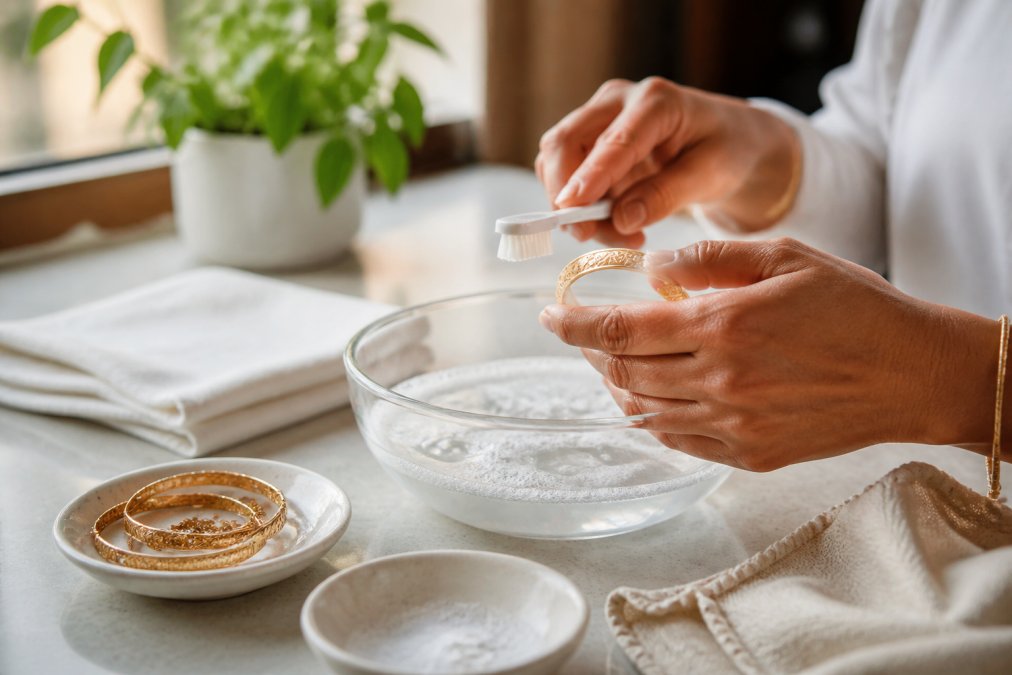
Rinse thoroughly under running water, then pat dry immediately with a microfiber cloth. This final step matters more than most people realise. Leaving water droplets on gold allows mineral deposits to form, creating spots that look like tarnish but are actually oxidation residue. A microfibre cloth removes moisture without scratching and leaves no lint behind.
The Gentle Soak Method
For handcrafted pieces with secure settings, the soak-and-brush approach is reliable. The warmth of the water helps loosen stubborn residue without requiring harsh chemicals. Many jewellery owners find this method sufficient for regular maintenance.
However, not all pieces suit this approach. If your handcrafted gold jewellery contains porous stones like pearls, opals, or emeralds, skip the soak entirely. Water can penetrate these gemstones and cause internal damage. Similarly, if your piece features glued components or has any loose elements, moisture poses a risk. In these cases, move directly to dry cleaning methods.
For pieces that are safe to soak, frequency depends on wear. Jewellery worn daily against skin accumulates more oils and requires more frequent cleaning, roughly every two weeks. Pieces worn occasionally need cleaning only a few times per year.
Soft-Bristled Cleaning for Delicate Settings
Delicate settings demand particular care. Hand-set gemstones, especially those held by thin prongs, require a different approach than bezel-set stones. The brush should barely touch the setting itself; focus on the gold around it. Never brush directly across the prongs or delicate wirework.
For handcrafted pieces with intricate details, a soft-bristled brush alone might not reach embedded dirt. Consider a soft toothpick wrapped in a microfibre cloth for stubborn spots. This gives you precision without risk of scratching. Work slowly and deliberately; rushing leads to accidents.
After brushing, rinse with distilled water if possible. Tap water contains minerals that can leave deposits, particularly noticeable on polished gold surfaces. Distilled water rinses clean without leaving residue behind.
What Not to Use When Cleaning
Avoid harsh chemicals entirely. Bleach, ammonia-based cleaners, and commercial jewellery polishes contain abrasive compounds designed to remove tarnish quickly, but they also remove the patina and surface character that makes handcrafted pieces special. These chemicals can damage delicate settings and are particularly dangerous for porous stones.
Ultrasonic cleaners pose risks for handcrafted jewellery. The vibrations can loosen prongs, separate components, and damage delicate wirework. Professional jewellers use these machines, but they understand when a piece isn't suitable. Your handmade bracelet or necklace likely isn't.
Steam cleaners are equally problematic. The intense heat and pressure can dislodge stones and damage solder joints. Avoid them completely for handcrafted pieces.
Never use toothpaste as a cleaner, despite the common recommendation. Toothpaste is abrasive, it's designed to scrub teeth, and will scratch gold surfaces, particularly noticeable on polished finishes. The damage is permanent and irreversible.
Perfume, lotions, and fragranced products should stay away from your jewellery during storage. These substances can accumulate on gold and interact with skin oils to create buildup that's difficult to remove. Apply cosmetics before putting on your jewellery, and remove pieces before applying lotions or fragrances.
Best Storage Solutions for Gold Jewellery
Storage determines how much maintenance your handcrafted gold jewellery requires. Poor storage accelerates tarnish, encourages tangling, and increases the risk of damage. The right approach minimises these problems significantly.
Individual compartments are essential. Storing multiple pieces together causes them to tangle and scratch each other. Handcrafted chains are particularly vulnerable; their delicate links catch on other jewellery, leading to kinks and breaks. A jewellery box with divided sections keeps pieces separate and protected.
Soft fabric matters. Hard surfaces scratch gold. Look for boxes lined with velvet or microfibre cloth, these materials cushion your pieces and prevent surface damage. Anti-tarnish strips placed inside the box absorb oxidising compounds in the air, slowing tarnish formation significantly.
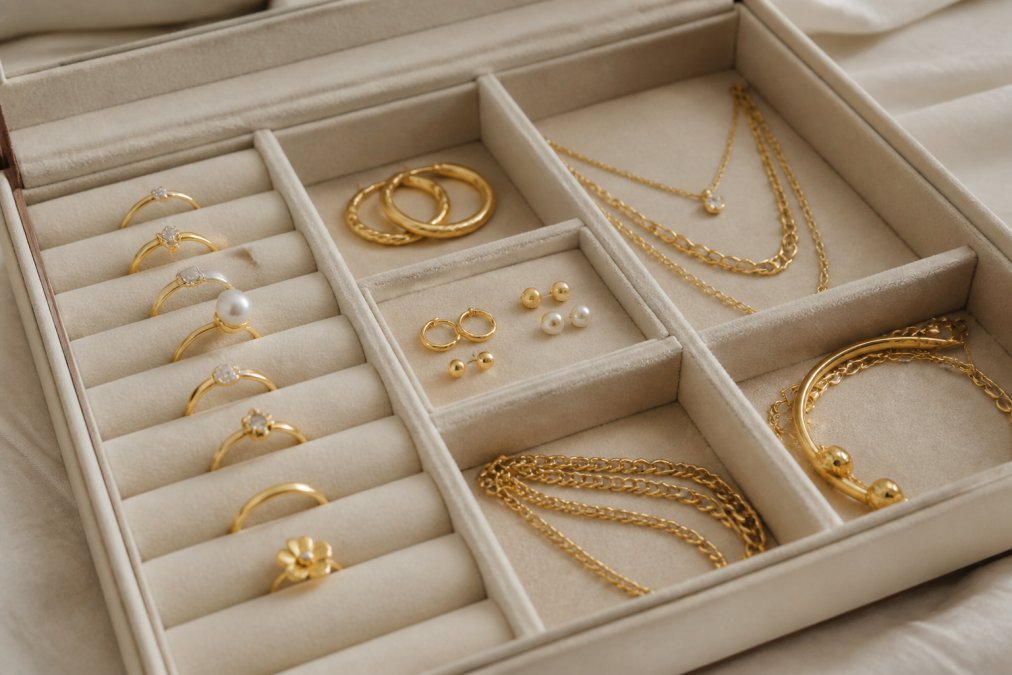
Avoid plastic bags and tissue paper. Plastic can trap moisture and accelerate tarnish. Tissue paper is acidic and damages gold over time. Cloth pouches specifically designed for jewellery storage are your best option, they breathe, protect, and allow you to see what you're storing without removing everything.
Moisture is your enemy. Store your jewellery in a cool, dry place away from bathrooms and kitchens where humidity fluctuates. Basements and attics experience temperature swings that can affect metal and stone integrity. A bedroom closet or dresser drawer in a climate-controlled room is ideal.
| Storage Method | Protection Level | Best For | Cost |
|---|---|---|---|
| Soft fabric jewellery box with compartments | High | Daily-wear pieces | £15-40 |
| Individual cloth pouches | Medium-High | Travel and occasional wear | £5-15 per pouch |
| Velvet-lined storage chest | Very High | Collections and heirlooms | £30-100 |
| Plastic organiser with compartments | Low | Temporary storage only | £5-10 |
How to Prevent Gold Jewellery from Tarnishing
Tarnish forms when gold reacts with sulphur compounds in the air and on skin (peer-reviewed research). Handcrafted pieces tarnish more visibly than mass-produced jewellery because artisans often leave natural patina or use techniques that highlight surface texture. Understanding what causes tarnish helps you prevent it.
Avoid chlorine entirely. Swimming pools, hot tubs, and cleaning products containing chlorine accelerate tarnish and can permanently damage gold. Remove your jewellery before any water activity involving treated water. Saltwater presents similar risks; ocean exposure corrodes gold faster than freshwater.
Skin chemistry influences tarnish rates. Some people's skin naturally oxidises gold faster than others. If you notice rapid tarnishing, it's not a flaw in your piece, it's your body's chemistry. Wearing your jewellery regularly actually helps prevent tarnish because body oils create a protective barrier. Pieces stored away tarnish faster than pieces worn frequently.
Anti-tarnish strips work effectively. These strips absorb sulphur compounds from the air and should be replaced every 2-3 months. They're inexpensive and make a measurable difference, particularly for stored pieces you wear occasionally.
Humidity control matters more than most people realise. If you live in a particularly humid climate, consider a small dehumidifier in your storage area or silica gel packets inside your jewellery box. These absorb moisture that promotes oxidation.
Daily Habits That Protect Your Pieces
What you do daily determines how quickly your handcrafted gold jewellery deteriorates. Simple habits prevent most problems before they start.
Remove your jewellery before bathing. Water, soap, and shampoo combine to create conditions that accelerate tarnish and can loosen settings. This single habit extends the life of your pieces significantly.
Take off your pieces before applying lotion, perfume, or other cosmetics. These products interact with gold and skin oils to create stubborn buildup. Apply everything first, then put on your jewellery. This protects both your pieces and your skin.
Avoid wearing handcrafted gold jewellery during exercise or physical activity. Sweat contains salts and acids that tarnish gold and can damage delicate settings. The risk of catching a chain or bracelet on something and causing damage also increases during activity.
Remove your jewellery before bed. Sleeping in your pieces subjects them to unnecessary pressure and increases the risk of damage if you roll onto them. It also prevents tangling and reduces contact with skin oils that accumulate overnight.
Inspect your pieces weekly. Look for loose prongs, bent clasps, or signs of damage. Catching problems early prevents them from worsening. A loose prong can be tightened before a stone falls out. A bent clasp can be straightened before your piece is lost.
When to Seek Professional Inspection and Cleaning
Professional jewellers have tools and expertise you don't have at home. Knowing when to seek their help prevents costly damage and ensures your handcrafted gold jewellery receives appropriate care.
Annual professional inspections are worth the investment (the American Academy of Dermatology). A jeweller can identify problems invisible to the naked eye: loose prongs that haven't yet shifted, micro-cracks in solder joints, or wear patterns suggesting structural stress. These inspections can save you hundreds in repair costs.
Professional cleaning uses equipment and techniques unsuitable for home use. Jewellers can safely use ultrasonic cleaners and steamers on pieces where they're appropriate, pieces without porous stones or delicate settings. They can also polish gold to restore shine without damaging the surface, something home methods cannot achieve.
Seek professional help immediately if you notice loose stones, bent prongs, or broken clasps. Attempting to fix these yourself risks permanent damage. A handcrafted piece with soldered components requires professional soldering to repair safely. Attempting to repair solder joints with adhesive creates problems that are later difficult to fix.
Tarnish that doesn't respond to gentle home cleaning might indicate oxidation requiring professional polishing. A jeweller can remove heavy tarnish without scratching the gold underneath. This is particularly important for handcrafted pieces where the surface finish is part of the design.
Repair Versus Cleaning: Knowing the Difference
Understanding the distinction between cleaning and repair prevents you from attempting repairs at home that require professional intervention.
Cleaning removes surface dirt, oils, and light tarnish. It restores appearance without altering the piece's structure. Home cleaning methods are appropriate for this. Professional cleaning uses stronger techniques but achieves the same goal: making your jewellery look its best without changing it.
Repair involves fixing structural damage: tightening loose settings, straightening bent metal, replacing broken clasps, or resoldering separated components. These require specialised skills and equipment. Attempting repairs at home risks permanent damage to handcrafted pieces where every component is custom-made.
A loose prong is a repair issue, not a cleaning issue. Cleaning won't tighten it. A jeweller can tighten the prong safely without damaging the stone or surrounding metal. This is relatively inexpensive when caught early but becomes costly if the stone falls out during cleaning or wear.
A bent clasp is another repair issue. If your handcrafted necklace or bracelet won't close properly, a jeweller can straighten the clasp or replace it entirely. Forcing a bent clasp closed damages both the clasp and the attachment point.
Solder joints, the connections holding components together, are particularly vulnerable in handcrafted pieces. If you notice separation at a joint, stop wearing the piece immediately and take it to a jeweller. Continuing to wear it risks complete separation. Professional resoldering is straightforward and prevents further damage.
Gemstone damage requires professional assessment. If a stone appears cloudy, cracked, or loose, have a jeweller examine it before cleaning. Some damage is irreversible, but professional cleaning might restore clarity. Attempting to clean a damaged stone yourself could make the problem worse.
Caring for handcrafted gold jewellery from Diamonds by daisy means understanding that your pieces deserve more than generic care advice. The 30-day satisfaction guarantee backing each purchase reflects our commitment to quality, and that quality demands proper maintenance. Follow these guidelines consistently, and your handcrafted pieces will retain their beauty and structural integrity for decades. When in doubt about whether a situation calls for home care or professional help, err toward professional intervention. The cost of a jeweller's assessment is minimal compared to the cost of damage that could have been prevented.
Frequently Asked Questions
Is it safe to wear handcrafted gold jewellery while showering or swimming?
No. Remove your handcrafted gold jewellery before showering or swimming. Chlorine in pools and saltwater can cause oxidation and weaken delicate settings. Moisture also accelerates tarnish formation. Shower water and soaps may contain chemicals that damage handcrafted joints and prongs. Store your pieces in a dry place while bathing.
How often should I have my handcrafted gold jewellery professionally inspected?
Have your handcrafted pieces professionally inspected at least once annually, or every 6 months if worn frequently. Professional inspections check for loose prongs, weakened clasps, and structural damage that home care cannot address. Early detection prevents stone loss and costly repairs.
Can household chemicals damage the finish of handcrafted gold jewellery?
Yes. Cleaning products, perfume, lotion, and hairspray contain chemicals that corrode gold and dull gemstones. Chlorine bleach is particularly harmful to handcrafted settings. Always apply perfume and lotion before wearing jewellery, never after. Store pieces away from household cleaners. Use only fragrance-free, mild dish soap and distilled water for home cleaning to protect the integrity of handcrafted work.
What is the best way to store handcrafted gold pieces to prevent scratching?
Store each piece separately in a soft fabric pouch or dedicated jewellery box with compartments lined with microfiber cloth. Never pile pieces together, as they scratch easily. Keep an anti-tarnish strip in your storage box to slow oxidation. Store in a cool, dry place away from direct sunlight and humidity. Proper storage extends the life of handcrafted settings and maintains the polish of solid gold.
This article was written using GrandRanker