

Three Part Jewelry System: Storage Ideas by Room and Georgia's Tips
Use a lined jewelry box for most pieces, a ring roll or padded case for anything delicate, and a small open tray on your dresser for the jewelry you wear daily. That three-part combination covers most of what a typical collection needs. Separate your diamonds and hard metals from softer stones right away, since they scratch easily, and start with whatever container you have on hand while you build out a real system by space and jewelry type.
TL;DR:
- Modular and expandable jewelry organizers are better suited for growing collections than fixed boxes that may overflow quickly.
- Jewelry displayed on walls or pegboards is ideal for everyday pieces but should be stored behind closed doors if the items are valuable or sentimental.
- Proper storage requires separating diamonds and hard metals from softer stones to prevent scratching, with specific containers for rings, necklaces, earrings, and bracelets.
- For long-term storage, jewelry should be cleaned, stored in breathable pouches, and protected from humidity and tarnish using appropriate materials like anti-tarnish strips.
- Small-space solutions such as stackable trays, hanging organizers, or repurposed household items provide effective storage for compact collections and travel.
Table of Contents
- Jewelry Storage Ideas by Room and Space
- The Best Way to Store Each Type of Jewelry
- Protecting Valuables: Security, Tarnish, and Paperwork
- Travel and Small-Collection Storage Hacks
- DIY and Repurposed Jewelry Storage on a Budget
- What to Look for When Buying a Jewelry Box or Organizer
- Georgia’s Practical Storage and Styling Notes
- Lighting for Jewelry Displays
- Seasonal Storage for Jewelry You’re Not Wearing Right Now
- Why Storage Matters to Us
- Find Pieces Worth Storing Properly
- Sources
Jewelry Storage Ideas by Room and Space
Where you store jewelry matters almost as much as how. A gorgeous lined box does you no good if it lives in a closet you open twice a year, and a beautiful open tray is a bad idea if you share a bathroom counter with three roommates. Match the storage to the room, and the room to your actual habits.
Dresser and vanity: trays, stacked trays, or a box
Your dresser is prime real estate because it’s where you get dressed. The tradeoff here is visibility versus protection. A decorative tray keeps rings and everyday earrings in view and easy to grab, but it also collects dust and sits in plain sight if you have guests or roommates. A closed jewelry box with a lid solves both problems at once, and stackable trays split the difference. You get compartments for organizing by type, plus the option to close a lid over the whole stack when you’re not digging through it.
For anyone with a collection that keeps growing, modular or stackable tray systems are worth the extra few dollars because they scale with you. Wirecutter’s testing of jewelry organizers found that people with expanding collections do better with expandable systems than with a single fixed box that eventually overflows.
Wall and gallery displays: hooks, pegboards, and vertical storage
A wall-mounted rack or a small pegboard turns necklaces and long earrings into decor while keeping them tangle-free. Mount hooks at staggered heights so chains don’t cross each other, and leave at least two inches between hooks for anything with pendants or charms. This works especially well for pieces you wear often, since they stay visible and grabbable instead of buried in a drawer.
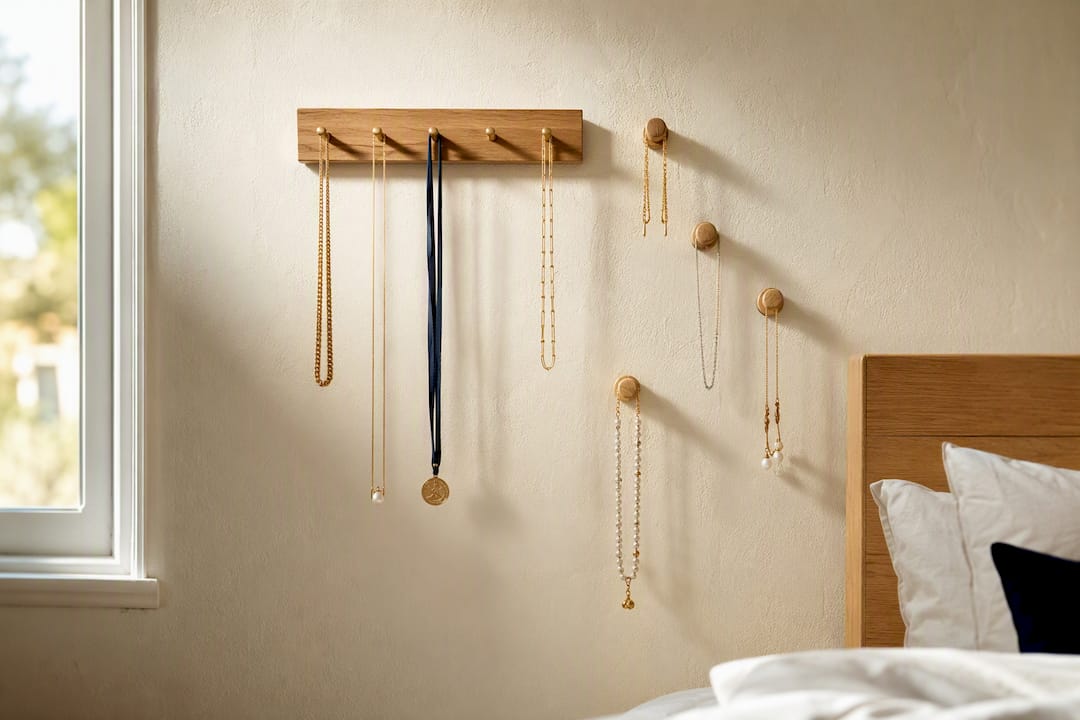
The catch: anything hanging in the open collects dust, fades faster under direct light, and is easier for a visitor to walk off with than something behind a closed door. Architectural Digest’s coverage of jewelry organization notes that gallery walls are great for surfacing your most-worn pieces, but they’re the wrong call for anything valuable or sentimental. Keep the wall display for costume jewelry and everyday gold, and put the good stuff somewhere closed.
Closet organizers and jewelry armoires
A hanging closet organizer with clear pockets works well if your closet has the space and you want jewelry sorted by outfit or occasion. A freestanding jewelry armoire is the furniture-piece version of a jewelry box: drawers, hooks, and a mirror in one unit. It makes sense if you have a genuinely large collection and a bedroom with room to spare, but it’s overkill for a starter collection or a small apartment.
If you’re rethinking your closet setup entirely, a system like the ones from One Day Doors & Closets can build jewelry storage directly into a custom closet design rather than bolting it on as an afterthought.
Drawer-based storage and dividers
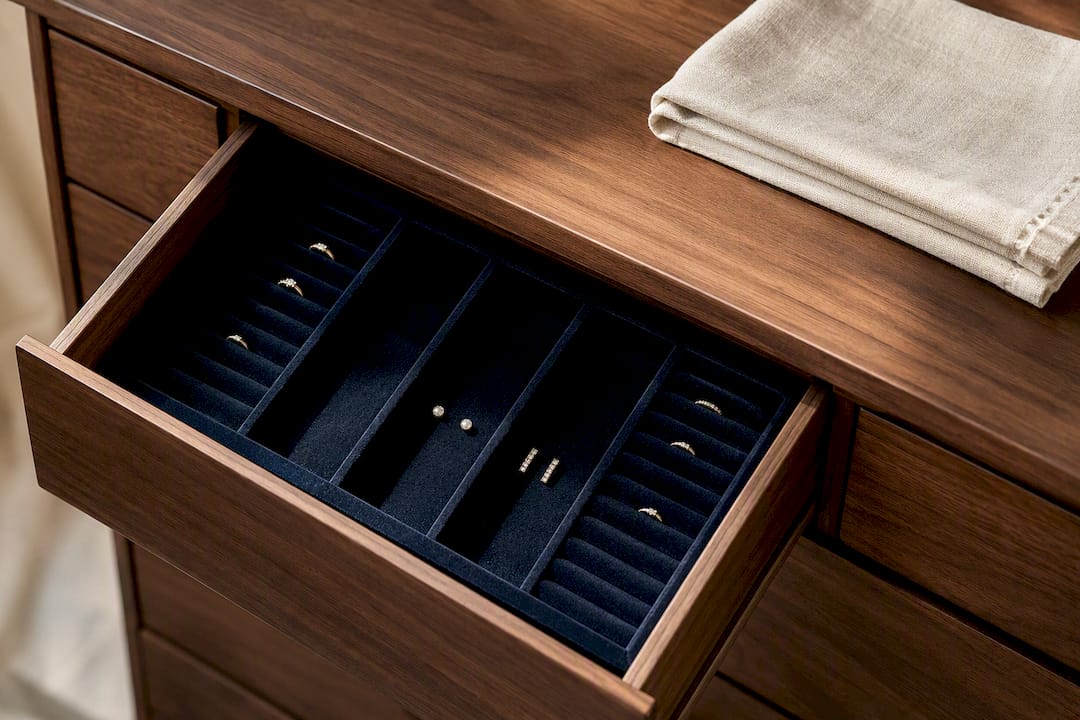
Drawers hide clutter better than open surfaces, but a drawer full of loose jewelry is a tangled mess within a week. Measure your drawer before buying an insert. Most standard dresser drawers run somewhere between 15 and 24 inches wide, and a divider tray that’s even half an inch too wide won’t sit flat. Velvet-lined drawer inserts with individual slots for rings and earrings are the standard fix, and they’re one of the cheapest upgrades you can make to an existing dresser.
Nightstand and everyday catchall trays
Keep one small tray by your bed or bathroom sink for the two or three pieces you take off every single day: your everyday rings, a watch, maybe a pair of hoops. This isn’t where your good jewelry lives long-term. It’s a landing spot so you’re not hunting for your wedding band at 11 p.m. Professional organizers consistently point to this kind of easy-access spot as the difference between people who actually put jewelry away and people who leave it wherever it lands, according to Martha Stewart’s roundup of organizer-recommended storage ideas.
Small-space solutions
If you’re working with a studio apartment, a dorm room, or just a tiny bathroom counter, look at:
- A compact stackable tray that fits inside a drawer instead of sitting on top of it
- A hanging organizer that mounts on the inside of a closet or cabinet door, using zero counter space
- A multifunction mirror with a hidden jewelry compartment behind the glass
- A travel roll repurposed as everyday storage, since it’s built to be small anyway
Pro Tip: If you’re short on surface space, mount a small pegboard on the inside of a closet door. It holds a surprising amount of jewelry, and it’s invisible the second the door closes.
The Best Way to Store Each Type of Jewelry
Not all jewelry storage is one-size-fits-all. A necklace and a diamond ring have completely different failure points: one tangles, the other scratches everything it touches. Here’s how to handle each category.
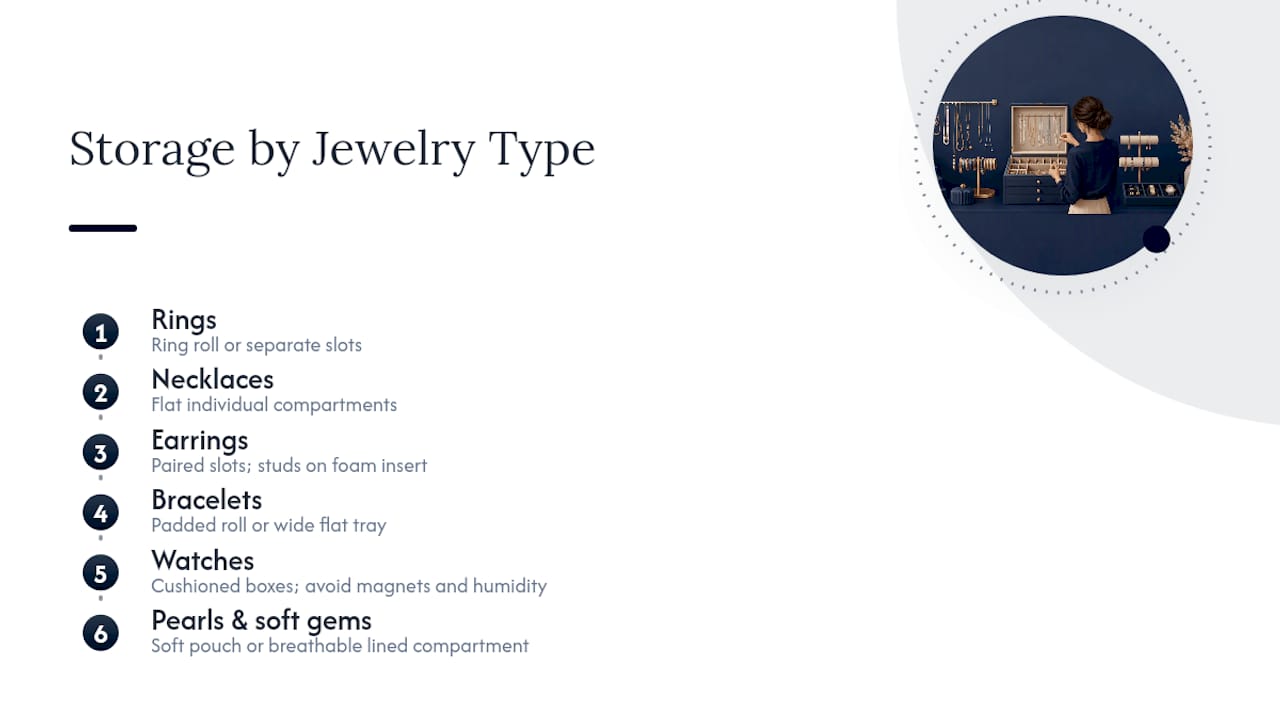
Rings. A ring roll (a fabric strip with individual slots) keeps rings separated and upright, which protects both the stones and the metal. If you use a tray instead, make sure each ring has its own slot rather than sitting loose in a shared compartment. Diamonds are hard enough to scratch nearly every other metal and gemstone, so storing diamonds in their own pouch or compartment away from softer pieces isn’t optional if you want your other jewelry to stay scratch-free.
Necklaces. Flat compartments beat hanging hooks for anything delicate. Thin chains especially are prone to stretching or snapping when they hang under their own weight over time, and a hook is also where chains tangle with each other. Lay chains flat in individual slots, or hang only your sturdier, thicker necklaces if you go the hook route.
Earrings. Paired compartments (small individual slots, one pair per slot) solve the classic problem of losing a back or a mate. For studs specifically, a foam insert or a fabric-lined tray with tiny holes keeps posts upright and easy to grab. Traveling with earrings is its own challenge, which a low-tech card trick solves neatly (more on that below).
Bracelets. Padded rolls or flat, wide trays prevent the bending and clasp stress that comes from cramming bracelets into a tight box. Bangles do best stacked on a vertical rod or a dedicated bracelet bar rather than tossed in a drawer, where they scratch each other constantly.
Watches. A proper watch box with individual cushions keeps faces from scratching each other. If you own an automatic watch, a winder keeps it running when it’s not on your wrist, but skip storing any watch near strong magnets or in a humid bathroom cabinet, both of which mess with the movement over time.
Pearls and soft gemstones. Pearls are softer than most other gems and need breathable storage, not sealed plastic. A soft pouch or a flat, lined compartment with some air circulation works far better than an airtight bag. Storage guidance specific to pearls recommends moderate humidity, since pearls can dry out and crack in overly dry conditions the same way they can be damaged by excess moisture.
Protecting Valuables: Security, Tarnish, and Paperwork
Storing jewelry well isn’t only about tangles and dust. The bigger risks are theft, tarnish, and having zero proof of what you own if something goes wrong.
- Decide between a home safe and a bank safe-deposit box. A home safe is more convenient for pieces you access regularly, but it should be bolted to a floor or wall stud and ideally fire-rated. A bank safe-deposit box is more secure for things you rarely touch, like heirlooms or a wedding set you only wear once a year.
- Use anti-tarnish strips or silica gel packets in every drawer or box holding silver. These slow tarnish noticeably, but they aren’t permanent. Replacing anti-tarnish strips every three to six months keeps them working instead of sitting there doing nothing.
- Photograph and appraise anything valuable. Take clear photos of each piece, get a written appraisal for anything expensive or sentimental, and keep receipts and appraisal documents scanned somewhere outside your house, not just in the same drawer as the jewelry itself.
- Check your insurance coverage before you assume you’re covered. Standard homeowner’s or renter’s policies often cap jewelry coverage at a few thousand dollars total, regardless of what any single piece is worth. If you own something that would blow past that cap, a rider or standalone policy is worth the small extra premium.
- Skip the obvious hiding spots. A bathroom drawer, a jewelry box on top of a dresser, or a sock drawer are the first three places anyone looks. A locked box inside a closet, or a safe bolted somewhere inconspicuous, beats any “clever” hiding spot you’ve seen on the internet.
Documenting what you own with a diamond piece’s investment value in mind also makes future insurance claims or resale conversations far less painful, since you’ll already have the appraisal and photos on hand instead of scrambling for them after a loss.
Travel and Small-Collection Storage Hacks
Traveling with jewelry is where most damage and loss actually happens, not sitting at home in a drawer.
Pack jewelry in your carry-on, never checked luggage, and use a padded travel case with individual compartments rather than tossing pieces loose into a pouch. Photographing everything before you leave gives you a reference if something goes missing, and it’s worth genuinely limiting what you bring. Leave anything irreplaceable at home unless you have a specific reason to wear it.
If you have a small collection or you’re just packing light, a few cheap tricks work better than they should:
- A weekly pill organizer with seven compartments holds a surprising number of rings, studs, and small pendants
- Threading earring posts through a punched business card keeps pairs together and stops backs from getting lost
- A necklace card (a small piece of cardboard with a slit cut in it) stops chains from tangling into a knot
- A small zip pouch, one per jewelry type, keeps everything separated inside a bigger travel case
Before you leave, run through a quick mental checklist: photos taken, only the pieces you’ll actually wear, anything valuable insured, and a plan to use the hotel safe rather than leaving jewelry on the bathroom counter. Once you’re at your destination, keep jewelry on your body or in a locked hotel safe rather than in an open suitcase, and favor a hard padded case over a soft pouch if you’re checking a bag for any reason.
DIY and Repurposed Jewelry Storage on a Budget
You don’t need to spend money to fix a messy jewelry drawer. Some of the best organizing hacks use things already sitting in your kitchen.
- An ice cube tray or a muffin tin separates studs, small rings, and loose trinkets into individual compartments, and both work well inside a drawer where they won’t slide around
- The business-card earring trick (punching holes through a card to hold pairs) works just as well at home as it does for travel
- A cork board or pegboard mounted on a wall makes a cheap gallery-style display, as long as you space hooks far enough apart that necklaces don’t cross and tangle
- A cleaned-out egg carton is a passable stud organizer in a pinch, and a pill organizer or a repurposed mason jar can hold loose pieces, though jars leave everything jumbled together rather than sorted
- Professional organizers regularly recommend these exact household swaps as a starting point before anyone invests in purpose-built organizers
Pro Tip: DIY storage is great for costume jewelry and studs, but graduate to a real lined box or a safe once a piece is worth more than the drawer it’s sitting in. A muffin tin doesn’t protect against dust, moisture, or a curious toddler the way a closed container does.
What to Look for When Buying a Jewelry Box or Organizer
Skip the ones with flashy exteriors and check these details instead.
- Lining material. Anti-tarnish fabric protects silver noticeably better than plain velvet, which does nothing to slow oxidation. If you own more silver than gold, this single detail matters more than anything else on the list.
- Layout flexibility. Removable trays, ring rolls built into the design, dedicated earring slots, and necklace hooks all mean you won’t outgrow the box in six months.
- Security and portability. A small lock is worth having if the box sits somewhere accessible to guests or kids, and a compact size matters if you plan to travel with it.
- Expandability. Stackable, modular systems hold up better over time than a single fixed box, especially if your collection is still growing.
- Maintenance. Look for replaceable anti-tarnish inserts and a lining that can be wiped down or swapped out rather than one that traps grime permanently.
| Feature | Why it matters | Skip if |
|---|---|---|
| Anti-tarnish lining | Slows silver oxidation significantly | You only own gold or costume pieces |
| Modular/stackable trays | Scales with a growing collection | You have a small, stable collection |
| Built-in ring rolls | Keeps rings upright and separated | You already use a separate ring roll |
| Lock or clasp | Adds a layer of security at home | The box lives inside a locked room already |
Georgia’s Practical Storage and Styling Notes
My nightly routine is boring on purpose: rings off first, into their own slots, watch onto its cushion, everything else back into its lined compartment before I go to bed. Five minutes, and nothing ends up tangled or scratched by morning. It’s the same five minutes, every night, and that consistency matters more than any specific box you buy.
Storage also changes how a gift lands. A piece handed over in a proper lined box or pouch reads as considered in a way that a piece pulled out of a plastic bag never will, no matter how nice the jewelry itself is.
If you’re just starting out, don’t overbuy. A single lined tray and a ring roll cover almost everything a beginner collection needs. Add complexity only once your collection actually outgrows the simple version, not before.
For anyone building a smaller, more considered collection, minimalist jewelry styles tend to pair well with simple storage. Fewer pieces mean you don’t need the elaborate armoire; a small tray and a ring roll will carry you a long way.
— Georgia
Lighting for Jewelry Displays
Good lighting does two jobs: it makes jewelry look better, and it protects jewelry that’s on open display. Direct, harsh sunlight fades certain stones and dulls the shine on plated metals over months of exposure, so any open shelf or gallery wall near a window is working against you.
For a wall-mounted display or an open tray you actually want to show off, a small LED strip light or a battery-powered puck light tucked above or behind the display case makes everything catch light properly without the fade risk of direct sun. Warm white light (around 2700 to 3000 Kelvin, if you’re shopping for bulbs) flatters gold tones, while a cooler white brings out the sparkle in silver and diamonds better.
If your storage is closed, like a drawer or a lidded box, lighting barely matters since the pieces aren’t exposed to UV in the first place. Save the lighting investment for whatever you’re actually displaying, not for storage that stays shut most of the day. A cheap battery-operated closet light inside an armoire is enough to see what you’re grabbing without needing to wire anything into the wall.
Seasonal Storage for Jewelry You’re Not Wearing Right Now
Jewelry that sits untouched for months, whether it’s a holiday piece, an heirloom, or something you just don’t wear this time of year, needs a slightly different approach than your everyday rotation.
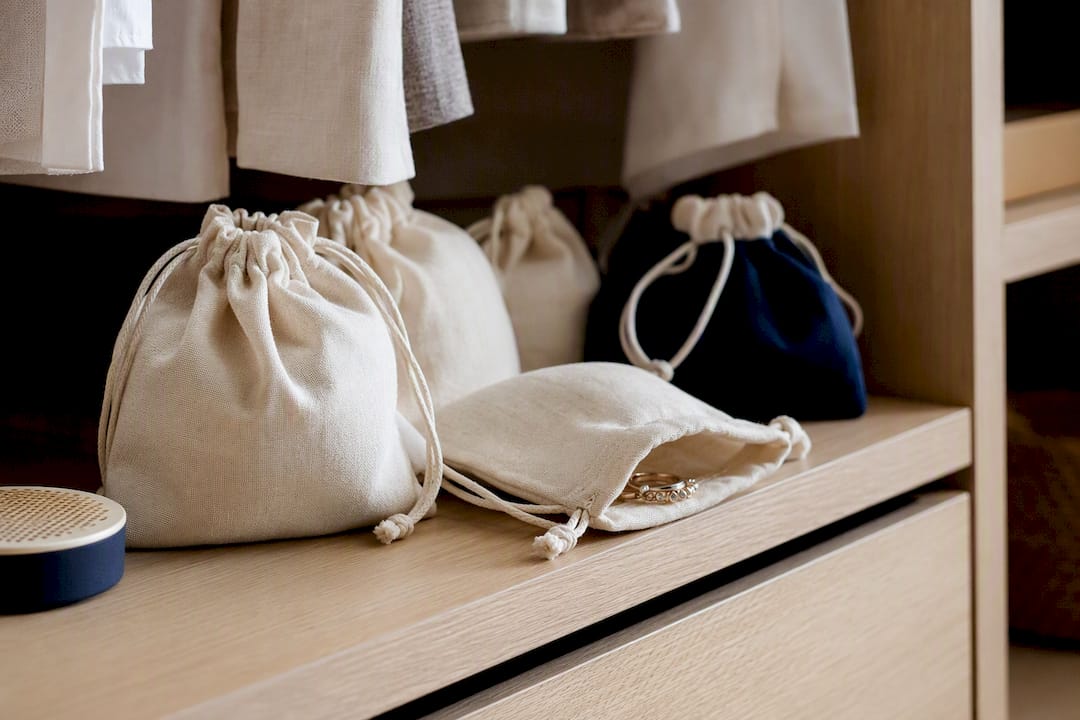
Before putting anything away for an extended stretch, clean it first. Dust, lotion residue, and skin oils left on a piece for months accelerate tarnish and can dull stones. Once it’s clean and completely dry, store it in a breathable pouch rather than sealed plastic, especially for pearls or other porous materials, and tuck in a fresh anti-tarnish strip if silver is involved.
Humidity swings are the real enemy of long-term storage. A basement or an attic, both common spots for “seasonal” storage, tend to run either too damp or too dry depending on the time of year, and either extreme is bad news for pearls and organic materials. A closet inside your main living space holds a steadier temperature and humidity level than anywhere near an exterior wall or an unfinished room.
Set a calendar reminder to check on stored pieces every few months rather than forgetting about them until next season. A quick look confirms nothing has tarnished, no anti-tarnish strip needs replacing, and nothing has shifted or been damaged in storage.
Why Storage Matters to Us
I think about storage every time I see a piece come back for cleaning that could have been avoided entirely with a five-dollar pouch. The pieces people wear the longest, and love the most, are almost always the ones stored properly from day one, not the ones that sat in a junk drawer getting scratched by keys and coins. If you want a quick refresher on keeping specific metals looking right between wears, our care guide for handcrafted gold jewelry is worth a few minutes. And if you’re in the market for something new to add to a properly organized collection, that’s an easy next step too.
Find Pieces Worth Storing Properly
Once you’ve got a system that keeps jewelry protected, the next question is what actually deserves a spot in it. Some jewelers curate jewelry built for exactly that: everyday pieces with enough craftsmanship that they’re worth a lined tray and an anti-tarnish strip, not a junk drawer.

The everyday gold jewelry collection is built around pieces you’ll actually reach for daily, and each one arrives ready to give as a gift or keep for yourself without needing an upgrade in packaging. If you’re storing anything higher-value, our sterling silver and diamond jewelry collection pairs well with the safe and documentation habits covered above. For a piece that needs a careful hand at home, our guide on cleaning a delicate diamond necklace safely walks through it step by step. Browse the collection, pick a piece worth protecting, and build your storage routine around it from the day it arrives.
Sources
- 10 Jewelry Storage Ideas, According to Professional Organizers
- Jewelry Storage: Best Practices & Solutions Guide (2026) • Jewelry Carats
- Home safes, jewelry boxes, and insurance tips: Storing jewelry safely
- The 9 Best Jewelry Boxes and Organizers of 2026 | Reviews by Wirecutter
- Jewelry storage ideas and organization tips (Architectural Digest)