

How to Clean Delicate Diamond Necklace at Home Safely
Table of Contents
- Why Your Delicate Diamond Necklace Needs Proper Care
- What You'll Need Before You Start
- Safe Household Items for Cleaning Fine Jewellery
- Step-by-Step Guide to Cleaning Your Diamond Necklace
- Can You Use Toothpaste to Clean Diamonds?
- How Often to Clean Diamond Necklace
- Storage and Maintenance Between Cleanings
- When to Seek Professional Cleaning
Last Updated: August 29, 2026
Why Your Delicate Diamond Necklace Needs Proper Care
A delicate diamond necklace is often an heirloom, investment, or piece marking a significant life moment. Yet many don't realise that cleaning it safely at home requires a fundamentally different approach than sturdier pieces. Fine chains in white gold or platinum weaken if exposed to harsh chemicals or aggressive scrubbing. Settings holding stones are equally fragile, one wrong move with an abrasive cloth or wrong solution risks loosening prongs or damaging delicate metalwork.
At Diamonds by daisy, proper care is straightforward once you understand what makes these pieces delicate. This guide walks you through exactly how to clean delicate diamond necklaces safely at home, what to avoid, and when professional intervention becomes necessary.
What You'll Need Before You Start
Gathering the right materials before you begin is non-negotiable. Using wrong tools causes more damage than leaving your necklace unworn.
Essential items:
- Warm water (lukewarm, never hot)
- Mild dish soap (avoid anything labelled "antibacterial" or "degreasing")
- Soft-bristled toothbrush (genuinely soft, not medium or hard)
- Lint-free cloth (microfibre cloths are ideal)
- Small bowl or cup
- Optional: distilled water for final rinse
A regular toothbrush will scratch metal and stone. Harsh dish soap strips protective oils. Tap water minerals leave residue that dulls the finish. Don't use jewellery cleaning solutions marketed as "universal" cleaners, ultrasonic machines (which loosen stones in delicate settings), or steam cleaners (which force moisture into crevices causing tarnish).
Safe Household Items for Cleaning Fine Jewellery
What works: Mild dish soap mixed with warm water is genuinely effective. The soap lifts buildup without attacking metal or stone. Warm water (around 40°C) opens metal pores slightly, allowing soap to penetrate (peer-reviewed research).
What absolutely doesn't work: Toothpaste is a common but mistaken suggestion. Even "gentle" formulations contain abrasive particles designed to scrub teeth, particles that scratch gold, platinum, and diamonds. Over time, toothpaste dulls the polish and creates tiny scratches that catch light unevenly.
Vinegar, baking soda, lemon juice, bleach, and alcohol-based cleaners are equally risky. They can strip protective coatings and weaken solder joints in delicate settings. The safest approach is the simplest: warm water and mild soap.
Step-by-Step Guide to Cleaning Your Diamond Necklace
Step 1: Prepare Your Workspace and Gather Materials
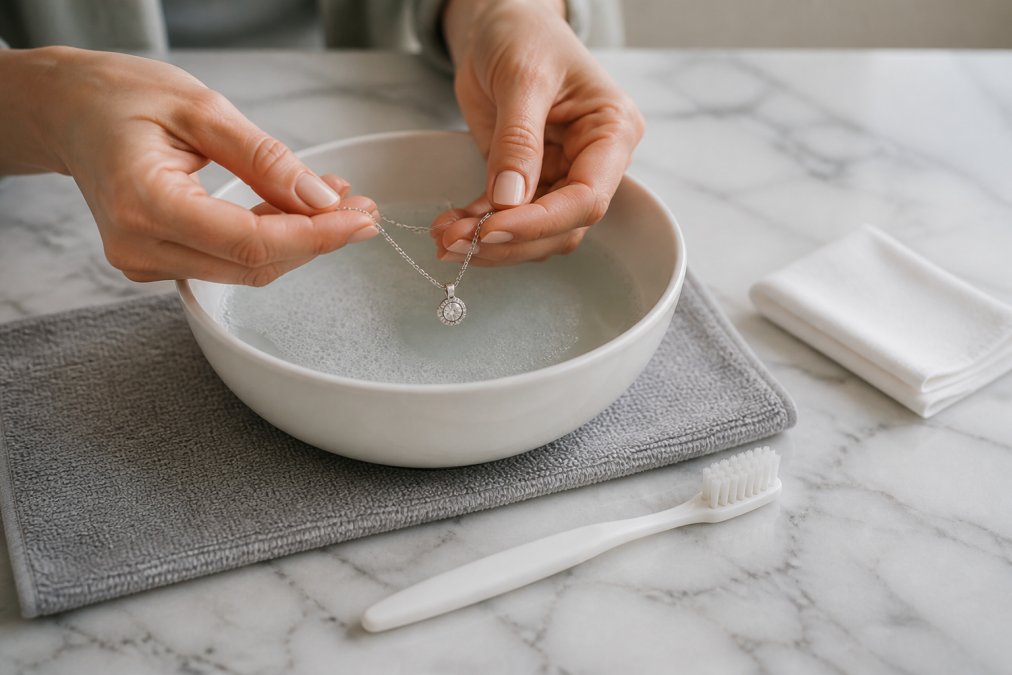
Set up a dedicated workspace where you won't lose small components. A bathroom sink is the worst choice, drains are where necklaces disappear. Use a small bowl or cup placed on a stable surface, ideally lined with a soft cloth.
Inspect your necklace visually before cleaning. Look for loose stones, bent prongs, or visible damage to the chain. If you notice anything concerning, seek professional inspection before attempting to clean.
Fill your bowl with warm water. Test the temperature with your inner wrist, it should feel comfortably warm, not hot.
Step 2: Soak Your Necklace in Warm Water
Add a small amount of mild dish soap to the warm water. Stir gently to distribute evenly. The water should look slightly cloudy but not foamy.
Place your necklace in the bowl and let it soak for 10-15 minutes. This soaking time is crucial, it allows warm water to soften buildup of oils, dirt, or residue on the chain and around stone settings. The soap begins lifting debris without aggressive scrubbing.
Resist rushing this step. The longer the necklace soaks (up to 20 minutes maximum), the more effectively buildup releases.
Step 3: Gently Clean with Soft Brush and Mild Soap
After soaking, remove your necklace and place it on a soft cloth. Using your soft-bristled toothbrush, gently brush the chain and area around stone settings. Focus on the back of the stone where dust and oils accumulate. Use light, short strokes to guide debris away, not scrub.
For thin cable chains or intricate designs, use even gentler pressure. If you feel resistance, soak longer rather than push harder.
For the stone itself, brush very lightly around the pavilion (underside) and table (flat top). Use small circular motions moving in multiple directions rather than brushing across facets in one direction.
Step 4: Rinse Thoroughly and Pat Dry
Rinse your necklace thoroughly under lukewarm running water, holding it gently over a cloth. Let water run over the chain and stone for at least 30 seconds.
If you have distilled water, use it for the final rinse. Tap water minerals can leave spots and reduce clarity. After rinsing, place your necklace on a lint-free microfibre cloth. Pat it dry gently with another lint-free cloth, working from clasp toward stone. Avoid rubbing.
Allow your necklace to air dry completely for at least 30 minutes before wearing or storing it.
Can You Use Toothpaste to Clean Diamonds?
No. Toothpaste contains abrasive particles, typically silica or calcium carbonate, that are harder than the polish on your gold or platinum (the American Dental Association). Brushing toothpaste onto your necklace grinds these particles into the metal surface, creating microscopic scratches that accumulate over time.
The damage isn't always obvious immediately, but after multiple toothpaste cleanings, the metal develops a dull, scratched appearance difficult to restore without professional polishing. Even "whitening" or "sensitive" toothpaste formulations contain abrasive particles too aggressive for fine jewellery.
The warm water and mild soap method is genuinely sufficient.
How Often to Clean Diamond Necklace
How often to clean your necklace depends on how frequently you wear it and your environment.
General guidelines:
For necklaces worn daily, light cleaning every 2-4 weeks keeps them brilliant. A quick rinse under warm water with a gentle wipe often suffices for regular maintenance.
For necklaces worn weekly or less frequently, thorough cleaning every 2-3 months is adequate.
For necklaces worn occasionally or stored most of the time, annual cleaning before wearing ensures they're fresh and brilliant.
Consistency without excess is key. Over-cleaning wears the metal's finish and gradually loosens settings. Under-cleaning allows buildup to accumulate, making stones appear cloudy.
If you live in a humid climate or near the sea, clean more frequently, every 3-4 weeks. If you wear your necklace whilst swimming, showering, or exercising, clean it immediately after to remove chlorine, salt water, or sweat.
Storage and Maintenance Between Cleanings
How you store your necklace between wearings matters as much as how you clean it.
Storage best practices:
Store your necklace in a cool, dry place away from direct sunlight. UV light can fade certain gemstone treatments, and heat accelerates tarnish on metal. Avoid plastic bags or boxes, which trap moisture and promote tarnish.
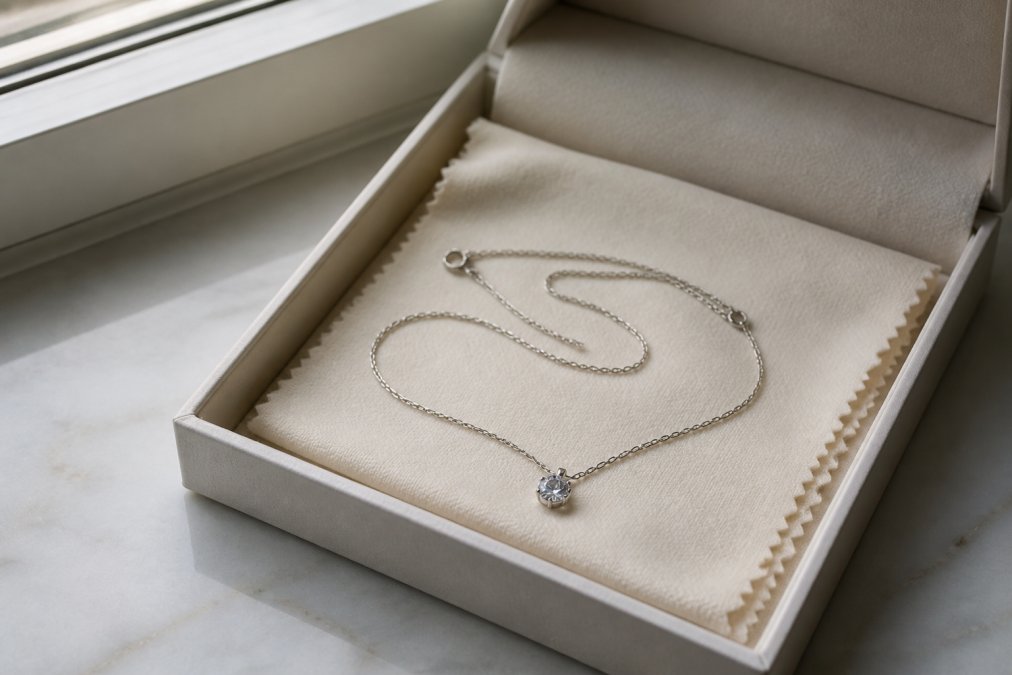
Lay the necklace flat on a soft cloth rather than hanging it. Hanging puts continuous tension on the chain, particularly at the clasp and where chain connects to pendant (peer-reviewed research). Over time, this tension weakens links or strains the clasp mechanism.
Keep your necklace separate from other jewellery. Harder metals or stones scratch gold and platinum, and tangled chains risk damage when untangling.
Avoid storing your necklace in a bathroom. Humidity from showers accelerates tarnish on white metals. Bedrooms or living room drawers are better choices.
If you notice tarnish beginning to form on the metal, clean your necklace promptly. Early tarnish is easy to remove with warm water and soap. Left untreated, tarnish becomes stubborn and requires professional restoration.
When to Seek Professional Cleaning
Some situations require professional intervention.
Seek professional help if:
Your necklace has loose or visibly damaged stones. A loose stone can fall out during home cleaning, and damaged settings need assessment before water touches them.
The chain has visible damage, kinks, bent links, or broken sections. Attempting to clean a damaged chain can worsen damage or cause breakage.
Your necklace has significant tarnish that doesn't respond to the warm water and soap method after thorough attempts.
The stone is cloudy or has lost clarity despite cleaning. This can indicate internal damage, worn coating, or setting problems requiring professional inspection.
Your necklace is antique, vintage, or has sentimental value beyond replacement cost. These pieces often have delicate settings, historical significance, or previous repairs making them risky to clean at home.
You're unsure whether your necklace's metal or stone is safe to clean with water. Some antique treatments, certain gemstone types, or unusual alloys can be damaged by water or soap.
Professional cleaning typically costs between £30 and £100. For frequently worn necklaces or those with significant value, this occasional investment is worthwhile insurance.
Caring for a delicate diamond necklace is straightforward when you understand what works and what doesn't. The warm water and mild soap method is effective, safe, and costs almost nothing. Consistent, thoughtful cleaning keeps your necklace brilliant without unnecessary wear. Knowing when to seek professional help protects your investment for decades.
At Diamonds by daisy, we stand behind the quality of every piece we create with our 30-day satisfaction guarantee. That confidence comes from knowing that with proper care, your necklace will maintain its brilliance and structural integrity for a lifetime.
Frequently Asked Questions
Q: What is the best way to clean a diamond necklace at home?
A: The safest method combines warm water, mild dish soap, and a soft-bristled toothbrush. Soak your necklace for 15-20 minutes, then gently brush the diamond and setting to remove buildup and residue. Rinse thoroughly under warm running water and pat dry with a lint-free cloth. Avoid harsh chemicals, abrasive materials, and steam cleaning, which can damage delicate chains and loosen stones. This gentle approach preserves both the gemstone's clarity and the chain's integrity.
Q: How often should I clean my diamond necklace?
A: Clean your diamond necklace every 2-4 weeks with the at-home method described above to maintain its luster and remove daily buildup. If you wear it frequently or in environments where it accumulates dirt or oils, clean it weekly. Schedule a professional inspection and cleaning once or twice yearly, especially if your necklace has delicate prongs or a complex setting. Regular maintenance prevents tarnish buildup and catches loose stones before they become a problem.
Q: Can I use toothpaste to clean diamonds?
A: No, toothpaste is not recommended for cleaning diamonds. Most toothpastes contain abrasive particles designed to clean teeth, which can scratch the diamond's table and pavilion surfaces, dulling its clarity and luster. Additionally, some toothpaste formulas contain harsh chemicals that can damage precious metals like gold, platinum, and sterling silver in the setting. Stick to mild dish soap and warm water instead, which clean effectively without risk of chemical damage or scratching.
Q: Is it safe to use an ultrasonic cleaner on a delicate diamond necklace?
A: Ultrasonic cleaners can be risky for delicate diamond necklaces, particularly those with thin chains or vintage settings. The high-frequency vibrations may loosen stones in delicate prongs or damage fragile chain links. If your necklace has a sturdy modern setting and solid chain, an ultrasonic cleaner can work, but only use it occasionally and never as your primary cleaning method. For necklaces with intricate designs, loose stones, or antique settings, hand-cleaning with mild soap and warm water is always the safer choice.
This article was written using GrandRanker