

Premium Diamond Jewellery Investment Guide
Table of Contents
- Is Diamond Jewellery a Good Investment?
- Factors Influencing Diamond Value and Investment Potential
- GIA Diamond Certification Explained
- Understanding Retailer Markup and Hidden Costs
- Diamond Jewellery Resale Value and Liquidity
- Luxury Jewellery Appraisal Process
- Tax Implications and Exit Strategy Planning
- Natural vs Synthetic Diamonds for Investment
Last Updated: August 16, 2026
Is Diamond Jewellery a Good Investment?
Diamond jewellery investment is fundamentally different from buying for personal enjoyment. When you purchase a diamond piece as an investment, you're acquiring a physical asset with intrinsic value, but the financial return depends heavily on several factors that most casual buyers overlook.
The honest answer: diamonds can be a good investment, but only under specific conditions. Investment-grade diamonds, those meeting particular standards for carat weight, cut quality, colour grade, and clarity, have historically held value and appreciated modestly over time. However, the retail markup, insurance costs, appraisal fees, and liquidity challenges mean many buyers lose money on diamond jewellery purchases within the first few years of ownership.
At Diamonds by daisy, we work with clients who view their pieces both as wearable luxury and as long-term assets. The key distinction is understanding what you're actually buying. A beautiful vintage-inspired engagement ring from a trusted retailer serves an emotional purpose. Whether it also serves as a financial investment depends on the specific diamond's characteristics, your purchase price, and your realistic exit strategy.
The real question isn't whether diamonds appreciate, some do. It's whether the total cost of ownership, combined with realistic resale projections, justifies the initial investment. For many buyers, the answer is yes, particularly if you're purchasing investment-grade stones from reputable sources with proper certification and documentation.
Factors Influencing Diamond Value and Investment Potential
Diamond value is determined by a specific hierarchy of characteristics. Understanding these factors is essential before committing capital to a diamond purchase.
The 4Cs: Carat, Cut, Colour, and Clarity
The four Cs form the foundation of diamond valuation. Each factor directly influences both the stone's market value and its investment potential.
Carat weight measures the diamond's mass. Larger diamonds command exponentially higher prices per carat, a two-carat stone costs significantly more than twice the price of a one-carat diamond of similar quality. This non-linear pricing means larger stones often hold value better as investment assets, though they also carry higher acquisition costs and greater liquidity risk.
Cut quality determines how effectively the diamond reflects light. A well-cut diamond sparkles more brilliantly and commands premium pricing. For investment purposes, cut matters tremendously because it influences desirability in the secondary market. A poorly cut diamond, regardless of other qualities, becomes harder to resell.
Colour grade ranges from colourless (most valuable) to light yellow or brown. Investment-grade diamonds typically start at D, E, or F colour grades, the colourless range. Stones with visible colour, even if beautiful, depreciate faster because fewer collectors seek them as investment pieces.
Clarity refers to the absence of inclusions or blemishes. Flawless or internally flawless diamonds command premium prices, but even eye-clean stones (where inclusions aren't visible to the naked eye) perform reasonably well in resale. Significant inclusions reduce investment potential substantially.
The interplay between these factors creates the diamond's market position. A three-carat stone with excellent cut and colour but moderate clarity may outperform a two-carat flawless diamond with poor cut, because the cut influences daily visual appeal and secondary market desirability.
Provenance and Certification
Provenance, the documented history and origin of a diamond, increasingly influences investment value. Certified diamonds with clear sourcing documentation command premium prices compared to uncertified stones.
Certification serves as your proof of authenticity and quality. Without it, even a genuinely high-quality diamond becomes difficult to resell because buyers cannot verify your claims. The certification provides an independent third-party assessment that protects both you and future buyers.
Diamonds from known sources with ethical sourcing credentials appreciate better than those with questionable origins. This reflects both regulatory changes around conflict diamonds and growing consumer preference for responsibly sourced gemstones. When you eventually sell, buyers increasingly ask about provenance.
GIA Diamond Certification Explained
GIA certification is the industry standard for diamond grading and authentication. The Gemological Institute of America provides independent, consistent grading reports that document a diamond's exact specifications across the four Cs, plus additional characteristics like fluorescence and polish quality.
A GIA report includes several critical elements. The diamond's dimensions are recorded in millimetres. The carat weight is specified to two decimal places. Colour and clarity grades appear prominently, along with cut grade for round brilliant diamonds. The report also notes any treatments or enhancements the stone has undergone.
For investment purposes, the GIA report serves as your diamond's passport. It travels with the stone and provides consistent, verifiable documentation. When you sell, buyers expect this certification. Without it, you're asking them to trust your word about quality, a significant barrier in the secondary market.
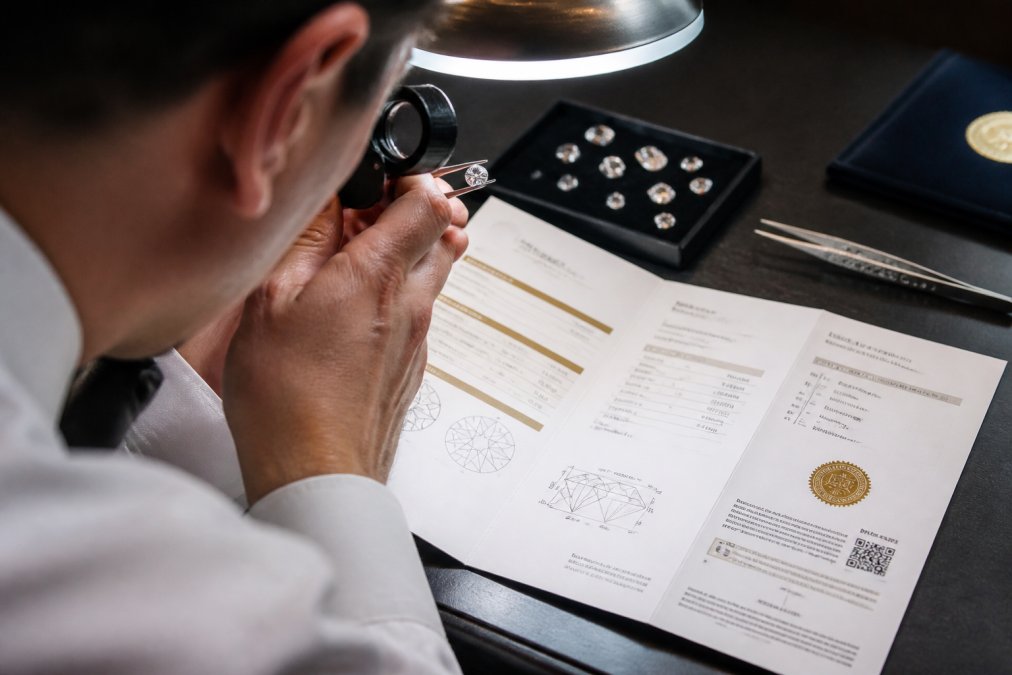
The report number is laser-inscribed on the diamond's girdle (the widest part), creating a permanent link between the stone and its documentation. This prevents substitution and provides additional security.
Understanding Retailer Markup and Hidden Costs
This is where many diamond investors encounter their first serious shock. The retail markup on diamond jewellery typically ranges from 100% to 300% above the wholesale cost. You pay for the retailer's overhead, marketing, staff, and profit margin, costs that don't transfer to the secondary market.
When you buy a diamond ring from a high-street jeweller or luxury retailer, you're paying retail prices. When you attempt to resell that same diamond, you're entering the secondary market where wholesale prices apply. This gap, between what you paid and what buyers will offer, represents the primary reason many diamond jewellery purchases lose value immediately.
The markup isn't inherently unfair. Reputable retailers provide expertise, authentication, certification, and after-sales service. But understanding the markup is essential for realistic investment planning. If you pay £5,000 for a diamond, the actual wholesale value might be £2,000-2,500. For the purchase to represent a sound investment, the diamond must appreciate sufficiently to overcome this initial depreciation.
Insurance and Security Expenses
Insurance for diamond jewellery typically costs 0.5-1.5% of the insured value annually. On a £10,000 diamond ring, expect £50-150 per year in insurance premiums. Over a decade, that's £500-1,500 in pure cost with no tangible return.
Security expenses compound the issue. Storing valuable diamonds requires either safe deposit boxes (typically £50-200 annually) or home security systems (potentially £500-2,000+ for adequate protection). These costs erode investment returns year after year.
Many investors overlook these expenses when calculating long-term returns. A diamond appreciating 3% annually looks attractive until you subtract 1-2% in annual insurance and storage costs. Your real return drops to 1-2%, barely beating inflation.
Appraisal Fees and Maintenance
Professional appraisals cost £150-400 depending on complexity and the appraiser's credentials. You'll need appraisals for insurance purposes, potentially for inheritance documentation, and certainly before selling to establish a baseline value.
Maintenance includes professional cleaning, occasional re-polishing, and setting repairs. A diamond might need re-setting every 15-20 years if the mounting shows wear. These costs accumulate and reduce net investment returns.
Diamond Jewellery Resale Value and Liquidity
Resale value represents the critical reality check for diamond jewellery investment. The secondary market for diamonds is far smaller and less liquid than many investors assume.
Diamonds are not easily converted to cash. Selling requires finding a buyer willing to pay your asking price. This might take weeks or months. Auction houses, jewellery retailers, and diamond dealers all offer different prices, and they're almost always below what you paid at retail.
Typical resale returns range from 40-60% of the original retail purchase price for diamonds sold within 5-10 years. A £10,000 diamond ring might fetch £4,000-6,000 on the secondary market. This assumes the diamond is investment-grade and properly certified. Lesser-quality stones perform worse.
The liquidity challenge worsens with jewellery settings. A diamond mounted in a bespoke platinum setting is harder to resell than a loose diamond. Buyers want to choose their own settings. The metalwork, while potentially valuable, rarely commands the price you paid for it.
Luxury Jewellery Appraisal Process
A proper luxury jewellery appraisal establishes the current market value of your piece for insurance, investment tracking, or resale purposes. The process is more rigorous than many buyers expect.
Professional appraisers evaluate multiple dimensions of your jewellery. They assess the diamond's characteristics using the four Cs, verify certification, examine the metal composition and weight, inspect the setting's condition and craftsmanship, and document the piece photographically. The result is a detailed report with photographs, specifications, and a stated replacement value.
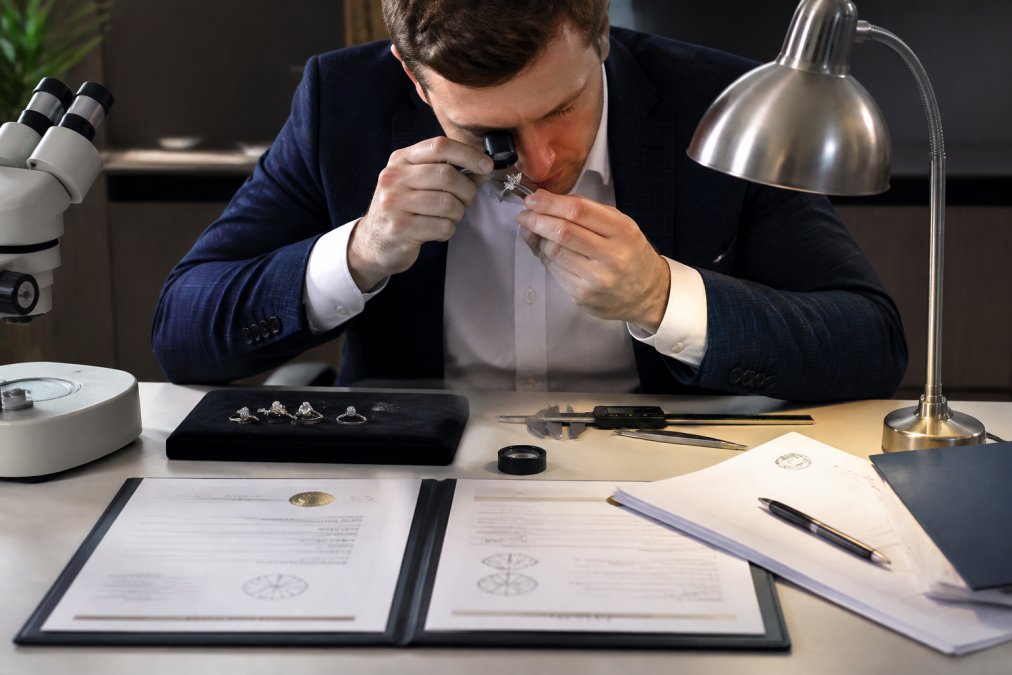
Appraisers must be independently credentialed, look for membership in the Institute of Professional Goldsmiths or equivalent professional bodies. Independent appraisers have no financial incentive to overvalue or undervalue your piece, unlike retailers who might inflate values for insurance purposes or downplay value when buying from you.
The appraisal serves several purposes. Insurance companies require current appraisals to establish coverage limits. Estate planning benefits from documented valuations. If you're considering selling, an appraisal establishes a realistic baseline for negotiations.
For investment-grade diamonds, request that the appraisal specifically note the stone's investment characteristics, carat weight, colour grade, clarity, and cut quality. This documentation supports future resale negotiations and provides a clear record of what you own.
Tax Implications and Exit Strategy Planning
Tax treatment of diamond jewellery varies significantly depending on your circumstances and how you eventually sell.
In the United Kingdom, capital gains tax applies when you sell an asset for more than you paid. However, jewellery held as a personal possession typically qualifies for the personal possessions exemption if the item cost less than £6,000. Diamonds purchased as investment-grade assets above this threshold may not qualify for the exemption, meaning any appreciation becomes subject to capital gains tax.
This distinction matters enormously for investment planning. A £15,000 investment-grade diamond that appreciates to £20,000 over ten years creates a £5,000 capital gain potentially subject to tax. Your actual return after tax could be significantly lower than the headline appreciation figure.
Exit strategy planning should begin before you purchase. Consider: Will you sell to a dealer (fastest but lowest price)? Auction through a house (longer timeline, potentially higher price)? Sell privately (most work, potentially best price)? Each option has different tax and logistical implications.
Many investors overlook the exit strategy entirely, then face difficult choices when circumstances change. Planning ahead, understanding your options, documenting your costs clearly, and tracking appreciation over time, protects your investment.
Natural vs Synthetic Diamonds for Investment
The emergence of lab-created diamonds has fundamentally altered the investment landscape for diamond jewellery.
Synthetic diamonds are chemically identical to mined diamonds but created in laboratories rather than extracted from the earth. They're real diamonds, same carbon structure, same optical properties, but they're not rare. Production capacity for lab-created diamonds is expanding rapidly, which means their future value is uncertain.
For investment purposes, natural diamonds retain significant advantages. Rarity drives long-term value. Natural diamonds are finite; lab diamonds can be produced indefinitely. Collectors and investors continue to prefer natural stones, which command premium prices in the secondary market.
However, lab-created diamonds make sense for personal jewellery if you value affordability and ethics. They're substantially cheaper than natural diamonds of equivalent quality. For investment-focused purchases, stick with natural, certified diamonds from reputable sources.
The distinction matters because resale value diverges sharply. A lab-created diamond purchased for £5,000 might resell for £2,000. A natural diamond of similar quality purchased for £8,000 might resell for £4,500-5,500. The natural stone retains proportionally more value because demand remains stronger in the secondary market.
Investing in diamond jewellery requires balancing emotional appeal with financial realism. Premium diamonds from trusted sources like Diamonds by daisy, backed by proper certification and documentation, offer genuine investment potential, but only if you understand the total cost of ownership and plan for a realistic exit strategy. The 30-day satisfaction guarantee ensures you can purchase with confidence, knowing you're acquiring a piece that meets exacting standards for both beauty and investment merit. Begin with investment-grade certification, factor in insurance and appraisal costs, and plan for a minimum 10-15 year holding period to realise meaningful returns.
Frequently Asked Questions
Is diamond jewellery a good long-term investment?
Diamond jewellery can serve as a long-term investment if you purchase investment-grade diamonds with strong certification, excellent provenance, and realistic expectations about resale value. However, returns depend heavily on quality, market demand, and holding period. Unlike stocks or bonds, diamonds offer no income stream and require insurance and secure storage. They work best as part of a diversified portfolio rather than as a primary investment vehicle.
What does GIA diamond certification mean for investment value?
GIA certification provides independent verification of a diamond's authenticity and quality across the 4Cs: carat weight, cut, colour, and clarity. A GIA report significantly enhances resale value and liquidity because buyers trust the grading. Investment-grade diamonds almost always carry GIA certification. Without it, resale becomes difficult and you may face substantial discounts when liquidating the piece.
How much of the price I pay is retailer markup?
Retailer markup typically ranges from 100% to 300% above wholesale cost, depending on brand positioning, design complexity, and precious metal content. Handcrafted, bespoke pieces from heritage retailers command higher markups than mass-produced items. This markup reflects design, craftsmanship, customer service, and brand reputation. When reselling, expect to recover only 30-60% of your original purchase price, depending on market conditions and the piece's desirability.
What are the tax implications when selling diamond jewellery?
In the UK, capital gains tax may apply if you sell diamond jewellery for a profit above the annual exemption threshold (£3,000 for the 2025/26 tax year). However, jewellery is considered a tangible asset, and certain pieces may qualify for exemption if they meet specific criteria. Inheritance tax may also apply if diamonds are passed to heirs. Consult a tax adviser before liquidating significant pieces to understand your specific liability and any available reliefs.
Can I resell premium diamond jewellery easily?
Resale is possible but not guaranteed to be quick or at a favourable price. Investment-grade diamonds with strong GIA certification and clear provenance have better liquidity than fashion pieces. Auction houses, specialist dealers, and online platforms offer resale channels, though each charges fees (typically 10-20%). Secondary market demand fluctuates, so expect 3-12 months to find a buyer. Vintage and rare pieces often command better resale premiums than contemporary designs.
How do I verify that a diamond is investment-grade?
Investment-grade diamonds must meet specific criteria: minimum carat weight (typically 0.5+), high colour grades (D-H), excellent clarity (VS1 or better), and very good to excellent cut quality. A GIA report is essential. Provenance documentation, including purchase receipts and appraisals, strengthens investment credentials. Request full certification before purchase and have the piece independently appraised by a qualified gemologist to confirm authenticity and quality.
Should I buy natural or synthetic diamonds for investment?
Natural diamonds retain investment value far better than lab-created synthetics. Synthetic diamonds have flooded the market in recent years, causing prices to fall sharply. Resale value for synthetics is minimal, and many buyers actively avoid them. For investment purposes, always purchase natural, certified diamonds. Synthetic diamonds are suitable for fashion jewellery where investment return is not a consideration, but they offer poor capital appreciation prospects.
This article was written using GrandRanker