

Luxury Diamond Jewellery with Guarantee: Your Complete 2026 Guide
Table of Contents
- What Makes Luxury Diamond Jewellery Worth the Investment
- Understanding Diamond Quality: Certification and Grading
- Hallmarking Requirements for UK Jewellery: What You Need to Know
- Diamond Jewellery Guarantee vs Insurance: Which Protection You Actually Need
- Investment Value and Resale Potential of Luxury Diamonds
- Choosing Luxury Diamond Jewellery: Engagement Rings, Earrings, and Necklaces
- Bespoke Design and Custom Services for Luxury Pieces
- Ethical Sourcing and Conflict-Free Diamonds
Last Updated: August 7, 2026
What Makes Luxury Diamond Jewellery Worth the Investment
Luxury diamond jewellery is a commitment to quality, craftsmanship, and lasting value. When you invest in a piece backed by a proper guarantee, you're securing peace of mind alongside beauty.
The distinction between ordinary jewellery and true luxury lies in handpicked gemstones, precious metal settings, and meticulous craftsmanship. At Diamonds by daisy, each piece is selected with the same rigour a collector applies to fine art.
A guarantee transforms the buying experience. Rather than hoping a piece performs as promised, you know exactly what protection you have. Whether that's a 30-day satisfaction guarantee or long-term authenticity assurance, the right guarantee removes the anxiety that typically accompanies high-value purchases.
Quality diamonds retain value in ways that mass-produced jewellery cannot. Understanding what drives that value, certification, cut grade, clarity, and ethical sourcing, helps you make a decision you won't question later.
Understanding Diamond Quality: Certification and Grading
The foundation of any luxury diamond purchase is third-party certification. Without it, you're relying entirely on a seller's word about what you're buying.
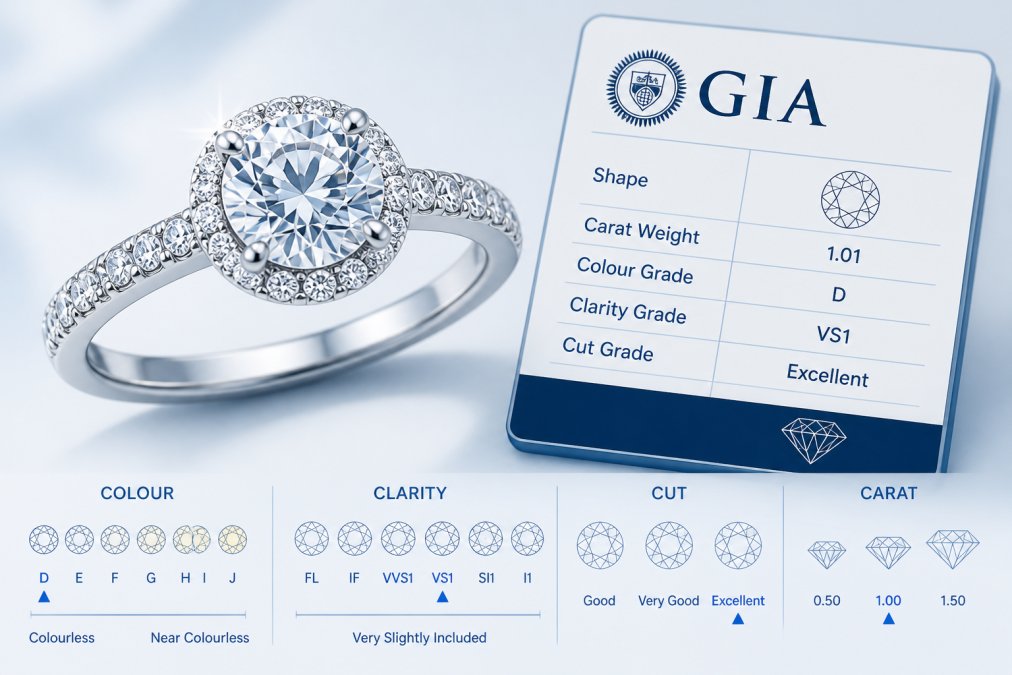
Why GIA Certification Matters for Luxury Purchases
GIA certification, issued by the Gemological Institute of America, is the global standard for diamond grading. A GIA certificate documents four critical measurements: carat weight, colour grade, clarity grade, and cut grade. These are standardised assessments performed by trained gemologists using calibrated equipment, not opinions.
The certificate becomes your proof of authenticity and quality, essential if you ever need to insure, sell, or authenticate the piece. Without certification, you have no independent verification. Certified diamonds command higher resale value precisely because buyers trust the documentation.
Reading Your Diamond Grading Report
A GIA diamond grading report contains specific data that directly impacts value and suitability.
The carat weight measures the diamond's mass. One carat equals 200 milligrams. Price increases exponentially with carat weight; a 2-carat diamond costs significantly more than two 1-carat diamonds of identical quality because larger stones are rarer.
The colour grade ranges from D (colourless) to Z (light colour). For engagement rings and visible jewellery, most buyers target H or better, where no colour is perceptible without magnification.
The clarity grade describes inclusions, tiny imperfections within the stone. VS1 and VS2 grades offer excellent value, as inclusions are invisible without magnification. SI grades cost less but may have visible inclusions depending on placement.
The cut grade measures how well the diamond's facets interact with light. A well-cut diamond sparkles dramatically; a poorly cut stone of identical carat weight and colour appears dull. Cut is the most visible factor affecting beauty.
Understanding these four factors helps you prioritise what matters for your specific piece. An engagement ring worn daily might prioritise durability (clarity and cut) over the largest carat weight.
Hallmarking Requirements for UK Jewellery: What You Need to Know
In the United Kingdom, hallmarking is a legal requirement for precious metal jewellery. Any jewellery made from gold, silver, or platinum sold in the UK must carry a hallmark, an official mark stamped into the metal certifying the precious metal content.
The Assay Office oversees hallmarking in the UK. Four assay offices operate across the country, and each applies hallmarks to jewellery submitted by retailers and craftspeople. The mark includes the fineness (metal purity), the assay office mark, the date letter, and the maker's mark.
When you purchase luxury diamond jewellery from a reputable seller, hallmarking provides assurance. A hallmarked piece proves the metal content is genuine. Without hallmarking, a seller could claim 18-carat gold while delivering 9-carat, a significant difference in both value and durability.
Check for hallmarks on any precious metal jewellery you purchase. They're typically found on the inner band of rings or the clasp area of necklaces and bracelets. If a seller cannot show you a hallmark on a piece claimed to be precious metal, that's a red flag worth investigating.
Diamond Jewellery Guarantee vs Insurance: Which Protection You Actually Need
Guarantee and insurance serve different purposes. Understanding the distinction helps you choose the right protection for your purchase.
What a Satisfaction Guarantee Covers
A satisfaction guarantee protects you immediately after purchase. Diamonds by daisy's 30-day satisfaction guarantee allows you to return a piece if it doesn't meet your expectations or doesn't match what you envisioned.
This protection addresses a real concern: online jewellery purchases carry risk. A piece that photographs beautifully might feel different on your skin or simply not align with your style once it arrives. A satisfaction guarantee removes that financial risk.
Satisfaction guarantees typically cover manufacturing defects and misrepresentation. Most guarantees do not cover damage from misuse or wear after the return period expires. The 30-day window is standard across the industry, giving you adequate opportunity to evaluate the piece in real-world conditions before the guarantee expires.
Insurance for Long-Term Protection
Insurance protects your investment over years, covering damage, loss, and theft. A jewellery insurance policy typically covers accidental damage, theft, and loss with agreed-upon replacement value.
UK jewellery insurance works through specialist providers or as an extension to home contents insurance. You'll need a recent valuation certificate to establish the replacement value. The insurer then reimburses you (or replaces the piece) if it's damaged or lost.
Jewellery insurance is essential for high-value pieces. The cost typically runs 1-2% of the insured value annually. For a £5,000 piece, expect to pay £50-£100 per year, modest compared to the replacement value you're protecting.
Investment Value and Resale Potential of Luxury Diamonds
Quality diamonds hold value in ways that most consumer goods do not. Diamonds are inherently scarce. Unlike gold, which can be mined in increasing quantities, large high-quality diamonds become rarer as mining progresses.
Certified diamonds with strong grades, particularly in colour and clarity, command consistent resale markets. A well-documented diamond with GIA certification can be resold through specialist dealers, auction houses, or online platforms. Certified stones maintain value far better than uncertified alternatives.
The resale market for jewellery is more complex than the diamond market alone. Pre-owned jewellery typically sells for 40-60% of original retail value, depending on condition, design, and market demand. Quality pieces from reputable makers retain value far better than mass-produced alternatives. Vintage and pre-owned luxury jewellery from established makers often appreciates as scarcity and craftsmanship become more valued over time.
Choosing Luxury Diamond Jewellery: Engagement Rings, Earrings, and Necklaces
Different pieces serve different purposes and carry different considerations.
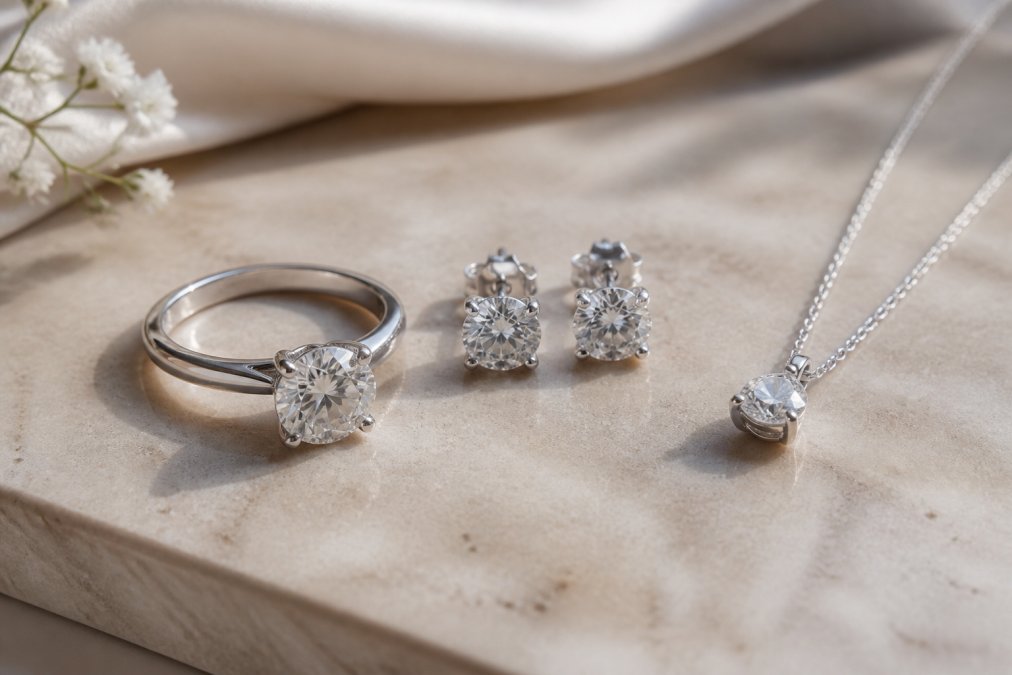
Diamond Engagement Rings
An engagement ring is worn daily, often for decades. This intensive wear demands durability alongside beauty.
For engagement rings, prioritise cut and clarity over carat weight. A well-cut 1.5-carat diamond with VS1 clarity outperforms a poorly cut 2-carat stone with SI2 clarity. Avoid inclusions near the diamond's edges, where the stone is most vulnerable to chipping. A clarity grade of VS1 or better ensures inclusions are invisible to the naked eye and positioned safely away from edges.
Metal choice affects both aesthetics and durability. Platinum is the most durable option, though it's also the most expensive. 18-carat gold offers excellent durability at a lower price point. Avoid anything below 14-carat for an engagement ring, as softer metals wear too quickly.
Setting style influences practicality. A solitaire setting showcases the diamond but offers less protection. A halo setting surrounds the diamond with smaller stones, providing both visual impact and additional protection.
Luxury Diamond Earrings and Necklaces
Earrings and necklaces face less daily stress than rings, allowing more flexibility in stone selection and setting design.
For earrings, matched pairs are essential. Consistency in colour, clarity, and cut ensures both earrings appear identical when worn. Stud earrings are more versatile than drop styles.
Necklaces offer opportunity for statement pieces. A single larger diamond in a pendant creates visual impact without the daily wear concerns of a ring. Metal choice for earrings and necklaces is more flexible than in rings; 14-carat gold is adequate.
Bespoke Design and Custom Services for Luxury Pieces
Custom design transforms a generic piece into something uniquely yours. A bespoke design begins with consultation about your vision, stone size and quality, metal preference, setting style, and any specific design elements.
The design phase is collaborative. A skilled designer guides you toward options that work practically while honouring your preferences. Once you've approved the design, the craftsperson sources materials and begins construction. The timeline typically runs 6-12 weeks, depending on complexity.
Bespoke pieces carry higher costs than ready-made alternatives. You're paying for design consultation, custom metalwork, and the craftsperson's time. However, you're acquiring something genuinely unique, a piece that reflects your personal style and specifications in ways mass-produced jewellery cannot.
Ethical Sourcing and Conflict-Free Diamonds
The origin of diamonds matters, both ethically and practically. Conflict-free diamonds are sourced from mines that meet international standards for labour practices, environmental responsibility, and community impact.
Lab-grown diamonds offer an alternative to mined stones. These diamonds are chemically identical to mined diamonds but created in controlled environments. They carry lower environmental impact and typically cost 30-40% less than comparable mined diamonds.
Pre-owned and authenticated jewellery represents another ethical choice. A vintage diamond has already completed its environmental impact; purchasing it extends its life without requiring new mining.
When selecting luxury diamond jewellery, consider the sourcing story. Ask your seller about the diamond's origin, certifications, and any ethical sourcing claims. Reputable sellers provide transparent information.
Purchasing luxury diamond jewellery with guarantee is an investment in quality that extends far beyond the moment of purchase. The right piece, backed by certification, protected by guarantee, and selected with care, becomes something you'll treasure for decades. Diamonds by daisy's commitment to handpicked gemstones, precious metals, and a 30-day satisfaction guarantee ensures you can buy with confidence, knowing your investment is protected. When you're ready to explore pieces that combine timeless elegance with verified quality, explore the collection and discover how luxury diamond jewellery can elevate your personal style.
Frequently Asked Questions
What does a luxury diamond jewellery guarantee actually cover?
A satisfaction guarantee typically covers defects in craftsmanship, material authenticity, and gemstone quality for a specified period (such as 30 days). It ensures the piece matches the description and certification provided. However, guarantees usually do not cover damage from accidental wear, loss, or theft. For long-term protection against these risks, separate insurance is recommended. Always check your retailer's specific terms before purchase.
Are GIA certified diamond jewellery UK pieces more valuable than non-certified diamonds?
GIA certification provides an independent, internationally recognised assessment of a diamond's quality, clarity, cut, and carat weight. For luxury purchases, GIA certified diamonds offer transparency and confidence in what you're buying. In the UK market, certified diamonds typically hold their value better because the certification is verifiable and widely trusted. This certification is particularly important when considering investment value or potential resale.
What's the difference between a jewellery guarantee and insurance?
A guarantee covers manufacturing defects and authenticity for a limited time (usually 30 days to a few years). Insurance protects against loss, theft, and accidental damage over the long term, typically lasting the lifetime of the piece if renewed. For luxury diamond jewellery, both are valuable: the guarantee ensures you receive what you paid for, while insurance protects your investment against unforeseen circumstances. Combining both provides comprehensive peace of mind.
How can I verify that luxury diamond jewellery is ethically sourced and conflict-free?
Look for jewellery retailers who provide certification from reputable bodies and transparency about their supply chain. GIA certification confirms the diamond's quality but not its origin; seek retailers who explicitly state their commitment to conflict-free sourcing and ethical practices. In the UK, reputable luxury jewellers often provide documentation and valuation certificates that detail the stone's provenance. Ask your retailer directly about their sourcing practices before making a purchase.
This article was written using GrandRanker