

Protect Gold Plated Jewelry With Georgia's 2 Minute Clean
The safest way to clean gold plated jewelry is a quick soak in warm water with a drop of mild dish soap, followed by a gentle wipe and immediate drying with a soft microfiber cloth. Skip anything abrasive or acidic, from toothpaste to vinegar, since both strip the thin gold layer. If the base metal shows through after cleaning, that’s plating loss, not dirt, and it’s a job for a jeweler, not your kitchen sink.
TL;DR:
- Cleaning gold plated jewelry with warm water and mild soap prevents damage, but prolonged soaking or abrasive cleaners can strip the plating.
- Use a soft microfiber cloth for regular polishing and avoid chemical-treated cloths that may be too aggressive for the thin gold layer.
- Signs of worn plating include persistent dullness or base metal showing through, which requires replating rather than cleaning.
- Ultrasonic cleaners are generally harmful to plated jewelry and should be used only on unglued, solid pieces if recommended by the manufacturer.
- Daily habits, such as removing jewelry after applying products and storing properly, significantly extend the life of gold plated pieces.
Table of Contents
- How Do You Clean Gold Plated Jewelry at Home?
- How Do You Polish and Spot Clean Gold Plated Pieces?
- What Should You Never Use on Gold Plated Jewelry?
- How Do You Know When Plating Is Worn and Needs Replacing?
- What Daily Habits Protect Gold Plating Longest?
- Quick Gold Plated Jewelry Maintenance Checklist
- What Georgia Has Learned About Plated Jewelry Care
- A Realistic View on Caring for Plated Jewelry
- Ready to Refresh Your Everyday Jewelry Collection?
- Sources
- FAQ
How Do You Clean Gold Plated Jewelry at Home?
Gold plating is a microscopically thin layer of real gold bonded over a base metal, usually brass, copper, or sterling silver. That thinness is exactly why the cleaning method matters more than it does for solid gold. Here’s the sequence that keeps the layer intact.
What you’ll need:
- A small bowl
- Warm (not hot) water
- A drop of mild dish soap or baby shampoo
- A soft microfiber cloth
- Cotton swabs or an ultra-soft toothbrush for crevices
The method:
- Fill the bowl with warm water and add one drop of mild soap.
- Submerge the piece for a brief moment, no more than a few minutes.
- Gently swirl it in the water. Don’t scrub yet.
- Use a cotton swab or soft-bristle brush to work loose grime from settings or engraved detail.
- Rinse briefly under lukewarm running water.
- Pat dry immediately with a lint-free microfiber cloth. Never let it air-dry.
Heat and long soaks weaken the bond between the plating and the base metal underneath, and that’s the mechanism most people miss. A short soak is a cleaning step. A prolonged soak can strip your jewelry. Air-drying also invites water spots and oxidation, which is why the towel step isn’t optional.
For frequency, a quick wipe after every wear helps keep oils and skin acids from building up. A full soap soak every few weeks is usually sufficient for regularly worn pieces, with less frequent cleaning for occasional wear.
Pro Tip: Set a phone reminder tied to payday or the first of the month. Deep cleans that happen on a schedule are far more likely to happen at all.
How Do You Polish and Spot Clean Gold Plated Pieces?
Between full cleans, a soft polishing cloth handles everyday dullness without touching the plating itself. The key is choosing a plain microfiber or jewelry polishing cloth, not one pre-treated with chemical polish, since those impregnated formulas are often too aggressive for a thin gold layer.
- Buff gently in one direction rather than a hard back-and-forth scrub.
- For a stubborn oily spot, dampen a cotton swab with 70% isopropyl alcohol, dab once, and dry immediately. Avoid this near glued or porous stones, since alcohol can loosen adhesive or cloud certain gems.
- To fill tiny surface scratches and add a bit of luster back, rub on a drop of baby oil or mineral oil, then buff off every trace of excess with a dry cloth.
Think of the oil trick as a finishing touch, not a cleaning method. It hides light wear. It does not remove grime, and it definitely doesn’t replace the soap soak.
What Should You Never Use on Gold Plated Jewelry?
Most damage to plated jewelry doesn’t come from wearing it too much. It comes from a well-meaning cleaning hack gone wrong. Jewelers consistently flag the same offenders:
- Toothpaste and baking soda — both are mild abrasives that scratch and thin the gold layer, even though they feel harmless on teeth.
- Vinegar and lemon juice — the acid corrodes plating and can dull it permanently.
- Ammonia-based cleaners — too harsh for a layer measured in microns.
- Metal polishes and Magic Erasers — built for solid metal or household surfaces, not a plated finish.
- Heavy scrubbing of any kind — friction is the enemy, full stop.
The pattern behind every one of these is simple: abrasives scratch, acids corrode, and both accelerate the exact wear you’re trying to prevent.
Ultrasonic cleaners deserve a special note, because they’re a genuinely useful tool for solid gold and get recommended reflexively. For plated pieces, the cavitation action can loosen the plating or shake glued stones free. If you own an ultrasonic unit, limit its use to plain plated chains with no glued settings, and check the manufacturer’s guidance first.
How Do You Know When Plating Is Worn and Needs Replacing?
Dirty and worn are two different problems, and only one of them responds to cleaning. Watch for these signs:
- A dull gray or silvery tone that persists even after a proper soap soak.
- The base metal peeking through at high-friction points: the inside of a ring, the back of a clasp, the underside of a pendant.
- Color that looks patchy rather than evenly worn.
None of that comes back with a cloth or a soak, because there’s no gold left there to clean. That’s a job for replating, which involves a jeweler stripping the old finish and electroplating a fresh layer of gold over the base metal.
Before committing to replating, ask the jeweler three things: how thick the new plating will be, what base metal you’re working with, and a realistic cost estimate, since replating rhodium plated pieces typically runs $30 to $120 depending on the piece and metal. If replating isn’t worth it for a low-cost item, you have two honest choices: wear it as-is and accept the patina, or retire it in favor of a piece built for daily wear.
What Daily Habits Protect Gold Plating Longest?
Prevention does more for a plated piece than any cleaning routine ever will. A few habits, done consistently, add real months to a piece’s life.
- Follow the “last on, first off” rule: put jewelry on after perfume, lotion, and makeup, and take it off before showering, swimming, or working out.
- Wipe every piece with a microfiber cloth before it goes back in storage.
- Store pieces separately in anti-tarnish pouches or a compartment tray with a silica gel packet, rather than tossed together in a drawer.
- Keep plated jewelry out of steamy bathrooms, where humidity accelerates tarnishing.
Base metal matters here too. Plating over sterling silver, often called vermeil, tends to be thicker and tolerates slightly more handling than plating over brass or copper. If you’re not sure what’s underneath your gold, treat it as the cheaper option and handle it that way. It costs you nothing and protects the piece either way.
Pro Tip: Keep a small dish by your bathroom sink just for jewelry removal. The habit sticks faster when the spot is already there waiting.
Quick Gold Plated Jewelry Maintenance Checklist
- After every wear: Wipe with a microfiber cloth and store the piece separately, not tangled with other jewelry.
- Weekly or biweekly: Soap soak for no more than 2 minutes, gentle wipe, immediate dry.
- Keep on hand: microfiber cloth, mild dish soap, cotton swabs, a small bowl dedicated to jewelry.
- Pause and call a jeweler if: the gray base metal shows through, color looks patchy, or a soft cloth stops making any visible difference.
What Georgia Has Learned About Plated Jewelry Care
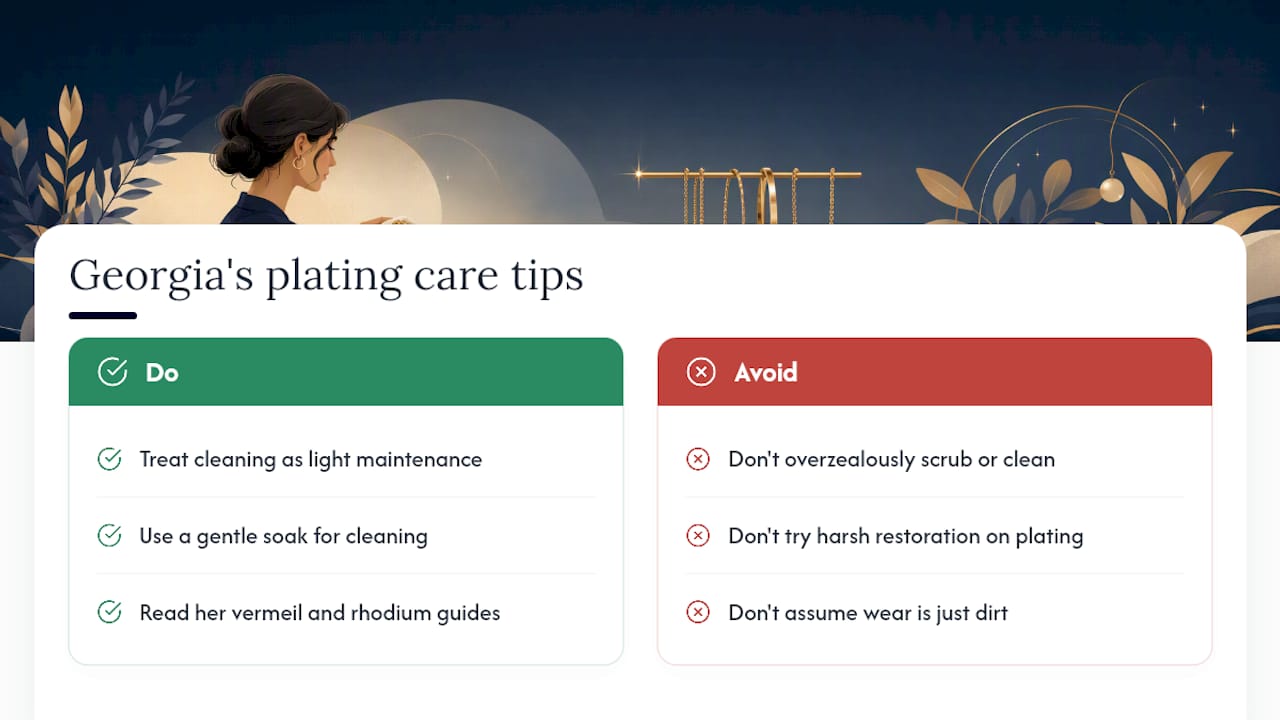
Georgia has spent years curating jewelry collections for Diamondsbydaisy, working closely with craftsmanship standards and fielding real customer questions about wear and longevity. Her recurring observation: most plating damage traces back to one overzealous cleaning session, not months of normal wear.
Her practical advice is to treat cleaning as light maintenance, not restoration. If a piece needs more than a gentle soak to look right, that’s the plating talking, not the dirt. For readers who want the deeper mechanics, her guides on cleaning gold vermeil and rhodium plating lifespan go further into base-metal specifics.
A Realistic View on Caring for Plated Jewelry
Plated jewelry was never meant to last forever unchanged, and that’s fine. It’s meant to look great for as long as you treat it gently, and it rewards a light touch far more than heavy effort. The goal isn’t perfection; it’s a piece that still catches the light two years from now because you wiped it down instead of scrubbing it.
Good jewelry, plated or solid, holds up best when the care matches the piece: quick, consistent, and a little patient. That’s the whole secret.
— Georgia
Ready to Refresh Your Everyday Jewelry Collection?
Even the best care routine can’t rebuild plating that’s already worn through, and at some point replacing a favorite piece makes more sense than babying it. Diamonds by Daisy curates everyday gold-finish jewelry built for regular wear, so you’re not choosing between style and durability every morning.

Browse the full jewelry and accessories collection to find pieces that pair well with the maintenance habits above, or start with something low-fuss for daily rotation. If you also store delicate accessories, keeping items separated rather than piled together, the way Lingerie Seduction recommends for delicate pieces, protects finishes across your whole jewelry box, not just the gold. When you’re ready to add a piece that can handle everyday life, take a look at what’s currently in stock and pick something you’ll actually wear.
Sources
- How to Restore Gold-Plated Jewelry at Home (Safely) | Cleaning, Shine & When to Re-Plate | BriteCo
- How to Clean Gold Plated Jewelry - Real Simple
- How to Clean Gold Jewellery: A Guide to Every Type
FAQ
How Do You Restore Faded Gold Plated Jewelry at Home?
A warm water and mild soap soak followed by gentle drying can restore shine from surface dirt, but it can’t rebuild plating that’s actually worn away. If the base metal is showing, restoration means professional replating, not a home remedy.
Can You Clean Gold Plated Jewelry With Dawn Dish Soap?
Yes, a single drop of a mild dish soap like Dawn diluted in warm water works well for a quick soak, as long as you rinse thoroughly and dry immediately afterward. Avoid concentrated soap directly on the piece or prolonged soaking.
Does Vinegar Clean Gold Plated Jewelry?
No. Vinegar’s acidity corrodes and dulls gold plating rather than cleaning it, and jewelers consistently warn against using it on plated pieces. Stick to mild soap and water instead.
How Often Should You Deep Clean Gold Plated Jewelry?
A quick wipe after each wear plus a full soap soak every 2 to 4 weeks is enough for most pieces worn regularly. Items worn occasionally need deep cleaning far less often.
Is It Safe to Use an Ultrasonic Cleaner on Gold Plated Jewelry?
Generally not, since the cavitation action can loosen thin plating or dislodge glued stones. Limit ultrasonic use to plain plated chains without settings, and only with manufacturer guidance.