

How to Clean Gold Vermeil Without Ruining the Gold Layer
The safest way to clean gold vermeil is to wipe it with a soft microfiber cloth after every wear. If grime builds up, dip the cloth (not the jewelry) in lukewarm water with a single drop of mild dish soap, wipe gently, rinse fast, and dry the piece completely with a separate cloth.
That’s it. No scrubbing, no soaking, and no silver dip or ultrasonic cleaner unless the maker specifically says it’s safe for that piece.
Before you touch any cleaning solution, check for a 925, STERLING, or VERMEIL stamp, and look for loose stones or lifting gold. If you spot damage, stop and get the piece to a jeweler instead of pushing forward.
- Wipe with a clean microfiber or lint-free cloth
- Only add lukewarm water plus a drop of mild dish soap if the cloth alone isn’t cutting it
- Rinse briefly, then dry immediately and thoroughly
- Never scrub, soak, or use silver dips, ultrasonic baths, or steam cleaners without explicit approval
- Inspect stamps and settings before you start
Key Takeaways
Preserving gold vermeil comes down to one rule: clean gently to remove residue, never to restore worn gold, and stop the moment you see exposed silver or damage.
| Point | Details |
|---|---|
| Wipe first, always | A dry microfiber cloth after each wear prevents most buildup before it starts. |
| Soap only briefly | Use lukewarm water with one drop of mild dish soap, then dry immediately. |
| Inspect before cleaning | Check for 925/vermeil stamps, loose stones, and peeling before you start. |
| Skip harsh tools | Avoid toothpaste, baking soda, silver dips, and ultrasonic or steam cleaners. |
| Know when to stop | Dark patches or exposed silver mean it’s time for a jeweler, not more cleaning. |
Table of Contents
- What Is Gold Vermeil, and Why Does That Change How You Clean It?
- How Do You Know if a Piece Is Safe to Clean at Home?
- What’s the Right Way to Clean Gold Vermeil Step by Step?
- What Should You Never Use to Clean Vermeil?
- Is It Dirt, Wear, or Tarnish? How to Read the Signs
- When Should You Take Vermeil to a Jeweler Instead?
- How Do You Store Vermeil to Cut Down on Cleaning?
- How Diamonds by Daisy Approaches Vermeil Care
- Ready to Refresh Your Jewelry Collection?
- The Real Priority With Vermeil Care Isn’t Cleaning, It’s Restraint
- Sources
What Is Gold Vermeil, and Why Does That Change How You Clean It?
Gold vermeil is sterling silver with a layer of real gold bonded to the surface. The FTC’s rule sets the bar for using that word: the base has to be sterling silver, the gold has to be at least 10 karat, and the coating needs to measure a minimum thickness equivalent to 2.5 microns of fine gold. That thickness requirement is what separates vermeil from cheap gold plating, which can be a fraction of a micron and wears through in weeks.
Gold itself doesn’t tarnish. So why does vermeil sometimes look dull or discolored? The silver underneath does react with sulfur compounds in the air and on your skin, and sterling silver reacts and tarnishes when it’s exposed. If the gold layer thins at friction points, that silver peeks through and starts to darken.
Rings, bracelets, and clasps wear fastest because they take the most contact, friction, and impact. That’s exactly why a ring or bracelet needs gentler, less frequent deep cleaning than a necklace pendant that mostly just sits still.
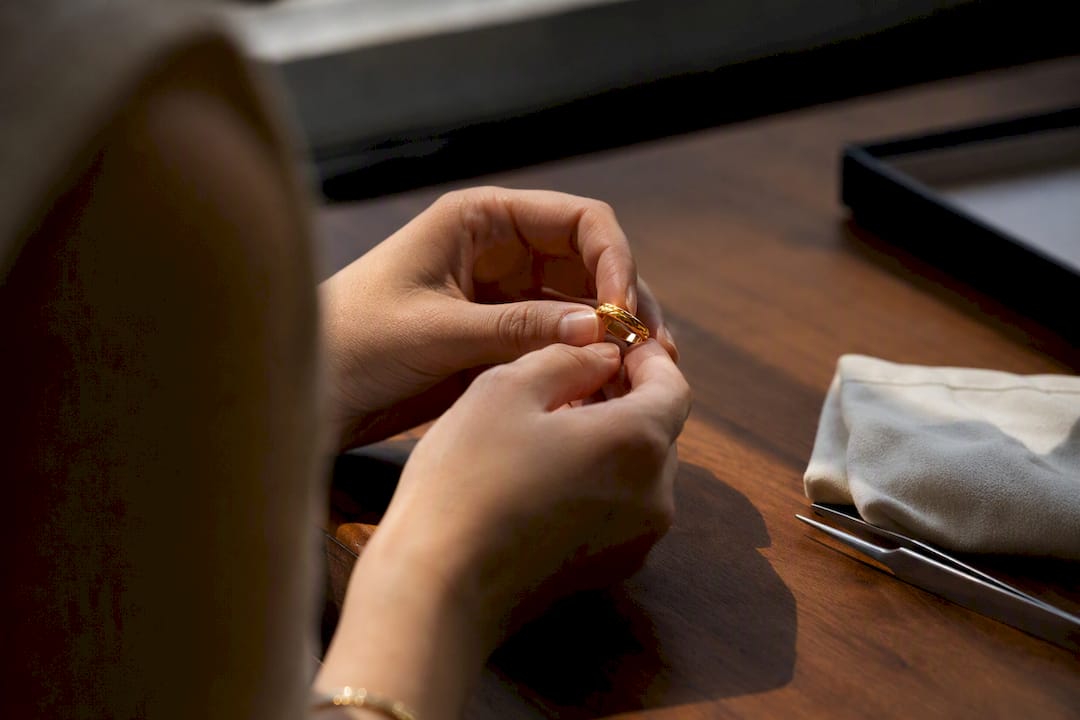
How Do You Know if a Piece Is Safe to Clean at Home?
Run a quick inspection before you touch soap or water. Most vermeil disasters happen because someone skipped this step and started scrubbing a piece that was already compromised.
- Confirm the stamp: look for 925, STERLING, or VERMEIL somewhere on the clasp or inside the band
- Check every prong and setting for movement, since a stone that shifts even slightly needs a jeweler, not a cloth
- Look closely for peeling, bubbling, or flaking in the gold coating
- Scan for dark patches, which usually mean the silver base is already exposed and tarnishing
If you see any of that, don’t clean it yourself. Complex settings, antique pieces, or anything with visible damage belongs with a professional first.
Pro Tip: Hold the piece under a bright lamp and tilt it slowly. Thinning gold often shows up as a faint color shift before it’s obvious in normal light, and catching it early means a smaller fix later.
What’s the Right Way to Clean Gold Vermeil Step by Step?
Treat this as two separate routines: a quick daily wipe and an occasional deeper clean, only when the plating checks out fine.
Routine care (after every wear):
- Wipe the entire piece with a clean, dry microfiber cloth to lift oils, lotion residue, and sweat.
- Pay extra attention to the back of rings and the inside of bracelet clasps, where residue collects unseen.
- Let it air out for a minute before storing, especially if you’ve been sweating or wearing perfume nearby.
Deeper clean (only if the plating is intact):
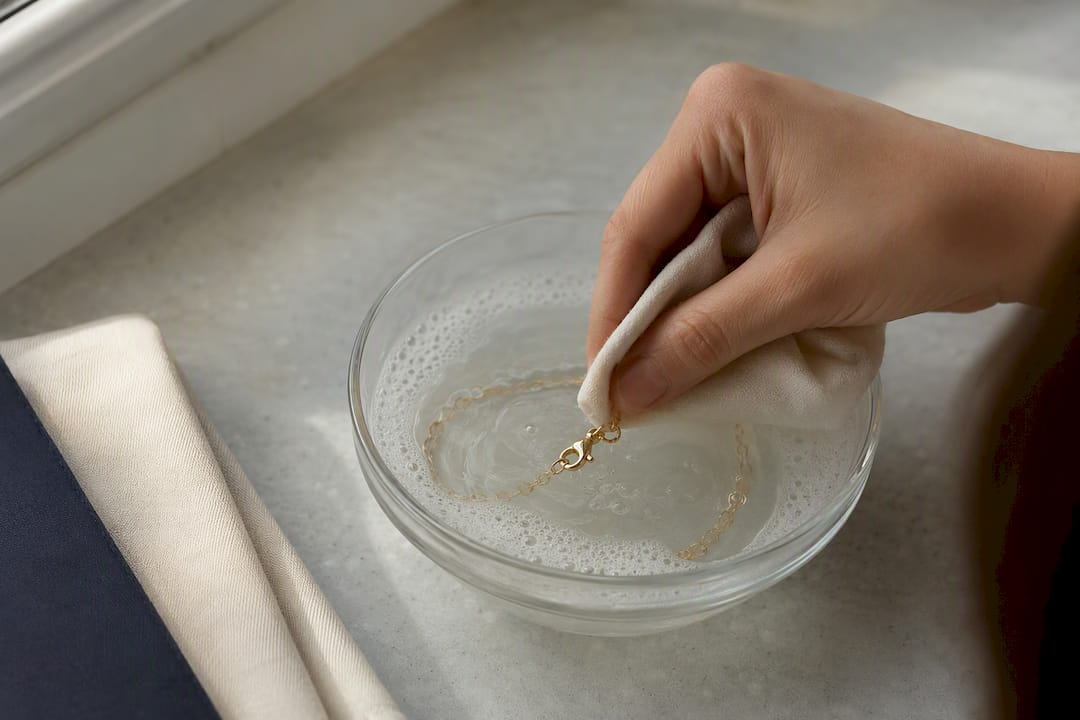
- Fill a small bowl with lukewarm water and add one drop of mild dish soap.
- Dip a soft cloth into the solution. Don’t submerge the jewelry itself.
- Gently wipe the surface, using a soft-bristle brush only on tight crevices or filigree.
- Rinse quickly with a separate damp cloth to remove soap residue.
- Dry immediately with a fresh microfiber cloth, then let the piece air-dry fully before storing.
That “brief contact, dry immediately” sequence matters more than most people assume. BriteCo’s care guidance points out that soap and water left sitting on plated metal, even mild soap, invite the exact tarnishing you’re trying to prevent.
On frequency: a daily wipe is free and takes ten seconds. A deeper soap clean is usually enough once a month for pieces you wear often, and BriteCo’s recommended cadence backs that same light touch. Be more conservative with rings and bracelets specifically. They take the most friction, so treat every clean as an opportunity to remove gold you can’t get back.
For chains, thread a soft cloth between individual links rather than trying to wipe the whole thing in one pass. For anything with a clasp or catch, clean it inside the bowl of soapy water using the cloth as your tool, not your fingers directly against the metal.
Pro Tip: If a piece has a matte or brushed finish, skip the soap step entirely and stick to dry wiping. Matte textures trap moisture in tiny grooves, and that moisture is what speeds up tarnish on the silver underneath.
What Should You Never Use to Clean Vermeil?
A shocking number of vermeil rings and bracelets get ruined by household products that work fine on solid gold but strip plating instantly. Vermeil isn’t solid gold, and it can’t take the same abuse.
- Toothpaste and baking soda: both are abrasive pastes that scratch and wear away thin gold, no matter how gently you rub
- Metal brushes or abrasive cloths: anything stiffer than a soft microfiber will scuff the surface
- Silver dips and strong chemical cleaners: these are formulated for solid silver and can strip gold plating in seconds
- Ultrasonic and steam cleaners: the vibration and heat can loosen stones and damage plating, and most retailers warn against them unless the manufacturer confirms it’s safe for that specific piece
- Pools, hot tubs, and showers: chlorine and hot water both accelerate wear on the gold layer
- Perfume, sunscreen, and lotion contact: apply these first, let them fully absorb, then put your jewelry on last
Is It Dirt, Wear, or Tarnish? How to Read the Signs
Discoloration on vermeil almost always falls into one of three categories, and each one calls for a different response.
An even, dull film across the whole surface is usually just residue from lotion, oil, or soap buildup. A gentle wipe or the soap-and-water method described above typically clears it right up.
A lighter, slightly pale patch concentrated at friction points, like the inside of a ring or the back of a bracelet clasp, signals the gold layer is thinning. Cleaning won’t bring that gold back. At that stage you’re looking at a conversation with a jeweler about replating, not another round of soap.
Dark gray or black patches that appear quickly, especially compared to how the piece looked a few weeks earlier, usually mean the sterling silver base is exposed and actively tarnishing. GoldConsul’s breakdown of vermeil discoloration treats this as the clearest signal to stop cleaning and get a professional opinion, since continued at-home cleaning on exposed silver risks pushing wear further.
Before you hand a piece to anyone, snap a photo of the affected area. It gives you a before-and-after reference and helps a jeweler judge how fast the issue is progressing.
When Should You Take Vermeil to a Jeweler Instead?
Stop cleaning at home the moment you see peeling, blistering, exposed silver, or a stone that’s come loose. Sentimental or inherited pieces deserve a professional look even for routine maintenance, since the cost of a mistake is higher than the cost of an appointment.
A qualified jeweler will inspect the piece, clean it with controlled methods that don’t strip more gold than necessary, and recommend replating if the coating has worn through. Be aware that aggressive pre-polishing before replating can soften fine detail on intricate pieces, so ask what technique they plan to use.
When picking a jeweler, ask directly about their experience with plated silver specifically, request to see sample work, and confirm whether replating comes with any kind of warranty.
How Do You Store Vermeil to Cut Down on Cleaning?
The single biggest thing you control is exposure. Take vermeil off before swimming, showering, cleaning the house, or doing anything physical that generates sweat and friction. Rotating between a few pieces instead of wearing the same one daily spreads out wear and buys you time before you notice any thinning.
- Store each piece separately in a soft pouch or a lined jewelry box compartment
- Avoid rubber-lined trays and acidic tissue paper, both of which react with metal over time
- Keep pieces away from direct sunlight and humid bathrooms, where tarnish accelerates
- Add silica gel packs or anti-tarnish strips as backup protection, replacing them on the schedule the manufacturer recommends
Pro Tip: Toss a few anti-tarnish strips into your everyday jewelry box, not just your “good jewelry” drawer. The pieces you wear most are the ones most exposed to sweat and lotion, so they need the extra protection more than anything sitting untouched.
How Diamonds by Daisy Approaches Vermeil Care
Diamonds by Daisy curates its vermeil pieces, including 18K gold vermeil bracelets, with the same conservative care philosophy laid out above: preserve the gold layer rather than try to restore it after the fact. Every design gets checked for plating quality before it ever reaches a customer, because a bracelet or hoop earring that wears unevenly at the clasp isn’t a piece worth selling.
Customers consistently point to the craftsmanship and finish quality on these pieces as a reason they return for gifts and everyday wear alike. If a piece needs attention beyond a cloth and mild soap, the Diamonds by Daisy fine jewelry return guarantee outlines how documentation and warranty claims work, which is worth reading before you assume a piece is beyond saving.
Ready to Refresh Your Jewelry Collection?
Sometimes the gold layer has simply worn past the point where cleaning helps, and that’s a normal part of owning vermeil, not a failure on your part. When that happens, replacing a well-loved piece is often more practical than chasing a repair that costs more than the item itself.
Diamonds by Daisy’s everyday gold jewelry collection is built with the same demi-fine standards described throughout this guide: sterling silver bases, real gold thickness, and finishes designed to hold up to daily wear. Browse the full range on the Diamonds by Daisy homepage if you’re shopping for a replacement piece or something new to add into rotation.
The Real Priority With Vermeil Care Isn’t Cleaning, It’s Restraint
Most advice on cleaning vermeil focuses on the wrong problem. People search for the perfect cleaning solution when the actual skill they need is knowing when to stop. Every scrub, every dip in an unapproved cleaner, every ultrasonic bath removes a little more of a coating that was never more than a few microns thick to begin with.
The conventional wisdom treats vermeil like solid gold jewelry that just needs a good polish now and then. That’s backward. Vermeil rewards the owner who inspects before acting and treats every cleaning decision as reversible only in one direction: you can always clean more, but you can never put gold back once it’s gone.
If I had to name the one habit that separates vermeil that lasts years from vermeil that looks tired after months, it’s the pre-clean inspection. Not the soap formula, not the cloth brand. Look first. Then decide if cleaning is even the right move, or if a jeweler should take it from here.
Sources
The core guidance here draws on the FTC’s vermeil labeling rule, BriteCo’s vermeil cleaning guide, and Jewelers Mutual Group’s plating comparison.
- Federal Trade Commission jewelry guides — vermeil definition
- How to Clean Vermeil Jewelry: Safe Steps, What to Avoid, & Tarnish Fixes | BriteCo
Recommended
- 18K Gold Vermeil CZ Bracelet – Stacking Bracelet for Her | Diamonds by Daisy – Diamonds by daisy
- Gold & Silver Thick Hoop Earrings – Statement Hoops | Diamonds by Daisy – Diamonds by daisy
- Annette 18K Gold Vermeil Huggie Earrings – Stacking Hoops | Diamonds by Daisy – Diamonds by daisy
- Fine Jewelry Return Guarantee: A Buyer’s Guide – Diamonds by daisy