

Jewelry Care: 6 Step Deep Clean and 2 Daily Habits From Georgia
Skip any one of these and you shorten the life of even well-made pieces. Materials differ a lot, though, and treating a pearl like a diamond is how good jewelry gets ruined fast.
TL;DR:
- Regular wiping with a soft cloth after each wear prevents buildup and maintains jewelry’s shine, especially for pieces worn daily.
- Avoid soaking plated or vermeil jewelry, as even brief immersions can wear away their delicate metal layers.
- Maintain jewelry by storing each piece separately in a cool, dry environment away from sunlight and humidity to prevent tarnish and damage.
- Avoid exposure to chemicals, heat, and ultrasonic cleaners, especially for organic gems like pearls and treated stones, by asking a jeweler first.
- Annual professional inspections help identify early signs of wear, loose stones, or damaged clasps, prolonging jewelry’s lifespan and preserving value.
Table of Contents
- Building a Daily and Weekly Jewelry Care Routine
- How to Clean Jewelry by Material and Gemstone
- What to Avoid: Chemicals, Heat, and Risky Cleaning Tools
- Storage Best Practices That Prevent Tangles and Tarnish
- When to Get Professional Jewelry Inspection and Repair
- A Safe At-Home Deep-Clean Routine, Step by Step
- Georgia’s Practical Rules for Everyday Jewelry Care
- Handling and Wearing Jewelry Without Damaging It
- How to Spot Early Signs of Damage or Wear
- Emergency Care After Accidental Damage or Exposure
- Environmental Factors That Affect Jewelry Longevity
- Why Care Habits Protect Both Value and Meaning
- The Gap Between Jewelry Advice and How People Actually Live
- Sources
Building a Daily and Weekly Jewelry Care Routine
Most damage happens quietly, between wears, not during some dramatic accident. A quick wipe with a microfiber cloth after each wear removes the oils, sweat, and product residue that dull metal and cloud gemstones over time.
The habit that matters most is what you take off before you put jewelry on: lotion, perfume, and hairspray all leave films that build up on settings and stones. Swimming pools and the ocean are worse. Chlorine and salt water erode metal finishes and dull gemstones, so pieces should come off before you get in the water, not after.
A simple cadence keeps this manageable:
- Daily: Wipe each piece with a soft cloth before storing it, and glance at clasps and prongs while you do.
- Weekly: Give frequently worn pieces a light clean with a soft brush.
- Monthly: Do a slightly deeper clean on anything that’s been in regular rotation.
- Annually: Book a professional inspection, even if nothing looks wrong.
That “little and often” approach beats waiting months and then attacking tarnish with something harsh. Regular light cleaning preserves plated and delicate pieces far better than occasional deep scrubbing ever will.
How to Clean Jewelry by Material and Gemstone
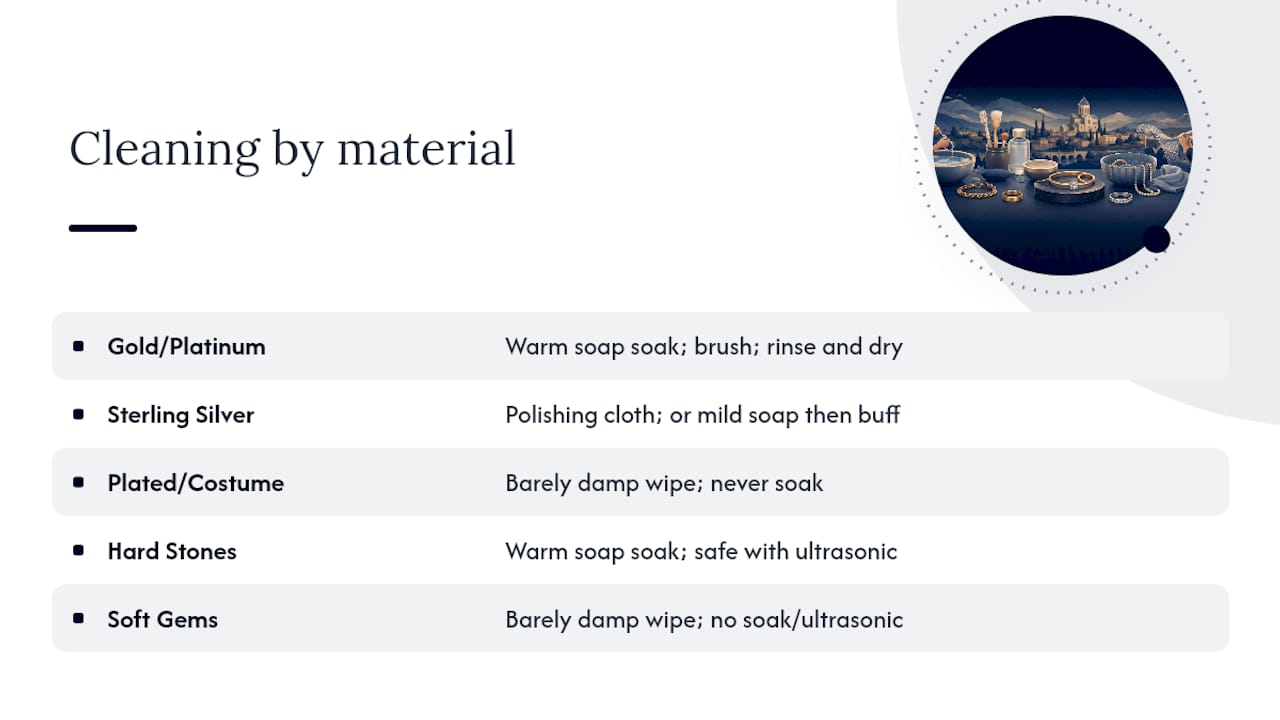
Not every piece in your jewelry box wants the same treatment. Gold behaves differently than plated brass, and a diamond can shrug off things that would ruin an opal. Here’s how to sort your collection.
Solid gold and platinum: These are the most forgiving metals you own. Mix a few drops of mild dish soap into warm water, soak for a few minutes, then work a soft-bristled brush (a clean, dedicated toothbrush works fine) into the crevices around prongs and settings. Rinse under warm water with the drain closed, and dry completely with a lint-free cloth. The American Gem Society recommends this same warm soap-and-water method for most hard stones and metals.
Sterling silver: Tarnish is normal, not a sign of poor quality. A polishing cloth designed for silver handles routine upkeep; for heavier tarnish, the same mild soap solution works, followed by a gentle buff. Anti-tarnish strips in the storage box slow the process between cleanings.
Plated and vermeil pieces: This is where people make the most expensive mistakes. Gold vermeil and plated fashion jewelry have a thin metal layer over a base, and soaking can wear that layer away faster than wear alone. Stick to a barely damp cloth, never a soak, and dry immediately. If you want the specifics for a particular piece, our guide to cleaning gold vermeil without stripping the gold layer walks through it.
Diamonds, sapphires, and rubies: These are genuinely tough. They can be soaked and brushed using the same mild soap method, and ultrasonic cleaners are generally fine, as long as the setting is stable and not cracked. Our walkthrough on cleaning a delicate diamond necklace covers the setting checks worth doing first.
Opals, pearls, and other soft or organic gems: Wipe only, with a barely damp soft cloth. Opals and pearls are sensitive to chemicals, heat, and sunlight and can dehydrate or crack if you clean them the way you’d clean a diamond. Never soak them, and never put them near an ultrasonic or steam cleaner.
Costume jewelry and glued stones: If a stone is glued rather than set with prongs, soaking can loosen the adhesive. Treat these like plated pieces: wipe, don’t submerge.
Pro Tip: Before cleaning any piece you’re unsure about, check whether the stone is set with prongs or glued in place. A quick look with your phone’s camera zoomed in tells you more than you’d expect.
What to Avoid: Chemicals, Heat, and Risky Cleaning Tools
The fastest way to damage jewelry isn’t neglected, it’s exposure to the wrong substances or the wrong equipment.
Skip these entirely:
- Chlorine and salt water, which dull gemstones and erode metal finishes over time.
- Lotions, perfumes, and hairspray, applied before jewelry goes on, not after.
- Harsh household cleaners, including anything with ammonia or bleach.
- Prolonged heat and direct sunlight, which stress organic materials like pearls and can affect some treated stones.
- Ultrasonic and steam cleaners on soft or treated gems. GIA specifically flags heat and light risks for colored gemstones and recommends caution with ultrasonic devices on treated or fracture-filled stones.
If you’re not sure whether a stone has been treated (many emeralds are oil-filled, many topaz stones are irradiated), ask your jeweler before you clean it yourself. Treated stones often need the gentlest option available: a soft, barely damp cloth.
Storage Best Practices That Prevent Tangles and Tarnish
How you store jewelry between wears matters almost as much as how you clean it. Tangled chains get stretched trying to separate them, and pieces tossed in a drawer together scratch each other constantly.
A few storage rules solve most of this:
- Separate everything. Individual pouches, a fabric-lined box with compartments, or hooks for necklaces all keep pieces from touching.
- Close clasps before storing. Closing a necklace clasp before it goes into storage prevents the tangling that leads people to yank and stretch delicate chains.
- Add anti-tarnish strips to any drawer or box holding silver.
- Keep storage cool, dry, and out of direct light. Bathrooms are the worst spot in the house for jewelry because of humidity swings.
- Skip tissue paper for long-term storage. It gets thrown away by accident more often than you’d think; a zippered bag or fabric compartment is safer.
- Use a proper safe for heirlooms and anything genuinely irreplaceable.
Pro Tip: When traveling, pack jewelry in a small foam-lined case or a padded pouch with each piece’s clasp closed. A pill organizer works in a pinch for rings and earrings.
When to Get Professional Jewelry Inspection and Repair
Annual professional inspection catches the problems you can’t see from across the room: a prong worn thin, a clasp about to fail, a stone sitting looser than it should. Industry guidance points to yearly checks as the baseline for catching these before they cause an actual loss.
A jeweler visit typically covers:
- Ultrasonic or steam cleaning appropriate to the piece’s materials.
- Polishing to restore shine without removing metal unnecessarily.
- Rhodium replating for white gold, which fades with wear over time.
- Prong tightening or re-tipping, which extends a setting’s working life significantly.
Ask what the inspection actually includes, whether stones will be checked under magnification, and what a repair would cost before you agree to it. Most basic inspections take a few minutes; repairs vary widely depending on what needs fixing.
A Safe At-Home Deep-Clean Routine, Step by Step
This is the version worth printing and keeping near your jewelry box. It works for gold, platinum, diamonds, and most hard gemstones. It does not work for pearls, opals, or glued stones.
- Check the piece first. Confirm the material, look for glued stones versus prong settings, and skip this whole process if you’re unsure.
- Mix the solution. A few drops of mild dish soap in a bowl of warm water.
- Soak. Two to three minutes for lightly soiled pieces, up to ten for heavier buildup.
- Brush gently. Use a clean, dedicated toothbrush at multiple angles around the setting to lift oils and debris without scratching soft metals.
- Rinse thoroughly in a bowl or with the drain closed, never over an open drain.
- Dry completely with a lint-free cloth before storing.
A dedicated, clean brush matters more than people expect. Reusing a grimy toothbrush just redeposits the grime it’s supposed to remove.
Georgia’s Practical Rules for Everyday Jewelry Care
The two habits that save the most jewelry over time: closing clasps before storage, and cleaning “little and often” rather than letting grime build for months. A dirty brush undoes half your effort, so keep one set aside for jewelry only. Vermeil needs a lighter touch than solid gold. Our guide to handcrafted gold jewelry goes deeper on finish-specific care.
Handling and Wearing Jewelry Without Damaging It
The order you get dressed in matters more than most people realize. Jewelry should go on last, after lotion, perfume, and hairspray have had time to settle, and come off first, before you wash your hands or touch anything abrasive. Reversing that order is one of the most common ways rings and bracelets pick up a dulling film within weeks of a thorough cleaning.
Grip matters too. Pick rings and bracelets up by the band or the metal frame, not by the stone itself. Repeatedly pressing on a gemstone, especially one held by thin prongs, gradually loosens the setting. The same goes for earrings: unscrew or unclasp them by the post or hook, not by tugging on the decorative front.
Certain activities call for taking everything off entirely. Gardening, cleaning, gym workouts, and manual chores expose jewelry to friction, grit, and impact that a normal day at a desk doesn’t. A ring can pick up a hairline scratch across a polished surface in seconds if it hits a countertop edge wrong.
Layering deserves a mention, too, since it’s popular and it’s a leading cause of tangled chains and scuffed surfaces rubbing against each other all day. If you stack rings or layer necklaces regularly, check at the end of the day for any signs the pieces have been grinding against one another. Soft metals like gold show that kind of contact wear faster than most people expect.
How to Spot Early Signs of Damage or Wear
Catching a problem early is almost always the difference between a $20 repair and a lost stone. The good news is that most warning signs are visible without any special equipment, if you know where to look.
Run a fingertip gently across the top of any ring or pendant setting. If a stone rocks even slightly or you feel a rough edge where a prong used to sit flush, that’s a setting starting to fail. Worn prongs often look thinner or flatter than the others around the same stone, a detail that’s easy to miss unless you’re comparing them side by side.
Clasps are the second thing to check. A clasp that used to snap shut firmly and now needs a second try, or a spring ring that feels loose, is heading toward failure. This matters most on necklaces holding pendants, since a failed clasp there means losing the whole piece, not just risking a scratch.
Look for a dulling or yellowing film across the surface of a piece you clean regularly. That’s usually a sign of product buildup rather than actual damage, but if a light cleaning doesn’t remove it, the plating or finish itself may be wearing through. On plated pieces specifically, watch for a shift in color at high-contact points, like the inside of a ring band. That’s the base metal starting to show, and once it does, only replating fixes it.
Emergency Care After Accidental Damage or Exposure
Accidents happen fast: a ring gets splashed with bleach while you’re cleaning, a bracelet catches on something and a link bends, a pearl necklace goes swimming when you forget to take it off. What you do in the next few minutes matters.
For chemical exposure (chlorine, bleach, harsh cleaning products), rinse the piece immediately under cool running water and dry it right away. Don’t wait until later. The erosion these chemicals cause to metal finishes and gemstones happens faster the longer the residue sits.
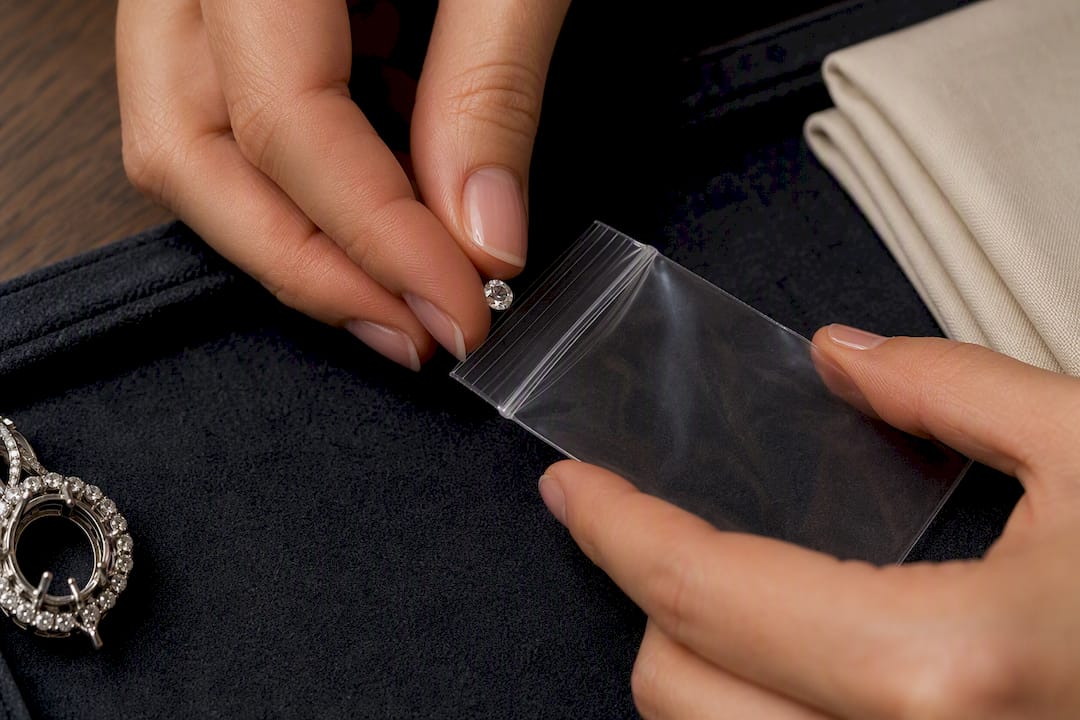
If a stone comes loose or falls out entirely, stop wearing the piece immediately and store the loose stone somewhere safe if you managed to catch it. Wrapping it in tape or tissue on a countertop is how stones get vacuumed up or thrown away by mistake, so a small zippered bag is worth the extra ten seconds. Take both the piece and the stone to a jeweler as soon as possible.
For bent metal, like a warped ring band or a kinked bracelet, resist the urge to bend it back yourself. Metal that’s already stressed can crack or snap with a second bend in the wrong direction, and a jeweler has tools that reshape it without weakening the structure.
If a pearl or opal gets submerged in chlorinated or salt water, remove it, rinse gently with plain fresh water, and let it air dry completely away from direct heat. Don’t use a hairdryer or leave it on a sunny windowsill to speed things up. That’s the same heat exposure that damages these materials in the first place.
Environmental Factors That Affect Jewelry Longevity
Where you live and how you store jewelry day to day both quietly shape how long a piece stays in good condition, separate from anything you do while wearing it.
Direct sunlight is a bigger factor than most people assume. UV exposure over time can fade the color in certain treated or dyed gemstones and dry out organic materials like pearls, which lose the moisture that keeps their surface from micro-cracking. A jewelry box on a sunny windowsill is a slow way to age pieces that would otherwise last decades.
Air quality plays a role too. Sulfur compounds in the air, the kind found in higher concentrations in polluted urban environments, are what cause silver to tarnish faster than it would in cleaner air. Homes near industrial areas or heavy traffic tend to see faster tarnish buildup on silver jewelry left out rather than stored properly.
Humidity is the third factor, and it’s the one people control most easily just by choosing where they store things. A bathroom cabinet, with its constant swings between steam and dry air, accelerates tarnish and can loosen glue on costume pieces over months of exposure. A bedroom drawer or closet, away from that humidity cycle, is a far better long-term home for anything you’re not wearing that day.
Why Care Habits Protect Both Value and Meaning
A piece that’s cleaned and stored well doesn’t just look better, it holds the meaning it was given for longer, which matters most with gifted jewelry. Jewelry pieces meant to be worn often, not saved for special occasions, benefit from a two-minute nightly habit (wipe, close the clasp, put it away separately) that pays off for years. Explore everyday gold jewelry collections built with daily wear in mind.
The Gap Between Jewelry Advice and How People Actually Live
Most jewelry care advice assumes a level of discipline that doesn’t match how people actually get dressed in the morning. Nobody remembers to remove three rings, a bracelet, and a necklace before jumping in the shower on a Tuesday. The advice that actually works isn’t the most thorough version. It’s the version simple enough to survive contact with a rushed weekday.
That’s why “little and often” beats a quarterly deep clean every time, even though a deep clean feels more thorough. A 30 second wipe after work, five nights a week, does more for a piece’s lifespan than one intense scrubbing session every few months, because it never lets buildup get established in the first place. The habit has to be smaller than your willpower on a bad day, or it won’t survive past week two.
The other underrated point is how often people treat all jewelry as one category, when a $40 vermeil chain and a $4,000 diamond ring need completely different handling. Soaking the vermeil the way you’d soak the diamond is the single most common way costume and plated jewelry dies early. Match the care to the material, not to how much you like the piece.
— Georgia
Sources
For guidance beyond this piece, Jewelers of America covers chemical exposure risks in detail, while GIA offers depth on gemstone-specific heat and light sensitivity. The American Gem Society publishes practical cleaning methods by material, and AP News has a solid overview of storage fundamentals. None of these replace an annual visit to a jeweler you trust.
- Jewelry Care | Jewelers of America
- How To Clean Jewelry, According to the Experts | Vogue
- How to care for and store your jewelry | AP News
- Practical Tips for How to Clean Your Precious Jewelry | AGS