

Benefits of Commissioning Bespoke Engagement Rings
Table of Contents
- What Makes Bespoke Engagement Rings Different
- The Bespoke Engagement Ring Process: From Vision to Reality
- How Long Does a Bespoke Ring Take to Make
- Cost of Custom Engagement Rings: Understanding Your Investment
- Choosing the Right Gemstones and Precious Metals
- Investment and Resale Value of Bespoke Pieces
- Ethical Sourcing and Traceability in Bespoke Commissions
- Common Pitfalls to Avoid When Commissioning Your Ring
- Frequently Asked Questions
Last Updated: October 1, 2026
What Makes Bespoke Engagement Rings Different
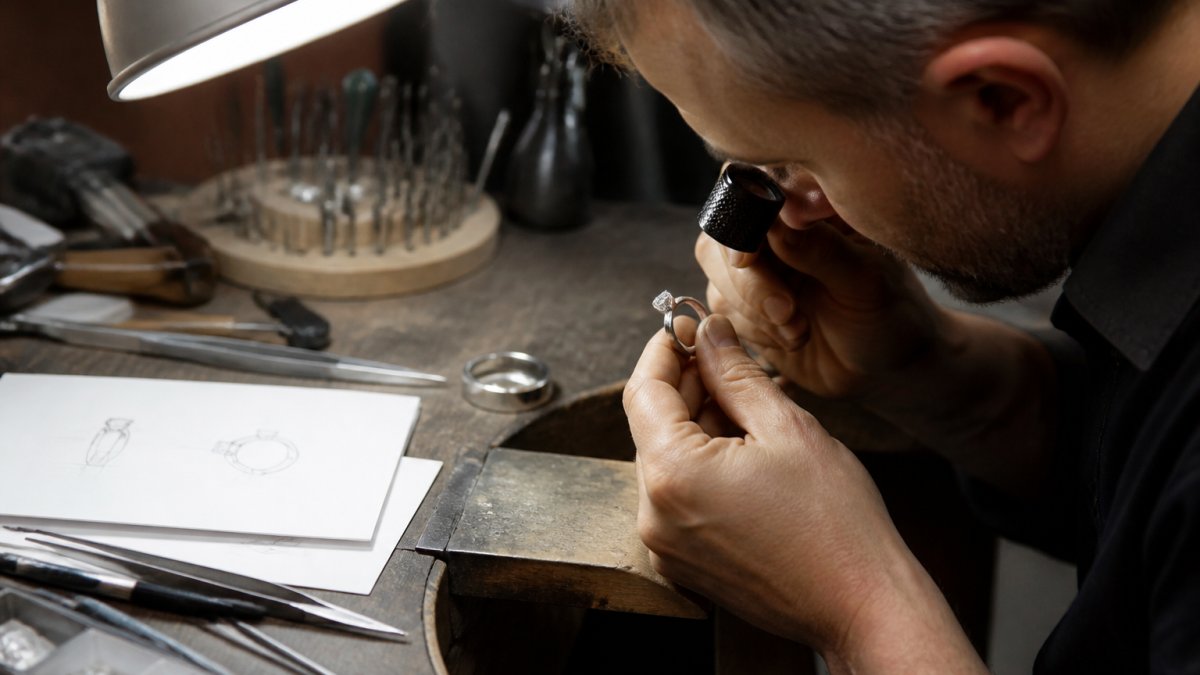
A bespoke engagement ring is custom-designed specifically for you, hand-crafted by master craftsmen who work directly with you throughout creation, reflecting your personal style in ways mass-produced rings cannot.
When you commission bespoke engagement rings, you collaborate with skilled artisans to build something entirely unique, eliminating the compromise of settling for a design that's close enough.
At Diamonds by Daisy, we understand an engagement ring is a symbol of commitment and daily-wear piece you'll treasure for decades. The bespoke process prioritises your vision, ensuring the final ring exceeds your expectations.
The Bespoke Engagement Ring Process: From Vision to Reality
The bespoke process follows a structured approach designed to capture your vision while maintaining quality at every stage.
Design Consultation and Your Design Brief
During your design consultation, a skilled designer listens to your ideas, preferences, and inspirations. You'll discuss lifestyle, aesthetic preferences, gemstone choices, metal preferences, and budget.
The designer asks key questions about style preferences and metals, forming your design brief, a detailed document guiding every subsequent step.
A strong design brief includes reference images, measurements, stone preferences, and meaningful details like engravings or ethically sourced stones. The more detailed your brief, the closer the final ring will match your vision.
CAD Modelling and 3D Rendering
Your craftsman creates a CAD model, a precise digital representation allowing you to see your bespoke engagement ring design from every angle before metal is shaped.
Adjustments like band width or stone height are made digitally at minimal cost.
This stage lets you refine proportions and details until the rendering matches your vision precisely.
Wax Model and Quality Assurance
After CAD approval, your craftsman creates a wax model, a full-scale prototype letting you experience how the design feels on your finger and identify final adjustments before precious metals are used.
You can request modifications based on how the prototype feels; adjustments are far simpler and more cost-effective at this stage than after casting.
How Long Does a Bespoke Ring Take to Make
Bespoke engagement rings typically take several weeks from consultation to delivery.
Complex designs or significant revisions extend the timeline. Expedited services typically cost more.
The timeline reflects deliberate craftsmanship; rushing compromises quality. This is why bespoke engagement rings differ markedly from mass-produced alternatives.
Cost of Custom Engagement Rings: Understanding Your Investment
Commissioning bespoke engagement rings involves multiple cost factors: the gemstone, precious metals, labour, design consultation, and craftsman expertise.
The stone typically represents the largest expense. Precious metals add considerable value, platinum costs more than gold, and hand-crafting requires more material than industrial casting.
Master craftsmen command premium rates for their refined skills. Design consultation, CAD modelling, wax prototyping, and finishing all represent skilled labour contributing to final cost.
For specific pricing information tailored to your preferences and requirements, Diamonds by Daisy can provide a detailed quote based on your design brief, chosen gemstones, and metal selections. This personalised approach ensures transparency and helps you understand exactly where your investment is directed.
Choosing the Right Gemstones and Precious Metals
Your gemstone and metal choices determine both aesthetics and how your ring performs over decades of daily wear.
Gemstone Durability and Lifestyle Fit
Diamonds offer unparalleled brilliance and exceptional durability (10 on the Mohs hardness scale), resisting scratching and requiring minimal care. However, they can chip if struck hard and require periodic professional cleaning.
Sapphires and rubies (9 on the Mohs scale) are nearly as hard as diamonds and suitable for daily wear. Emeralds (7.5-8) are more fragile and sensitive to soaps and temperature changes. Opals (5.5-6.5) are soft and can crack, making them unsuitable for daily wear unless removed during showers and exercise. Moissanite (9.25) offers diamond-like brilliance at lower cost, though its light refraction differs slightly.
Discuss your lifestyle during consultation. Active lifestyles suit harder stones like diamond, sapphire, or moissanite. Softer stones like emerald work for sedentary lifestyles if you remove your ring during risky activities.
Metal Selection and Long-Term Performance
Platinum is exceptionally durable, naturally white, and requires no replating. It's heavier than gold and often the most expensive option.
White gold (18-carat, 75% pure gold) requires periodic rhodium replating to maintain brightness. It's lighter and often more affordable than platinum.
Yellow gold and rose gold don't require replating and maintain their colour naturally. Yellow gold is traditional and warm-toned. Rose gold (an alloy of gold with copper) has gained popularity in recent years for its romantic, vintage aesthetic. Both are slightly softer than white gold, meaning they may scratch more easily with daily wear, though these scratches often add character rather than detracting from the ring's beauty.
Stone-Metal Combinations and Visual Impact
The metal you choose influences how your stone appears. Platinum and white gold create a neutral backdrop that emphasises the stone's colour and brilliance, making diamonds appear maximally bright and coloured gemstones appear vivid. Yellow gold and rose gold create warmth that can enhance the appearance of warm-toned stones (such as fancy-coloured diamonds or rubies) but may mute cool-toned stones (such as blue sapphires or emeralds). Discuss these visual effects with your craftsman during the design consultation; viewing CAD renderings in different metals helps you assess which combination appeals to you most.
Maintenance and Durability Planning
Your choice of stone and metal should factor in long-term maintenance. Diamond and sapphire rings require only occasional professional cleaning and no special care beyond removing your ring during activities that pose risk of impact. Platinum rings rarely need maintenance beyond cleaning. White gold rings require periodic replating to maintain appearance. Emerald, opal, and other softer or more delicate stones require more careful handling and may need professional care if damage occurs.
When commissioning your bespoke engagement ring, ask your craftsman about recommended maintenance schedules and costs. Understand whether your chosen metal will change appearance over time (such as white gold yellowing) and whether you're comfortable with that natural evolution or prefer to maintain its original appearance through replating. This conversation ensures your final ring aligns not just with your aesthetic preferences but with your willingness to maintain it over the decades you'll wear it.
Investment and Resale Value of Bespoke Pieces
A common concern with custom engagement rings centres on resale value. Unlike mass-produced rings that depreciate significantly, well-crafted bespoke engagement rings often retain value more effectively because they represent genuine craftsmanship and quality materials.
The resale value depends primarily on the gemstone quality and precious metal content, factors largely independent of whether the ring was bespoke or ready-made. A high-quality diamond in a well-crafted platinum setting holds value because those materials have inherent worth. The bespoke nature can actually enhance value if the design is timeless and beautifully executed.
However, bespoke engagement rings are fundamentally personal pieces. You commission them to wear and treasure, not as investment vehicles. Those who approach them primarily as financial assets often find themselves disappointed. The true value lies in owning something uniquely yours, a ring that couldn't be replicated on any high street and that reflects your individual taste perfectly.
Ethical Sourcing and Traceability in Bespoke Commissions
Conscious consumers increasingly prioritise knowing where their gemstones originate and how they were sourced. Bespoke engagement rings offer a significant advantage here: you can request specific sourcing standards and trace your stone's provenance throughout the commissioning process.
When commissioning bespoke engagement rings, you can discuss ethical sourcing directly with your craftsman. Request conflict-free certification, fair-trade sourcing, or recycled precious metals if these values matter to you. Some clients specifically request lab-grown diamonds or ethically mined gemstones from verified suppliers.
This transparency is difficult with mass-produced rings, where supply chains are opaque and sourcing information unavailable. Bespoke commissions allow you to make informed choices aligned with your values. Diamonds by Daisy works with suppliers who prioritise ethical practices, ensuring your bespoke engagement ring reflects not just your aesthetic but your principles. We provide peace of mind with a 30-day satisfaction guarantee.
Common Pitfalls to Avoid When Commissioning Your Ring
Understanding where commissions commonly go wrong helps you navigate the process successfully and protects both your investment and timeline. The most frequent mistake is insufficient communication during the design consultation. Vague preferences, such as "I like something classic" without reference images or specific details, lead to designs that miss the mark. Instead, gather 5-10 reference images from jewellery websites, Pinterest, or Instagram showing rings you genuinely love. Note what appeals to you: the band width, the height of the stone setting, the metal finish (matte versus polished), and any decorative elements.
Frequently Asked Questions
What does it mean to have a bespoke engagement ring?
A bespoke engagement ring is a custom-designed piece created specifically for you, from initial concept through final craftsmanship. Unlike mass-produced rings, bespoke commissions involve a design consultation where you work with a master craftsman to define every detail, gemstone selection, precious metal choice, setting style, and personalised flourishes. The result is a one-of-a-kind ring that reflects your personal style and sentimental values, often incorporating heirloom elements or specific design requirements that simply aren't available off the shelf.
Is a bespoke engagement ring more expensive than buying off the shelf?
Bespoke commissions often cost more than ready-made rings because you're paying for bespoke craftsmanship, personalised design consultation, and hand-crafted creation. However, the cost difference depends on your gemstone selection, precious metal choice, and design complexity. Many customers find the premium justified by receiving exactly what they want rather than compromising on a mass-produced design. For pricing details on custom engagement rings, consult directly with a bespoke jeweller to discuss your specific requirements and budget.
How long does the process of commissioning a bespoke ring take?
The timeline for a bespoke ring typically ranges from several weeks, though this varies depending on design complexity, gemstone sourcing, and the craftsman's current workload. Discussing timelines upfront with your jeweller ensures the commissioning process aligns with your needs, particularly if you have a specific date in mind.
What should I consider when choosing gemstones for a bespoke commission?
Gemstone selection is a cornerstone of bespoke design. Consider the four Cs, carat, cut, colour, and clarity, which directly affect both appearance and value. Work with your craftsman to understand how each factor influences the stone's sparkle and durability. You'll also choose between diamonds and alternative precious stones like sapphires or emeralds, depending on personal preference and sentimental meaning. Ethical sourcing and traceability matter too; reputable bespoke jewellers can provide documentation on stone origin, ensuring peace of mind about your investment.