

Diamond Fluorescence: What It Is and Whether It Matters
Table of Contents
- What Is Diamond Fluorescence?
- Understanding the Diamond Fluorescence Scale
- How Fluorescence Affects Diamond Sparkle and Visual Performance
- Diamond Fluorescence Price Impact and Value Retention
- Fluorescence in Different Diamond Colour Grades
- Does Diamond Fluorescence Matter? A Practical Decision Guide
- Checking Fluorescence on Your Diamond Grading Report
- Frequently Asked Questions
Last Updated: September 20, 2026
What Is Diamond Fluorescence?
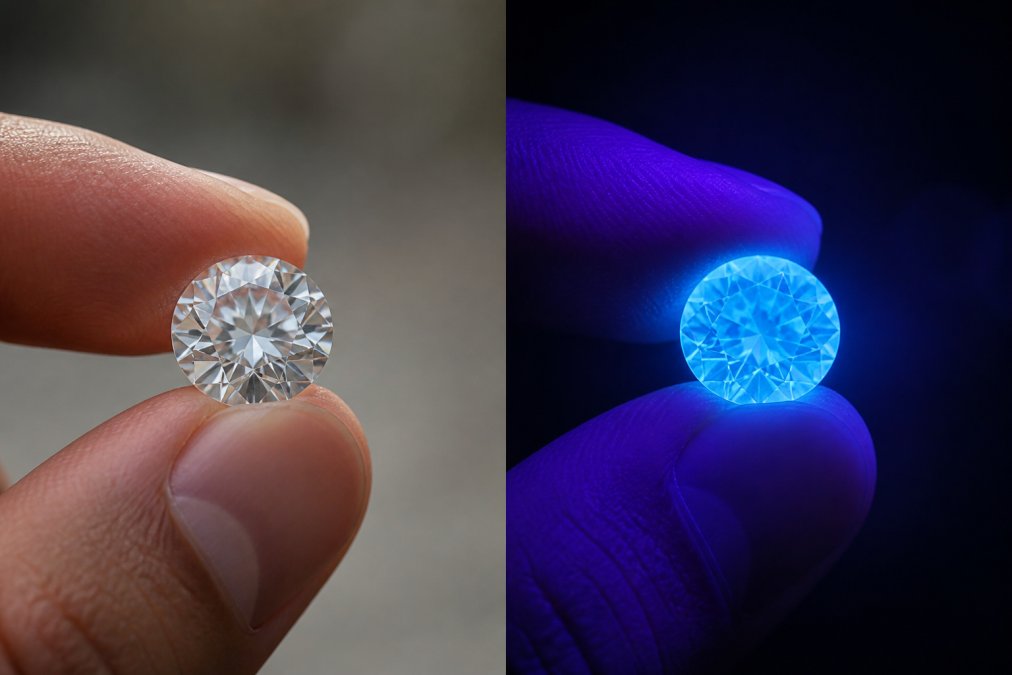
Diamond fluorescence is the glow a diamond emits when exposed to ultraviolet (UV) light. This optical property happens because of trace elements trapped within the diamond's crystal structure during its formation. When UV light hits these elements, they absorb the energy and release it as visible light, usually blue.
It's worth understanding because fluorescence affects how a diamond looks in certain lighting conditions. Not all diamonds fluoresce. Some show no reaction to UV light at all. Others glow brightly under black light but appear completely normal in daylight.
Fluorescence isn't inherently good or bad, but it matters in specific situations, and knowing when is key.
How fluorescence occurs in diamonds
Fluorescence happens because of impurities in the diamond. Nitrogen and boron are the most common culprits. When UV light strikes these trace elements, they get energised. They then release that energy as visible light, creating the characteristic glow.
The intensity of the glow depends on how much of these elements are present and how they're arranged within the crystal lattice. A diamond with more trace elements will fluoresce more intensely than one with very few.
This is a natural process. It doesn't damage the diamond or indicate poor quality. Many high-quality diamonds fluoresce. The fluorescence is simply a side effect of how the stone formed deep underground.
Long-wave ultraviolet light and the blue glow
Long-wave ultraviolet light is the specific type that triggers fluorescence in diamonds. It's the same UV light used in black lights at nightclubs and gemological laboratories. When you hold a fluorescent diamond under a black light, you'll see a blue glow emerge.
The blue colour is the most common. Some diamonds glow orange, yellow, or even red under UV light, depending on which trace elements are present. But blue fluorescence accounts for the vast majority of cases.
In everyday life, you won't encounter long-wave UV light. Sunlight contains some UV, but not enough to trigger noticeable fluorescence in most diamonds. This is why a fluorescent diamond looks completely normal in daylight, the UV component of natural light is too weak to activate the glow.
Understanding the Diamond Fluorescence Scale
The Gemological Institute of America (GIA) grades fluorescence on a five-point scale. Every diamond grading report includes a fluorescence rating. Understanding these grades helps you interpret what you're seeing on your certification.
Intensity grades: None, Faint, Medium, Strong, and Very Strong
None means the diamond shows no reaction to long-wave UV light. These diamonds are non-fluorescent.
Faint fluorescence is barely visible under a black light. Most people wouldn't notice it without looking carefully. It has virtually no effect on the diamond's appearance in normal lighting.
Medium fluorescence is clearly visible under UV light but still doesn't affect how the diamond looks in daylight. This is where the glow becomes obvious if you're looking for it.
Strong fluorescence is intense and obvious under black light. Some people report that very strong fluorescence might affect appearance in bright sunlight, though this is rare and depends on the diamond's colour grade.
Very Strong fluorescence is the most intense. These diamonds glow brightly under UV light. This is the only grade where fluorescence occasionally causes a noticeable effect on the diamond's visual performance in real-world conditions.
Most diamonds fall into the None, Faint, or Medium range. Strong and Very Strong are less common.
How Fluorescence Affects Diamond Sparkle and Visual Performance
The short answer: for most diamonds, fluorescence makes no practical difference to how the stone looks. A diamond with Medium fluorescence will sparkle and shine identically to one with None in normal daylight.
The real impact only appears in specific, rare scenarios. Very Strong fluorescence in certain colour grades might create a subtle milky or oily appearance in bright sunlight. But this effect is uncommon, and many people never notice it.
The 'milky' and 'oily' appearance myth
This myth persists because it sounds plausible. The concern is that Very Strong fluorescence might create a cloudy or oily look that reduces sparkle. The reality is more nuanced.
Studies and real-world experience show that Very Strong fluorescence rarely causes a noticeable milky appearance. When it does happen, it's usually only visible in very bright sunlight, and even then, only to someone looking closely. In indoor lighting or on an overcast day, you won't see it.
The myth gained traction because fluorescence can theoretically affect light refraction inside the stone. But the effect is so subtle that most people can't detect it. Even gemologists sometimes debate whether it's actually there or just psychology.
What matters: if you're buying a diamond with Very Strong fluorescence, ask to see it in bright sunlight before committing. If it looks good to you in that lighting, you're fine. The 30-day satisfaction guarantee gives you time to assess the stone in your own home under your own lighting conditions.
Real-world lighting scenarios
In a typical home with indoor electric lighting, fluorescence makes zero difference. Your diamond will look identical whether it fluoresces or not.
In bright sunlight outdoors, a Non-fluorescent diamond and a Medium-fluorescent diamond will look the same. Only Very Strong fluorescence might show a subtle effect, and only in the brightest conditions.
In a jeweller's showroom under halogen or LED spotlights, fluorescence won't be noticeable. The lighting in most shops is designed to make diamonds sparkle, and it works the same way regardless of fluorescence.
On an overcast day or indoors under office lighting, you won't see any fluorescence effect at all. Long-wave UV light simply isn't present in sufficient quantity.
The practical takeaway: buy the diamond you love based on how it looks in normal conditions.
Diamond Fluorescence Price Impact and Value Retention
Fluorescence does affect price, but not as dramatically as many people think. The impact depends on the diamond's colour grade and the intensity of the fluorescence.
Price discounts and market perception
Diamonds with Very Strong fluorescence sometimes trade at a slight discount, typically 5-10% less than a non-fluorescent equivalent. This discount exists because some buyers worry about the milky appearance myth, even though that concern is rarely justified.
Resale value considerations
When you eventually sell or trade in a diamond, the fluorescence rating will be on the grading report. Buyers will see it and factor it into their offer. But the impact is small enough that it shouldn't drive your purchasing decision.
Fluorescence in Different Diamond Colour Grades
The impact of fluorescence varies depending on the diamond's colour. This is where the nuance becomes important.
Does Diamond Fluorescence Matter? A Practical Decision Guide
The honest answer depends on your specific situation. For most buyers, fluorescence doesn't matter at all. For a small subset, it's worth considering.
When fluorescence is worth considering
You should think about fluorescence if you're buying a colourless diamond (D, E, or F) and it has Very Strong fluorescence. In this specific combination, there's a small chance you might notice a subtle milky appearance in bright sunlight. It's rare, but possible.
When it makes no practical difference
For near-colourless and lower-colour diamonds, fluorescence makes no practical difference. Buy based on the four Cs and your personal preference. The fluorescence rating is irrelevant to how the stone will look or perform.
Checking Fluorescence on Your Diamond Grading Report
Your diamond's fluorescence grade appears on the grading report from the gemological laboratory. Learning to read this section takes just a moment.
| Fluorescence Grade | Visibility Under Black Light | Effect on Appearance | Price Impact | Best For |
|---|---|---|---|---|
| None | No glow | None | None | All buyers; safest choice |
| Faint | Barely visible | None | None | All buyers; no concern |
| Medium | Clearly visible | None | None | All buyers; no concern |
| Strong | Obvious glow | Rarely noticeable | Minimal | All buyers; minor consideration |
| Very Strong | Intense glow | Possible in bright sunlight | 5-10% discount | Lower colour grades benefit; colourless diamonds warrant inspection |
Frequently Asked Questions
Does fluorescence make a diamond look cloudy or milky?
No, this is a widespread misconception. Fluorescence itself does not cause cloudiness or a milky appearance in diamonds. Some diamonds with strong fluorescence may appear slightly hazy, but this is caused by other optical properties, not the fluorescence alone. The vast majority of fluorescent diamonds look completely clear and brilliant under normal lighting. Checking your diamond grading report will show whether any haziness is noted separately from the fluorescence intensity rating.
How does diamond fluorescence impact the resale value?
Fluorescence can affect resale value, but the impact is usually modest. Diamonds with strong or very strong fluorescence may sell at a small discount compared to non-fluorescent stones of the same quality, as some buyers prefer to avoid the feature. However, for faint or medium fluorescence, the price difference is negligible. If you're buying for personal enjoyment rather than pure investment, fluorescence should not be your primary concern. Always request the diamond grading report to see the fluorescence rating before purchase.
Is it bad if a diamond fluoresces under UV light?
Fluorescence itself is not bad, it's simply a natural property of some diamonds caused by trace elements in their crystal structure. Whether it matters depends on your priorities. Strong fluorescence may slightly reduce the diamond's perceived brilliance in some lighting conditions, but many people notice no visual difference at all. The key is understanding what you're buying: check the diamond fluorescence scale on your certification, view the stone in person if possible, and decide whether the feature matters to you or affects the price in a way that concerns you.
Should you buy a diamond with fluorescence?
Yes, you can confidently buy a diamond with fluorescence if the price and appearance suit you. Fluorescence does not make a diamond fake or inferior. Many beautiful, high-quality diamonds fluoresce. The decision comes down to personal preference and value: if a fluorescent diamond is priced lower than a non-fluorescent stone of identical cut, clarity, and colour, and you're satisfied with its appearance under normal lighting, it can be excellent value. Always review the grading report, ask for high-quality photographs, and use the 30-day satisfaction guarantee to ensure you're happy with your choice.