

Is Vintage Jewellery Worth It for Investment?
Table of Contents
- Understanding Vintage vs Antique Jewellery
- Does Vintage Jewellery Appreciate in Value?
- Factors Affecting Antique Jewellery Value
- The Real Costs of Vintage Jewellery Investment
- Alternatives to Traditional Jewellery Insurance Policies
- How to Evaluate Vintage Jewellery for Investment Potential
- Vintage Jewellery as Portfolio Diversification
- The Verdict: Is Vintage Jewellery Right for You?
Last Updated: August 30, 2026
Understanding Vintage vs Antique Jewellery
Antique jewellery is typically defined as pieces at least 100 years old, while vintage jewellery refers to items between 20 and 100 years old. This distinction affects value, rarity, and investment potential significantly. Estate jewellery describes previously owned pieces regardless of age. Understanding these categories helps you assess what you're buying, a Victorian brooch from 1880 carries different investment characteristics than a 1970s cocktail ring.
The craftsmanship in older pieces often reflects techniques that have become rare or lost entirely. Georgian and Edwardian jewellery showcases hand-finishing methods that modern mass production rarely replicates. Recognising these distinctions helps you understand why certain pieces command premium prices at auction.
Does Vintage Jewellery Appreciate in Value?
Vintage jewellery can appreciate, but not automatically and not uniformly across all pieces. The answer depends entirely on specific factors: rarity, condition, provenance, and current market demand.
Precious metals provide a baseline value floor. Gold and platinum prices fluctuate with commodity markets, so vintage jewellery containing these materials holds intrinsic value regardless of design or age. However, real appreciation potential comes from craftsmanship, historical significance, and collector demand.
Period pieces from highly desirable eras, Art Deco, Victorian, and Edwardian, tend to appreciate more consistently than more recent vintage pieces. A well-documented Art Deco diamond ring from the 1920s has stronger appreciation potential than a 1980s cocktail ring, even if both contain similar carat weights. Provenance becomes critical here. Pieces with documented ownership history, auction records, or designer attribution command higher prices and appreciate more reliably.
The market for vintage jewellery has grown substantially over the past decade, driven by younger buyers seeking tangible assets and unique pieces unavailable in contemporary collections.
Factors Affecting Antique Jewellery Value
Rarity and Provenance
Rarity is the primary driver of value in antique jewellery investment. A piece that survives in excellent condition from a limited production run or specific historical period commands exponentially higher prices than common variants from the same era.
Provenance, the documented ownership history of a piece, dramatically influences investment potential. Jewellery with clear provenance, particularly items that have appeared in auction catalogues, museum collections, or belonged to notable figures, appreciates more predictably. Designer attribution adds substantial value. Signed pieces from renowned makers like Cartier, Tiffany, or Fabergé appreciate far more reliably than unsigned pieces of similar quality and age.
Limited production runs and period-specific designs increase rarity. Art Deco jewellery represents a relatively concentrated period of distinctive aesthetic. Pieces exemplifying the geometric forms and bold designs of that era hold value better than transitional pieces.
Condition and Wearability
Condition directly impacts both current resale value and investment trajectory. A piece in pristine condition, with original finishes, intact gemstones, and no significant wear, commands 20-40% premiums over pieces showing visible age (peer-reviewed research).
Wearability affects investment potential practically. A delicate Victorian ring that cannot withstand daily wear has a narrower market than a sturdy Art Deco piece suitable for modern use. Pieces designed for daily wear appreciate more reliably because they appeal to broader buyer pools.
Damage significantly impacts value. Missing gemstones, bent prongs, broken clasps, or structural damage reduce investment potential substantially. Restoration costs can exceed the piece's market value.
Hallmarks and Authenticity
Hallmarks serve as authentication markers and value indicators. British hallmarking standards, administered by the four Assay Offices, provide independent verification of metal content and, historically, the year of manufacture. A properly hallmarked piece carries more investment credibility than unmarked jewellery.
The presence of maker's marks, date stamps, and metal purity marks increases confidence in authenticity and value. Pieces bearing hallmarks from London, Birmingham, Sheffield, or Edinburgh assay offices have documented proof of their composition and approximate age.
Authenticity verification becomes critical as vintage jewellery prices rise. Reproduction pieces and convincing fakes exist in the market. When investing in vintage jewellery, professional authentication through qualified valuers protects your investment.
The Real Costs of Vintage Jewellery Investment
Insurance and Security Expenses
Vintage jewellery investment requires proper insurance, and this ongoing cost significantly impacts overall investment returns. Standard homeowners' insurance typically covers jewellery only up to modest limits, often £1,500 to £2,500 per item (fca.org.uk). Valuable vintage pieces require specialist jewellery insurance policies.
Specialist insurance policies cost approximately 1-2% of the item's insured value annually (abi.org.uk). For a £10,000 vintage ring, you'd pay £100-£200 yearly. Over a decade, this represents £1,000-£2,000 in costs that reduce net appreciation.
Insurance companies require professional valuations before issuing policies. These valuations cost approximately £90 per item, with additional costs for detailed written reports. Bank safety deposit boxes typically cost £50-£150 annually.
Liquidity Challenges
Vintage jewellery is fundamentally illiquid compared to financial assets. Converting a piece to cash takes time, involves transaction costs, and may require accepting below-market prices depending on urgency.
Selling through auction houses involves commission fees of 10-20% on the hammer price. If your £10,000 ring sells for £10,000 at auction, you receive £8,000-£9,000 after commissions. Direct sales to dealers typically result in steeper discounts, with dealers offering 40-60% of retail value.
Auction house sales involve cataloguing, photography, marketing, and waiting for the sale date, typically 2-4 months. This illiquidity means vintage jewellery isn't suitable for investors needing quick access to capital. Market timing affects realisation prices significantly.
Alternatives to Traditional Jewellery Insurance Policies
Professional appraisal services offer practical alternatives to standard insurance policies for documenting value. The Birmingham Assay Office provides professional valuations specifically designed for insurance, probate, and private sale purposes, with digital reports secured using blockchain technology for tamper-resistant records.
Specialist authentication services like Mozeris Fine Antiques provide comprehensive authentication combining physical examination, scientific material testing, and historical verification. Authentication certificates add credibility and value to pieces, making them easier to sell.
Auction house valuations offer another option. Chiswick Auctions and Lyon & Turnbull provide free or low-cost valuations for items being considered for sale, with valuations informed by current market demand and international auction results.
The most practical approach combines multiple services: professional appraisal for insurance documentation, specialist authentication for high-value pieces, and auction house valuations when considering sale.
How to Evaluate Vintage Jewellery for Investment Potential
Getting Professional Appraisals
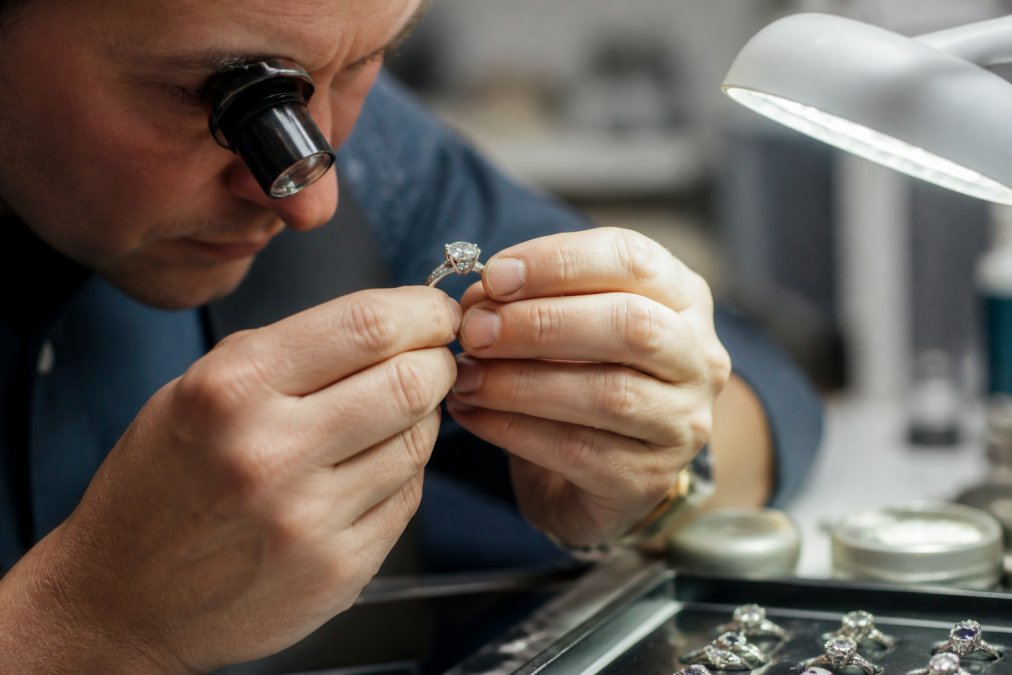
Professional appraisal is essential for serious vintage jewellery investment. A qualified appraiser provides documented assessment of authenticity, condition, and market value, essential for insurance, legal purposes, and investment tracking.
Seek appraisers registered with the Jewellery Valuers Association or similar professional bodies. Valuations should include detailed condition reports, photographic documentation, and specification sheets listing metal composition, gemstone details, measurements, and any repairs or alterations. Request updated valuations every 3-5 years as market values shift.
Spotting Quality and Craftsmanship
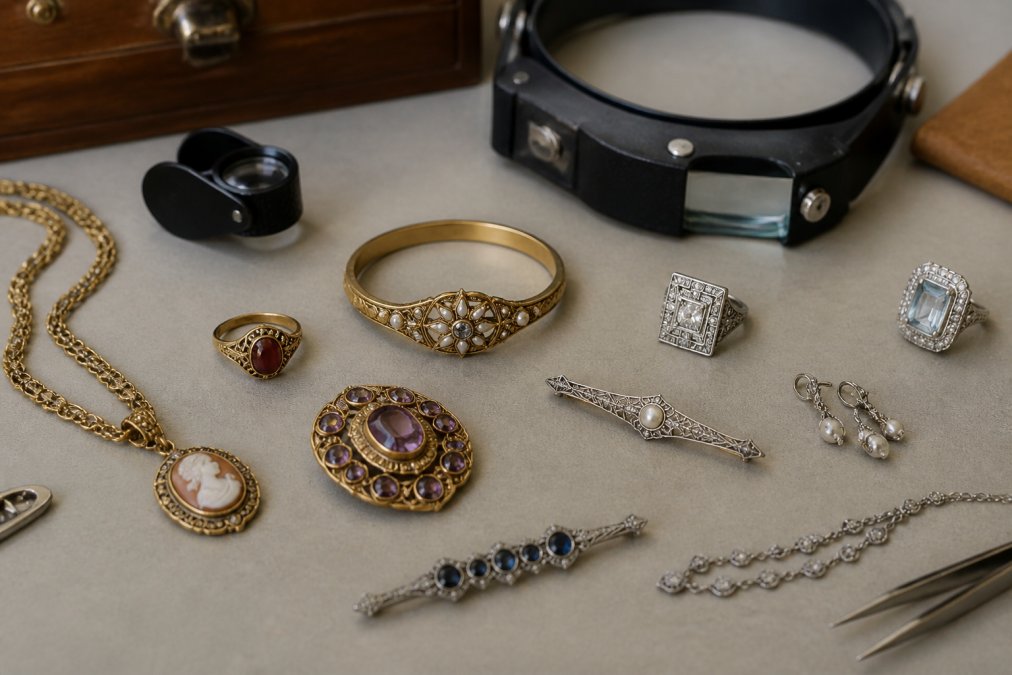
Quality assessment requires understanding period-specific techniques and design standards. Victorian jewellery emphasises ornamental detail and often incorporates seed pearls, enamel work, and intricate filigree. Edwardian pieces showcase delicate platinum work and brilliant-cut diamonds. Art Deco favours geometric forms, bold colours, and symmetrical designs.
Examine hallmarks and maker's marks carefully. Pieces bearing marks from respected assay offices provide documented proof of metal content and approximate age. Gemstone quality requires specialist assessment, cut and clarity matter enormously. A well-cut Victorian diamond with excellent clarity commands exponentially higher prices than a poorly cut stone of similar carat weight.
Craftsmanship assessment involves examining construction details. Hand-finished edges, precise prong settings, and meticulous stone-setting indicate quality. A skilled appraiser can identify alterations like replaced stones, re-plated surfaces, or re-soldered joints, which reduce investment value compared to original pieces.
Vintage Jewellery as Portfolio Diversification
Vintage jewellery offers genuine portfolio diversification benefits, but only when approached strategically. Precious metals provide commodity exposure. Gold and platinum prices fluctuate based on global economic conditions, currency movements, and industrial demand.
Rarity and collector premiums provide alternative return sources. While commodity prices fluctuate, the collector premium, the additional value paid for rarity, provenance, and craftsmanship, can appreciate independently. This dual-return structure offers unique diversification compared to financial assets.
However, vintage jewellery should represent only a small portfolio allocation, typically 5-10% of total assets. The illiquidity, ongoing costs, and market volatility make it unsuitable as a core holding. The most effective diversification strategy combines multiple eras and styles, spreading risk across different aesthetic periods and market cycles.
The Verdict: Is Vintage Jewellery Right for You?
Vintage jewellery can be a worthwhile investment, but only for specific investor profiles with realistic expectations about returns, costs, and liquidity.
Vintage jewellery investment makes sense if you have capital to deploy long-term (minimum 10-year horizon), can afford ongoing insurance and storage costs without impacting returns, appreciate the aesthetic and historical value beyond pure financial returns, and have expertise or access to professional guidance for authentication and valuation.
The investment case rests on three pillars: strong provenance with documented ownership history, excellent condition requiring minimal restoration, and sustained collector demand for that specific style or period.
At Diamonds by daisy, we understand that vintage-inspired jewellery appeals to investors and collectors seeking tangible assets with aesthetic value. Our curated collection of fine jewellery, meticulously crafted with handpicked gemstones and precious metals, offers investment-grade pieces with the provenance and quality standards that serious collectors demand.
Vintage jewellery investment requires patience, expertise, and acceptance of illiquidity. Returns depend entirely on piece selection, market timing, and your willingness to hold through market cycles. For investors meeting these criteria, vintage jewellery offers genuine diversification and the intangible satisfaction of owning tangible beauty with historical significance.
Frequently Asked Questions
Q: What defines the difference between vintage and antique jewellery?
A: Antique jewellery is typically at least 100 years old, whilst vintage pieces are generally 20-100 years old. Antique jewellery often commands higher prices due to rarity and historical significance, particularly pieces from Georgian, Victorian, Edwardian, or Art Deco periods. Vintage jewellery from mid-20th century eras can also appreciate, though usually at a slower rate than true antiques. Understanding this distinction is crucial when evaluating vintage jewellery for investment potential.
Q: Does vintage jewellery appreciate in value over time?
A: Vintage jewellery can appreciate, but appreciation is not guaranteed and depends heavily on specific factors. Pieces with exceptional craftsmanship, rarity, provenance, and historical significance tend to hold or increase in value. However, market demand fluctuates, and many vintage pieces appreciate modestly or remain stagnant. Unlike precious metals with a spot price, vintage jewellery value is driven by collector demand and condition, making it less predictable than traditional investments.
Q: What factors affect antique jewellery value the most?
A: Key factors include rarity (fewer pieces made increases value), provenance (documented history strengthens investment potential), condition (wearable pieces command higher prices), craftsmanship quality, hallmarks and authenticity certification, and market demand for specific periods. Gemstone quality, precious metal content, and historical significance also play important roles. Professional appraisals from qualified valuers help determine true market value beyond aesthetic appeal.
Q: What are the main risks of investing in vintage jewellery?
A: Liquidity is a significant risk; selling vintage pieces can take time and may yield less than purchase price. Market volatility means collector demand can shift unpredictably. Authenticity fraud is common, making professional authentication essential. Insurance and security costs add ongoing expenses. Additionally, condition deterioration requires specialist care and restoration, which can be costly. Unlike gold spot prices, vintage jewellery values are subjective and dependent on buyer interest, making returns uncertain.
Q: How can I verify that vintage jewellery is authentic before investing?
A: Seek professional authentication from qualified valuers registered with recognised bodies. Services like the Birmingham Assay Office, Mozeris Fine Antiques, or specialist jewellers provide detailed examination of hallmarks, signatures, materials, and historical verification. Request authentication certificates and condition reports. Examine hallmarks for period-appropriate techniques and maker's marks. Buy from reputable dealers who provide provenance documentation. Avoid pieces without clear history or authentication, as they carry higher fraud risk and lower investment value.
Vintage jewellery investment demands careful selection and realistic cost expectations. Whether it aligns with your portfolio depends on your investment horizon, risk tolerance, and ability to manage ongoing expenses. If you're seeking investment-grade pieces with documented provenance and exceptional craftsmanship, Diamonds by daisy offers professionally curated fine jewellery backed by our 30-day satisfaction guarantee, providing confidence in every acquisition.
This article was written using GrandRanker