

3 Habits That Prevent Silver Tarnish for Everyday Jewelry Owners
You can’t stop tarnish forever, but you can slow it down dramatically with three habits: wear your silver often but take it off before lotions, perfume, or a swim; store it sealed in an anti-tarnish bag or pouch; and wipe it down with a soft cloth after each wear. Do those three things consistently and most sterling silver pieces stay bright for a significantly longer time between cleanings when these habits are followed.
TL;DR:
- Storing silver in anti-tarnish bags or sealed containers with silica gel can significantly slow tarnish by blocking sulfur and moisture.
- Frequent wiping with a soft cloth after each wear removes oils and sweat that can accelerate tarnishing, especially when done consistently.
- Tarnish forms faster than oxygen exposure due to silver’s strong chemical attraction to sulfur compounds, with humidity further speeding the reaction.
- Avoid using abrasive cleaners, vinegar, lemon juice, or dipping plated jewelry, as they can damage delicate surfaces and accelerate tarnish.
- Maintaining relative humidity below 50% and minimizing contact with sulfur-releasing materials prolongs silver’s shine and appearance.
Table of Contents
- Why Silver Tarnishes: The Chemistry Behind the Dullness
- Daily Habits That Slow or Speed Up Tarnishing
- Storage Best Practices to Slow Tarnish
- Preventive Products Worth Using (and Ones to Question)
- Safe Cleaning Methods for Existing Tarnish
- Common Mistakes That Damage Silver Fast
- What Conservation Research Says (and Georgia’s Practical Take)
- Why a Few Minutes a Month Protects More Than the Metal
- Care Made Easy With Diamonds by Daisy
- Sources
- FAQ
Why Silver Tarnishes: The Chemistry Behind the Dullness
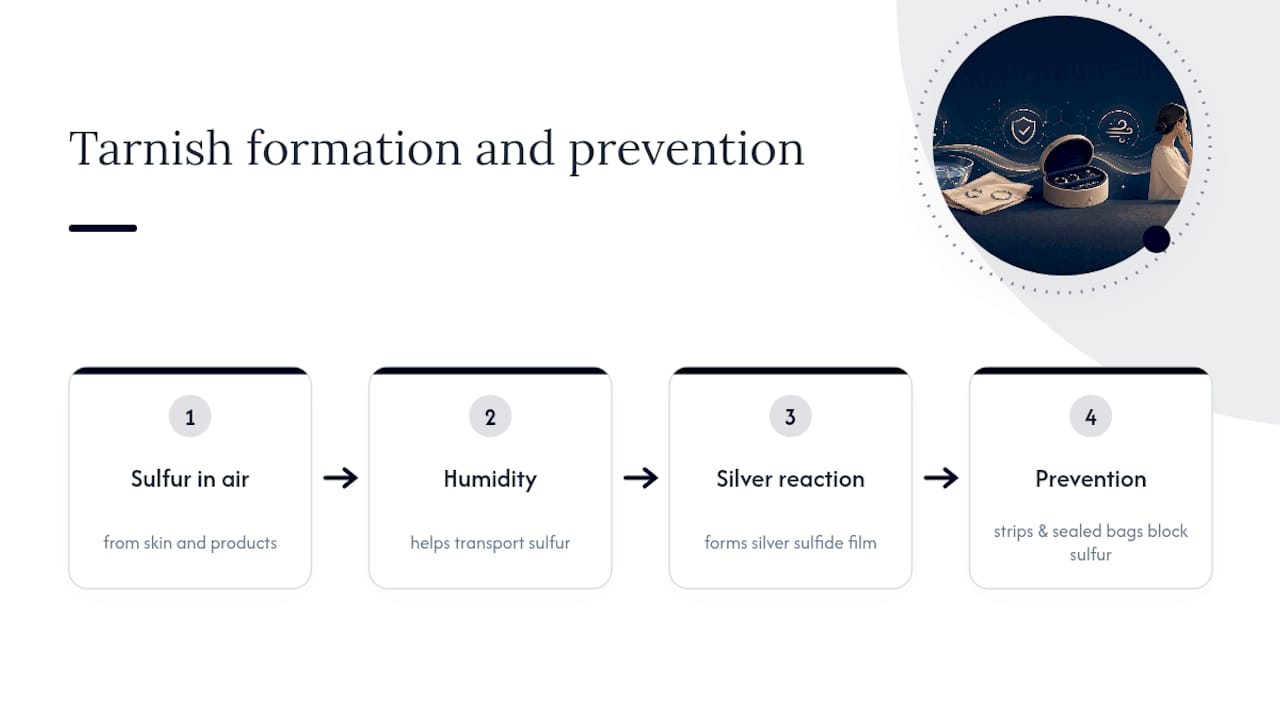
Tarnish isn’t dirt. It’s a chemical reaction. Silver reacts with sulfur compounds in the air, on your skin, and in household products, forming a thin layer of silver sulfide, the black or yellowish film you see creeping across a ring or chain. Humidity speeds the whole process up, since moisture in the air helps sulfur compounds reach the metal surface faster.
Here’s the part most people don’t know: silver reacts with sulfur far more aggressively than it does with oxygen. Molecular dynamics research found that silver atoms actually diffuse toward sulfur, pulled almost magnetically toward it, which explains why sulfide tarnish forms so much faster than the slower oxide tarnish you’d expect from plain air exposure.
That single fact reshapes how you should think about prevention. Oxygen isn’t your enemy. Sulfur is. Every effective strategy in this article, from anti-tarnish strips to sealed storage bags, exists to keep sulfur compounds away from your silver, not to keep out air in general.
Daily Habits That Slow or Speed Up Tarnishing
What you do between wears matters more than what you do during a deep clean. Skin oils and the light friction of daily wear actually help keep silver polished, so pieces worn often can tarnish more slowly than pieces left sitting in a drawer.
But timing and contact matter just as much as frequency:
- Put jewelry on last, after lotion, perfume, hairspray, and makeup have fully dried.
- Take rings and bracelets off before swimming, showering, or cleaning the house.
- Wipe pieces with a soft, lint-free cloth after each wear to lift sweat and oil before they react with the metal.
- Keep silver away from eggs, onions, and other high-sulfur foods during cooking or eating.
- Never let silver touch bleach, chlorine, or ammonia-based cleaners, even briefly.
Pro Tip: Keep a small polishing cloth in your bathroom drawer next to your jewelry box. A ten-second wipe before bed takes less time than brushing your teeth and does more for tarnish prevention than any spray or dip.
Storage Best Practices to Slow Tarnish
How you store silver when you’re not wearing it often matters more than how you clean it. The goal is simple: block sulfur, block moisture, block direct contact with anything reactive.
- Use anti-tarnish bags or treated cloths. These are lined with materials that absorb sulfur compounds before they reach the metal.
- Add silica gel packets or another desiccant to your jewelry box or drawer to pull excess moisture out of the air.
- Seal smaller pieces in zip-top bags with the air pressed out. This is one of the most effective short-term fixes, since it starves the reaction of both sulfur and humidity.
- Keep silver away from rubber, wool, leather, and certain woods like oak, all of which release sulfur compounds as they age. Skip newspaper wrapping too.
- Avoid humid basements and bathrooms for long-term storage. Conservation guidance recommends keeping relative humidity below roughly 50% wherever silver is stored or displayed.
Christie’s care guidance echoes this, specifically flagging rubber and certain woods as materials to keep well away from stored silver.
Preventive Products Worth Using (and Ones to Question)
A handful of low-cost products do most of the heavy lifting here. Polishing cloths are the safest option for regular upkeep. They’re pretreated with a mild abrasive and a protective compound that buffs away light tarnish without stripping metal. Replace one once it looks gray or feels dry, since a saturated cloth stops working and can even redeposit grime.
- Anti-tarnish strips or tabs absorb airborne sulfur inside a drawer or jewelry box; replace them regularly every few months to maintain effectiveness.
- Treated storage bags work the same way as strips but double as physical protection against scratches.
- Silica gel packets tackle humidity rather than sulfur directly, so pairing them with strips covers both triggers at once.
Chemical inhibitors and lacquer coatings deserve more caution than marketing suggests.
Conservators generally avoid commercial tarnish inhibitors and lacquers because they can form a wax-like layer that traps moisture unevenly. If that coating ever fails or wears through in spots, it can actually cause patchy, harder-to-remove tarnish and complicate any future conservation work.
If you’re protecting a sentimental or antique piece, skip the lacquer and rely on sealed storage instead.
Safe Cleaning Methods for Existing Tarnish
Light tarnish rarely needs anything aggressive. Start gentle and only escalate if the milder step doesn’t work.
- Wash with mild soap and warm water first. A soft cloth and a few drops of dish soap handle surface grime and light discoloration. Dry thoroughly afterward, since leftover moisture invites more tarnish.
- Reach for a silver polishing cloth for moderate tarnish. Good Housekeeping’s testing rates these among the most reliable at-home tools, precisely because they combine gentle abrasion with a protective residue.
- Try a baking soda paste for heavier buildup on solid sterling pieces. Mix baking soda with a little water, rub gently with a soft cloth, then rinse and dry completely.
- Use the aluminum foil and baking soda soak for badly tarnished solid silver. Line a bowl with foil, add hot water and baking soda, and submerge the piece; the electrochemical reaction pulls sulfur off the silver and onto the foil. This method works well on solid sterling but should never touch plated jewelry, glued gemstones, or anything with an adhesive setting, since the reaction and the soak can loosen stones or strip thin plating.
Skip frequent dips and abrasive polishes on plated or antique pieces altogether. If a piece is heavily tarnished, gem-set, or clearly silver plated rather than solid, a jeweler can re-plate or professionally clean it without the risk of a DIY method going wrong. Not sure which one you own? A quick sterling versus plated check settles it before you start scrubbing.
Common Mistakes That Damage Silver Fast
A few habits do more harm than tarnish ever would.
- Never run silver through the dishwasher. Heat, harsh detergent, and contact with other metals accelerate tarnish and can pit the surface.
- Skip steel wool and other abrasive scrubbers. They scratch the surface permanently.
- Don’t apply undiluted vinegar or lemon juice to delicate or antique pieces. The acid can eat into thin plating and damage soft gemstones.
- Avoid toothpaste and commercial silver dips on plated or gemstone jewelry. Both are too abrasive or too harsh for anything beyond solid, unadorned sterling.
- Never wrap silver in newspaper or store it near rubber bands, rubber-backed drawer liners, or certain woods.
What Conservation Research Says (and Georgia’s Practical Take)
The chemistry backs up the routine, not just the marketing. Peer-reviewed research on the silver-sulfur reaction confirms that sulfide formation outpaces oxide formation because silver atoms are drawn toward sulfur at a molecular level. Conservation institutes translate that into one clear rule: control humidity and sulfur exposure, and you control most of the tarnish.
If you remember one number, remember 50%. Keeping relative humidity below that threshold, paired with a sulfur scavenger like a silica packet or anti-tarnish strip, does more for long-term silver care than any polish ever will.
Pro Tip: When buying new pieces, ask about the alloy. Argentium silver tarnishes more slowly than standard sterling because of its different metal composition, which makes it worth the small price difference for jewelry you plan to wear daily.
Why a Few Minutes a Month Protects More Than the Metal
Silver that gets a quick wipe and a sealed bag between wears rarely needs aggressive cleaning later, and that matters beyond appearance. A ring passed down from a grandmother or a bracelet from a first anniversary carries meaning that a professional re-plating can’t fully restore. Small, boring routines are what actually preserve both the shine and the story behind a piece. Skip the dramatic fixes and stick with the dull, consistent habits. They’re the ones that work.
— Georgia
Care Made Easy With Diamonds by Daisy
Choosing simpler settings from the start makes every tip above easier to follow. Diamonds by Daisy’s sterling silver and diamond jewelry collection is built with everyday wear in mind, favoring clean settings that are easier to wipe down, store, and maintain than pieces with intricate filigree or hard-to-reach crevices.

If you’re shopping for a gift rather than for yourself, the everyday gold jewelry collection offers an alternative for anyone who wants a lower-maintenance metal without giving up an elegant look. Whichever collection you’re browsing, keep a polishing cloth stored right alongside the piece from day one. That habit alone will save more shine over a year than any deep clean. Browse the full collection or reach out to customer service if you have questions about caring for a specific design.
Sources
The care advice here draws on conservation science and lab-tested cleaning guidance rather than folklore:
- PubMed: molecular dynamics and silver–sulfur reaction (2019)
- How to Make Tarnished Silver Shine Again, According to Pros — Good Housekeeping
- Understanding how silver objects tarnish — Canadian Conservation Institute
- How to store and care for silver — Christie’s
FAQ
What can I put on silver to keep it from tarnishing?
Store it in an anti-tarnish bag or treated cloth alongside a silica gel packet, and wipe it with a polishing cloth after each wear to remove oils and sweat before they react with the metal.
What causes silver to tarnish so quickly?
Silver reacts strongly with sulfur compounds in the air, on skin, and in household products, and that reaction speeds up in humid conditions, forming the dark film known as silver sulfide.
Will sterling silver tarnish if I wear it every day?
It will still tarnish eventually, but daily wear often slows the process because skin oils and light friction keep the surface polished, as long as you remove it before lotions, perfume, or swimming.
Will saran wrap keep silver from tarnishing?
Plastic wrap can offer short-term protection by limiting air exposure, but it’s not designed to absorb sulfur the way anti-tarnish bags or silica packets are, so it’s a poor substitute for proper storage.