

How Metal, Letterform, and Scale Change What an Initial Necklace Means
An initial necklace is a small, wearable marker of identity: it says “this is me” or “this is someone I love” in a single letter. People wear their own initial as a quiet form of self-expression, and they gift someone else’s initial to mark a bond that matters. Style choices, from a delicate script to a bold monogram, decide whether that message reads as everyday or deeply sentimental.
TL;DR:
- Choosing durable metals like solid gold or sterling silver ensures initial necklaces last as heirlooms for years, while gold-plated options are better for trends.
- Large or bold initials in a block font make a strong statement, whereas tiny script initials are more intimate and subtle.
- Personal or meaningful occasions like milestones, memorials, or gifts often influence the ideal format, metal, and embellishments for the necklace.
- Customization options, including engraving and accents like birthstones, require longer production times, so order early for personalized gifts.
- Prioritizing intent over trend and considering the message the jewelry conveys ensures lasting value beyond fleeting fashion cycles.
Table of Contents
- Initial Necklace Meaning: Identity, Connection, and Memory
- Single Initial, Nameplate, or Monogram: What’s the Difference?
- How Metal, Letterform, and Extras Change the Message
- Occasions People Choose Initial Necklaces For, and What Each One Signals
- A Shopper’s Checklist for Choosing the Right Piece
- Georgia’s Take: Styling and Gifting an Initial Necklace
- Where the Conventional Advice Gets It Wrong
- Shop Initial and Personalized Necklaces at Diamonds by Daisy
- Sources
- FAQ
Initial Necklace Meaning: Identity, Connection, and Memory
The letter around your neck rarely stays neutral. It almost always points to one of three things: who you are, who you love, or what you refuse to forget.
Wearing your own initial is the most direct read. It’s a confidence marker, a small daily reminder of self, and often the first personalized piece someone buys for themselves rather than waits to receive as a gift. There’s something different about choosing your own symbol versus inheriting one, and jewelry buyers pick up on that distinction fast.
The relational use is where initial necklaces do their heaviest emotional lifting. A mother wearing her children’s first initials on a delicate chain, a couple exchanging each other’s letters, a grandchild’s initial on a nameplate passed down a generation. These pieces work as remembrance and connection at once, which is part of why monogram jewelry keeps circling back into fashion instead of fading out.
There’s a third layer that gets less attention: initials as talismans or belonging markers. A single letter can function almost like a lucky charm, a subtle nod to heritage, or a signal that you belong to a particular family, team, or friend group.
Common symbolic roles an initial necklace can play:
- A statement of personal identity and self-assurance
- A tribute to a partner, child, parent, or close friend
- A memorial piece honoring someone no longer present
- A heirloom marker passed between generations
- A fashion signal, worn simply because the letter looks good
Single Initial, Nameplate, or Monogram: What’s the Difference?
Monograms didn’t start in jewelry cases. They started on coins, wax seals, and household linens, where a set of interlaced letters marked ownership long before anyone thought to hang one from a chain. That history of marking identity on coins and seals is exactly why a monogram still reads as formal and coded, even on a modern necklace.
The three main formats carry distinct tones:
- Single-initial pendant: one letter, usually in a delicate script or a simple block font, worn as a subtle personal marker
- Nameplate: a full name or word rendered on a horizontal bar, more direct and declarative than a single letter
- Three-letter monogram: interlaced initials, traditionally first, middle, and last name, that read as heritage pieces rather than casual accessories
The visual logic tracks with the history. Interlaced letters feel formal because they were designed to look permanent, the way a family crest or an engraved seal was meant to last. A single letter in a soft script feels intimate by comparison, more like a whispered nickname than an announcement. Historical figures understood this distinction well. Anne Boleyn was known to wear jewelry inscribed with initials tied to her identity, a detail the National Portrait Gallery still documents, and that same instinct, marking a name in metal, is what drives buyers today.
How Metal, Letterform, and Extras Change the Message
The metal you choose says almost as much as the letter itself. Solid 14k gold reads as an investment piece, something meant to be worn for years and eventually handed down. Gold-plated pieces deliver the same look at a lower price point but wear off over time, which makes them better suited to trend pieces than heirlooms. Sterling silver sits in between: durable, cooler in tone, and a favorite for those who want a piece that feels a little more everyday than an heirloom gold pendant.
Letterform matters just as much as metal. A thin cursive script feels personal and soft, almost handwritten. A blocky, engraved, or geometric letter reads bolder and more contemporary, closer to a statement piece than a keepsake. Scale shifts the tone too. A tiny letter tucked on a fine chain stays quiet and intimate. A larger pendant, or one set on a nameplate bar, moves the piece toward a deliberate style statement rather than a private symbol.
Embellishments add another layer of meaning entirely:
- A birthstone or diamond accent tied to the letter often signals a birth month or milestone
- Lockets built around an initial can hold a photo, turning the piece into a memorial or keepsake
- Hand engraving on the back, a date or short phrase, adds a private message only the wearer knows
The rise of celebrity-worn initial jewelry has pushed metal choice into the spotlight too, with mixed-metal stacking and layered pendants like this round-cut diamond accent pendant becoming a common way to wear more than one meaningful letter at once.
Pro Tip: If you’re buying for permanence, gold-plated pieces need more careful storage and occasional replating. Ask about the plating thickness before you buy if the necklace will see daily wear.
Occasions People Choose Initial Necklaces For, and What Each One Signals
Initial necklaces show up at nearly every major life marker, and the occasion often shapes which format and material feels right.
- Birthdays call for something personal but not overly serious. A single initial in a delicate script, often paired with a birthstone, works as a casual keepsake rather than an heirloom.
- Baby announcements and first birthdays tend to push toward nameplates or a parent’s necklace bearing the new child’s initial, a piece meant to be worn daily as a quiet reminder.
- Graduation gifts often lean toward monograms or a full first initial paired with a milestone date engraved on the back, marking a transition rather than a routine.
- Anniversaries are where solid gold and monogram formats appear most, since the occasion itself signals permanence.
- Memorials call for the most restrained designs: a single initial, sometimes in a locket, worn as a private tribute rather than a fashion statement.
- “Just because” gifts skew toward simple, affordable single-initial pendants that read as thoughtful without demanding a big occasion.
One practical note that catches gift-givers off guard: made-to-order monogram and engraved pieces often take longer to produce than off-the-shelf pendants, and personalized items are frequently final sale. If you’re buying for a specific date, order well ahead and confirm the return policy before checkout.
A Shopper’s Checklist for Choosing the Right Piece
Start with intent before you start browsing. Whose initial is it, and why? A necklace for yourself can afford to be trendy. A necklace for a memorial or a milestone gift needs more permanence and more thought behind the material.
Once intent is set, work through these practical checks:
- Match metal to purpose: solid gold or sterling silver for lasting pieces, gold-plated for trend-driven or budget buys
- Check chain length against how the wearer layers jewelry, shorter chains sit closer and suit a single pendant, longer chains work better for stacking
- Inspect clasp quality, since a fragile clasp is the most common point of failure on delicate necklaces
- Confirm production time and return policy before ordering anything personalized
- Decide between a pre-formed pendant and custom engraving, engraving adds a private detail but usually extends the wait
A guide to jewelry customization is worth a look before you commit to engraving, since personalization options vary more between pieces than most buyers expect.
Pro Tip: If the necklace is a surprise gift, confirm sizing details with someone close to the recipient rather than guessing. Chain length is the single most common return reason for personalized jewelry.
Georgia’s Take: Styling and Gifting an Initial Necklace
My rule for layering is simple: pair a single initial with one other delicate piece, never three statement pieces at once. A monogram or nameplate can stand alone; a script initial wants a plain chain beside it, nothing competing for attention.
Some pieces are chosen for their lasting appeal rather than fleeting trends. That means checking finish quality up close, not just in a product photo, and asking whether a design tells a story or just fills a catalog slot. A pendant necklace earns a spot on the site when it works as both a daily piece and a keepsake, which is a higher bar than most personalized jewelry clears.
If you’re shopping for someone whose milestone matters to you, our graduation gifting guide breaks down which formats suit which moments.
Where the Conventional Advice Gets It Wrong
Most guides treat initial necklaces as one category with one meaning: sentimental jewelry, full stop. That undersells what’s actually happening. The same letter, in a different metal or scale, sends a completely different message, and treating every initial piece as interchangeable is how people end up gifting a delicate keepsake for an occasion that called for a bold statement, or vice versa.
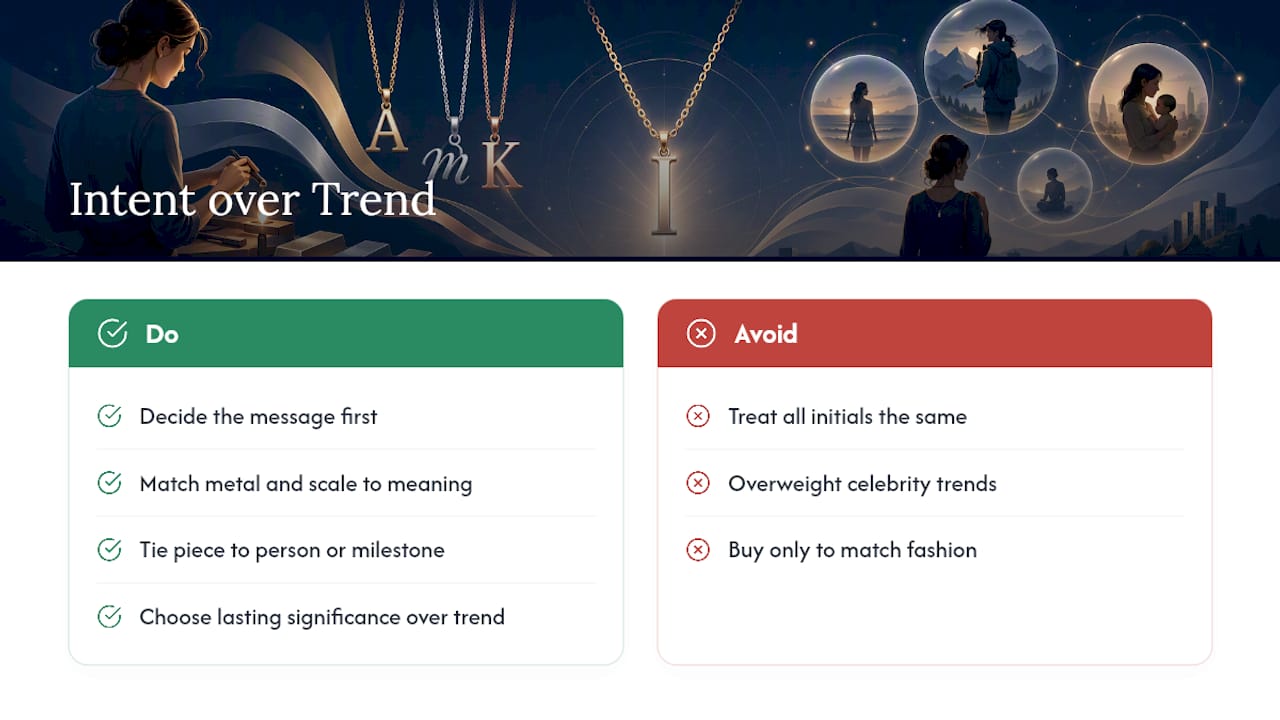
The conventional wisdom also overweights the celebrity trend angle. Yes, influencer sightings have pushed initial jewelry back into fashion coverage, but the pieces with staying power aren’t the ones chasing a trend cycle. They’re the ones tied to a specific person, a specific milestone, a specific memory. That’s a design choice, not a marketing one.
If you take one thing from this, prioritize intent over trend. Decide what the piece needs to say before you decide what it should look like. A necklace bought to match a moment in someone’s life outlasts one bought to match a moment in fashion.
— Georgia
Shop Initial and Personalized Necklaces at Diamonds by Daisy
Diamondsbydaisy is the alternative to guessing your way through a mall jewelry counter: every piece in the collection is chosen for craftsmanship and lasting quality, not just shelf appeal, so you’re not stuck comparing twenty near-identical pendants to find the one that actually holds up.
Start with the full Jewelry & Elevated Accessories collection to see current pendant and nameplate styles, or browse Everyday Gold Jewellery if you want something durable enough for daily wear. Gift shoppers should check the Gifts for Her collection, which groups pieces by occasion rather than leaving you to filter alone. On any product page, look for metal type, personalization options, and estimated production time listed together, since made-to-order pieces need more lead time than in-stock pendants. Customer reviews often mention finish quality and craftsmanship as reasons for satisfaction. If a piece needs a longer engraving turnaround, the site notes it upfront so you can plan around a gifting date instead of finding out too late. Start browsing the collections page now to find a piece that fits the moment you’re marking.
Sources
- Why monogram jewelry still feels personal and timeless | Prism News
- National Portrait Gallery — Anne Boleyn entry
- Who What Wear — initial jewellery trend
FAQ
Whose Initial Do You Wear on a Necklace?
There’s no fixed rule. Most people wear their own initial as a personal statement, while parents, partners, and grandparents often wear the initial of someone they love as a token of connection or remembrance.
Where Is Kate Middleton’s Initial Necklace From?
Royal and celebrity initial necklaces have varied by designer and occasion over the years, and trend coverage notes that high-profile sightings like these are a major reason initial jewelry keeps returning to fashion. No single necklace defines the trend; the visibility itself drove renewed interest in the format.
Why Do Girls Wear a Necklace With Their Own Initials?
Wearing your own initial is a simple, visible marker of identity and confidence, often one of the first pieces of personalized jewelry someone chooses for themselves rather than receives as a gift. It reads as self-expression rather than sentiment tied to another person.
Are Initial Necklaces Classy?
Yes, when the material and design match the occasion. A solid gold or sterling silver initial in a clean script or monogram format reads as polished and timeless, while the tone shifts toward casual or trendy with lighter, gold-plated pieces. Browsing Diamonds by Daisy’s jewelry collection shows how metal and letterform combine to keep a piece looking elevated rather than costume-like.