

Choosing Sustainable Diamond Jewelry 2026
Table of Contents
- What Defines Sustainable Diamond Jewelry in 2026
- Lab-Grown vs Mined Diamonds: Sustainability Comparison
- Ethical Diamond Certification Standards Explained
- How to Verify Diamond Provenance and Ethical Claims
- Recycled Metals and Circular Design in Sustainable Jewelry
- Balancing Luxury, Longevity, and Ethical Value
- Making Your Choice: A Practical Framework
- Conclusion
Last Updated: August 13, 2026
What Defines Sustainable Diamond Jewelry in 2026
Sustainable diamond jewelry encompasses pieces created with environmental responsibility, ethical sourcing practices, and transparent supply chains. Today, choosing sustainable diamond jewelry means considering the entire lifecycle of your piece, from extraction or creation through craftsmanship to potential resale or redesign.
Sustainability now covers multiple dimensions. Environmental impact extends beyond "conflict-free" to include carbon footprints, water usage, and habitat disruption. Ethical considerations encompass fair labour practices, community benefit, and supply chain transparency. At Diamonds by daisy, we recognise that conscious consumers demand verifiable proof that their luxury purchase aligns with their values.
Sustainability isn't a single checkbox. A diamond might be conflict-free but mined using methods that harm local ecosystems. A recycled metal might come from responsibly sourced origins or industrial waste streams. A lab-grown stone eliminates mining but requires energy-intensive laboratory conditions. Understanding these trade-offs is essential before committing to any piece.
The 2026 landscape reflects maturation in how jewellery brands communicate sustainability. Greenwashing has become easier to spot. Consumers increasingly demand certifications, third-party verification, and transparent disclosure of material origins.
Lab-Grown vs Mined Diamonds: Sustainability Comparison
The choice between lab-grown and mined diamonds represents the most significant decision when selecting sustainable diamond jewellery. Each option carries distinct environmental, ethical, and financial implications.
Lab-grown diamonds are created in controlled laboratory environments using either high-pressure, high-temperature (HPHT) or chemical vapour deposition (CVD) processes. They are chemically, physically, and optically identical to mined diamonds. The primary sustainability argument centres on eliminating large-scale mining operations, no excavation, no habitat disruption, no community displacement.
Mined diamonds require extracting ore from the earth and managing significant land restoration challenges. Modern mining operations in regulated jurisdictions have implemented stricter environmental controls than earlier decades. The sustainability case for mined diamonds rests on land restoration, long-term economic benefits to mining communities, and the permanence of the resource once extracted.
Carbon Footprint and Environmental Impact
The carbon footprint comparison reveals a nuanced picture. Lab-grown diamonds require substantial electrical energy during creation. Depending on whether the energy grid uses renewable or fossil fuel sources, carbon intensity varies dramatically. A lab-grown diamond created using renewable electricity carries significantly lower carbon footprint than one produced in a facility powered by coal.
Mined diamonds generate emissions through equipment operation, transportation, and processing. However, total carbon footprint depends heavily on the specific mine's location, methods, and restoration practices. A diamond from a modern, well-regulated mine may have lower lifetime emissions than one from a laboratory powered by fossil fuels.
Neither option is inherently "zero-carbon." Both represent trade-offs. Lab-grown diamonds shift environmental impact from habitat destruction to energy consumption. Mined diamonds concentrate impact at specific geographic locations but may offer lower lifetime carbon profiles if sourced responsibly. Ask your jeweller about energy sources used in lab creation or specific mining practices for mined stones.
Supply Chain Transparency
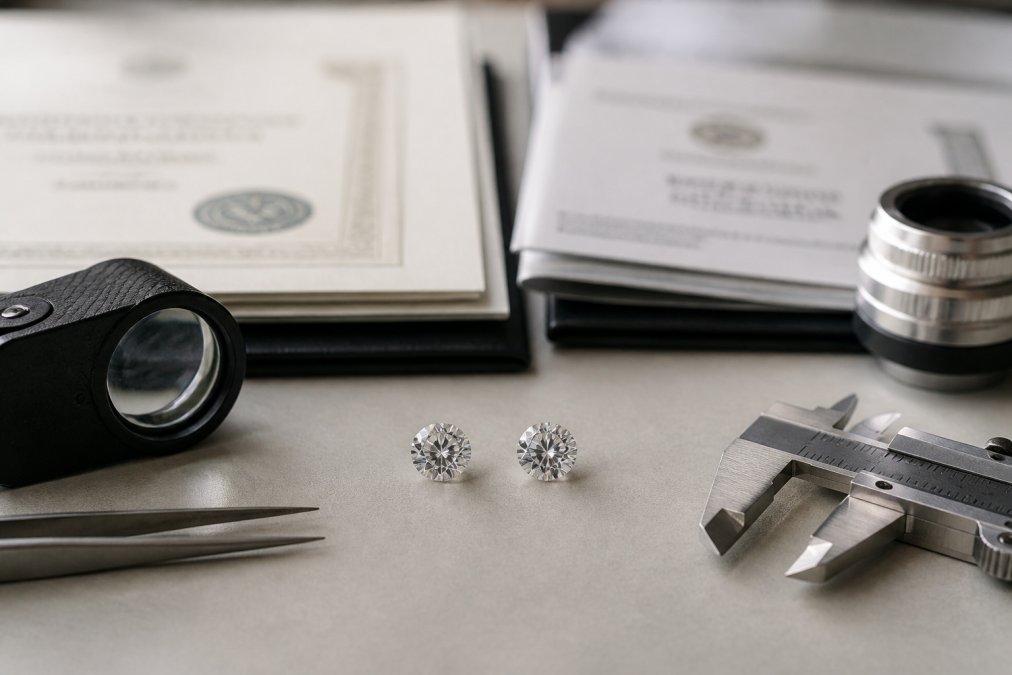
Traceability has become the defining characteristic of ethical diamond sourcing in 2026. Today, transparency requirements extend far beyond "conflict-free" certification. Responsible jewellery brands provide detailed information about where diamonds originate, who mined or created them, and how materials moved through the supply chain.
For lab-grown diamonds, transparency means disclosing which facility created the stone, what energy sources powered production, and whether the laboratory meets recognised ethical standards. Reputable producers maintain records linking each diamond to its creation date, method, and facility.
For mined diamonds, transparency involves identifying the specific mine, country of origin, certifications held, and practices employed. Responsible suppliers trace diamonds from extraction through polishing to final sale.
Ethical Diamond Certification Standards Explained
Certification provides the verification mechanism that transforms sustainability claims into verifiable facts. Multiple certification systems exist, each with different standards and audit processes.
The Kimberley Process Certification Scheme (KPCS) was established in 2003 to prevent conflict diamonds from entering the mainstream supply. However, it focuses narrowly on diamonds financing armed conflict and does not address environmental damage, labour practices, or community displacement.
The Responsible Jewellery Council (RJC) operates a more comprehensive certification system covering environmental practices, labour standards, and business ethics. RJC-certified mines and jewellery companies undergo independent third-party audits requiring documented policies on water management, waste reduction, biodiversity protection, and fair labour practices.
The Diamond Producers Association (DPA) has introduced blockchain-based tracking for diamonds from select mines, creating an immutable record of each stone's journey from extraction through sale.
Key Certifications to Look For
Prioritise certifications involving independent third-party verification. Self-certification carries less weight than independently verified credentials.
Look specifically for RJC Chain of Custody certification, which traces diamonds through multiple supply chain stages and requires participating companies to document their processes and undergo regular audits.
For lab-grown diamonds, certifications from the International Gemological Institute (IGI) or the Gemological Institute of America (GIA) confirm the stone's lab origin and specifications.
Environmental certifications like the Carbon Trust Standard indicate that a jewellery company has measured and offset its carbon footprint, demonstrating corporate commitment to environmental responsibility.
How to Verify Diamond Provenance and Ethical Claims
Provenance verification separates genuine sustainability from marketing rhetoric. A diamond's documented history from origin through every transaction provides the foundation for trust.
Begin by requesting a diamond's certification report from an independent gemological laboratory. Legitimate dealers provide these reports automatically. GIA and IGI certifications carry more weight than lesser-known laboratories.
For mined diamonds, provenance documentation should identify the specific mine or region of origin. Cross-reference the mine name against public databases of certified operations. The Responsible Jewellery Council maintains a searchable directory of certified mining operations and jewellery companies. If a jeweller cannot identify the mine, that's a significant warning sign.
For lab-grown diamonds, documentation should specify the creation facility, date of creation, and method used (HPHT or CVD). Some facilities now use blockchain or digital tracking systems that allow consumers to verify the diamond's creation record independently.
Questions to Ask Your Jeweller
Ask: "Can you provide the certification report from an independent gemological laboratory?" A legitimate dealer has this documentation immediately available.
Ask: "Where did this diamond originate, and can you provide documentation?" For mined diamonds, expect a specific mine name and certification information. For lab-grown stones, expect facility details and creation records.
Ask: "What certifications does this diamond or your company hold?" Listen for specific certifications (RJC, Kimberley Process, IGI, GIA) rather than generic claims.
Ask: "How has this diamond been tracked through the supply chain?" A detailed answer describes documentation at multiple stages.
Ask: "What is your return or redesign policy if I'm unsatisfied?" Diamonds by daisy offers a 30-day satisfaction guarantee, reflecting confidence in the quality and ethics of our pieces.
Recycled Metals and Circular Design in Sustainable Jewelry
The metal component of jewellery represents an often-overlooked sustainability factor. Recycled metals offer a compelling alternative to newly mined precious metals.
Recycled gold comes from reclaimed jewellery, industrial waste, and electronic components. Using recycled gold eliminates the need for new mining operations that disturb ecosystems, consume vast quantities of water, and generate toxic processing waste. Recycled gold requires significantly less energy to refine than virgin gold extraction. The metal itself is chemically identical to newly mined gold.
Circular design philosophy extends beyond material choice to the entire lifecycle of a piece. A circular-design jewellery piece is created with the assumption that it may be redesigned, repurposed, or recycled at the end of its current life.
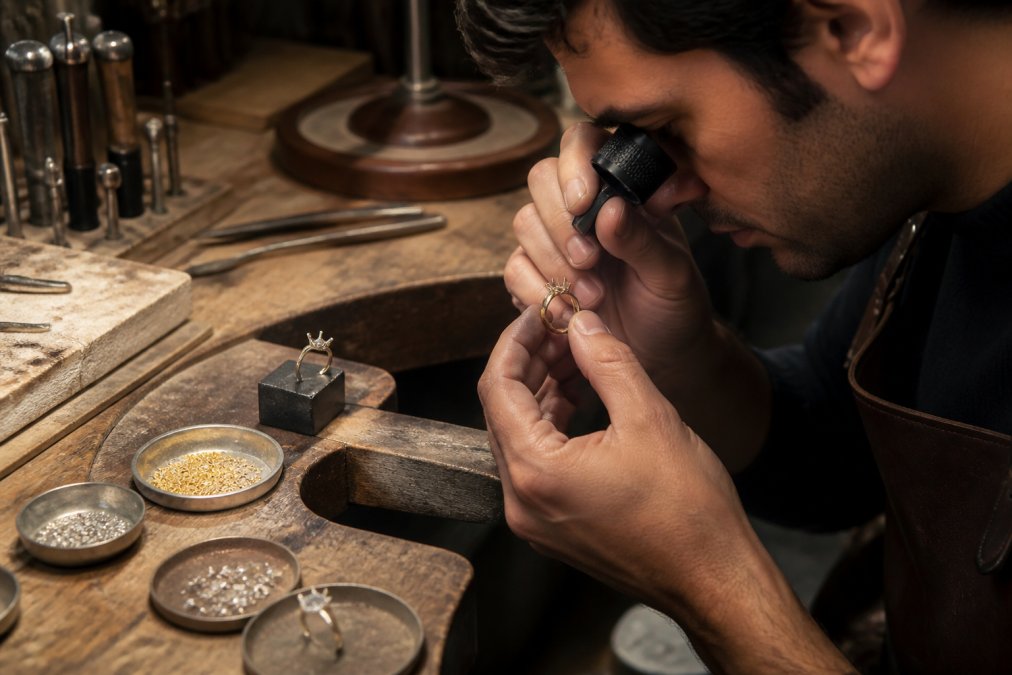
Responsible jewellery companies now offer redesign and recycling services. If you grow tired of a piece's design, the jeweller can remake it using the same metal. When a piece reaches the end of its life, the jeweller can recycle the metals responsibly. This service model transforms jewellery from a one-time purchase into a long-term relationship with the maker.
When selecting sustainable diamond jewellery, inquire about the metal's origin. Ask whether the setting uses recycled precious metals and what percentage of recycled content is included. Ask about redesign and recycling services.
Balancing Luxury, Longevity, and Ethical Value
Sustainable jewellery costs more because responsible sourcing, transparent supply chains, and ethical labour practices carry financial overhead. A jeweller committed to verified provenance must invest in documentation systems, third-party audits, and traceability infrastructure.
Quality craftsmanship also justifies premium pricing. Sustainable jewellery brands typically employ skilled artisans rather than automated mass production. A piece created by a master craftsperson will outlast mass-produced alternatives by decades.
Longevity transforms the value equation. A piece worn for fifty years costs significantly less per year than a cheaper piece replaced every five years. When you invest in quality sustainable jewellery, you're purchasing durability alongside ethics.
Investment Quality and Resale Considerations
Fine jewellery purchased from reputable makers with documented provenance retains value more effectively than anonymous mass-market pieces. A diamond from a certified, transparent source commands premium prices in the secondary market.
Resale value depends on craftsmanship quality, provenance documentation, and design timelessness. Classic designs remain desirable across decades, while trendy styles lose appeal quickly.
Luxury sustainable jewellery from established makers typically retains 60-80% of its original value when resold through reputable channels. For someone concerned about financial commitment, resale value provides meaningful reassurance.
Customization and Redesign Services
Customization and redesign services extend a piece's value across your lifetime. Rather than purchasing a fixed design, you can commission a piece tailored to your specific preferences. This bespoke approach ensures the jewellery genuinely reflects your personal style.
Redesign services allow you to adapt pieces as your preferences evolve. The underlying materials maintain their value and integrity while the design evolves. This flexibility transforms jewellery from a static purchase into a dynamic relationship with your maker.
Diamonds by daisy specialises in customization that captures your unique aesthetic while maintaining the highest standards of craftsmanship. Our 30-day satisfaction guarantee ensures you feel confident in your customization choices.
Making Your Choice: A Practical Framework
Selecting sustainable diamond jewellery requires weighing multiple factors against your personal priorities. No single "correct" choice exists.
Start by clarifying your sustainability priorities. Are you most concerned about environmental impact? Lab-grown diamonds from facilities powered by renewable energy represent the strongest choice. Are you prioritising ethical labour practices and community benefit? Mined diamonds from certified operations in regulated jurisdictions may align better with your values. Are you seeking to minimise total environmental footprint? Consider recycled metals, responsible sourcing, and the piece's longevity together.
Next, establish your budget and resale expectations. Understand whether you're purchasing a piece you'll wear for decades or something you might resell within five years. A piece you'll cherish indefinitely justifies greater investment in customization and quality.
Research jewellery makers thoroughly. Review their certifications, request documentation of sourcing practices, and examine their transparency about supply chains. A jeweller confident in their sustainability practices welcomes detailed inquiries.
Consider the piece's design longevity. Timeless designs maintain appeal across decades. Trendy designs date quickly and reduce resale value.
Finally, evaluate the jeweller's commitment to your satisfaction. A 30-day satisfaction guarantee indicates confidence in quality and alignment with customer values.
| Decision Factor | Lab-Grown Priority | Mined Diamond Priority | Recycled Metal Priority |
|---|---|---|---|
| Primary Concern | Environmental footprint (mining elimination) | Ethical sourcing in regulated regions | Circular economy participation |
| Best For | Environmentally focused consumers | Those valuing community benefit | Circular design advocates |
| Certification Focus | Lab facility standards, energy source | RJC, mine identification, labour practices | Metal recycling certification |
| Resale Consideration | Growing market, newer category | Established secondary market | Metal value retained |
| Design Flexibility | Excellent (any design possible) | Excellent (any design possible) | Excellent with redesign services |
Choosing sustainable diamond jewellery in 2026 means moving beyond single-dimension claims to comprehensive understanding of your piece's origins, creation, and lifecycle. Today's conscious consumer can access genuine transparency, verified certifications, and documented provenance.
The investment you make in sustainable jewellery transcends the immediate purchase. You're acquiring a piece crafted with integrity, backed by verifiable ethical practices, and designed to maintain its beauty and value across decades. At Diamonds by daisy, we've built our entire practice around this principle, meticulously handpicked gemstones, responsibly sourced precious metals, and craftsmanship that elevates your personal style. Our 30-day satisfaction guarantee reflects our confidence that when you understand exactly what you're purchasing and why it matters, you'll feel genuinely satisfied with your choice.
Frequently Asked Questions
What defines sustainable diamond jewellery in 2026?
Sustainable diamond jewelry combines ethical sourcing, minimal environmental impact, and supply chain transparency. This includes lab-grown diamonds with certified carbon-neutral production, mined diamonds from conflict-free sources with verified provenance, recycled precious metals, and pieces designed for longevity. Certification from recognized bodies and clear documentation of the diamond's origin and production method are now standard markers of genuine sustainability.
Are lab-grown diamonds more sustainable than mined diamonds?
Lab-grown diamonds typically have a lower carbon footprint and require less land disruption than mined diamonds. However, sustainability depends on the energy source used in production. Lab-grown diamonds created using renewable energy are significantly more sustainable. Mined diamonds from responsible sources with strong environmental practices can also be sustainable. The key is verifying production methods and energy sources rather than assuming one type is universally better.
What certifications should I look for when buying sustainable diamonds?
Look for the Kimberley Process Certification for conflict-free status, though this has limitations. The Responsible Jewellery Council (RJC) certification is more comprehensive, covering ethical mining and labour standards. For lab-grown diamonds, check for certifications verifying carbon-neutral or renewable-energy production. The Gemological Institute of America (GIA) provides grading reports for both lab-grown and mined diamonds. Always request documentation proving a diamond's origin, production method, and any environmental certifications before purchase.
How can I verify a diamond retailer's ethical credentials?
Ask for specific documentation: certification numbers, supply chain details, and production location. Reputable retailers provide gemstone traceability reports and are transparent about their sourcing practices. Request a jeweler's certification or membership in ethical trade organisations. Check their return and satisfaction policies, which signal confidence in their products. Request before-purchase grading reports and certification details. Be cautious of vague claims like 'ethically sourced' without supporting documentation, genuine ethical retailers welcome detailed questions.
This article was written using GrandRanker