

Best Places to Sell Unwanted Diamond Jewellery in 2026
Table of Contents
- Why Selling Unwanted Diamond Jewellery Is Worth Your Time
- How to Get a Diamond Ring Valued Before You Sell
- Selling Certified vs Uncertified Diamonds: What It Means for Your Price
- Your Selling Options Compared
- How to Sell Unwanted Diamond Jewellery Safely
- Common Mistakes to Avoid When Selling Diamonds
- Conclusion
- Frequently Asked Questions
Last Updated: September 5, 2026
Selling unwanted diamond jewellery can feel like navigating a market where the buyer always holds the advantage. The gap between what you paid at retail and what a buyer offers is often significant, but understanding where to sell and how the valuation process works can narrow that gap considerably. This guide breaks down the best places to sell unwanted diamond jewellery in the UK, focusing on your financial safety and maximising your return.
The single most important thing to know before you sell is that the retail price you paid bears little relation to the current resale value. When you buy a diamond ring on the high street, you are paying for the stone, the metal, the craftsmanship, the brand overheads, and the retailer's margin. When you sell, you are entering the secondary market, where the buyer is looking for a discount against retail. A common expectation is that you might recover a fraction of the original purchase price, but with the right preparation, you can secure a fair offer that reflects the true quality of your stone.
Why Selling Unwanted Diamond Jewellery Is Worth Your Time
Holding onto jewellery you no longer wear means tying up capital in an asset that generates no return. Whether it is an engagement ring from a past relationship, an inherited piece that does not suit your style, or a gift that has sat in a drawer for years, converting that asset into cash is a sensible financial move. The proceeds can be redirected toward something you will actually use, or reinvested into a piece you love.
There is also a practical element. Diamonds are durable, but settings wear down, and rings that are not worn can become damaged or loose over time. Selling while the piece is in good condition protects its value. If you are considering upgrading or replacing a piece, selling the old one first can fund part of the new purchase, which is a strategy many jewellery owners overlook.
How to Get a Diamond Ring Valued Before You Sell
Before you approach any buyer, you need an independent understanding of what your diamond is worth. A valuation is not the same as an appraisal for insurance purposes, which often inflates the replacement cost. You need a realistic market valuation that reflects what a buyer will actually pay.
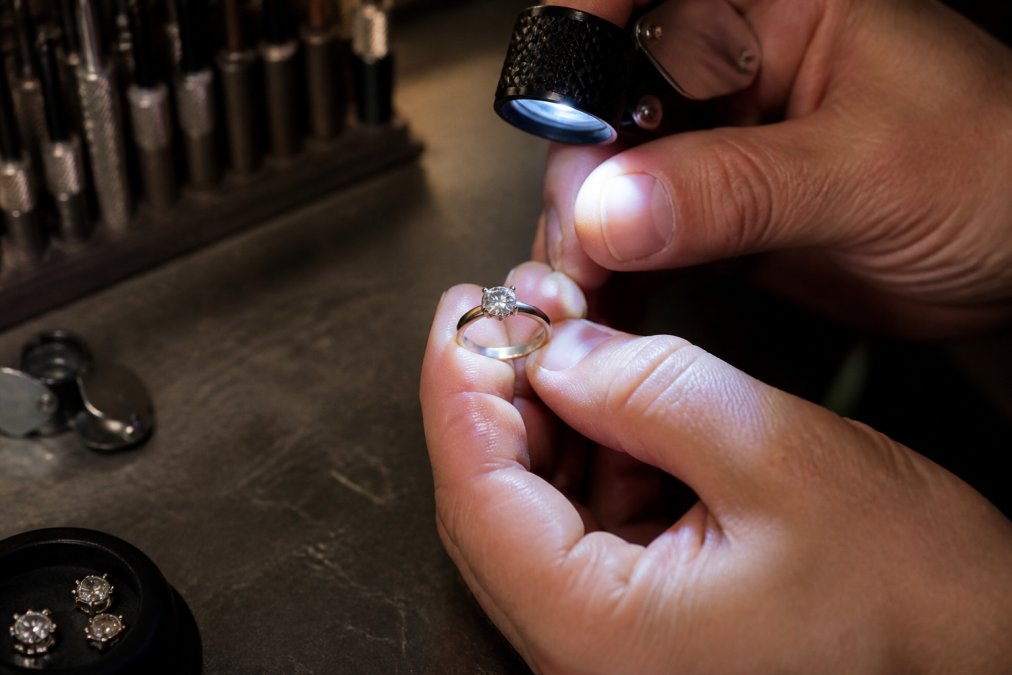
Start by finding a reputable independent gemologist or a jeweller who offers valuation services without a conflict of interest. You want someone who does not intend to buy the piece from you, ensuring their figure is objective. The valuation process considers the four Cs, which are carat weight, cut grade, colour grade, and clarity. These four characteristics determine the diamond's quality and its position in the market.
The National Association of Jewellers' guidance on valuations recommends using a qualified valuer who can provide a written report. This report is essential when you approach buyers, as it gives them a documented baseline to work from. Expect to pay a fee for this service, which is a worthwhile investment when selling a high-value item.
The four Cs are the language of the diamond trade. A stone with a high carat weight but poor cut and clarity will not outperform a smaller, perfectly cut stone in terms of resale value. Cut is often the most overlooked factor, yet it has the greatest impact on a diamond's brilliance and therefore its desirability on the secondary market.
Selling Certified vs Uncertified Diamonds: What It Means for Your Price
The presence of a grading report from an independent laboratory is the single biggest factor in determining your selling price. A certified diamond comes with a document from a recognised gemological laboratory, such as the GIA, which attests to its carat weight, cut, colour, and clarity. This removes doubt for the buyer and simplifies the entire transaction.
Selling certified vs uncertified diamonds is a stark comparison. An uncertified diamond is a risk for a buyer, who must either take your word for its quality or pay for their own grading report before making an offer. That cost and risk is factored into the price they offer you, often resulting in a significantly lower figure. A certified diamond, by contrast, is a known quantity, and buyers will pay a premium for that certainty.
If you have an uncertified diamond, you have two choices. You can sell it at a discount, accepting the buyer's assessment, or you can pay for your own GIA report before you approach buyers. The cost of certification is often outweighed by the increase in the offer you will receive. Many sellers find that certification is the difference between a quick, fair sale and a prolonged negotiation with lowball offers.
Your Selling Options Compared
You have five main routes to sell unwanted diamond jewellery in the UK, each with distinct trade-offs between speed, return, and convenience. The table below summarises the landscape before we examine each option in detail.
| Selling Route | Speed of Sale | Potential Return | Convenience | Best For |
|---|---|---|---|---|
| Specialist Diamond Buyers | Fast | High | High | Certified stones, quick cash |
| Online Postal Services | Medium | Medium | Very High | Nationwide sellers, no local buyers |
| Auction Houses | Slow | Variable | Low | Unique, high-value, or vintage pieces |
| High Street Jewellers | Medium | Low to Medium | Medium | Face-to-face transactions |
| Pawnbrokers | Immediate | Low | High | Instant cash, no valuation waiting |
Specialist Diamond Buyers
Specialist buyers are the strongest starting point for most sellers. Unlike general jewellers, their entire business model depends on accurately pricing diamonds, so they understand the secondary market intimately. They typically offer direct purchase, meaning they buy your piece outright with no commission deducted from your payout.
The benefit of dealing with a specialist is their expertise. They will verify your diamond's certification, assess its condition, and make an offer based on current market rates for the stone itself, not the brand of the setting. This approach tends to yield the fairest price for a quality, certified diamond. Many operate in established jewellery districts, such as Hatton Garden in London, where you can walk in for an in-person appraisal.
Online Postal Services
Online postal services have grown in popularity because they remove the geographic limitation of finding a local buyer. You ship your jewellery to a company using their secure, insured postal system, they assess it, and they make you an offer. If you accept, the money is transferred to your account. If you decline, they send the piece back.
The convenience is undeniable, but it requires trust. You are sending a high-value item through the post, so you must verify the legitimacy of the buyer before you package anything. Reputable services provide fully insured shipping and a transparent valuation process. The trade-off is that you are relying on their assessment without the ability to negotiate face-to-face, which some sellers find less satisfactory.
Auction Houses
Auction houses can achieve the highest prices for exceptional pieces, but they are not the right choice for most sellers. They operate on a commission fee, which is deducted from the final sale price, and your item is only sold if it reaches the reserve price you set. There is also the time factor, as you must wait for a suitable auction date.
This route suits unique, vintage, or high-artistry pieces where a specialist collector might pay a premium. For a standard, modern diamond ring, an auction house is often overkill. The commission, combined with the waiting period and the uncertainty of the sale, makes it less attractive than a direct sale to a specialist buyer for most people.
High Street Jewellers and Pawnbrokers
High street jewellers and pawnbrokers offer the most traditional route. A high street jeweller may buy pre-owned items directly, though not all do, and their offers can be conservative because they are factoring in their own retail margins. Pawnbrokers offer the fastest access to cash, often with no appointment required, but their offers are typically the lowest because they are taking on the risk of resale.
These options suit sellers who prioritise immediacy and face-to-face interaction over maximising their return. If you have a relationship with a local jeweller, it is worth asking if they purchase second-hand stock. For a quick cash injection, a pawnbroker is a viable, if less profitable, option.
How to Sell Unwanted Diamond Jewellery Safely
Safety should be your primary concern throughout the process, both for your physical security and the security of your asset. When meeting a buyer in person, always choose a reputable location. A jeweller's shop or a pawnbroker's premises is far safer than meeting in a neutral public space. Never agree to meet a private buyer in a café or car park, regardless of the offer.
For postal services, verify the legitimacy of the buyer before sending anything. Check for a physical address, a landline telephone number, and reviews from independent sources. Understand the insurance coverage for your parcel. A reputable buyer will provide insured shipping and will guide you through the process. The UK Government's guidance on selling goods online outlines your consumer rights and how to verify a legitimate business.
Before you send or hand over your jewellery, take your own photographs of the piece from multiple angles, and record the serial number if it has one. Document the valuation report and any certification you hold. This creates a clear record of the item's condition and provenance, which protects you if there is a dispute about the condition of the piece upon arrival.
Common Mistakes to Avoid When Selling Diamonds
The most common mistake is accepting the first offer you receive without comparison. Just as you would shop around when buying, you should obtain at least three offers before committing to a sale. The range of offers for the same piece can be surprisingly wide, and a little patience can yield a significantly better outcome.
Another frequent error is neglecting to clean the piece before valuation. A diamond covered in grease and dirt can look dull, and while a professional buyer will account for this, a clean, sparkling stone creates a better impression and can subtly influence the assessment. The British Jewellers' Association care guide recommends a gentle clean with warm soapy water and a soft brush before any appraisal.
Sellers also misunderstand the role of the setting. Unless the ring is a designer piece or contains significant precious metals, the value is overwhelmingly in the diamond itself. Do not be offended by an offer that seems low relative to the ring's original cost. The buyer is pricing the stone on the secondary market, and your expectation should be set accordingly.
Conclusion
Selling unwanted diamond jewellery is a process of managing expectations and choosing the right channel. A certified diamond sold to a specialist buyer will always outperform an uncertified stone sold to a pawnbroker. The effort you put into obtaining an independent valuation and presenting a clean, documented piece is directly reflected in the offers you receive.
At Diamonds by daisy, we understand the importance of quality and provenance in fine jewellery. Our curated collection is built on meticulously handpicked gemstones and precious metals, and we stand behind every piece with a 30-day satisfaction guarantee, ensuring that when you choose to buy, you are making a confident and informed decision.
Frequently Asked Questions
Where can I sell my diamond ring for the most money in the UK?
Specialist diamond buyers and online auction platforms typically secure the highest prices for diamond rings. These buyers often have lower overheads than high street shops and pay closer to the wholesale market price. Auction houses can also achieve strong results for exceptional stones, but their commission fees will reduce your final payout. For the best outcome, get valuations from several sources before committing to a sale.
How much is a 1 carat diamond worth in the UK?
The value of a 1 carat diamond in the UK depends heavily on its cut, colour, clarity, and certification. A certified stone with excellent cut and high colour grades will command a far higher resale value than an uncertified diamond of the same weight. Market prices fluctuate, so a professional valuation from a gemologist is the only reliable way to know what your specific diamond is worth.
What documents do I need to sell diamond jewellery in the UK?
You do not need formal documents to sell diamond jewellery, but having the original receipt, any GIA or other grading report, and the original packaging can strengthen your negotiating position. Certification from a recognised laboratory like GIA is the most valuable document, as it independently verifies the diamond's characteristics. If you lack these papers, a buyer will assess the piece based on their own expert appraisal.
How do professional diamond valuations work?
A professional diamond valuation is carried out by a trained gemologist who examines the stone using specialised tools. They assess the 4Cs: carat weight, cut, colour, and clarity, and may use a loupe or microscope to identify inclusions. They will also check the metal and hallmark of the setting. The result is an appraisal document stating the diamond's characteristics and an estimated market value, which you can use to compare offers from buyers.
This guide is provided for general information and does not constitute financial advice. Market conditions fluctuate, and you should obtain independent valuations before making a sale.
This article was written using GrandRanker