

Why Diamond Cut Is the Most Important Factor
Table of Contents
- Why Diamond Cut Matters Most
- Diamond Cut vs Shape: Understanding the Difference
- How Cut Affects Light Performance and Brilliance
- GIA Diamond Cut Grades and What They Mean
- The Impact of Diamond Cut on Price and Value
- Cut vs Carat: Finding the Right Balance for Your Budget
- Certification and Cut Quality: What to Look For
- Frequently Asked Questions
Last Updated: September 19, 2026
Why Diamond Cut Matters Most
Understanding why diamond cut is the most important factor is essential: it determines how brilliantly your stone will perform. A beautifully cut diamond with modest carat weight will outshine a poorly cut stone that weighs significantly more because cut directly controls the light that returns to your eye, which is what makes a diamond truly sparkle.
Cut refers to how precisely a diamond's facets are proportioned and angled relative to one another, distinct from shape, which simply describes the outline. Two stones of identical carat weight and colour can look dramatically different depending on how well they've been cut.
Cut matters because of physics: light enters through the crown, bounces off the pavilion facets, and reflects back through the top. If facets are angled correctly, the diamond sparkles; if angles are off, light leaks out the sides and the stone appears dim. A well-cut diamond often looks more impressive than a larger stone with poor proportions.
Diamond Cut vs Shape: Understanding the Difference
Cut and shape are separate characteristics. Shape describes the outline (round, cushion, emerald, oval, pear, marquise, asscher, radiant, or heart). Cut describes the quality of the faceting and proportions within that shape.
You can have an excellent cut in any shape. What matters is how well the facets are aligned and angled to return light, two cushion cut diamonds of identical carat weight, colour, and clarity can have vastly different optical performance depending on cut quality.
Shape preference is personal, but regardless of which shape appeals to you, insist on the best cut quality within that shape category. A well-cut cushion will always outperform a poorly cut round, even if the round is larger.
When comparing prices, a cushion cut diamond may cost less than a round brilliant of similar specs because cushion cuts retain more rough stone during cutting. Round brilliants require more precision and waste more rough material, which is why excellent rounds often command a premium.
How Cut Affects Light Performance and Brilliance
When a diamond is cut to the right proportions, light enters through the crown, travels through the stone, and reflects back through the top in a controlled manner, creating brilliance, fire, and scintillation.
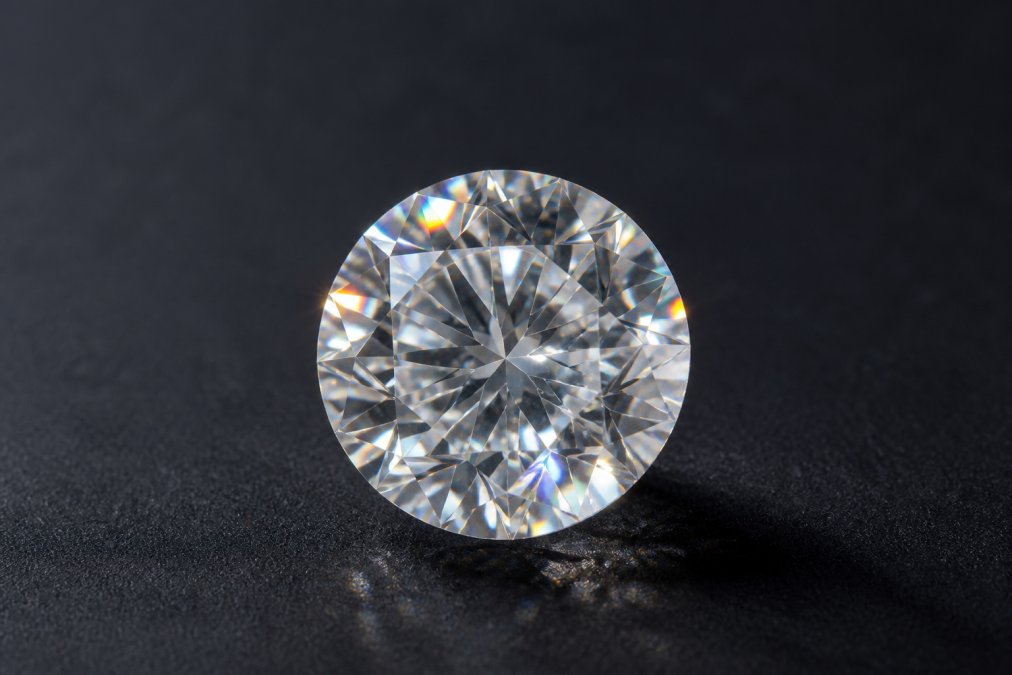
Brilliance is the white light reflected back to your eye, the overall brightness and luminosity. When facets are angled correctly, more light bounces back through the top, creating sparkle. If pavilion angles are too steep, light escapes through the sides (light leakage). If too shallow, the diamond appears glassy and dim.
Fire is the coloured light dispersion, those rainbow flashes. A well-cut diamond shows fire in controlled bursts. Too much can look garish; too little means the diamond lacks personality.
Scintillation is the pattern of light and dark areas when the diamond moves, the "sparkle" effect. Diamonds with balanced proportions show distinct bright flashes separated by darker zones, creating visual interest.
A poorly cut diamond might show some fire but lack brilliance and scintillation, appearing lifeless despite its size. A well-cut diamond balances all three, creating the optical performance that justifies the investment.
Brilliance, Fire, and Scintillation Explained
Brilliance depends on crown angle and pavilion angle working in concert. Light enters through the crown facets, bounces off the pavilion facets, and returns through the crown. If the pavilion is too deep, light reflects back into the stone; if too shallow, light passes through without reflecting. The ideal pavilion angle for a round brilliant is approximately 40.6 to 41.8 degrees.
Fire is influenced by table percentage, the width of the largest crown facet, measured as a percentage of diameter. For round brilliants, the ideal table percentage is 54-57%; different shapes have different ideal ranges.
Scintillation relates to facet arrangement and symmetry. Perfect symmetry and well-proportioned facets show crisp, distinct sparkle patterns. Polish and symmetry grades directly affect how light interacts with the surface.
GIA Diamond Cut Grades and What They Mean
The Gemological Institute of America (GIA) grades diamond cut from Excellent to Poor based on precise measurements and light performance analysis.
Excellent cut diamonds fall within the narrowest range of ideal proportions. They return the maximum amount of light, showing excellent brilliance, fire, and scintillation. These diamonds command a premium because they represent the top tier of optical performance.
Very Good cut diamonds still perform exceptionally well, though they fall slightly outside the Excellent range. The difference in light return is minimal, often imperceptible to the naked eye, but measurable under laboratory conditions. Very Good cuts offer excellent value because you're paying significantly less than Excellent without sacrificing noticeable sparkle.
Good cut diamonds have proportions that allow good light return, but they're noticeably less brilliant than Excellent or Very Good stones. Light leakage becomes visible. A Good cut diamond will still sparkle, but it won't have the commanding presence of a well-cut stone.
Fair and Poor cuts have proportions that result in significant light loss. These diamonds appear dull or lifeless and should be avoided unless you're buying for industrial purposes.
For shapes other than round brilliant, GIA uses slightly different terminology. For cushion, oval, and other fancy shapes, GIA provides a cut grade of Excellent, Very Good, Good, Fair, or Poor, though the grading criteria differ. For emerald and asscher cuts, which have step facets rather than brilliant facets, GIA doesn't assign cut grades, instead, you rely on polish, symmetry, and proportions to assess quality.
The Impact of Diamond Cut on Price and Value
Cut quality directly influences price. An Excellent cut diamond costs more than a Very Good cut of identical carat weight, colour, and clarity. The premium reflects the superior light performance and the precision required to achieve those proportions.
However, the relationship between cut and price isn't linear. The jump from Good to Very Good is often smaller than the jump from Very Good to Excellent. This creates an opportunity: a Very Good cut diamond often delivers 90% of the visual impact of an Excellent cut at a significantly lower price. For many buyers, this represents the sweet spot, you're not paying the Excellent premium, but you're still getting a stone that sparkles brilliantly.
Cut also affects long-term value retention. A well-cut diamond holds its value better than a poorly cut one. If you ever decide to sell or trade the diamond, a stone with an Excellent cut grade will command stronger resale interest. Buyers recognise that cut quality is non-negotiable, so they're willing to pay accordingly.
The influence of cut on price varies by shape.
Cut vs Carat: Finding the Right Balance for Your Budget
This is where many buyers make their first mistake: prioritising carat weight over cut quality. A 1.5-carat diamond with a Good cut will look noticeably smaller and less brilliant than a 1.2-carat diamond with an Excellent cut. The difference in light return is dramatic. Yet the 1.5-carat stone might cost more because carat weight is the most visible specification to untrained eyes.
| Factor | Priority | Rationale |
|---|---|---|
| Cut | 1st | Controls light performance and visual impact |
| Colour | 2nd | Affects warmth and sparkle; D-H is excellent |
| Clarity | 3rd | Eye-clean grades (VS1+) invisible to naked eye |
| Carat | 4th | Less visible than cut; reduce here if needed |
Certification and Cut Quality: What to Look For
Always insist on an independent diamond certification from either the GIA or the American Gem Society (AGS). These certifications include detailed cut grades and proportions that allow you to assess the diamond's optical potential. A certificate isn't just a formality, it's your evidence that the cut quality is what the seller claims.
Frequently Asked Questions
What is the most important factor in a diamond?
Diamond cut is the single most important factor because it directly controls how light enters, travels through, and exits the stone. A well-cut diamond with ideal proportions, symmetry, and polish will display maximum brilliance and sparkle, regardless of its other qualities. Even a diamond with excellent colour and clarity will appear dull and lifeless if poorly cut. Cut quality determines the optical efficiency and visual appeal that makes a diamond truly beautiful.
How does diamond cut differ from diamond shape?
Shape refers to the outline of the diamond: round, cushion, emerald, pear, or oval. Cut describes how well the facets are proportioned and arranged to optimise light performance. Two diamonds of the same shape can have vastly different cut quality. A round brilliant diamond might be cut to ideal proportions with perfect symmetry, while another round diamond might have poor proportions and uneven facets. Shape is your aesthetic choice; cut is what determines how well the diamond sparkles.
Does diamond cut affect the price more than clarity?
Yes, cut has a more significant impact on a diamond's visual appearance and value than clarity does. A well-cut diamond with a lower clarity grade will appear more brilliant and beautiful than a poorly cut diamond with higher clarity. This is because cut directly influences light performance and sparkle, which are immediately visible. Slight inclusions in a lower clarity grade are often invisible to the naked eye and matter far less to overall beauty than the quality of the cut.
What does GIA diamond cut grading mean?
The Gemological Institute of America grades diamond cut on a scale from Excellent to Poor, based on proportions, symmetry, and polish. An Excellent or Ideal grade means the diamond has optimal facet angles, table and depth percentages, and minimal polish marks, resulting in superior light return and sparkle. GIA certification provides independent verification of cut quality, helping you understand exactly what you're purchasing and ensuring the diamond will deliver the brilliance and fire you expect.