

Ring Settings Types: How to Pick the Right One
Prong settings maximize sparkle by exposing the diamond to light from every angle; bezel settings maximize protection by wrapping the stone in a metal rim that resists snags and chips. Between those two poles sits most of the jewelry world: solitaire/prong, bezel (full and partial), halo, pavé, channel, tension, three-stone, side-stone, cluster, flush/gypsy, split shank, cathedral, trellis, bar, east-west, and semi-mount designs, each solving a different combination of durability, brilliance, and budget.
The short version: if brilliance is your priority, lean toward prongs or a halo. If you work with your hands, garden, lift weights, or just hate the idea of catching a claw on a wool sweater, a bezel or flush setting will serve you better. Everything else, including pavé, channel, and cluster designs, lands somewhere in between.
What follows is a full breakdown of each setting style with its trade-offs, a head-to-head on bezel versus prong (the two most-argued options), a shape-pairing cheat sheet, and the exact questions to ask before you buy.
- Prong/solitaire: highest sparkle, lowest snag protection
- Bezel: highest protection, softer light return
- Halo/pavé: bigger apparent size and more flash, more upkeep
- Tension, flush, and bar: low-profile and modern, but pricier to resize or repair
- Three-stone, cluster, and split shank: sentimental or statement designs with their own maintenance quirks
Key Takeaways
The setting you choose determines whether your ring prioritizes brilliance or durability, and the two goals pull in opposite directions.
| Point | Details |
|---|---|
| Prong settings maximize sparkle | Open claws expose more of the diamond to light but need checking every 6 to 12 months. |
| Bezel settings maximize protection | A continuous metal rim resists snags and chips, ideal for daily manual work. |
| Halo and pavé boost apparent size | More accent stones mean more visual impact and more long-term upkeep. |
| Match the setting to the stone shape | Pointed shapes like pear and marquise need protected tips; step cuts like emerald need edge coverage. |
| Diamondsbydaisy curates for craftsmanship | Pieces like the Diamond Bridal Ring Set show wear-tested settings built for everyday life, not just photos. |
Table of Contents
- Ring Setting Styles Explained: A Full Catalog
- Bezel vs. Prong: Which One Actually Protects Your Diamond
- How to Choose the Right Setting for Your Lifestyle
- Matching Settings to Diamond and Gemstone Shapes
- Curating Settings With an Eye for Craft
- From Victorian Bezels to Modern Tension Rings
- Mixing Settings to Build a One-of-a-Kind Ring
- What Most Buying Guides Get Wrong About Setting Choice
- Find Settings Built for How You Actually Wear Your Ring
- Sources
Ring Setting Styles Explained: A Full Catalog
Jewelers commonly reference 17 to 27 named setting types, though most shoppers only need to know a dozen or so well. Here’s the full lineup, ordered from the most commonly requested down to the specialty styles you’ll find when you want something less expected.
- Solitaire (prong) setting. The classic: a single stone held by four or six metal claws that lift it toward the light. It delivers the most brilliance of any style because almost nothing blocks light from entering or exiting the diamond. Pros: maximum sparkle, easy to clean, timeless resale value. Cons: prongs can catch on fabric and loosen over time. Best for: shoppers who want the diamond, not the setting, to be the star.
- Full bezel setting. A continuous metal rim wraps the entire edge of the stone. Pros: the most protective mainstream setting, virtually snag-free, great for active lifestyles. Cons: blocks some light entry, which mutes brilliance and slightly shrinks the visible diamond. Best for: daily wearers, manual workers, and anyone who has lost or chipped a stone before.
- Partial (half) bezel. Metal covers the sides but leaves the top and bottom of the stone open. Pros: better light exposure than a full bezel, still adds real edge protection. Cons: less coverage means less protection than a full wrap. Best for: buyers who want a compromise between sparkle and security.
- Halo setting. A ring of small accent diamonds surrounds the center stone. Pros: dramatically increases apparent size and adds a second layer of sparkle. Cons: more prongs on smaller stones mean more places for something to snag or loosen, and halo designs generally carry a higher long-term maintenance burden. Best for: shoppers stretching a smaller carat weight to look bigger.
- Pavé setting. Tiny diamonds are set into the band itself, held by small beads of metal, so the whole ring appears to shimmer. Pros: continuous sparkle down the band, elegant with almost any center stone. Cons: many small stones mean more inspection points and a higher repair bill if one comes loose. Best for: anyone who wants sparkle beyond just the center stone.
- Channel setting. Stones sit in a groove between two metal walls with no visible prongs. Pros: smooth, snag-resistant surface; clean, modern line. Cons: harder to resize than prong settings, and a damaged stone usually requires a jeweler to disassemble part of the channel. Best for: side stones on an active wearer’s band.
- Tension setting. The band’s own pressure holds the stone in place, so it appears to float with no visible metal touching its sides. Pros: striking, architectural look and excellent light exposure. Cons: requires precise craftsmanship, and resizing is expensive or sometimes impossible without remaking the ring. Best for: buyers who want a modern, minimalist statement and don’t mind paying for the engineering.
- Three-stone setting. A center stone flanked by two smaller stones, often symbolizing past, present, and future. Pros: sentimental meaning, adds visual width to the hand. Cons: side stones need their own prong checks. Best for: sentimental buyers or anyone upgrading a family stone.
- Side-stone setting. Similar to three-stone but with a longer row of smaller diamonds flanking the center. Pros: adds significant sparkle and perceived size without a much bigger center stone. Cons: more prongs, more inspection points. Best for: shoppers who want a bigger look without a bigger core diamond.
- Cluster setting. Several smaller diamonds grouped together to mimic the look of one larger stone. Pros: budget-friendly way to get a bigger visual footprint. Cons: cleaning between tightly grouped stones is trickier, and a lost stone changes the whole shape. Best for: buyers who want size and sparkle on a modest budget.
- Flush (gypsy) setting. The stone is set directly into the metal so its top sits level with the band’s surface. Pros: virtually indestructible day to day, zero snag risk. Cons: reduces brilliance since light enters from only one direction. Best for: manual laborers, athletes, or a stacking band worn alongside a statement ring.
- Split shank setting. The band divides into two strands as it approaches the center stone. Pros: adds visual drama and can make the center stone look larger by drawing the eye inward. Cons: more metal seams mean more places dirt and soap residue can build up. Best for: anyone who wants a fashion-forward silhouette without going full halo.
- Cathedral setting. The band curves upward on either side of the stone like architectural arches, echoing the halo’s height without the extra stones. Pros: elegant, elevates the center stone visually. Cons: the raised arches can be more vulnerable to knocks than a flat band. Best for: buyers who want a vertical, dressed-up look.
- Trellis setting. Crisscrossing prongs create a woven, lattice-like frame around the stone. Pros: distinctive, vintage-leaning texture; strong stone security from overlapping metal. Cons: intricate metalwork can be harder to clean thoroughly. Best for: shoppers drawn to antique or Art Deco styling.
- Bar setting. Vertical metal bars separate stones along the band, similar to channel but with visible dividers. Pros: contemporary look, decent snag resistance. Cons: less total light exposure than a pavé line. Best for: geometric, minimalist band designs.
- East-west setting. The center stone is rotated horizontally instead of the traditional vertical orientation. Pros: modern and unexpected, works especially well with oval or marquise stones. Cons: novelty can mean lower resale familiarity. Best for: buyers who want their ring to look distinct from the standard vertical solitaire.
- Semi-mount setting. The band and setting are finished, but the center stone is added afterward, often letting the buyer choose their own diamond. Pros: flexible, frequently more affordable to start. Cons: requires a second step and additional cost to complete. Best for: buyers who inherited a loose stone or want full control over the center diamond.
Pro Tip: If you’re torn between two setting styles, ask to see both in person under the same lighting. Photos flatten the way metal interacts with light, and the difference between a bezel and a prong solitaire is dramatic in person but easy to miss on a screen.
Bezel vs. Prong: Which One Actually Protects Your Diamond
The two most common structural settings sit at opposite ends of the same spectrum, and the choice comes down to how you actually live.
A bezel setting wraps the stone in a continuous metal rim, cutting snag risk to almost nothing and shielding the edges from chips. A prong setting exposes more of the diamond’s surface to air and light, which is exactly why it sparkles more but also why it’s more vulnerable to catching on gloves, upholstery, or gym equipment.
- Security/protection: Bezel wins outright; full coverage resists chips and loss far better than open claws.
- Sparkle/visibility: Prong wins; more light enters and exits the stone, boosting brilliance and fire.
- Face-up appearance: Prong settings let the diamond look slightly larger; bezels can visually shrink the stone unless a jeweler uses a thin, precision-cut rim.
- Maintenance frequency: Prongs need routine checks; bezels need almost none beyond a periodic polish.
- Cost implications: Bezels often use more metal, which can nudge up the price; prongs are typically cheaper to produce and easier to resize.
For active daily wear, bezel settings usually deliver the better balance of protection and low upkeep, while prong settings are the right call when maximum brilliance is non-negotiable.
Maintenance callout: Jewelers commonly recommend having prong settings inspected every 6 to 12 months to catch loosening before it turns into a lost stone. Halo and pavé settings, with their extra accent stones, often benefit from the same inspection window.
If you wear your ring daily and use your hands constantly, bezel or flush settings will save you money and stress over the years. If you save it for evenings out and want maximum fire, a prong or halo setting is worth the extra care.
How to Choose the Right Setting for Your Lifestyle
Pick a setting the way you’d pick running shoes: by how you’ll actually use it, not just how it looks in the store window. Four steps get you there.
- Assess your daily routine. Do you type all day, lift, cook, garden, or work with your hands constantly? Frequent manual activity points toward bezel, flush, or channel settings. Setting choice should follow how the ring will actually be worn, not just how it photographs.
- Decide protection versus sparkle. Be honest about which one you’d regret sacrificing. There’s no wrong answer, but pretending you don’t care about maintenance when you genuinely do just sets you up for a repair bill in year two.
- Confirm the setting fits your stone shape. A tension setting on a round brilliant behaves differently than a tension setting on a princess cut. Certain shapes, like emerald and asscher cuts, need specific protection at their exposed corners.
- Ask about maintenance, warranty, and repair. Any reputable jeweler should have clear answers ready, not vague reassurances.
Bring these exact questions to the counter or the chat window:
- “How often should the prongs be checked, and does that service come free with purchase?”
- “Is this a full or partial bezel, and how much of the stone’s edge is actually covered?”
- “What metal thickness is used around the girdle, and does it affect how the stone looks face-up?”
- “What’s the resizing process for this specific setting style?”
Pro Tip: Ask to see the setting under a jeweler’s loupe, not just across the counter. A well-made prong sits flush against the stone with no gaps; sloppy prong work shows daylight between the metal and the diamond, a sign it will need attention sooner rather than later.
Watch for red flags before you buy: a jeweler who can’t clearly explain their repair policy, vague language around metal purity or sizing, or no mention of inspection and warranty options at all. A certified diamond purchase should always come with documentation you can actually verify, and a clear return and warranty policy is a basic sign of a jeweler who stands behind their work.
Matching Settings to Diamond and Gemstone Shapes
Round and oval diamonds handle almost any setting well, but they show off best in prong mounts, which let light hit the stone’s facets from every direction. Emerald and asscher cuts have long, exposed facets and sharp corners that chip more easily, so a bezel or partial bezel is the safer call, though a halo can work if you want more visual weight around a step-cut stone.
Pear and marquise shapes both end in a delicate point, the single most vulnerable spot on any diamond. Protective prongs positioned right at that tip, or a bezel that wraps the point entirely, prevent the kind of chip that ruins an otherwise perfect stone. Cushion cuts and cabochons are more flexible: cushions do well in prong or halo settings, while cabochons, which have no facets to catch light anyway, are often set in bezels without losing any visual impact.
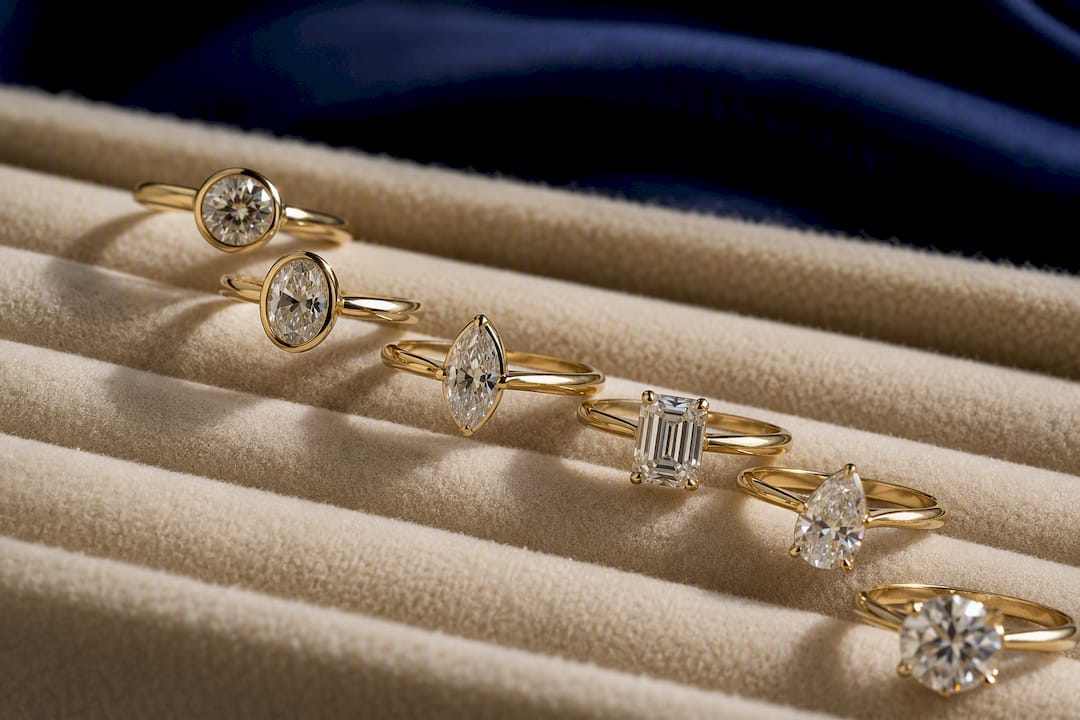
Halo and pavé settings make any shape read larger and brighter by surrounding the center stone with reflective surfaces, which is why a halo is such a popular move for smaller carat weights.
For colored gemstones, the setting changes more than security. A bezel setting tends to intensify a colored stone’s saturation by framing and concentrating its color, while a prong setting lets more ambient light pass through, which can make the same stone look a shade lighter.
Curating Settings With an Eye for Craft
Georgia, a contributor to Diamondsbydaisy, has spent years watching how setting choice changes not just how a ring looks on day one, but how it holds up on day one thousand. That’s the lens behind Diamondsbydaisy’s approach to jewelry curation: every piece is chosen for craftsmanship first, trend second.
- The Diamond Bridal Ring Set shows how sterling silver and natural diamonds can be paired in a wear-tested mount built for daily life, not just photos.
- The 18K yellow gold plated sterling silver cross ring illustrates how finish and metal choice affect a setting’s everyday durability.
If you’re still unsure which setting fits your stone or your routine, Diamondsbydaisy welcomes questions about ring care and setting selection before you commit to a purchase.
From Victorian Bezels to Modern Tension Rings
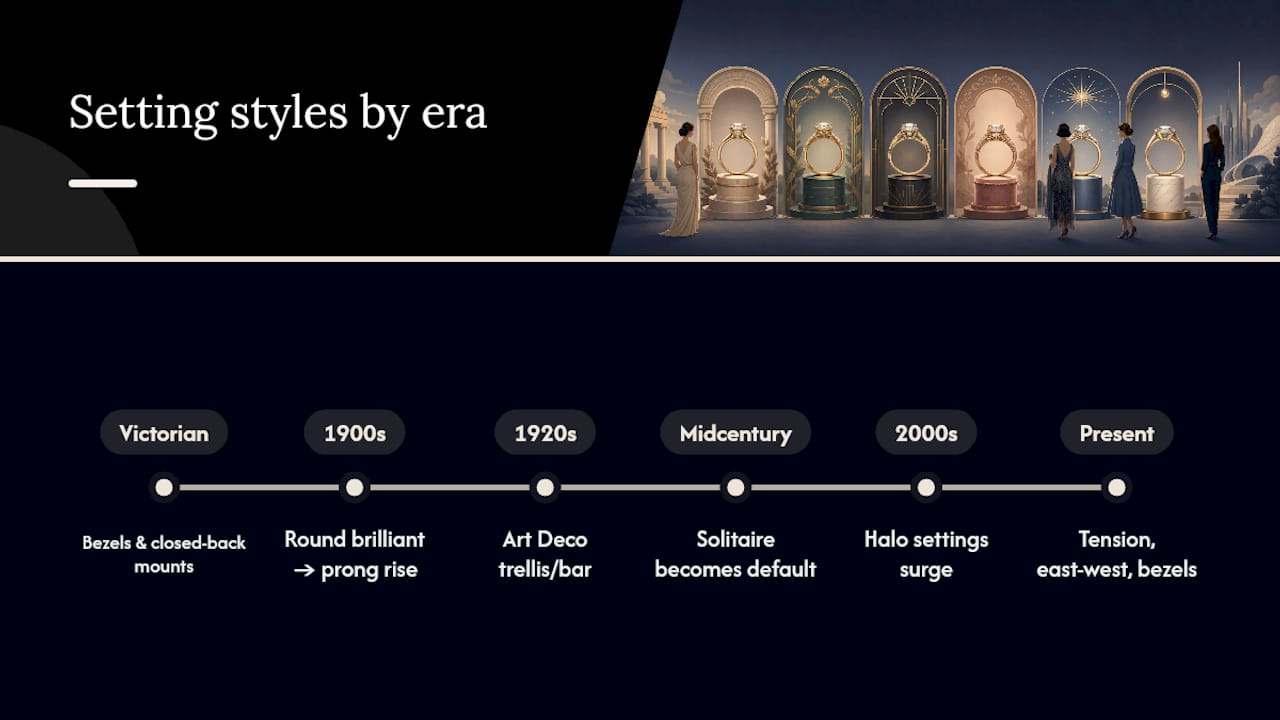
Setting styles have always tracked the tools and tastes of their era. Victorian jewelers relied heavily on bezels and closed-back mounts, partly because early cutting techniques produced less brilliant stones that needed a decorative frame to look their best. The invention of the modern round brilliant cut in the early 20th century changed everything: suddenly diamonds threw enough light on their own, and the prong setting rose to prominence because it got out of the way and let the stone perform.
Art Deco design brought geometric trellis and bar settings into fashion during the 1920s, favoring clean lines over ornate metalwork. The mid-century decades popularized the solitaire as the default engagement ring image, a look that still dominates bridal counters.
More recently, tastes have shifted back toward individuality. Halo settings surged over the past two decades as a way to maximize apparent size on more modest budgets. Tension settings and east-west orientations reflect a newer appetite for architectural, less traditional silhouettes. Bezel settings, once seen mainly as vintage or utilitarian, have made a real comeback among buyers who want a lower-maintenance ring that still looks deliberately styled rather than purely practical. The through-line across a century of setting trends is consistent: technology and lifestyle needs, not just fashion, drive which setting rises to the top.
Mixing Settings to Build a One-of-a-Kind Ring
Nothing says a ring has to use just one setting style. A prong-set center stone with a bezel-set halo combines maximum brilliance at the focal point with a protective, low-snag perimeter, giving you both benefits instead of forcing a single trade-off. Split shanks paired with pavé bands add texture and sparkle without needing a bigger center stone.
Custom work also lets you solve very specific problems. If you love the look of a tension setting but worry about resizing later, a jeweler can build a hybrid mount that mimics the floating illusion while keeping the stone secured by hidden prongs. If you want a family heirloom stone reset into something more current, a semi-mount base gives you total control over the final look while reusing the diamond you already own.
The best combinations usually pair one protective element with one high-sparkle element, so the ring reads as intentional rather than overloaded. A jeweler experienced in custom design can walk you through which combinations are structurally sound and which just look good in a sketch. Ask to see examples of similar hybrid settings they’ve actually completed, not just renderings, before committing to a custom build.
What Most Buying Guides Get Wrong About Setting Choice
Most articles on this topic treat setting choice as a purely aesthetic decision, ranking styles by how they photograph on Instagram. That’s backward. The research is consistent: the setting that matters most is the one that survives your actual life, not the one that looks best in a single studio shot.
The conventional advice also oversells halo settings as a universal upgrade. They do make a stone look bigger, but that comes at a real maintenance cost that rarely gets mentioned in the same breath as the size benefit. Anyone recommending a halo to a first-time ring buyer should say the quiet part out loud: more prongs means more inspection visits, period.
If there’s one thing worth prioritizing above all else, it’s asking about repair and inspection policy before you fall in love with a design. A gorgeous setting with no clear maintenance plan behind it is a problem waiting to happen, and no amount of sparkle fixes that later.
— Georgia
Find Settings Built for How You Actually Wear Your Ring
Diamondsbydaisy curates pieces the way this guide recommends you shop: with the setting’s real-world durability weighed just as heavily as its sparkle. Instead of scrolling through generic mass-market listings with no context on protection or upkeep, you get a smaller, vetted selection where craftsmanship and setting quality are already checked before the piece is listed.
The Bridal & Wedding Jewellery collection includes engagement-ready settings across the styles covered in this guide, from protective bezel-leaning mounts to brilliance-forward prong designs, so you can compare options side by side instead of guessing from a single product photo. If daily wear and low maintenance matter most to you, the everyday gold jewelry collection shows how low-profile settings hold up outside special occasions.
Browse the current selection and use the setting questions from this guide, prong inspection frequency, bezel coverage, metal thickness, when you reach out with questions. It’s the fastest way to land on a ring that still looks right in five years, not just on day one.
Sources
- 17 Types of Ring Settings to Know before You Shop | Blue Nile
- Ring Setting Comparison Bezel vs Prong | StoneBridge Jewelry
- Bezel vs Prong Setting: Which Protects Diamonds Better? | Lepdo Diamonds
Recommended
- Diamond Bridal Ring Set – Sterling Silver & Natural Diamonds | Diamonds by Daisy – Diamonds by daisy
- Diamond Arrowhead Open Ring – Sterling Silver Natural Diamonds | Diamonds by Daisy – Diamonds by daisy
- Gold Circle Stacking Bracelet – Minimalist Bridesmaid Gift | Diamonds by Daisy – Diamonds by daisy
- Tips for Buying Vintage Style Jewellery: A 2026 Guide – Diamonds by daisy