

Fine Jewelry Return Guarantee: A Buyer's Guide
Table of Contents
- Why a Return Guarantee Matters for Handcrafted Fine Jewelry
- Understanding Return Policies for Handcrafted Fine Jewelry
- Your Consumer Rights Under the Consumer Rights Act 2015 for Jewellery Returns
- Bespoke Jewellery Return Policy UK: Custom Designs and Exclusions
- Step-by-Step Return Logistics for High-Value Items
- How to Verify Hallmark on Fine Jewellery and Quality Assurance
- No-Questions-Asked vs. Inspection-Based Returns: What You Need to Know
- The Psychology of Risk-Free Luxury: Why Guarantees Matter
Last Updated: August 3, 2026
Why a Return Guarantee Matters for Handcrafted Fine Jewelry
When you invest in handcrafted fine jewelry with return guarantee protection, you're purchasing confidence. Buying luxury jewellery online carries genuine uncertainty: Will the colour match your skin tone? Does the weight feel right? Will it suit your aesthetic in person?
A strong return guarantee transforms the entire purchase experience. According to research from the Baymard Institute on e-commerce checkout abandonment, 70% of online shoppers abandon purchases due to uncertainty about product fit and satisfaction. For high-value items like handcrafted fine jewelry, that hesitation multiplies. A transparent, customer-friendly return policy removes the financial risk that keeps buyers from committing.
Today's discerning buyers, particularly women aged 25-50 seeking heritage and artisanal craftsmanship, expect peace of mind as part of the package. A 30-day satisfaction guarantee isn't a cost centre; it's a trust signal that separates retailers who stand behind their work from those who don't.
Understanding Return Policies for Handcrafted Fine Jewelry
Every retailer structures their return policy differently, but core elements remain consistent. Understanding how these policies work protects you before purchase and simplifies the process if you need to return a piece.
Return Window Duration and Eligibility
Most UK retailers offering handcrafted fine jewelry allow returns within 30 days of purchase, though some extend to 45 or 60 days. This window starts from your order confirmation date, not delivery date. Keep your order confirmation email, receipt, or invoice as proof of purchase.
For custom or bespoke jewellery, return eligibility often becomes more restrictive; many retailers don't accept returns on made-to-order pieces once production has begun.
The Consumer Rights Act 2015 provides additional protection beyond retailer policies. Under this legislation, goods must be of satisfactory quality and fit for purpose. If your jewellery arrives with defects, a loose stone, broken clasp, or misaligned settings, you have statutory rights to a refund or replacement regardless of the retailer's stated policy. The Consumer Rights Act 2015 guidance on your rights clarifies that "satisfactory quality" means the item should be safe, durable, and free from defects.
Condition Requirements for Returned Items
Your piece must be returned in unworn or saleable condition. This means it cannot show signs of wear that would prevent resale as new.
What "unworn condition" means generally includes:
- No visible scratches or marks from wearing
- Original packaging intact (box, tissue, documentation)
- All tags and certificates attached
- No exposure to perfume, lotions, or cleaning products
- No resizing, alterations, or repairs performed
Custom or bespoke pieces follow stricter rules. Once created to your specifications, most retailers classify it as non-returnable because it cannot be resold to another customer. However, if the piece arrives defective or doesn't match agreed specifications, you retain statutory rights under the Consumer Rights Act 2015.
Your Consumer Rights Under the Consumer Rights Act 2015 for Jewellery Returns
The Consumer Rights Act 2015 governs all retail transactions in the UK, including fine jewellery purchases. Under the Act, goods sold to you must be of satisfactory quality, fit for purpose, and match any description or sample provided. If your jewellery arrives defective, misrepresented, or unfit for its intended purpose, you have the right to:
- A full refund within 30 days (no questions asked)
- Repair or replacement within a reasonable timeframe (typically 30 days)
- A price reduction if repair or replacement isn't possible
- Compensation for any losses caused by the fault
The burden of proof lies with the retailer for the first 30 days. If a problem emerges within that window, they must demonstrate the fault existed before purchase. After 30 days, the burden shifts to you, but you still have up to six years to claim (five years in Scotland).
The UK Consumer Rights Act 2015 full guidance provides comprehensive detail. A retailer's return policy cannot override your statutory rights. For precious metals and gemstones, request certification or grading reports when purchasing high-value pieces. If a diamond is described as "VS1 clarity" or gold as "18ct", those claims are contractual promises.
Bespoke Jewellery Return Policy UK: Custom Designs and Exclusions
Bespoke and custom jewellery operates under different rules because it's created specifically for you. Once design work has begun and materials sourced, the piece typically becomes non-returnable. This protects the artisan's time and materials investment while acknowledging that a custom piece cannot be resold.
However, "non-returnable" doesn't mean "no recourse". If your bespoke piece arrives defective or doesn't match specifications, you retain full rights under the Consumer Rights Act 2015. The retailer must remedy the fault through repair or replacement.
Before committing to bespoke work, clarify the return policy in writing. Ask specifically:
- At what stage does the piece become non-returnable?
- If you reject the design during approval, can you get a refund?
- If the finished piece doesn't match the approved design, what's the remedy?
- Are there any defects or issues covered by a satisfaction guarantee?
Diamonds by daisy's approach to custom pieces balances artisan protection with customer confidence by offering clear communication throughout the design process and addressing concerns before production begins.
Step-by-Step Return Logistics for High-Value Items
Returning handcrafted fine jewelry requires care that standard retail returns don't demand. A £500 ring or £2,000 necklace needs protection during transit that everyday items don't.
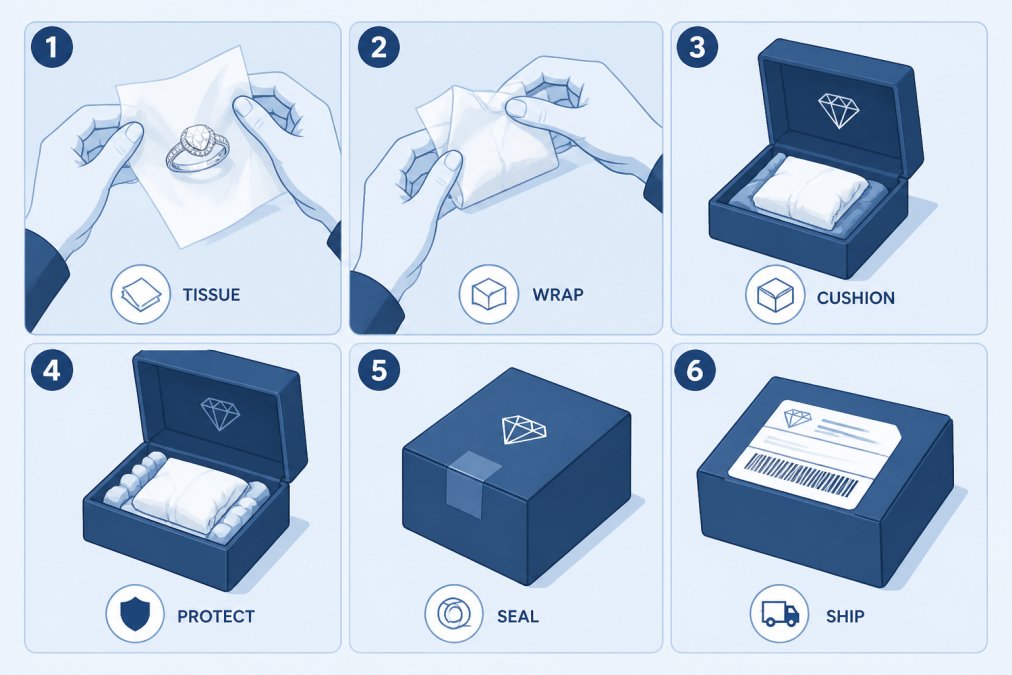
Secure Packaging and Trackable Shipping
When you initiate a return, the retailer should provide clear packaging and shipping instructions. For fine jewellery:
-
Use the original packaging if available. The branded box and tissue provide familiar protection and signal to handlers that the contents are valuable.
-
Wrap the piece in soft, acid-free tissue. Never use newspaper or plastic wrap that can scratch precious metals or damage gemstones.
-
Place the wrapped piece in a small box or padded envelope. Use bubble wrap or foam padding to fill gaps; the piece should not move when shaken.
-
Use trackable, insured shipping. For pieces over £1,000, use a courier service like DPD, UPS, or DHL that offers higher insurance coverage. Ensure the declared value matches the purchase price.
-
Obtain proof of postage immediately. Keep the tracking number, receipt, and insurance documentation. Take a photo of the sealed package before handing it to the courier.
Refund Processing Times and Full Refund Expectations
Once the retailer receives your return, the inspection and refund process typically follows this timeline:
- Day 1-2: Package arrives and is logged into the returns system
- Day 3-5: Quality inspection occurs
- Day 6-7: Inspection results are documented and you're notified
- Day 8-14: Refund is processed and credited to your original payment method
A full refund includes the purchase price of the jewellery. It typically does not include outbound shipping, return shipping, or customs duties or import taxes.
Refunds to credit or debit cards typically appear within 5-7 business days after processing.
How to Verify Hallmark on Fine Jewellery and Quality Assurance
A hallmark is an official stamp applied to precious metals that certifies the metal's purity and, often, the maker's identity. For UK jewellery, hallmarks are the primary assurance that what you're buying matches what's promised.
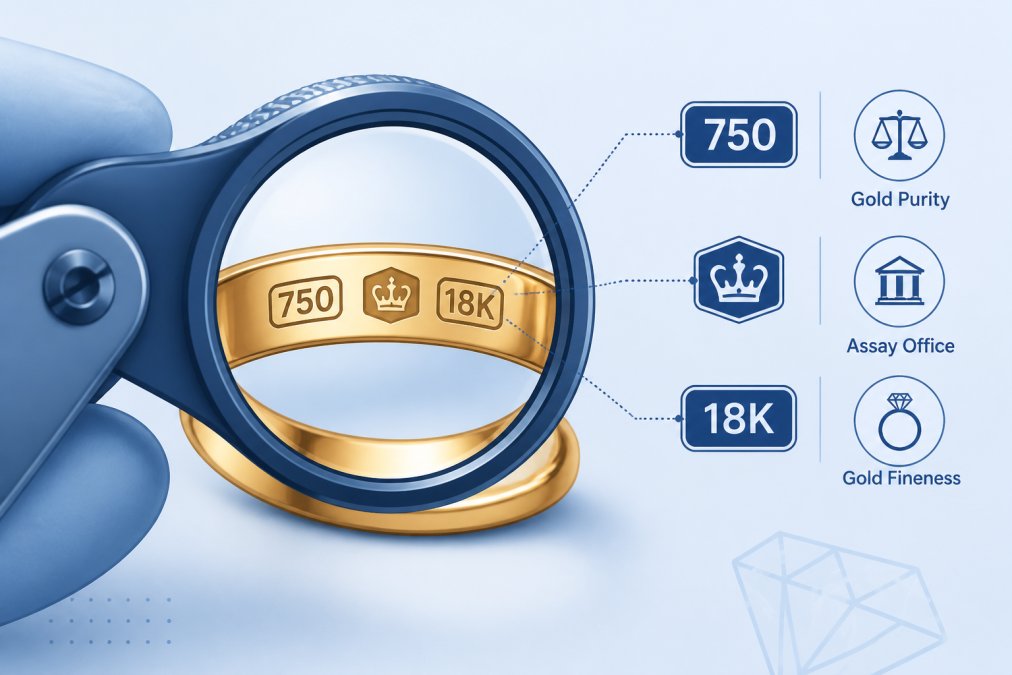
All precious metal jewellery sold in the UK should carry a hallmark. It typically appears on the inside of a ring, the back of a pendant, or a hidden area of the piece.
UK hallmarks consist of four components:
- The maker's mark, A unique symbol registered to the jeweller or maker
- The assay office mark, Indicates which of the four UK assay offices tested the metal (London, Birmingham, Sheffield, or Edinburgh)
- The fineness mark, Shows the metal's purity (e.g., 750 for 18ct gold, 925 for sterling silver)
- The date letter, A letter that changes annually, indicating the year of hallmarking
To verify a hallmark:
-
Use a jeweler's loupe or magnifying glass. Hallmarks are small and difficult to read with the naked eye.
-
Check that all four components are present. A missing component suggests the piece may not be officially hallmarked.
-
Cross-reference the fineness mark with the product description. If you purchased "18ct gold" and the hallmark shows 750 (18ct), it matches.
-
Verify the assay office mark against official records. The UK Assay Office hallmark verification database allows you to look up specific marks and confirm authenticity.
-
Request a certificate or grading report for high-value pieces. Diamonds and gemstones should come with certification from an independent lab like the Gemmological Association of Great Britain (GAGB) or the International Gemological Institute (IGI).
If a piece lacks a hallmark or the hallmark doesn't match the description, you have grounds for return or refund under the Consumer Rights Act 2015.
No-Questions-Asked vs. Inspection-Based Returns: What You Need to Know
Two distinct return models exist in the fine jewellery market.
No-questions-asked returns allow you to return any item within the stated window (typically 30 days) without justifying why. This model prioritizes customer convenience but typically requires the piece to be in completely unworn, original condition.
Inspection-based returns require the retailer to examine the piece before approving the refund. The inspection assesses whether the item meets stated condition requirements. Only after passing inspection is the refund processed.
| Return Model | Timeline | Condition Flexibility | Refund Speed | Best For |
|---|---|---|---|---|
| No-Questions-Asked | 30-60 days | Strict (unworn only) | 5-7 days | Buyers wanting speed and simplicity |
| Inspection-Based | 30-45 days | Moderate (minor wear acceptable) | 10-14 days | Buyers wanting transparency and documentation |
Diamonds by daisy employs an inspection-based approach because fine jewellery warrants the extra care. Each return undergoes documented quality assessment, ensuring that only pieces in appropriate condition are restocked.
The Psychology of Risk-Free Luxury: Why Guarantees Matter
The psychology of purchasing luxury goods online differs fundamentally from buying everyday items. When you spend £500-£5,000 on a handcrafted fine jewellery piece, the psychological stakes shift dramatically.
A return guarantee addresses what researchers call "purchase anxiety", the gap between what you see online and what you'll receive in person. A transparent return guarantee signals that the retailer is confident in their product and willing to stand behind it. This confidence transfers to the buyer, removing hesitation that drives abandoned purchases.
For fine jewellery specifically, the guarantee becomes a proxy for trustworthiness. It says: "We're not trying to trap you into a purchase. We believe our pieces are beautiful enough that you'll want to keep them once you experience them in person."
When you purchase handcrafted fine jewelry with return guarantee protection, you're investing in confidence. Diamonds by daisy's 30-day satisfaction guarantee, combined with transparent quality assurance through hallmark verification and inspection-based returns, ensures that your investment is protected. Every piece is meticulously handpicked, arrives in secure packaging with full documentation, and can be evaluated risk-free. If it doesn't meet your expectations or our quality standards, the return process is straightforward and refunds are processed promptly. This is how luxury retail should work: with clarity, integrity, and genuine peace of mind backing every purchase.
Frequently Asked Questions
What does a fine jewelry return guarantee actually cover?
A return guarantee for handcrafted fine jewelry typically covers items returned in unworn, undamaged condition within the specified window, usually 30 days. It protects you if the piece doesn't meet your expectations in person or if quality issues arise. Most guarantees exclude custom or bespoke designs, engraved items, and pieces altered after purchase. Always verify what 'saleable condition' means for your retailer, as standards vary.
How do I know if my handcrafted fine jewelry meets quality standards before buying?
Request certification or grading reports for gemstones and precious metals before purchase. For sterling silver, 18ct gold, and gold vermeil pieces, verify hallmarks are properly stamped. Ask retailers for proof of provenance and details about the artisanal craftsmanship. Reputable sellers provide detailed product descriptions, high-resolution photography, and are transparent about materials and sourcing.
What are my consumer rights when buying fine jewellery online in the UK under the Consumer Rights Act 2015?
The Consumer Rights Act 2015 gives you the right to reject goods within 30 days if they do not match the description, are of unsatisfactory quality, or unfit for purpose. You can request a full refund during this period. However, you must return items in the condition you received them, minus fair wear and tear from inspection. Custom or bespoke pieces may have different protections, so check the retailer's policy.
Are bespoke or custom-made jewelry pieces covered by standard return guarantees?
Most retailers exclude bespoke and custom designs from standard return policies because they are made specifically for you and cannot be resold. However, you retain consumer rights under the Consumer Rights Act 2015 if the piece fails to match your agreed specifications or contains defects in materials or workmanship. Always confirm custom piece terms in writing before ordering, including what recourse you have if the final design differs from your vision.
How long does a refund typically take after I return handcrafted fine jewelry?
Refund processing times vary by retailer but typically range from 5 to 14 working days after the item is received and inspected. Use trackable shipping to confirm delivery. Once the retailer verifies the piece meets return condition requirements, they will process your full refund to your original payment method. Request a tracking number for your return shipment and keep proof of postage in case disputes arise.
What's the difference between no-questions-asked and inspection-based returns?
No-questions-asked returns allow you to send items back without explanation and receive a full refund if conditions are met. Inspection-based returns require the retailer to examine the piece for damage, wear, or alterations before approving the refund. Inspection-based policies take longer but may protect retailers from abuse. Most fine jewelry retailers use inspection-based returns to ensure pieces remain in saleable condition, which protects both parties.
Why should I care about sustainability in jewelry returns?
Sustainable return practices mean retailers recycle or refurbish returned pieces rather than discarding them, reducing waste and environmental impact. Some artisanal jewelers use returned items to reclaim precious metals or repurpose gemstones. By choosing retailers committed to circular practices, you support responsible craftsmanship and reduce the demand for new mining. This aligns with conscious consumer values and protects the heritage of fine jewelry-making.
This article was written using GrandRanker