

Tips for Buying Vintage Style Jewellery: A 2026 Guide
Table of Contents
- Understanding Vintage Jewellery Eras and Styles
- How to Identify Authentic Vintage Jewellery
- Hallmarks on Vintage Jewellery: What UK Buyers Need to Know
- Essential Tips for Buying Vintage Style Jewellery
- Investment vs. Wearability: Making the Right Choice
- Caring for Vintage Jewellery: Preservation and Risk Management
- Buying from Trusted Sellers and Understanding Provenance
- Ethical Sourcing and Sustainability in Vintage Jewellery
Last Updated: July 30, 2026
When shopping for vintage style jewellery, knowing how to identify authentic pieces, assess quality, and spot reproductions is essential. Whether you're drawn to Georgian elegance, Art Deco glamour, or Victorian romance, tips for buying vintage style jewelry require a careful eye and knowledge of key markers. At Diamonds by daisy, we help collectors and jewellery enthusiasts navigate this rewarding market with confidence, offering meticulously handpicked pieces backed by our 30-day satisfaction guarantee. Below, we'll show you exactly how to evaluate vintage jewellery, from hallmarks and metal purity to gemstone quality and provenance, so you can invest wisely in pieces you'll treasure for a lifetime.
Understanding Vintage Jewellery Eras and Styles
Different historical periods produced jewellery with distinct design characteristics, construction methods, and material choices. Recognising these eras helps you understand what you're buying and why certain pieces command higher prices.
Georgian jewellery (1714-1830) features intricate metalwork with closed-back settings that trap light within the stone, typically set in yellow or rose gold with rose-cut diamonds and coloured gemstones. Victorian jewellery (1837-1901) is characterised by ornate designs, sentimental symbolism, and darker metals like black enamel and jet, with mid-Victorian pieces featuring substantial gemstones and elaborate filigree work. Edwardian jewellery (1901-1910) emphasises elegance with intricate platinum settings and diamond-focused designs, allowing jewellers to create delicate, lacy patterns impossible in softer metals. Art Deco (1920-1935) brought geometric boldness, symmetrical designs, and contrasting materials, frequently combining platinum with sapphires, emeralds, and rubies in striking linear patterns. Mid-century modern (1940-1970) reflects post-war optimism with sleek lines, mixed metals, and innovative gemstone cutting.
Understanding these eras helps you assess whether a piece's style, construction, and materials align with its claimed period. A piece claiming to be Georgian but featuring modern prong settings should raise questions about authenticity.
How to Identify Authentic Vintage Jewellery
Recognising Hallmarks and Maker's Marks
Hallmarks are official stamps that indicate metal purity, place of assay, and date of manufacture. In the UK, hallmarking is governed by the Hallmarking Act 1973, which requires most precious metal jewellery to be officially marked.
UK hallmarks consist of four components: the maker's mark (a unique symbol registered to the jeweller), the metal purity mark (925 for sterling silver or 750 for 18-carat gold), the assay office mark (showing where the piece was tested), and the date letter (which changes annually). Vintage jewellery should display these hallmarks inside the band or on the reverse of a brooch or pendant. Missing hallmarks don't necessarily indicate a fake; pieces made before 1973 may not have been hallmarked. However, clear, properly struck hallmarks add significant credibility. Maker's marks can help you trace the piece's origin and maker's reputation through antique dealer databases and auction house records.
Metal Purity and Precious Metal Standards
Precious metals used in vintage jewellery include gold, silver, platinum, and occasionally palladium. Each metal has standard purity levels that affect durability, value, and appearance.
Sterling silver (925) contains 92.5% pure silver and 7.5% other metals, typically copper, and should be hallmarked with "925" or the lion passant mark. Gold purity is measured in carats: 18-carat gold (750 fineness) contains 75% gold; 14-carat gold (585 fineness) contains 58.5% gold. Vintage jewellery may also feature 9-carat gold (375 fineness), which was common in earlier periods. Higher carat gold is softer and more prone to wear, which is why vintage pieces often use lower carat gold for durability. Platinum is rarer and more durable than gold, hallmarked with "Pt" or "Plat" with a purity mark of 950 or 900, and doesn't tarnish over decades.
When evaluating vintage jewellery, check the hallmark to confirm metal purity. Genuine precious metals develop a distinctive patina over time, a subtle darkening that actually adds character to vintage pieces.
Hallmarks on Vintage Jewellery: What UK Buyers Need to Know
Hallmarks serve as a jewellery piece's official identity card, providing legal proof of metal content and authenticity. The UK hallmarking system has evolved over centuries; before 1973, regulations were less standardised, and many pieces were not marked at all. The Hallmarking Act 1973 modernised the system, requiring nearly all precious metal jewellery above certain weight thresholds to be hallmarked. UK Government guidance on hallmarking provides current legal requirements.
When examining a vintage piece, look for four distinct marks: the maker's mark, the metal fineness mark, the assay office mark, and the date letter. The date letter allows you to pinpoint the exact year a piece was hallmarked. However, not all vintage jewellery bears hallmarks; Georgian and Victorian pieces were sometimes sold without marks. The absence of hallmarks doesn't automatically indicate a reproduction; you'll need to rely on construction techniques and design characteristics specific to the claimed era.
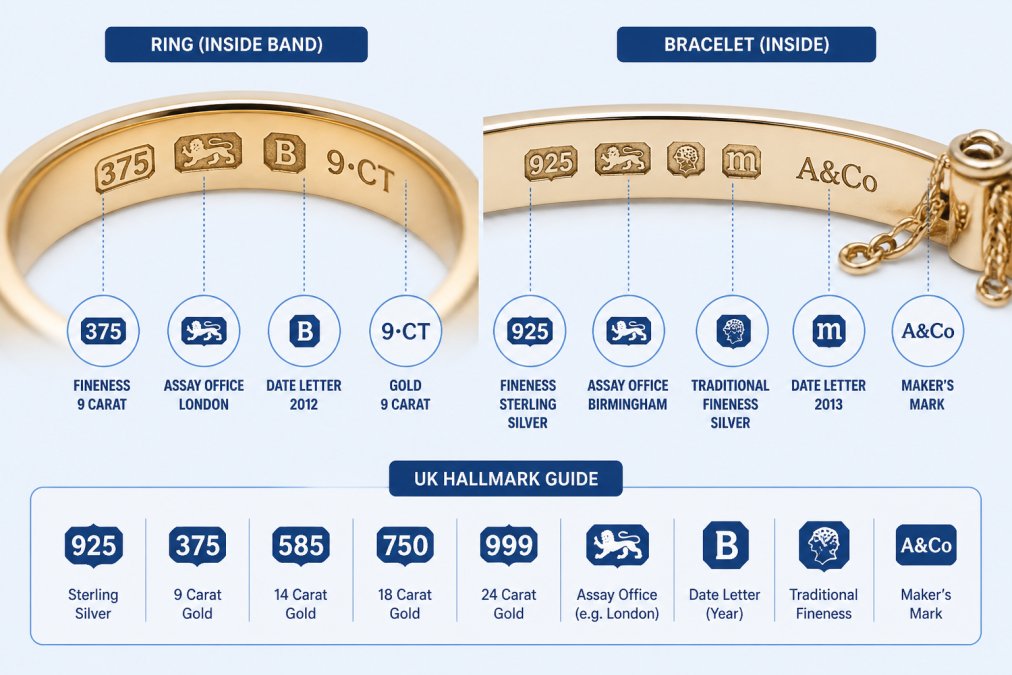
Reproductions often feature poorly struck or blurry hallmarks, hallmarks that don't match the claimed era, or hallmarks from assay offices that didn't exist in the claimed period. If uncertain about a piece's hallmarks, professional appraisers can verify authenticity. The British Antique Dealers' Association maintains a directory of reputable dealers and valuers who specialise in vintage jewellery authentication.
Essential Tips for Buying Vintage Style Jewellery
Assessing Condition, Wear, and Restoration Needs
Vintage jewellery shows its age, and that's part of its charm. Understanding the difference between acceptable patina and problematic damage is crucial before committing to a purchase.
Expected wear patterns vary by piece type and metal. Rings show wear on the band where they contact skin and clothing; brooches may have worn pin backs; necklaces often show wear at the clasp. This wear is normal and doesn't diminish value significantly. Authentic wear patterns are a sign of genuineness; reproductions often look artificially aged.
Gemstone settings require careful inspection. Prongs should hold stones securely without movement or rattling. Gently rock the stone (if the seller permits) to check for loose settings. Loose stones are a repair concern and should factor into your valuation. Claws that are worn thin or damaged may need replacement, which adds to restoration costs.
Metal condition varies based on care history. Tarnish on silver is cosmetic and easily removed. Oxidization on gold or platinum is normal and adds character. However, deep pitting, corrosion, or flaking indicates poor storage conditions and potential structural weakness. Enamel work, common in Victorian and Art Deco pieces, is fragile; chips or cracks are difficult and expensive to repair.
Before purchasing, ask the seller about any restoration work the piece has undergone. Professional restoration is acceptable; however, major repairs should be disclosed and reflected in the price.
Evaluating Gemstone Quality and Setting
Gemstone quality in vintage jewellery differs from modern standards. Older cutting techniques, such as old mine cut or cushion cut diamonds, produce different light performance than modern brilliant cuts.
Diamond assessment in vintage pieces requires attention to the Four Cs: carat weight, colour, clarity, and cut. Old mine cut diamonds have larger facets and a softer sparkle than modern cuts. They may also show slight colour tints that would be considered lower grade today but were standard for the era. Ask whether the piece comes with a gemstone certification or appraisal. For valuable pieces, a certificate from the Gemological Institute of America (GIA) provides independent verification.
Coloured gemstones should be examined for treatments. Many vintage stones have been heat-treated or oiled, which is acceptable and common. However, undisclosed treatments should be reflected in the price. Emeralds are particularly prone to fracture filling; a deep green emerald with no visible inclusions may have been treated, which affects its value and durability.
Setting style should match the claimed era. Georgian pieces feature closed-back settings; Victorian pieces often use ornate filigree; Edwardian pieces showcase delicate platinum work; Art Deco pieces display geometric designs. The durability of the setting matters if you plan to wear the piece regularly. Delicate filigree work is beautiful but fragile; diamonds and sapphires are durable; emeralds and opals are softer and more prone to damage.
Spotting Fakes and Reproductions
The vintage jewellery market includes both authentic pieces and skilled reproductions. Learning to distinguish between them protects your investment.
Construction methods reveal authenticity. Authentic vintage pieces show hand-finishing marks, slight irregularities in metalwork, and evidence of hand-soldering. Modern reproductions often display machine-perfect symmetry and laser-cut precision. Examine the piece under magnification; a jeweller's loupe (10x magnification) reveals details invisible to the naked eye.
Patina and aging are difficult to fake convincingly. Genuine patina develops unevenly, with deeper oxidization in crevices and lighter areas on raised surfaces. Authentic wear patterns on bands, clasps, and pin backs follow predictable paths; fakes may show wear in unlikely places or lack wear where it should be evident.
Gemstone setting techniques vary by era. Georgian pieces use closed-back settings. Victorian pieces feature open-back settings with ornate metalwork visible behind the stone. Edwardian pieces showcase delicate platinum work. A "Victorian" piece with a modern bezel setting is likely a reproduction or heavily restored piece.
Hallmark consistency is crucial. Research the assay office marks, date letters, and maker's marks to ensure they align with the claimed era and location. Online databases and antique dealer references help verify hallmark authenticity.
Price can signal fakes. If a piece claiming to be Georgian or Edwardian is priced significantly below market rates, investigate further. Authentic vintage jewellery commands premium prices due to rarity and craftsmanship.
Investment vs. Wearability: Making the Right Choice
Vintage jewellery serves two distinct purposes: as wearable pieces that bring joy through daily use, or as investment pieces that appreciate in value over time.
Investment-grade vintage jewellery typically meets specific criteria: it's from a desirable era (Georgian, Edwardian, or Art Deco), features high-quality gemstones or precious metals, shows minimal damage or restoration, includes documentation or certification, and has clear provenance. Investment pieces appreciate gradually, and require careful storage and insurance.
Wearable vintage jewellery prioritises aesthetic appeal and durability over rarity or investment potential. A beautiful Art Deco-inspired ring or a charming Victorian brooch can be worn regularly without concern for diminishing value. Consider your lifestyle when deciding. If you're an active person who wears jewellery daily, a delicate filigree brooch or an emerald ring may be impractical; a durable sapphire or diamond ring with a strong setting is more suitable.
Caring for Vintage Jewellery: Preservation and Risk Management
Cleaning, Storage, and Restoration Risks
Vintage jewellery requires gentle care to preserve its condition and value. Improper cleaning or storage can cause irreversible damage.
Cleaning methods vary by metal and gemstone type. For sterling silver, a soft cloth and mild soap work well; avoid abrasive cleaners that scratch the surface. For gold, warm water and gentle soap are sufficient. Never use ultrasonic cleaners on vintage pieces; the vibrations can loosen delicate settings or damage fragile gemstones like emeralds or opals.
Storage conditions significantly impact preservation. Keep vintage jewellery in a cool, dry place away from direct sunlight, which can fade enamel work and cause metal discolouration. Store pieces separately to prevent scratching, using soft pouches or jewellery boxes with compartments. Avoid storing jewellery in bathrooms, where humidity promotes tarnish and corrosion.
Restoration risks require careful consideration. Well-intentioned restoration can inadvertently damage a piece. Replating a ring may obscure original hallmarks or maker's marks, complicating future authentication. Resizing a ring can weaken its structure if the jeweller isn't experienced with vintage metalwork. Before authorising restoration, consult with the jeweller about their experience with vintage pieces and ask for before-and-after photos of similar work.
Insurance and Professional Appraisal
Vintage jewellery, particularly investment-grade pieces, should be insured. Standard homeowner's insurance often provides limited coverage for jewellery; specialist jewellery insurance offers better protection.
Professional appraisals establish value for insurance purposes and provide documentation for authentication. A qualified appraiser should be a member of a professional body such as the Royal Institution of Chartered Surveyors (RICS), which maintains standards for valuation expertise. The appraisal should include detailed descriptions, photographs, gemstone certifications (if available), and current market value. Update appraisals every 5-7 years, as market values fluctuate.
Buying from Trusted Sellers and Understanding Provenance
Provenance, the documented history of a piece's ownership and origin, adds credibility and value to vintage jewellery. Pieces with clear provenance command premium prices and are easier to authenticate.
Reputable dealers provide detailed information about their pieces' origins, condition, and any restoration work. They stand behind their merchandise with return policies and authenticity guarantees. Look for dealers who are members of professional organisations, display proper credentials, and maintain transparent business practices.
Auction houses such as Sotheby's and Christie's specialise in authenticated vintage jewellery and provide market benchmarks. However, auction house purchases typically include buyer's premiums (10-25% above the hammer price), which increases your total cost.
Private sellers may offer lower prices but carry higher authentication risk. If purchasing from a private individual, request documentation of authenticity, any certifications, and the piece's history. Be cautious of sellers who can't provide clear information or who avoid questions about condition or restoration.
Online marketplaces vary in reliability. Established platforms like Etsy and eBay include buyer protection policies, but authentication remains your responsibility. Request detailed photographs, ask specific questions about condition and hallmarks, and use secure payment methods that offer recourse if the piece doesn't match the description.
When evaluating a seller, consider their reputation, return policy, and willingness to answer detailed questions. Trustworthy sellers welcome scrutiny and provide comprehensive information. At Diamonds by daisy, we curate our collection with rigorous standards; each piece is meticulously examined, and our 30-day satisfaction guarantee ensures you can purchase with confidence.
Ethical Sourcing and Sustainability in Vintage Jewellery
Choosing vintage jewellery is inherently sustainable. By purchasing existing pieces rather than new items, you reduce demand for newly mined metals and gemstones, which carry significant environmental and social costs.
Ethical considerations in vintage jewellery differ from new jewellery. Vintage pieces were created before modern ethical sourcing standards existed, so their original mining practices may not meet contemporary expectations. However, purchasing vintage jewellery doesn't fund current mining operations, making it a more ethical choice than new jewellery with uncertain sourcing.
Conflict-free certification applies primarily to newly mined diamonds. Vintage diamonds predate modern certification systems, so they can't be certified as conflict-free. However, purchasing vintage diamonds avoids supporting current diamond mining, which can have negative environmental and social impacts in certain regions.
Responsible restoration is an ethical consideration. When restoring vintage jewellery, choose jewellers who use recycled metals when possible. Supporting artisan traditions is another benefit of vintage jewellery. Purchasing pieces from earlier eras supports the value of traditional craftsmanship and encourages contemporary artisans to maintain hand-finishing techniques.
| Consideration | Vintage Jewellery | New Jewellery |
|---|---|---|
| Environmental Impact | Minimal (no new mining required) | Significant (requires mining) |
| Ethical Sourcing | No modern certification available | Conflict-free certification possible |
| Craftsmanship | Hand-finished, artisan techniques | Often mass-produced |
| Sustainability | Highly sustainable (circular economy) | Depends on sourcing practices |
| Longevity | Proven durability over decades | Depends on quality and materials |
Buying vintage style jewellery is a rewarding investment when you know what to look for. From understanding hallmarks and metal purity to assessing gemstone quality and spotting reproductions, the knowledge you've gained here positions you to make confident, informed purchases. Whether you're drawn to the intricate details of Victorian filigree, the bold geometry of Art Deco, or the refined elegance of Edwardian designs, authentic vintage pieces offer timeless beauty and lasting value. Diamonds by daisy specialises in meticulously handpicked vintage and vintage-inspired jewellery, each piece selected for its quality, craftsmanship, and aesthetic refinement. Our 30-day satisfaction guarantee ensures you can invest with confidence, knowing that every purchase is backed by our commitment to excellence and your complete satisfaction.
Frequently Asked Questions
What is the difference between vintage and antique jewellery?
Vintage jewellery typically refers to pieces from the 1920s to 1980s, while antique jewellery is generally over 100 years old. Both can be valuable, but antique pieces often command higher prices due to rarity and historical significance. When buying vintage style jewellery, understanding these distinctions helps you set realistic expectations for age, condition, and investment potential.
How can I tell if vintage jewellery is authentic?
Look for hallmarks, maker's marks, and proper metal stamps indicating purity (925 for sterling silver, carat weight for gold). Examine construction quality, patina, and wear patterns consistent with age. Check gemstone settings for period-appropriate techniques like prongs or claws. Authentic vintage jewellery shows natural oxidization and wear. If in doubt, request a professional appraisal from a qualified UK gemologist before making a significant purchase.
What should I look for when buying authentic vintage jewellery?
Inspect for hallmarks, metal purity stamps, and maker's marks. Assess the condition of gemstones, settings, and fastenings, check for snagging, loose stones, or damage. Evaluate the era and style (Georgian, Victorian, Art Deco, etc.) to ensure authenticity. Request provenance documentation if available. Consider whether the piece suits your lifestyle and wearability needs, not just investment potential. Always buy from trusted sellers who provide detailed descriptions and condition reports.
Is vintage jewellery a good investment?
Vintage jewellery can appreciate in value, particularly signed pieces, rare gemstones, and designs from prestigious makers. However, investment returns depend on condition, provenance, and market demand. Pieces with strong provenance and documented authenticity typically retain resale value better. Consider both investment and wearability, the best purchases are pieces you genuinely love wearing, as this ensures satisfaction regardless of future resale value.
How should I care for vintage jewellery to maintain its value?
Store pieces in acid-free boxes away from moisture and direct sunlight. Clean gently using appropriate methods for the specific materials, avoid harsh chemicals that can damage delicate settings or gemstones. Be cautious with restoration; improper cleaning can diminish value. Have valuable pieces professionally appraised and insured. Regular gentle inspection helps identify loose stones or damaged fastenings early. When in doubt about caring for vintage jewellery, consult a professional jeweller.
What makes vintage jewellery more expensive than modern pieces?
Vintage jewellery often commands premium prices due to superior craftsmanship, rarity, and historical significance. Many vintage pieces feature handmade details, filigree work, and gemstones no longer readily available. Authentic hallmarks, maker's marks, and documented provenance add considerable value. Pieces from celebrated eras (Victorian, Art Deco, Edwardian) attract collectors willing to pay more. Quality materials and durability also justify higher prices compared to mass-produced modern alternatives.
How do I know if a vintage jewellery piece has been reproduced or faked?
Reproductions often lack authentic hallmarks or show inconsistent wear patterns. Examine the patina, genuine vintage pieces develop natural oxidization over decades. Check construction quality and techniques; fakes typically show inferior craftsmanship. Maker's marks should match the claimed era and maker. Request certification or appraisal documentation. Be wary of pieces with suspiciously perfect condition or prices significantly below market value. Buy from reputable dealers who guarantee authenticity and provide detailed provenance.
This article was written using GrandRanker