

5 Pearl Jewelry Looks for 2026 That Make Pearls Work Every Day
Pearls are having their biggest style moment in decades. 2026 is shaping up as the year they shed the “grandmother’s necklace” reputation for good. The trends worth knowing: layered strands, minimal single-drop pieces, sculptural metal settings, baroque and punk-influenced pearls, and pearl chokers worn tight to the neck. Every one of these looks works for daily wear, not just black-tie events, and every one pairs easily with the mixed-metal jewelry already in your rotation.
TL;DR:
- Layered freshwater pearl strands of varying lengths paired with chains create a casual, textured look ideal for everyday styling and versatile outfits.
- Minimal drop pearls on fine chains are suitable for daily office wear, with size and scale being key to an intentional, polished appearance.
- Sculptural and geometric settings work best as bold statement pieces for evening or special events, emphasizing jewelry as wearable art.
- Baroque and punk-influenced pearls with irregular shapes pair well with mixed metals and hardware elements, making them perfect for edgy, trend-forward styles.
- Pearl chokers should sit snug at the neck with small pearls, and layering them with longer pieces adds depth while maintaining a modern, wearable aesthetic.
Table of Contents
- Pearl Jewelry Trends 2026 at a Glance
- Trend Deep Dives: What to Buy and How to Style Each Look
- How to Wear Pearls Now: Outfit Formulas That Work
- Pearl Types and Materials Worth Knowing
- Runway and Celebrity Evidence Behind the Trend
- Pearl Care and Storage Basics
- How to Evaluate Pearl Jewelry Before You Buy
- Curating Pearls the Diamondsbydaisy Way
- Color Trends and Alternative Pearl Finishes for 2026
- Emerging Pearl Jewelry Designs and Techniques for 2026
- Who Is Driving the 2026 Pearl Trend
- Environmental and Ethical Considerations in Pearl Sourcing
- A Stylist’s Take on Where Pearls Are Actually Headed
- Shop the 2026 Pearl Edit
- Sources
- FAQ
Pearl Jewelry Trends 2026 at a Glance
Before you shop or scroll through editorial images, it helps to know which look you’re actually looking at. Retailers and design blogs have converged on the same five categories for 2026 pearl jewelry styles, and each one has a distinct place in your closet.
- Layered pearls: Multiple strands of different lengths worn together, mixed with chain necklaces for texture. Works for weekend brunch, dinner out, or dressing up a plain sweater.
- Minimal drop pearls: A single pearl on a thin chain or stud, often asymmetrical. The default for office wear or anytime you want polish without effort.
- Sculptural settings: Pearls set into architectural metal cuffs, twisted bands, or geometric frames rather than simple strands. Best for evening looks or as a statement piece with an otherwise simple outfit.
- Baroque and punk pearls: Irregular, free-form pearls mixed with chains, studs, or safety-pin style hardware. Suited to editorial looks, concerts, or anyone who wants pearls with an edge.
- Pearl chokers: Strands worn snug at the base of the neck, sometimes layered with a longer piece behind them. Reads modern in a way a loose strand doesn’t, and works from daytime to evening depending on the pearl size.
Trade coverage has zeroed in on chokers and layering specifically as the styling moves giving pearls their younger, architectural feel this year. If you only remember one thing from this list, remember that proportion, not just pearl quality, decides whether a piece looks current or dated.
Trend Deep Dives: What to Buy and How to Style Each Look
Each of the five 2026 trends has its own rules for proportion, material, and pairing. Getting these right is what separates a look that feels intentional from one that feels accidental.
-
Layered pearls. The formula that works: three strands, each a different length, at least one mixed with a delicate gold chain. Freshwater pearls in slightly varied sizes look more natural layered than perfectly matched Akoya strands, which read better worn alone. Pair with open necklines, since layering gets visually messy under a crewneck.
-
Minimal drop pearls. One pearl, one chain, done. The trick is scale: a single pearl of moderate size on a fine gold-filled or sterling chain looks intentional; anything smaller can disappear, anything larger starts competing with your face. This is the trend that works literally every day, including under a blazer.
-
Sculptural settings. Look for pearls partially wrapped in twisted or hammered metal rather than sitting in a plain bezel. These pieces read as jewelry-as-art, which means they do best as a single statement rather than mixed with other pearl pieces. A sculptural cuff or collar earns its keep at dinner or an event where you want one piece to do all the work.
-
Baroque and punk pearls. Irregular baroque shapes give designers room to treat every piece as one-of-a-kind, which is part of why this category has momentum. Styling examples circulating in fashion coverage pair baroque strands with chain link necklaces, mixed metals, and even safety-pin charms for a heirloom-meets-hardware effect. This is also the trend to reach for if you’re restringing an inherited pearl necklace instead of buying new.
-
Pearl chokers. Sizing matters more here than in any other category. A choker needs to sit snug, generally a length appropriate to fit closely around most necks, and smaller pearls (6mm to 7mm) keep the look delicate rather than bulky. Layer a choker with a longer minimal drop piece behind it for depth without overcrowding your neckline.
Pro Tip: If you own a single classic strand and want an instant 2026 update, don’t buy anything new yet. Clasp it shorter to sit choker length, or wrap it twice around your wrist as a bracelet. The pearls are the same. The proportion is what makes them look current.
How to Wear Pearls Now: Outfit Formulas That Work
Modern pearl styling comes down to breaking a few old rules on purpose. Here’s what actually works in 2026:
- Everyday: Wear a minimal drop pearl with a plain white tee and jeans, or layer two freshwater strands over a turtleneck for texture without trying too hard.
- Office: Stick to one pearl piece, either studs or a single pendant, paired with your existing gold or silver jewelry rather than a full pearl set.
- Evening: Go sculptural or choose a baroque statement piece, and let it be the only jewelry besides earrings.
- Do: Mix pearls with chain-link necklaces and existing metal pieces. Pearls no longer need to match each other, let alone the rest of your jewelry.
- Don’t: Wear a full matched pearl set (necklace, earrings, bracelet) unless it’s a formal event. That combination is what reads dated, not the pearls themselves.
- Hair and neckline: Chokers pair best with hair up or a low neckline; layered strands work better with an open collar than a high one, which hides the effect.
Want more outfit-specific combinations? Diamondsbydaisy’s guide to wearing pearls casually walks through ten looks built around freshwater and baroque pieces, and the necklace layering guide breaks down chain-and-pearl proportions in more detail.
Pearl Types and Materials Worth Knowing
Not all pearls behave the same way once you try to style them, so a quick primer helps before you buy.
- Freshwater pearls: Grown mostly in China, typically less expensive than Akoya, with a softer luster and more varied shapes. Best for layering, since slight size and shape variation actually helps the look.
- Akoya pearls: Rounder, glossier, and pricier than freshwater, with the classic uniform look. Best worn as a single strand or in minimal drop pieces where that mirror-like shine can be the focus.
- Baroque pearls: Irregular by nature, freshwater or Akoya in origin, and the material driving most of the 2026 punk and statement-jewelry momentum.
- Sourcing cues: Look for brands that disclose farming region and harvest method. Cultured pearls (farmed) make up nearly all pearls sold today; natural pearls are rare and typically only found through auction houses, not everyday retail.
Runway and Celebrity Evidence Behind the Trend
Editorial and trade press have been consistent on this point: pearls moved from occasion-only jewelry to daily styling essentials over the past year. Coverage of tennis star Coco Gauff’s pearl necklace at the US Open put pearls in front of a sports audience that doesn’t usually follow fine jewelry news, while designer collaborations have leaned into baroque shapes and sculptural settings for capsule collections. The pattern is simple: a high-visibility celebrity or runway moment shows up in editorial coverage, and within a season, retailers merchandise around it with both accessible everyday pieces and higher-end statement designs.
Pearl Care and Storage Basics
Pearls are softer than most gemstones, so a few habits protect your investment.
- Put pearls on last when getting dressed, and take them off first, before showering, applying perfume, or using hairspray.
- Wipe pearls with a soft, damp cloth after wearing to remove oils and residue.
- Restring pearl strands every one to two years if you wear them regularly, since silk cord stretches and weakens over time.
- Store pearls flat or in a soft pouch, separate from harder gems that can scratch them, and away from excessive humidity or dry heat.
How to Evaluate Pearl Jewelry Before You Buy
A quick checklist keeps you from overpaying for the wrong piece or underpaying for something that won’t hold up.
- Luster and matching: Pearls should reflect light sharply, and strands should have consistent color and size unless the piece is intentionally baroque.
- Drill and setting security: Check that drilled holes are clean and that pearls in settings sit securely, not loose in their mounts.
- Metal quality: Sterling silver or gold-filled findings resist tarnish better than plated base metal, especially for daily wear.
- Return policy: Confirm the seller’s return window before buying, particularly online.
- Sourcing transparency: Brands that name the pearl origin and farming method are generally more trustworthy than those that don’t disclose it at all.
Pro Tip: For round necklines, a choker or short strand sits better than a long pendant, which can get lost in the fabric. For V-necks, a minimal drop pearl follows the line of the neckline instead of fighting it.
Curating Pearls the Diamondsbydaisy Way
Curating pearl pieces for Diamondsbydaisy means applying the same filter to every trend on this list: does it work with something you already own, and will you actually reach for it on a Tuesday, not just a wedding. That’s the lens behind picks spanning minimal drops for the office to baroque statement pieces for nights out. Our own styling posts, including the breakdown of casual pearl outfits and the wider 2026 jewelry trend roundup, go deeper into specific combinations if you want more than a checklist.
Color Trends and Alternative Pearl Finishes for 2026
Classic white and cream pearls aren’t going anywhere, but the forecast for 2026 leans into more variation than pearls have historically offered. Expect to see more gray, silver, and champagne-toned pearls positioned as neutral alternatives to white, since they pair more easily with warm gold and cool silver metals alike. Black and peacock-toned Tahitian pearls, once reserved for statement pieces, are showing up in smaller everyday drops and stud earrings.
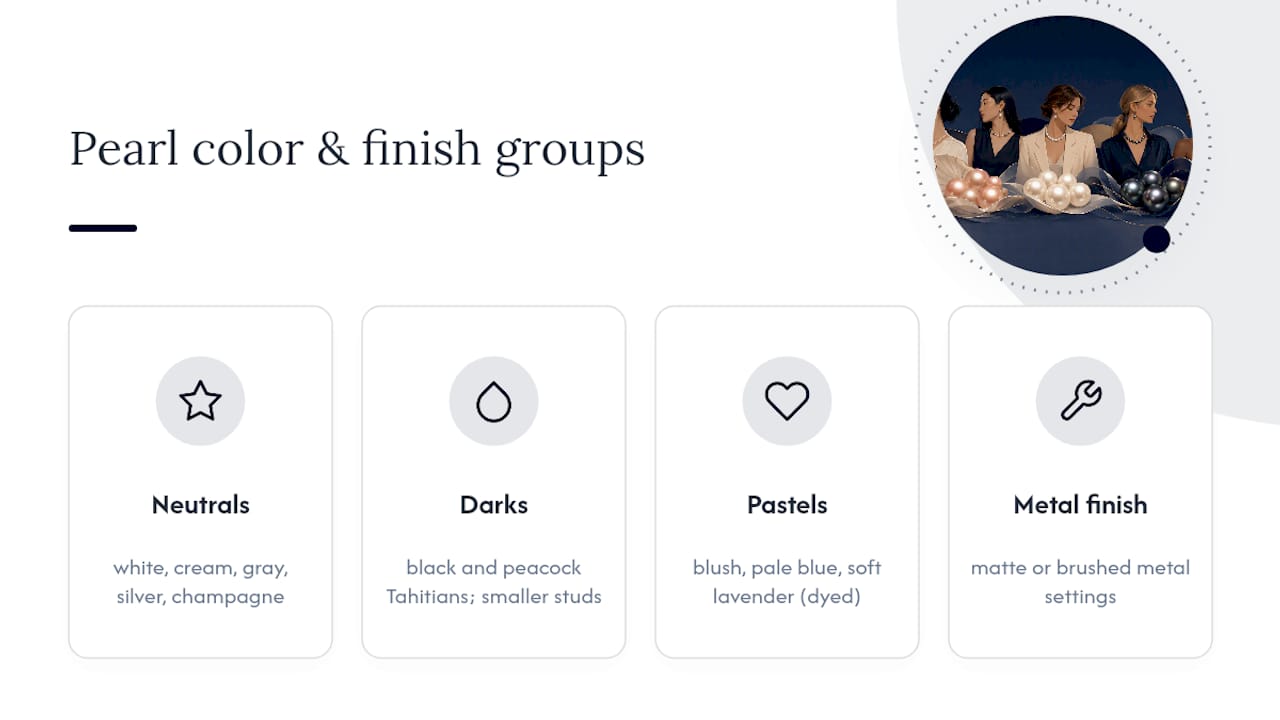
Treated and dyed pearls are also part of the conversation, particularly in blush pink, pale blue, and soft lavender tones aimed at younger buyers who want color without a full gemstone commitment. These finishes work best in minimal or sculptural settings, where the color reads as a deliberate accent rather than competing with an already busy layered look.
The bigger shift is textural. Matte or brushed-finish metal settings around pearls are replacing high-polish mounts in a lot of newer designs, giving pieces a softer, less formal look that suits the everyday-wear direction pearls have taken overall. If you’re buying new, a piece with a muted metal finish tends to age better stylistically than a mirror-polished one, simply because it doesn’t scream any particular year.
Emerging Pearl Jewelry Designs and Techniques for 2026
The most interesting shift in 2026 pearl design isn’t a new pearl type. It’s how designers are mounting and combining pearls with other materials. Sculptural settings that wrap pearls in twisted, hammered, or geometric metalwork have moved from runway novelty to retail staple, giving a single pearl the visual weight of a much larger stone.
Mixed-material pieces are also gaining ground: pearls set alongside colored gemstones, chain link hardware, or even resin and enamel accents. This pairs directly with the baroque and punk trend, where a single necklace might combine an irregular pearl with steel-toned chain for contrast. Asymmetrical designs, where one earring carries a pearl and its pair carries a smaller charm or stud, have also become a recognizable look rather than an outlier.
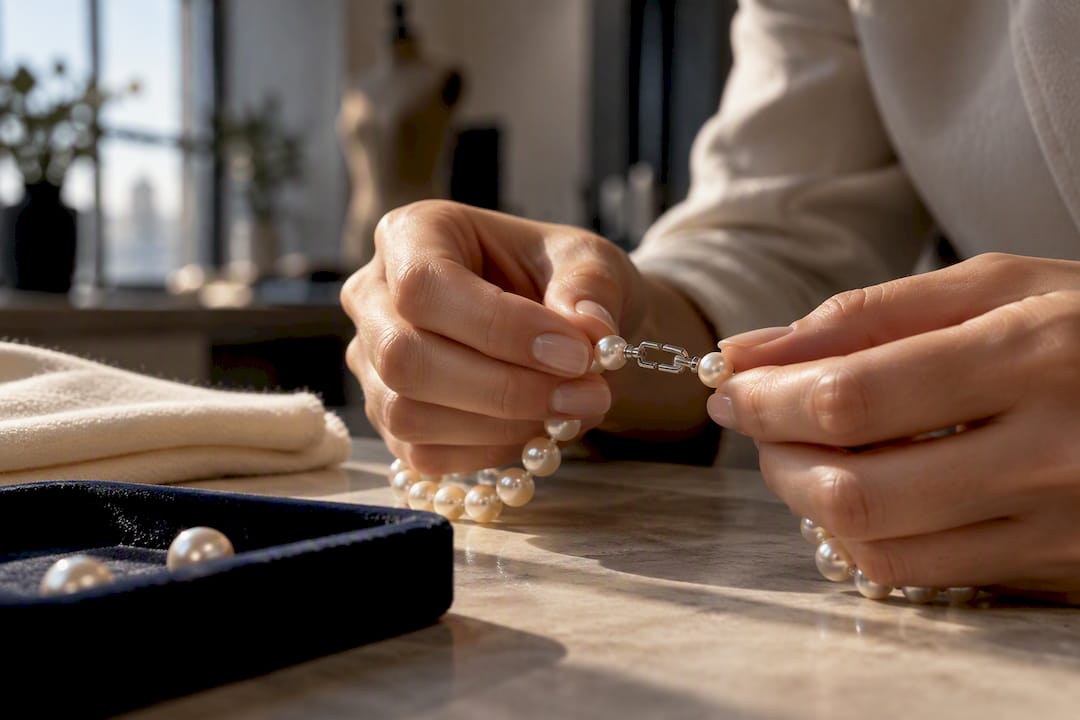
On the technical side, more brands are experimenting with hidden-clasp designs that let a single strand convert between choker length and longer drape, giving one necklace multiple styling options. That kind of convertibility fits the broader move toward pearls as everyday, functional jewelry rather than pieces reserved for one specific dress.
Who Is Driving the 2026 Pearl Trend
The momentum behind pearls in 2026 comes from a mix of independent jewelry designers and larger retail brands responding to the same signals. Designers working in baroque and irregular pearl shapes have leaned into the idea that no two pieces need to match, which trade coverage has tied directly to a broader renewed interest in baroque pearls among designers looking to emphasize individuality over uniformity.
At the same time, brand editorial content has shifted its own messaging, framing pearls as moving from strictly classic pieces toward everyday essentials and sculptural statement designs. That shift matters because it signals retailers are actively merchandising around the trend rather than just reacting to occasional runway spottings. For readers deciding what to buy, this convergence between independent design and mainstream retail is a reasonable sign the trend has staying power beyond a single season.
Environmental and Ethical Considerations in Pearl Sourcing
Pearl sourcing carries fewer of the ethical red flags associated with mined gemstones, but it isn’t free of them either. Nearly all pearls sold today are cultured, meaning they’re farmed rather than found, which reduces the environmental disruption tied to gem mining. Pearl farming still depends heavily on clean water conditions, since oysters and mussels are sensitive to pollution and temperature shifts, so responsible farms tend to double as informal indicators of local water health.
Labor practices vary more by region and operation size than by pearl type, which is why sourcing transparency matters more than the species of pearl itself. Brands that disclose farming location and harvesting practices give buyers more to go on than a generic “ethically sourced” label. For sustainable pearl jewelry trends specifically, the direction in 2026 favors smaller-scale, traceable farming operations over anonymous bulk sourcing, and buyers are increasingly asking sellers to name their supply chain rather than take sustainability claims at face value.
A Stylist’s Take on Where Pearls Are Actually Headed
The conventional advice on pearls, that they’re a “classic investment piece” you buy once and wear for decades unchanged, undersells what’s actually happening right now. The pearls themselves aren’t new. What’s changed is permission: permission to layer them like costume jewelry, clip them short like a choker, or mismatch them with chain hardware instead of treating them as untouchable heirlooms.
That’s the real story behind the runway and celebrity coverage driving this trend. It isn’t proving pearls are back in some abstract sense. It’s proving that the old rules around pearls, matched sets, one strand at a time, special occasions only, were never load-bearing. They were just convention.
If you take one thing from 2026’s pearl moment, prioritize proportion over pedigree. A $40 freshwater strand worn choker-length with a chain layered behind it will look more current than an expensive matched Akoya set worn the traditional way. Buy for how you’ll actually wear the piece, not for how impressive it sounds in a jewelry box.
— Georgia
Shop the 2026 Pearl Edit
Diamondsbydaisy curates pearls the same way this article breaks them down: for real wear, not just special occasions. Instead of chasing every trend individually, our Jewelry & Elevated Accessories collection groups pieces so you can find a layering-ready strand, a minimal drop pendant, or a statement baroque piece without digging through a catalog built for formal wear only.
If you’re shopping for a wedding, engagement, or milestone gift, the Bridal & Wedding Jewellery collection leans into the classic and sculptural pearl pieces best suited to those moments, while everyday shoppers will find more casual, mixable pieces across the main collection. Browse either one, pick a piece that matches the trend you actually want to wear, and check out; both collections ship as gift-ready, so there’s no separate wrapping step if you’re buying for someone else.
Sources
- Pearl Jewelry Trends 2026: Layered, Minimal & Sculptural
- Pearls get a modern edge with chokers and layered looks | Prism News
- Designers love baroque pearls - JCK
- Pearls Are Back With These New It-Styles for 2026
FAQ
Are pearls still in style in 2026?
Yes. Pearls are one of the defining jewelry categories of 2026, driven by layered strands, minimal drop pieces, sculptural settings, baroque and punk styling, and chokers, according to fashion and trade coverage tracking 2026 pearl jewelry styles. The shift is toward everyday wear rather than occasion-only jewelry.
What are the hottest jewelry trends for 2026?
Alongside pearls, the biggest jewelry movements include necklace layering, chokers, and sculptural metalwork that treats jewelry as small wearable art. Diamondsbydaisy’s jewelry trend roundup covers these categories beyond pearls specifically.
What are the current trends in pearl jewelry?
The five defining looks are layered strands, minimal single-drop pieces, sculptural settings, baroque or punk-influenced pearls, and pearl chokers. Baroque pearls in particular have gained traction because their irregular shapes let designers emphasize individuality rather than uniform matching.
How do you wear pearls without looking old-fashioned?
Break the matched-set habit: wear one pearl piece mixed with your existing chain necklaces or metal jewelry instead of a full pearl necklace, earring, and bracelet set. Wearing pearls choker-length or layered with a chain, rather than as a single loose strand, also reads as noticeably more modern.
What pearl type should I buy for everyday wear?
Freshwater pearls tend to work best for everyday layering because their slight variation in size and shape looks intentional when mixed with other strands. Akoya pearls, with their glossier and more uniform look, suit minimal single-pendant styling better than heavy layering.