

What Jewelry Hallmarks Really Mean (And Why You Should Check)
A hallmark is an official stamp on precious metal jewelry that certifies its fineness and records who submitted it for testing. Check it before you buy, sell, or insure anything, because an assay office mark is the closest thing the jewelry world has to a lie detector test.
Most legitimate hallmarks pack three pieces of information into a few millimeters of metal:
- A fineness or purity number (like 750 or 925)
- A maker or sponsor mark tied to whoever submitted the piece
- Often an assay office or town mark and a date letter confirming when it was tested
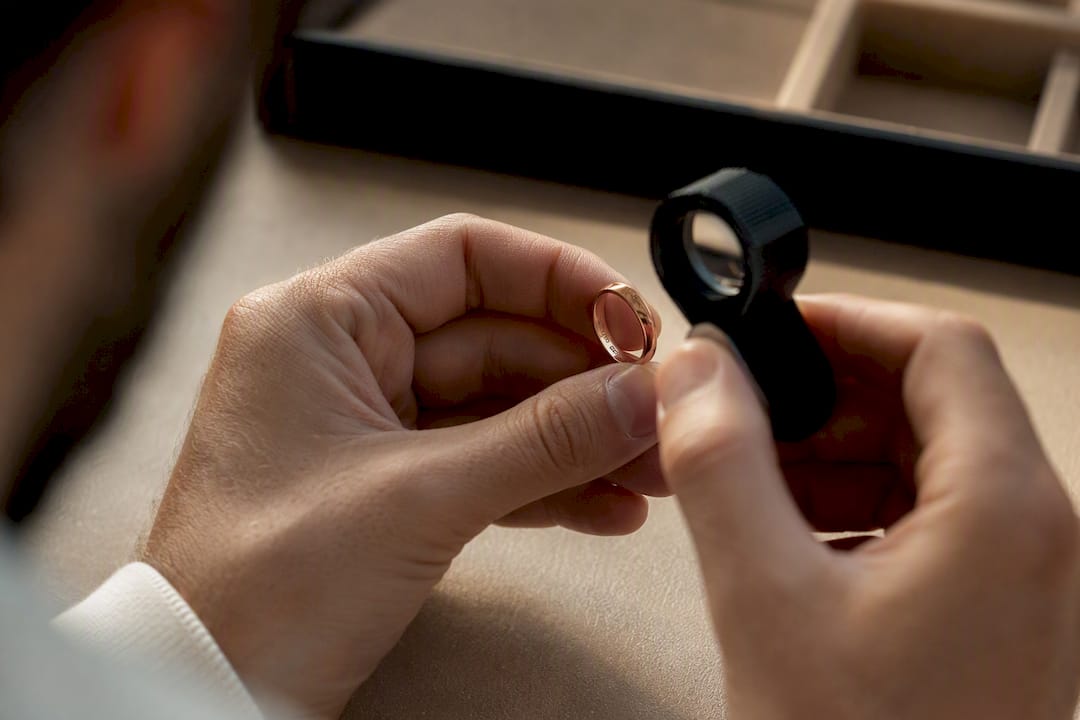
You’ll usually find these stamped inside a ring shank, on the back of a clasp, or on the underside of a pendant bail. Grab a loupe before you go hunting. Most marks are smaller than a grain of rice.
Key Takeaways
Hallmarks work because they combine an independently tested fineness number with a traceable maker mark, and reading both together is what separates a confident buyer from a guessing one.
| Point | Details |
|---|---|
| Fineness number rules value | 750, 585, 925, and similar numbers directly determine resale price and insurance replacement cost. |
| Maker marks aren’t hallmarks | A private maker’s mark alone offers no independent verification of purity. |
| Date letters pin down age | Cross-reference letter shape and shield style against an assay office chart to date vintage pieces. |
| Photograph before cleaning | Polishing can permanently blur or erase a date letter or fineness stamp. |
| Escalate disputed pieces | XRF testing or a certified jeweler resolves cases where marks look worn, mismatched, or missing. |
Table of Contents
- Understanding Jewelry Hallmarks: What Each Mark Actually Says
- How to Read Common Hallmark Symbols and Numbers
- Maker’s Marks and Date Letters: Pinning Down Origin and Age
- Where to Verify a Hallmark You Can’t Identify
- When Hallmarks Are Missing, Worn, or Just Wrong
- Turning Hallmark Knowledge Into a Buying and Selling Checklist
- What Most Guides Get Wrong About Reading Hallmarks
- Sources
Understanding Jewelry Hallmarks: What Each Mark Actually Says
A hallmark isn’t one symbol. It’s a small cluster of separate marks, each answering a different question, and reading jewelry hallmark meaning correctly means learning to separate them instead of treating the whole cluster as one blob of stamped metal.
- The fineness mark. This is a number like 750 or 925, sometimes paired with a carat figure like “18K.” The number tells you parts per thousand of pure metal. A 750 mark means 75% gold, or 18 carat; a 585 mark means 14 carat. This is the fact that actually determines resale value and insurance replacement cost, so it matters more than any other symbol on the piece.
- The sponsor or maker’s mark. Usually two or three letters inside a shield or cartouche. It identifies the person or company that submitted the piece for testing, and in most systems that mark gets formally registered with an assay office, which means it’s traceable back to a specific business, not just a decorative flourish.
- The assay office or town mark. This is the independent verification layer. British hallmarking developed as the oldest consumer protection system for precious metals, precisely because a maker vouching for their own metal isn’t good enough. An office mark means a third party actually tested the piece and confirmed what the fineness number claims.
- The date letter. A single letter, often in a specific font and shield shape, that cycles through the alphabet on a set schedule. It pins the piece to a specific year or narrow range of years, which is enormously useful for dating vintage or antique jewelry.
- Optional marks. Duty marks, commemorative marks (jubilees, millennium stamps), and import marks show up on some pieces and add historical color without changing the core purity story.
Read these together, not in isolation. A fineness number without a sponsor mark tells you what the metal claims to be but not who stands behind that claim.
How to Read Common Hallmark Symbols and Numbers
Once you know the categories of marks, the actual numbers are easy to memorize. Gold pieces commonly carry 375 (9 carat), 585 (14 carat), or 750 (18 carat). Silver almost always shows 925, meaning sterling. Platinum runs 950 or 900, and palladium typically shows 950 as well.
Older British pieces sometimes carry pictorial symbols instead of, or alongside, numbers:
- A crown historically marked gold in some assay offices, though modern practice has shifted toward numeric fineness stamps
- A lion passant (a walking lion in profile) is the traditional mark for sterling silver
- Anchors, castles, and other town symbols mark specific assay offices, a leftover from when each British city ran its own testing house
Here’s a worked example. Say you find a stamp reading “750,” followed by an anchor, followed by two initials in a shield. That translates to 18 carat gold, tested at Birmingham’s assay office, submitted by a specific registered maker. Four symbols, one complete story.
Struck hallmarks are physically punched into the metal with a steel die, which means they sit slightly recessed and tend to survive decades of wear, even if they get shallow. Laser hallmarks are etched on the surface with a laser and look crisper under magnification, but they can wear away faster on pieces that get handled constantly, like wedding bands. If a mark looks blurry or partial, don’t assume it’s fake. It might just be forty years of finger friction.
Pro Tip: Tilt the piece under raking light rather than shining a flashlight straight down on it. Marks that look invisible under direct light often pop into sharp relief the moment you angle the light source across the metal instead of into it.
Maker’s Marks and Date Letters: Pinning Down Origin and Age
A maker’s mark and a hallmark are not the same thing, and mixing them up is one of the most common identification mistakes. A maker’s or brand mark is a private identifier, essentially a signature. An official hallmark is independent certification of purity that a third party actually verified. A piece can carry a maker’s mark alone with no hallmark at all, and that combination tells you the maker’s claim was never independently checked.
Used together, though, maker marks and date letters are powerful. Cross-reference the sponsor’s initials against a maker registry, then check the date letter’s font and shield shape against a date-letter chart from the relevant assay office. When both point to the same window of years, you’ve got real confidence in the piece’s origin.
Watch for these pitfalls:
- Duplicate initials: plenty of makers over two centuries have shared the same two letters, so initials alone rarely confirm identity.
- Worn punch shapes: a shield that’s rounded from polishing can look like a different letter than it actually is.
- Imported systems: pieces hallmarked abroad and imported use different date-letter cycles and shield conventions entirely.
Before you clean or polish anything, photograph the marks under magnification and consult a reference chart. Aggressive polishing can blur a date letter permanently, and once it’s gone, no amount of research brings it back.
Where to Verify a Hallmark You Can’t Identify
You don’t need professional equipment to start. Photograph marks in raking light, hold the piece steady against a dark background, and take multiple shots at slightly different angles since one angle almost never captures every mark clearly.
For actual verification, lean on resources built for this exact task:
- Assay office guides explain mark shapes, date-letter cycles, and weight exemptions in plain language.
- Hallmark-finder databases and maker registries let you cross-check initials against documented historical marks.
- Certified jewelers can do a visual read for free or a small fee, which covers most everyday questions.
- Formal assay testing or XRF (X-ray fluorescence) analysis is the option for higher-value or disputed pieces, and it typically takes anywhere from a few days to a couple of weeks depending on the lab’s backlog.
Save your photos in a dated folder alongside any receipts or provenance documents. If you ever need an appraisal, insurance claim, or resale listing, that photo set does most of the legwork for whoever picks up the file next.
When Hallmarks Are Missing, Worn, or Just Wrong
Unmarked pieces aren’t automatically fake, but they deserve extra scrutiny before you hand over cash or list them for sale.
- Run basic at-home checks first. A magnet test rules out base metals disguised as gold or silver (precious metals aren’t magnetic), and weighing the piece against known density ranges can flag obvious fakes. Neither test is conclusive on its own.
- Escalate to professional testing when stakes are high. XRF testing reads the metal’s actual composition without damaging the piece, and results typically come back as a percentage breakdown of the metals present, which you can then compare against the claimed fineness.
- Document everything before you negotiate. Photograph the piece, any partial marks, and your test results, then bring that file to the seller if you’re disputing authenticity.
- Know your red flags. A “925” stamp on a piece that fails a basic acid or magnet test, mismatched marks that don’t correspond to any known assay office, or a seller who refuses to let you photograph the piece closely are all reasons to walk away or demand a third-party appraisal before you buy.
Turning Hallmark Knowledge Into a Buying and Selling Checklist
Reading jewelry hallmark meaning correctly is only useful if it changes what you actually do at checkout or before a sale. Here’s the practical sequence:
- Verify the fineness number matches what the listing or seller claims.
- Photograph every mark under magnification before you clean the piece.
- Ask for any documentation, receipts, or certificates the seller has.
- Compare the seller’s return policy against what you’d need if the hallmark turns out to be misleading.
Confirmed hallmarks do more than settle a purity argument. They form the backbone of a solid insurance claim, since an insurer replacing a piece needs documented metal content, not a guess. They also matter enormously for resale, where a clear, legible, verifiable hallmark can be the difference between a quick sale and months of buyer skepticism.
One easy way to protect that legibility: skip aggressive polishing on anything you plan to appraise or resell. A quick soft-cloth wipe is fine. A jeweler’s rouge wheel on an unverified antique can erase a date letter in seconds. Diamondsbydaisy builds its craftsmanship standards around exactly this kind of transparency, and if you’re weighing a purchase against buyer protections, it’s worth reviewing how a return guarantee actually works before you commit.
What Most Guides Get Wrong About Reading Hallmarks
Most explanations treat hallmarks as trivia, a fun bit of jewelry history to mention and move past. That undersells them badly. A hallmark is functional data, and treating it as decoration is exactly why so many buyers get burned on secondhand pieces.
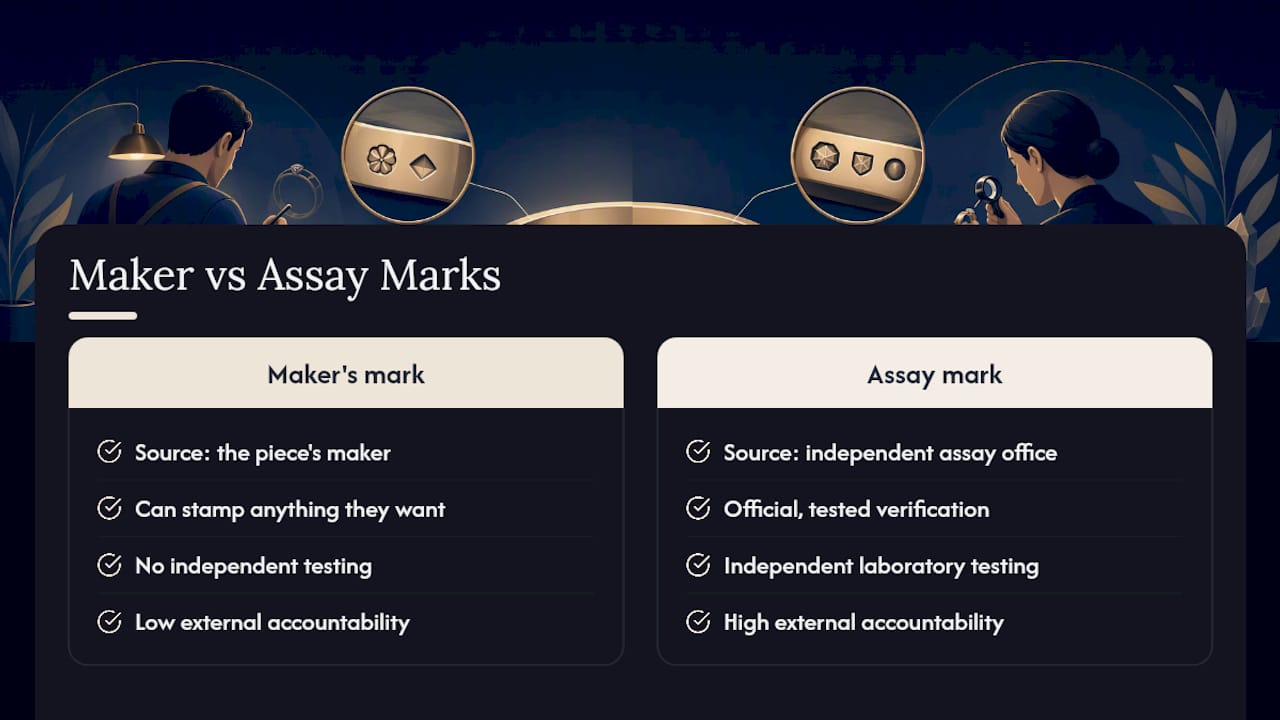
The bigger blind spot is the assumption that a maker’s mark carries the same weight as an assay office mark. It doesn’t, and conflating the two is the single most common mistake I see in how people talk about verifying jewelry. A maker can stamp anything they want on their own work. An independent assay office testing that same piece is a different level of accountability entirely, and that distinction should shape how much trust you extend to any unverified stamp.
If you take one thing from this, prioritize the fineness and assay marks over the romance of a pretty crown or lion symbol. Symbols are fun for dating a piece. Numbers are what protect your money.
— Georgia
Sources
For deeper reference, see Britannica’s hallmark overview, The Goldsmiths’ Company’s hallmarking guide, and Diamondsbydaisy’s vintage jewelry buying tips.
- UK Jewellery Hallmarks Explained: A Complete Guide | The Gem Press
- Hallmark | Britannica
- Hallmarking — The Goldsmiths’ Company
- Understanding hallmarks and your jewellery | The Assay Office