

Does Fair Trade Jewelry Really Make a Difference?
Table of Contents
- What Fair Trade Jewelry Actually Means
- The Real Impact on Mining Communities and Livelihoods
- Environmental Standards in Fairtrade Gold Mining
- Supply Chain Transparency and Verification
- Fairtrade Gold vs Recycled Gold: Understanding the Difference
- How to Identify Ethical Jewellery and Verify Certification
- Benefits of Fairtrade Gold for Miners and Artisanal Communities
- The Limitations: What Fair Trade Certification Cannot Guarantee
Last Updated: August 26, 2026
What Fair Trade Jewelry Actually Means
Fair trade jewelry refers to precious metals and gemstones sourced and produced according to standards that prioritize the welfare of miners, artisanal communities, and the environment. Unlike conventional jewelry sourcing, which often obscures supply chain origins, fair trade jewelry operates on documented traceability and third-party certification. This means you can follow the journey of your gold or diamonds from the mine to your wrist with verifiable proof at each step.
At Diamonds by daisy, we understand that conscious consumers want more than a beautiful piece, they want to know their purchase supports ethical practices. Fair trade jewelry achieves this through guaranteed minimum prices for miners, community development projects, and environmental stewardship standards that conventional mining frequently ignores.
The distinction matters because the jewelry industry has historically been opaque. A ring purchased in London might contain gold extracted under hazardous conditions, with miners earning subsistence wages whilst middlemen capture most of the value. Fair trade certification disrupts this model by establishing direct relationships between producers and buyers, ensuring miners receive fair terms of trade and communities benefit from development initiatives.
The Real Impact on Mining Communities and Livelihoods
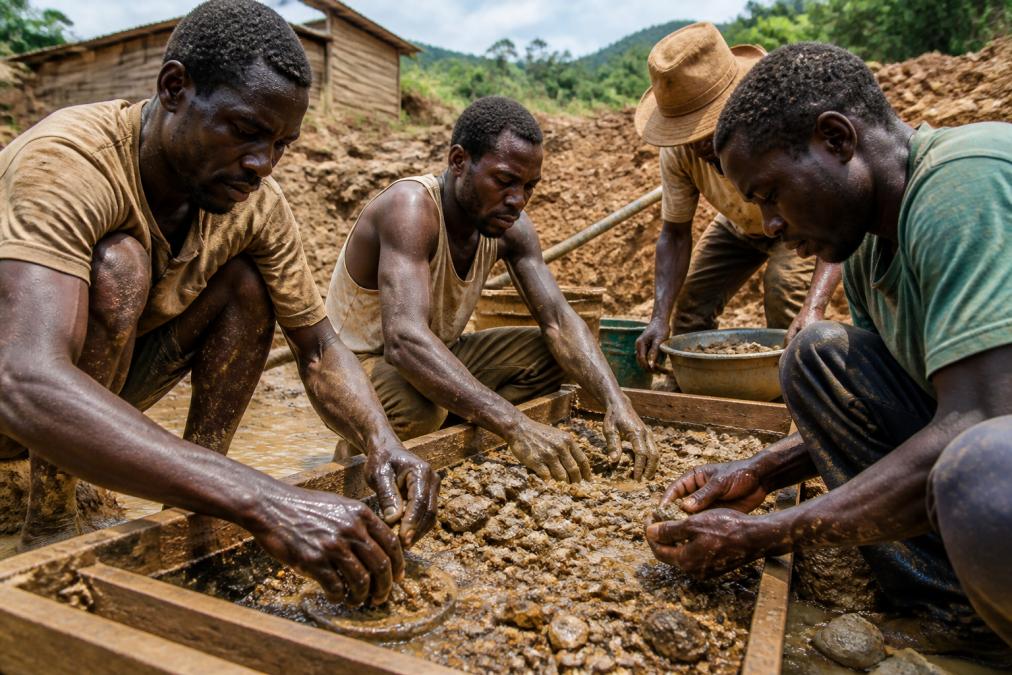
Mining communities in developing regions often face economic vulnerability. Without fair trade frameworks, artisanal and small-scale mining operations struggle to negotiate fair prices, leaving miners dependent on exploitative middlemen. Fair trade certification changes this dynamic by establishing direct purchasing relationships and ensuring economic empowerment through guaranteed minimum prices.
Guaranteed Minimum Price and Economic Empowerment
The guaranteed minimum price is perhaps the most tangible benefit of fair trade certification. Rather than accepting whatever price middlemen offer on any given day, miners operating under fair trade standards receive a price floor that reflects the true cost of responsible production. This stability allows families to plan investments in education, healthcare, and housing without fearing sudden income collapse.
Beyond the base price, fair trade systems typically include a social premium, an additional payment directed toward community projects. This premium funds initiatives that miners themselves prioritize: school construction, clean water systems, healthcare facilities, and vocational training programmes. The mechanism ensures that economic benefits flow directly to those who created the value, rather than concentrating in the hands of distant corporations.
The impact on livelihoods extends beyond individual income. When miners earn fair compensation, they can transition away from dangerous practices. Mercury-free mining techniques, for instance, require investment in equipment and training. Fair trade premiums often fund this transition, protecting both worker health and environmental integrity. Communities gain stability, young people see viable futures in their home regions, and generational poverty cycles begin to break.
Community Development Projects and Labor Standards
Fair trade certification mandates labour standards that protect workers from exploitation. Child labour is prohibited, working hours are regulated, and safety conditions are monitored. These aren't abstract ideals, they're enforced through regular third-party audits and community feedback mechanisms.
Community development projects funded by fair trade premiums address systemic challenges. A mining community might use premium funds to establish a cooperative processing facility, reducing dependence on external buyers and increasing the value captured locally. Another might invest in alternative livelihood training, creating economic diversification so families aren't entirely reliant on mining income. Women's economic empowerment programmes are common, recognizing that gender equality in the mining sector requires deliberate investment.
The difference between fair trade and conventional mining becomes visible in community infrastructure. Fair trade mining regions often show measurable improvements in school attendance, healthcare access, and economic stability. Conventional mining regions, by contrast, frequently experience the "resource curse", where mineral wealth concentrates in few hands whilst communities remain impoverished.
Environmental Standards in Fairtrade Gold Mining
Environmental degradation from conventional mining is severe. Cyanide leaching, mercury use, and habitat destruction characterize industrial-scale operations. Artisanal and small-scale mining, whilst less mechanized, often employs the most hazardous techniques precisely because miners lack resources for safer alternatives.
Fair trade certification establishes environmental stewardship requirements that shift this equation. Mercury-free mining becomes standard practice rather than an exception. Waste management protocols protect water sources from contamination. Habitat restoration receives funding and oversight. These standards exist because fair trade recognizes that environmental health and community prosperity are inseparable, poisoned water and degraded land undermine the livelihoods fair trade aims to protect.
The carbon footprint of fair trade gold is also lower than conventional alternatives in many cases. Because artisanal and small-scale mining operations are less energy-intensive than industrial extraction, and because fair trade premiums often fund renewable energy adoption, the overall environmental impact can be substantially reduced. This matters for consumers concerned about climate impact alongside ethical sourcing.
Verification of these environmental standards occurs through documented audits and community monitoring. Unlike marketing claims that lack accountability, fair trade environmental commitments are tracked and reported publicly, creating genuine incentive for compliance.
Supply Chain Transparency and Verification
Supply chain transparency is where fair trade jewelry proves its credibility. Every fair trade certified piece carries documented evidence of its journey. The chain of custody system tracks gold from mine to refinery to manufacturer to retailer, with each step verified by independent auditors.
This transparency addresses a legitimate consumer concern: how do you actually know your jewelry is ethically sourced? Marketing language alone provides no assurance. Fair trade certification provides verifiable proof through third-party auditing systems that maintain public records of certified producers and suppliers.
The verification process involves multiple checkpoints. Miners must be registered with certified cooperatives or fair trade organizations. Refineries must document the origin of gold they process. Manufacturers must maintain records of material sourcing. Retailers must provide certification documentation to customers. This chain creates accountability at every stage, if one link fails verification, the entire supply is flagged.
Consumers can verify certification by checking official fair trade registries or requesting certification documentation from retailers. Legitimate fair trade jewelry comes with certificates detailing the mine location, certification body, and audit date. Without this documentation, claims of fair trade sourcing are unsubstantiated marketing.
Fairtrade Gold vs Recycled Gold: Understanding the Difference
Recycled gold and fair trade gold address different environmental and ethical concerns, and the choice between them depends on your priorities.
Recycled gold is reclaimed from existing jewelry, electronics, or industrial waste. The environmental advantage is clear: recycling eliminates the need for new mining, avoiding the habitat destruction, water pollution, and carbon emissions of extraction. From a purely environmental perspective, recycled gold is superior, it requires no new mining whatsoever.
However, recycled gold doesn't address the social impact question. Recycling doesn't help miners in developing regions earn fair wages or fund community development. If your concern is solely environmental, recycled gold is the optimal choice. If you want to support ethical mining practices and community economic empowerment, fair trade gold serves a different purpose.
The distinction matters because marketing sometimes conflates them. A retailer might highlight "sustainable gold" without specifying whether it's recycled or fair trade, these are fundamentally different. Fair trade gold still involves mining, with associated environmental costs. But it ensures those costs are justified by genuine community benefit and environmental stewardship standards.
For many conscious consumers, the ideal approach combines both: recycled gold where possible for maximum environmental benefit, and fair trade gold for new pieces where recycled options aren't suitable. This hybrid approach maximizes both environmental protection and support for ethical mining communities.
How to Identify Ethical Jewellery and Verify Certification
Identifying genuine fair trade jewelry requires knowing what to look for and where to verify claims. Three certification bodies dominate fair trade gold certification: Fairtrade International, Fair Trade USA, and the Alliance for Responsible Mining. Each maintains public registries of certified producers.
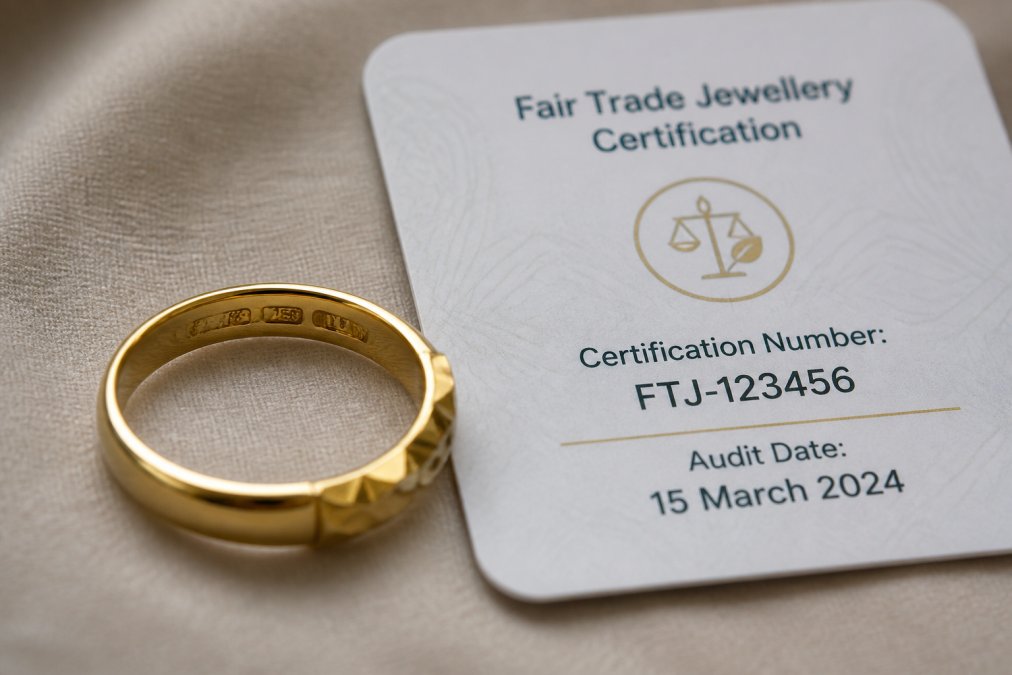
When purchasing fair trade jewelry, request the following documentation:
- Certification certificate detailing the certification body, certified producer name, and audit date
- Mine location or cooperative name, allowing you to trace the source
- Audit date confirming recent verification (audits should occur annually)
- Premium allocation details showing how fair trade premiums were used
Check the Fairtrade International producer directory or Fair Trade USA's certified trader list to confirm that your retailer and their suppliers are registered. Legitimate fair trade retailers have nothing to hide, they'll provide certification details readily.
Be wary of vague language like "ethically sourced," "conflict-free," or "responsibly mined" without third-party certification. These terms carry no legal definition and require no verification. Fair trade certification, by contrast, involves documented audits and public accountability.
Benefits of Fairtrade Gold for Miners and Artisanal Communities
The tangible benefits of fair trade certification accumulate across multiple dimensions. Miners earn higher incomes through guaranteed minimum prices and social premiums. Communities gain infrastructure, schools, clinics, water systems, funded by premium allocation. Women's economic participation increases through targeted programmes. Young people gain vocational training and see viable futures in their home regions.
Beyond economics, fair trade certification provides dignity and recognition. Miners are no longer anonymous suppliers in opaque supply chains. They become recognized producers whose names and stories are documented. This shift in status, whilst seemingly intangible, carries real psychological and social significance.
Health outcomes improve as fair trade premiums fund safer mining techniques and healthcare access. Environmental degradation slows as stewardship standards replace extractive practices. These benefits compound over time, a mining community operating under fair trade standards for five years looks measurably different from one locked in conventional mining cycles.
The evidence comes from documented case studies across fair trade mining regions. Communities in Peru, Ghana, and other major gold-producing nations show measurable improvements in school attendance, healthcare access, and income stability after fair trade certification. These aren't isolated success stories, they're systematic outcomes of the fair trade model.
The Limitations: What Fair Trade Certification Cannot Guarantee
Fair trade certification is powerful but not unlimited. Understanding its boundaries prevents unrealistic expectations and helps consumers make informed choices.
Fair trade cannot eliminate all mining's environmental impact. Extraction, by definition, involves environmental disruption. Fair trade standards minimize damage and fund restoration, but they don't achieve zero impact. If environmental minimization is your primary concern, recycled gold remains superior.
Certification also cannot guarantee perfect conditions. Fair trade standards establish minimums, guaranteed minimum prices, labour protections, environmental requirements, but these minimums exist in developing economies with limited resources. A fair trade miner in Ghana earns significantly more than a conventional miner, but may still earn less than a miner in wealthier nations. This reflects economic reality, not fair trade failure, but it's important to understand the actual wage levels rather than imagining them as equivalent to developed-world standards.
Fair trade certification requires ongoing verification and can fail. Audits occur annually, but lapses happen. Corruption, documentation fraud, and enforcement gaps exist in any system. This is why transparency and third-party oversight matter, they catch problems, but they don't prevent all problems.
Additionally, fair trade certification covers only a fraction of global gold mining. The majority of gold mining remains conventional, unverified, and opaque. Fair trade jewelry is a choice within the system, not a solution that transforms the entire industry. Choosing fair trade supports ethical alternatives, but it doesn't fundamentally alter market dynamics or force industry-wide change.
Finally, fair trade certification addresses mining practices but not all aspects of jewelry production. The manufacturing, refining, and retail stages involve labour and environmental considerations beyond fair trade scope. A fair trade gold ring manufactured in exploitative conditions or sold through unethical retail practices carries mixed impact. Comprehensive ethical jewelry requires attention to the entire supply chain, not just mining.
Understanding these limitations doesn't diminish fair trade's value, it contextualizes it. Fair trade jewelry represents genuine progress within current systems, not a perfect solution to complex global challenges.
Choosing fair trade jewelry means investing in documented ethical practices rather than accepting marketing claims at face value. At Diamonds by daisy, we believe conscious consumers deserve transparency about sourcing and impact. Our curated collection prioritizes pieces backed by verifiable fair trade certification, ensuring your jewelry purchase supports mining communities and environmental stewardship. With our 30-day satisfaction guarantee, you can purchase with confidence, knowing both the quality of your piece and the integrity of its origins are protected.
Frequently Asked Questions
Q: Does fair trade jewelry actually help miners and mining communities?
A: Fair trade certification ensures miners receive a guaranteed minimum price for their gold, protecting them from market volatility. Beyond price, the system requires investment in community development projects, labour standards compliance, and environmental stewardship. However, fair trade reaches only a fraction of global gold production, so its impact is concentrated in certified supply chains rather than the entire industry. Third-party certification and chain of custody verification provide accountability, though critics note that certification alone cannot address all challenges in artisanal and small-scale mining.
Q: What is the difference between fair trade gold and recycled gold?
A: Fairtrade gold comes from mines where workers receive fair terms of trade, environmental standards are enforced, and community development is funded. Recycled gold comes from reclaimed jewellery and industrial scrap, requiring no new mining. Both avoid conflict minerals and reduce environmental degradation compared to conventional mining. Recycled gold has no labour or community impact because it involves no mining. Fairtrade gold directly supports miners' livelihoods and sustainable development. Neither is inherently 'better', the choice depends on whether you prioritise supporting mining communities or minimising environmental impact.
Q: How can I verify that jewellery is genuinely ethically sourced?
A: Look for third-party certification marks from recognised bodies that audit supply chain transparency and verify chain of custody. Reputable retailers should provide certification documentation, hallmark stamps, and grading reports before purchase. Ask for proof of responsible sourcing practices and community impact reports. Be cautious of vague claims like 'ethical' or 'conflict-free' without certification, these terms lack legal definition. Established retailers often offer detailed provenance information and satisfaction guarantees, allowing you to purchase with confidence in the product's authenticity and sourcing standards.
Q: Are fair trade jewellery pieces more expensive than standard jewellery?
A: Fair trade jewellery typically costs more because the guaranteed minimum price, community development investments, and third-party certification add to production costs. However, price depends on design, materials, craftsmanship, and retailer markup rather than fair trade status alone. Premium pricing reflects not just the certification but also the quality, artisanal design, and the retailer's commitment to responsible sourcing. When comparing prices, consider the long-term value: certified pieces offer transparency, ethical assurance, and often superior craftsmanship, making them a worthwhile investment for conscious consumers.
This article was written using GrandRanker