

Cost Per Wear Handmade Rings: A Practical Guide
Table of Contents
- Cost Per Wear Handmade Rings: What the Number Actually Tells You
- The Cost Per Wear Formula, Step by Step
- Durability of Precious Metals: What Each One Costs You Over Time
- Handmade vs Mass-Produced: Where the Price Difference Goes
- Jewellery Investment Pieces: Resale Value and What Holds It
- Timeless Design, Wear Frequency and the Fast Fashion Trap
- What to Ignore When You Compare Handmade Rings
- Conclusion: Run the Numbers Before You Decide
- Frequently Asked Questions
Last Updated: October 2, 2026
Cost Per Wear Handmade Rings: What the Number Actually Tells You
Cost per wear is the price of a piece divided by the number of times you actually wear it. It exposes something most shoppers miss: a ring that costs more upfront can end up cheaper than a bargain that tarnishes, loosens, or sits unworn in a drawer.
Why the cheapest ring on the shelf is rarely the cheapest to own
A low-priced ring often hides its real costs in maintenance, replacement, and wear frequency. Thin plating wears through. Soft settings loosen. A design that feels dated after one season stops getting worn entirely, which pushes cost per wear toward infinity.
The UK Hallmarking guidance from the Assay Offices is a useful starting point here, because a hallmark confirms what a piece is actually made of before you judge its price.
The Cost Per Wear Formula, Step by Step
Cost per wear = total cost ÷ number of wears. Total cost is the purchase price plus resizing, cleaning, or repair over the piece's life. Number of wears means realistic wear, not days in a box.
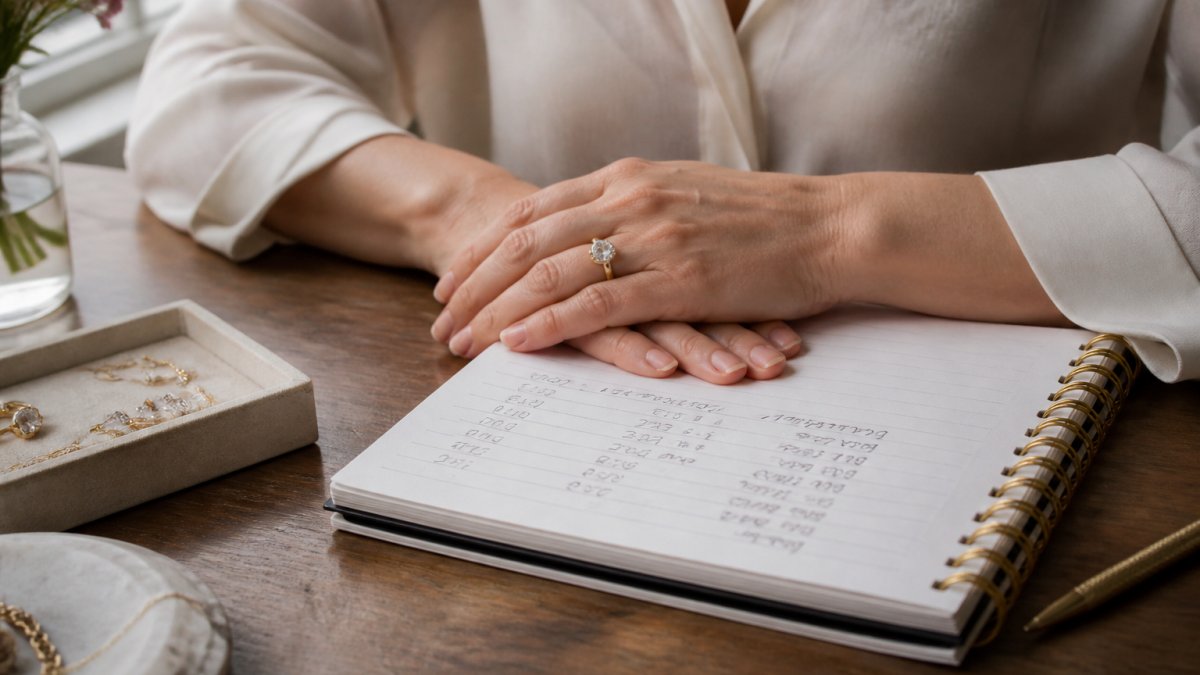
To run the numbers properly:
- Write down the purchase price.
- Add estimated maintenance costs over five years.
- Estimate how often you will genuinely wear it.
- Divide total cost by total wears.
- Compare that figure across every option you are considering.
A ring worn three times a week for five years gives you roughly 780 wears. Divide the price by that, and the picture changes fast.
Worked example: three rings, three real numbers
Say Ring A costs £200 and you wear it twice a month for two years: 48 wears, about £4.17 each. Ring B costs £600, worn three times a week for five years: 780 wears, about 77p each. Ring C costs £150 but stops getting worn after three months: 12 wears, £12.50 each.
Ring B is the most expensive on the tag and the cheapest to own. That is the whole argument for handmade rings in one example.
Durability of Precious Metals: What Each One Costs You Over Time
Precious metals do not wear at the same rate, and that difference shows up directly in your cost per wear. Harder alloys resist scratching, denting and metal loss, so they hold their shape and polish longer, need fewer repairs, and stay wearable for more years.
Metal hardness is measured on the Vickers scale (higher = harder). The figures below are widely published reference values, not estimates:
| Metal | Vickers Hardness (approx.) | Wear Resistance | Typical Maintenance Over 5 Years | Best For |
|---|---|---|---|---|
| 9ct gold (375) | ~120-150 HV | High | 1-2 polishes, occasional re-tip of claws | Daily wear |
| 18ct gold (750) | ~90-120 HV | Medium | 2-3 gentle re-polishes | Special occasions, softer look |
| Platinum (950) | ~130-160 HV | Very high | Rare re-polish; metal displaces rather than wears away | Heirloom pieces |
| Sterling silver (925) | ~60-90 HV | Low-medium | Regular cleaning, re-polish every 12-18 months | Casual, rotating wear |
| Palladium (950) | ~110-140 HV | High | Occasional re-polish | Daily wear, lighter than platinum |
Two practical points follow. First, 9ct gold is harder than 18ct because the alloying metals (copper, silver, zinc) are harder than pure gold, so the cheaper-sounding option often outlasts the pricier one in daily wear.
Gemstone durability: the Mohs scale and what it means for replacement frequency
The stone takes the knocks, and its hardness on the Mohs scale (1 = talc, 10 = diamond) determines how often it needs replacing, a direct cost-per-wear input.
| Gemstone | Mohs Hardness | Suitability for Daily Wear | Cost-Per-Wear Impact |
|---|---|---|---|
| Diamond | 10 | Excellent | Lowest replacement risk |
| Sapphire / ruby | 9 | Excellent | Very low replacement risk |
| Emerald | 7.5-8 | Fair, brittle, prone to chipping | Higher repair/replacement risk |
| Amethyst / quartz | 7 | Good for occasional wear | Moderate |
| Opal | 5.5-6.5 | Poor for daily wear, water and heat sensitive | High replacement risk |
| Pearl | 2.5-4.5 | Very poor for rings, soft and porous | Highest replacement risk |
Jewellers commonly see emerald and opal rings worn daily come back for stone replacement or re-polishing far more often than sapphire or diamond rings. A stone costing £300 to replace every four years adds £75 a year to your cost per wear before a single wear.
Claw settings, stone security and the repair cycle
Claw settings hold a stone with small metal prongs, and those prongs take the knocks. A snagged claw means a loose stone and a repair bill. Check the claws every few months and have them tightened when they feel rough or catch on fabric. A well-maintained setting lasts decades; a neglected one pushes your cost per wear up with every repair.
For a ring you rotate rather than wear constantly, softer metals and softer stones are perfectly reasonable, because the wear events are fewer and the replacement cycle stretches out accordingly.
Handmade vs Mass-Produced: Where the Price Difference Goes
The gap between handcrafted jewelry and mass-produced pieces comes down to labour, materials, and scale. A handmade ring is built by one maker who sets the stone by hand, finishes the metal, and checks the setting before it leaves the workshop.
Mass-produced rings are cast in bulk and finished quickly, keeping the price low but limiting individual attention. That is not automatically worse, but it changes how the ring ages.
Artisan craftsmanship costs more because the maker spends hours on a single piece, time that keeps the ring wearable for years.
Jewellery Investment Pieces: Resale Value and What Holds It
Most cost-per-wear guides stop at the purchase price and wear count. That is only half the equation: if you can sell a ring later, the money you recover reduces your net outlay, and your true cost per wear. Almost every competitor misses this.
The resale-adjusted cost per wear formula
Resale-adjusted cost per wear = (purchase price + lifetime maintenance − resale proceeds) ÷ total wears
Worked example. Ring B costs £600, is worn 780 times over five years, and needs £80 of maintenance.
A mass-produced ring bought for £150 and worn 12 times before it stops being worn has no meaningful resale market: £150 ÷ 12 = £12.50 per wear, with no recovery.
What actually drives resale value
Four factors do most of the work:
- Metal content. The metal's intrinsic scrap value sets a floor. A 9ct or 18ct gold ring, or a platinum ring, always has a melt value; sterling silver's floor is much lower. That is why gold and platinum pieces recover a larger share of their cost than silver or base-metal pieces.
- Gemstone quality and certification. A coloured stone or diamond with an independent grading report sells far more readily than an ungraded stone of unknown quality. In the UK, the recognised labs are AnchorCert (run by the Birmingham Assay Office) and the Gemmological Association of Great Britain (Gem-A); an IGI or GIA report is also widely accepted. A report does not guarantee a high price, but it removes the buyer's uncertainty, which is what depresses offers on uncertified stones.
- Maker and provenance. A documented maker with a recognisable style or a waiting list holds value better than an anonymous piece. Keep the original receipt, maker's certificate and provenance paperwork, buyers pay more when the story is verifiable.
- Design longevity. Classic solitaires, plain bands and simple bezel settings stay in demand. Trend-led pieces, chunky signets with novelty motifs, seasonal colourways, usually resell at a steep discount because the buyer pool shrinks once the trend passes.
Realistic recovery rates
Exact figures vary by maker, metal and market, but a common pattern in the second-hand jewellery trade is:
- Mass-market high-street rings: very low recovery, often close to scrap metal value only.
- Mid-tier designer pieces: typically recover a modest share of the original price, with the metal floor doing most of the work.
- Recognised fine-jewellery makers with certification: recover a larger share, especially for classic designs in platinum or 18ct gold with graded stones.
- Bespoke commissions: usually recover the least, because the design was made for one person and the buyer pool is narrow.
Treat these as directional, not promises. The point is that resale is a real, quantifiable input into cost per wear, and it favours the same pieces that win on durability: hard metals, hard stones, classic design, documented provenance.
How to fold resale into your buying decision
Run the standard cost-per-wear formula first, then the resale-adjusted version. If the two figures are close, you are buying something with little recoverable value, fine if you love it and will wear it constantly, less fine if you might sell it in a few years.
This is the calculation the rest of the market skips, and it is the one that most changes the answer.
Timeless Design, Wear Frequency and the Fast Fashion Trap
Fast fashion jewelry is built for a season, which is exactly why it fails the cost per wear test: cheap to buy and expensive to own, because it stops being worn long before it stops being owned.
Timeless design does the opposite. A classic band or simple solitaire setting keeps getting worn because it never looks out of place, and every extra wear lowers the cost per wear.
The Waste and Resources Action Programme on textile and product longevity makes a broader point that applies here: keeping an item in use for longer is usually the most effective way to reduce its real cost, financial and environmental alike.
What to Ignore When You Compare Handmade Rings
Discount percentages and seasonal sales tell you almost nothing about ownership cost. A reduced price on a ring you wear twice is still a bad deal.
Ignore the sticker price as a standalone number. Ignore "was" pricing that never reflected a real sale. Ignore trend labels that will date the piece within a year. What matters is the material, the setting, the maker, and how often you will actually put it on.
Conclusion: Run the Numbers Before You Decide
Comparing handmade rings on price alone leads you to the wrong piece. Run the cost per wear formula, check the metal and setting, and think honestly about how often you will wear it.
Diamonds by daisy offers a curated collection of fine jewelry, meticulously crafted with handpicked gemstones and precious metals, designed to elevate the personal style of those seeking luxurious and timeless elegance. Each piece ensures a high standard of quality and refined aesthetic, capturing your unique inner brilliance. We provide peace of mind with a 30-day satisfaction guarantee, making every purchase a trustworthy and confident experience. Add to cart and choose a ring that earns its place in your cost per wear calculation.
Frequently Asked Questions
How do you calculate the cost per wear of a ring?
Divide the price you paid by the number of times you expect to wear it. A ring costing £900 worn three times a week for five years works out at roughly £1.15 per wear. The formula only becomes useful when you use honest wear frequency rather than an optimistic guess, so track how often you actually reach for a piece before you judge it.
Why is handmade jewellery more expensive than mass-produced alternatives?
Handcrafted rings carry costs that factory production avoids: one maker's hours per piece, hand-picked stones, small-batch metal casting and individual finishing. Production scale is the main driver. A workshop making thousands of identical bands spreads tooling and labour across every unit, while a bespoke piece absorbs those costs alone. You are paying for a one-of-a-kind object rather than a repeatable unit.
Does high-quality jewellery actually save money over time?
It can, but only if you wear it. A durable piece in a harder metal with a secure gemstone setting needs fewer repairs and replacements than a plated ring that wears through. Compare total ownership: purchase price plus resizing, re-polishing and stone tightening over the years, divided by wears. Cost per wear is the fairest comparison, because it accounts for both longevity and how often the piece leaves the box.
What factors influence the longevity of a handmade ring?
Metal hardness, setting style, wall thickness and how you wear it matter most. Sterling silver is softer and scratches more readily than karat gold, and a high-profile claw setting catches on fabric more than a bezel. Daily wear on the hand you write with accelerates wear. Regular jewellery maintenance, such as removing rings before gardening, gym sessions or cleaning, extends the replacement cycle considerably.