

15–20 Work Tote Essentials to Keep You Commute Ready and Polished
The core work tote essentials fall into five groups you should pack before you leave the house: tech (laptop and its chargers), planning tools (notebook and pen), everyday carry (wallet, keys, phone), personal care and first aid, and water plus one snack. Everything else in this guide is about grouping those five categories so you stop digging around and start grabbing what you need in seconds.
TL;DR:
- Organize your tote by zones: work essentials near your back, daily carry items at the top, and backups at the bottom or sides for easy access.
- Use pouches labeled for tech, personal care, and stationery to quickly lift categories and maintain a clutter-free bag.
- Ensure your laptop has a properly fitted padded sleeve and carry a primary charger, spare cable, and portable charger sized for a full workday.
- Keep small personal care items and quick fixes in a compact pouch, and store hygiene products separately for easy access and discretion.
- Choose a structured tote with a padded laptop compartment, protective feet, and comfortable straps, and avoid overloading beyond a full laptop, water bottle, and key accessories.
Table of Contents
- The Ultimate Work Tote Essentials Checklist (Grouped by Purpose)
- How to Organize and Pack Your Tote Efficiently
- Tech Essentials and Device Protection
- Personal Care, First Aid, and Quick Fixes
- Food, Hydration, and Weather Contingencies
- Choosing the Right Tote: Capacity, Structure, and Comfort
- Style Note From Georgia: Jewelry That Travels Well
- Tips for Cleaning and Maintaining Tote Bags
- Safety and Security Items Worth Adding
- Georgia’s One-Minute Evening Routine
- Shop Diamonds by Daisy for a Polished, Commute-Ready Look
- Sources
- FAQ
The Ultimate Work Tote Essentials Checklist (Grouped by Purpose)
A daily carry that actually functions usually holds somewhere between 15 and 20 items, sorted into tech, paperwork, everyday carry, personal care, and contingency items. Trying to remember all of it loose in one bag is how you end up patting yourself down at the train platform. Group by function instead.
Tech (the heaviest, most important category):
- Laptop in a padded sleeve
- Charger and one spare cable
- Portable charger
- Headphones (wired or wireless)
- Any dongle or adapter your laptop needs
Planning and stationery:
- Notebook
- Pen (bring two, one always dies)
- Planner or day sheet
- A few sticky notes
- Business cards if your role calls for them
Everyday carry:
- Wallet
- Keys, ideally on a clip so they don’t sink to the bottom
- Phone
- ID or transit card, kept somewhere you can grab it without unzipping anything
- Sunglasses
Personal care and first aid:
- Lip balm
- Hand sanitizer
- Tissues
- Pain reliever
- Period supplies, stored in a discreet pouch
- A stain-removal pen
Food and hydration:
- Insulated, leak-proof water bottle
- One low-mess snack
Weather and extras:
- Compact umbrella
- Packable layer
- A folded tote for errands or an unexpected grocery run
A checklist from EVERKI’s work bag accessories guide backs this same grouping: tech, stationery, and personal-care items organized into their own pouches and pockets, rather than loose in the main compartment. Not every item earns a permanent spot, though. Treat your laptop, charger, wallet, and keys as always-have. Treat the umbrella, the spare layer, and the errand tote as day-dependent additions you swap in based on the forecast or your calendar.
How to Organize and Pack Your Tote Efficiently
The single biggest fix for a chaotic tote is the zone method: divide the bag into three mental sections instead of one open pit. The work zone holds your laptop and notebook, right against your back or the tote’s structured side. The everyday zone holds your wallet, keys, and phone, positioned near the top where your hand lands first. The backup zone holds chargers, medication, and a spare cable, tucked into a side pocket or the bottom, since you need those less often during the day.
Zoning your tote this way is the technique bag experts return to again and again, because it turns a guessing game into muscle memory. Liquids go upright, ideally in an exterior sleeve, and heavy items sit low and centered so the bag doesn’t pull to one side on your shoulder.
A tote organizer insert or a set of modular pouches makes this system stick. One pouch per zone means you can lift an entire category out in one motion, which matters most on the mornings you’re switching bags entirely.
- Tech pouch: charger, cable, dongle
- Care pouch: sanitizer, lip balm, pain reliever
- Stationery pouch: pen, sticky notes, business cards
Pro Tip: Rotate your pouches instead of your loose items. If your evening bag and your work tote share a “mobile kit” of chargers and medicine, you never have to remember to transfer anything. That habit, common among people who switch bags often, eliminates the panic of realizing your phone charger is in yesterday’s bag.
Run a 60-second evening prep: recharge everything, refill the depleted pouch, and set the tote by the door. Once a week, apply the dead-weight rule and pull out anything you haven’t touched in seven days. Receipts, an old granola bar wrapper, a pen that ran dry, gone.
Tech Essentials and Device Protection
Measure your laptop before you buy a sleeve. A 13 inch machine floating in a sleeve built for 15 inch devices slides around and takes the brunt of every bump; a properly fitted padded sleeve is the cheapest insurance you’ll buy all year.
Your charger strategy matters more than people think. Keep a primary charger, a spare cable, and a multi port adapter together in one labeled pouch, so a dead outlet at your desk doesn’t mean a scavenger hunt through every pocket.
- Primary charger and one spare cable, same pouch
- Multi-port adapter if you juggle more than one device
- Portable charger, sized for a full workday, not a weekend trip. Bigger capacity means more weight, so match it to how long you’re actually away from an outlet
- Headphones, wiped down periodically with a microfiber or lens cloth to keep the ear cushions from picking up grime
Store the portable charger low in the bag, near the laptop compartment, since it’s one of the heavier items you’re carrying and belongs close to your back for balance.
Personal Care, First Aid, and Quick Fixes
A small pouch with pain reliever, bandages, antacid, and hand sanitizer covers most of what actually derails a workday. If you deal with seasonal allergies, add a travel pack of allergy medication to the same kit.
For appearance fixes, keep it minimal: lip balm, blotting papers, a stain-removal pen for the inevitable coffee drip, a compact mirror, and a spare hair tie. Store period products in their own zippered pouch, separate from anything else, so you’re never fishing through your first-aid kit in front of a coworker.
- Bandages, pain reliever, antacid, allergy medication if needed
- Lip balm, blotting papers, stain pen, compact mirror, spare hair tie
- Wipes and hand sanitizer, kept in the same zone as your other care items
Sanitizer and wipes belong in the same pocket you reach for most often. If you’re digging for them, they’re in the wrong spot.
Food, Hydration, and Weather Contingencies
An insulated, leak-proof bottle stored upright in an exterior sleeve or dedicated pocket keeps liquid away from your laptop and papers, which matters more than the bottle’s design.
- Nuts, sealed protein bars, and dried fruit survive being tossed in the bottom of a bag without turning into a mess. Anything with sauce, or a soft banana, does not
- A separate insulated lunch bag makes sense if you’re carrying a full meal; for a snack alone, tucking a small container into the tote works fine
- Pack the umbrella and packable layer in an outer pocket, away from your laptop sleeve, so a sudden downpour doesn’t soak your electronics along with your jacket
Choosing the Right Tote: Capacity, Structure, and Comfort
A structured tote holds its shape and protects a laptop better than an open, floppy one, but an open tote is lighter and easier to stuff full when you’re running errands after work. A backpack distributes weight across both shoulders, which matters on longer commutes, but sacrifices the quick-access grab-and-go feel a tote gives you at your desk.
Your baseline size should fit a laptop, a notebook, a water bottle, and one pouch without forcing anything — that combination is the practical minimum, not a nice-to-have. Beyond that, editors consistently point to structured materials like leather, suede, and coated canvas with a padded laptop compartment and protective feet on the base.
- A padded laptop compartment, not just a loose main pocket
- Protective feet on the bottom, so setting the bag down doesn’t wear the base
- A strap wide enough to sit comfortably on one shoulder for a full commute
Estimate the total weight before you commit to a tote: many leather totes weigh 2 to 3 pounds empty, and a laptop plus charger adds another 4 to 5 pounds, with a full water bottle adding 1 to 2 more. That adds up fast, and it’s worth knowing before you’re carrying it for eight hours. If you’re deciding between styles entirely, a breakdown of tote, crossbody, and backpack trade-offs can help you match the shape to your actual commute.
Style Note From Georgia: Jewelry That Travels Well
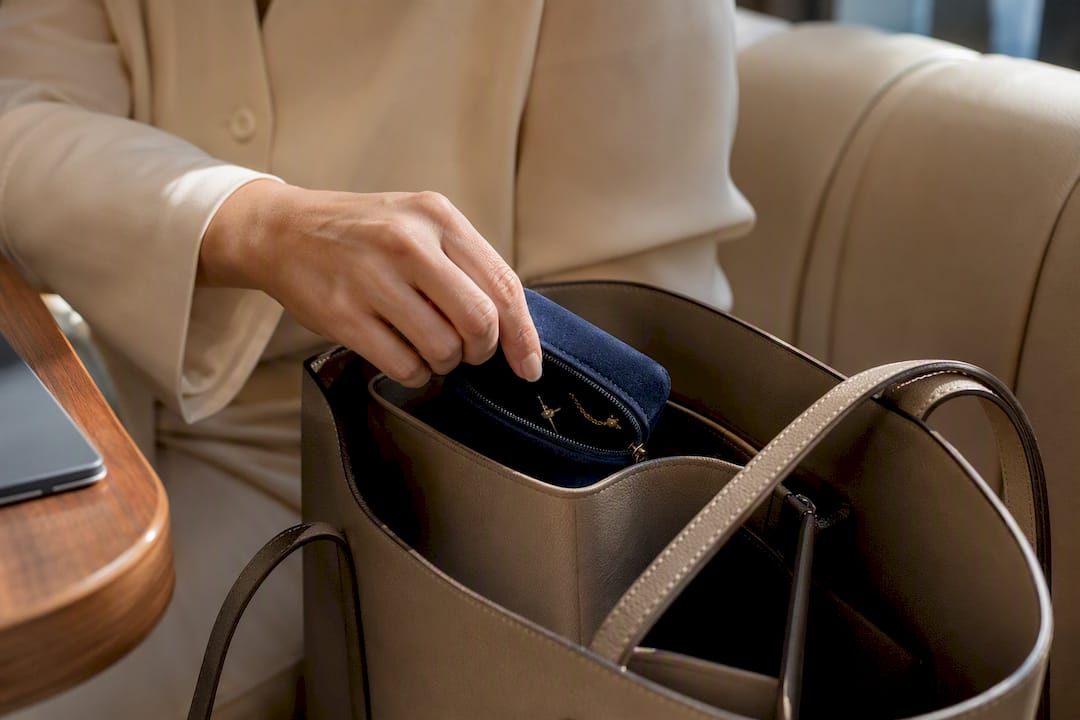
Delicate jewelry and a packed tote don’t naturally get along, but a little planning fixes that. Small stud earrings, a thin layered necklace, and a simple bangle survive a commute without tangling or scratching, especially compared to anything with dangling parts or loose chains.
Store delicate pieces in a small padded micro-pouch inside your tote, separate from your keys or anything metal with sharp edges. It’s the same zoning logic as your tech pouch, just scaled down for jewelry. For guidance on what reads as polished without feeling overdone at your desk, a style guide on work-appropriate jewelry covers the pieces that hold up best through a full day.
Tips for Cleaning and Maintaining Tote Bags
A tote takes more daily abuse than most bags in your closet, so a little upkeep goes a long way. Wipe down leather and coated canvas totes weekly with a slightly damp microfiber cloth, then let them air dry away from direct heat, which can crack or warp the material.
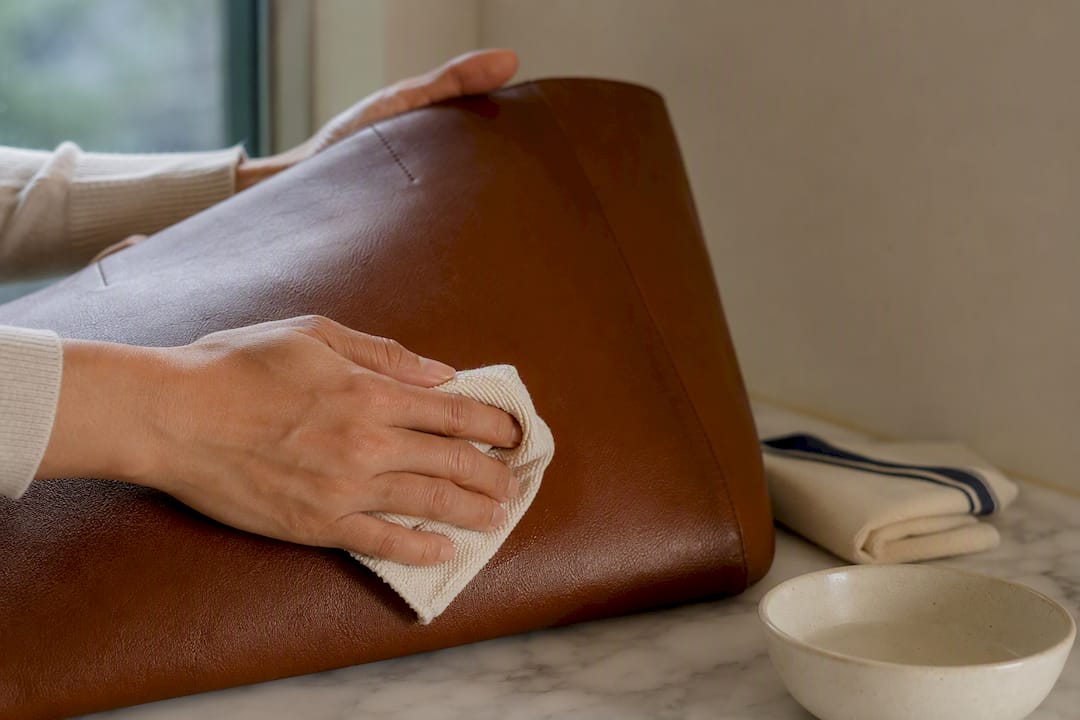
For fabric totes, spot-clean stains immediately with a mild soap and cold water rather than tossing the whole bag in a washing machine, which can warp structured shapes and loosen stitching. Empty the bag completely once a week during your dead-weight audit, and use that moment to shake out crumbs, dust, and any stray receipts hiding in the bottom seams.
Condition leather totes every few months with a leather-specific conditioner to prevent cracking, especially if you’re carrying the bag through cold, dry winters. Check the strap attachment points and zipper pulls periodically. Those are the first parts to fail on a bag used daily, and catching a loose stitch early is a lot cheaper than replacing the whole strap.
Store your tote upright when you’re not using it, stuffed lightly with tissue paper or a spare scarf to help it hold its shape. A tote that collapses flat in a closet every night develops creases and structural sag faster than one given a little support.
Safety and Security Items Worth Adding
A few small additions cost almost no space but add real peace of mind on your commute. A small combination lock is worth carrying if you ever store your tote in a shared locker, gym bag area, or communal office space where you can’t keep an eye on it.
A whistle or a small personal alarm clipped to your keys is a low-effort addition for anyone walking through a parking garage or a quiet street after dark. Neither takes up meaningful room, and both live comfortably in your everyday-carry zone next to your keys.
If your tote doesn’t zip fully closed, consider a bag with a top zipper or a magnetic snap closure specifically for commutes on crowded transit, where an open tote is an easy target. Keep your wallet and phone in an interior pocket rather than an exterior one for the same reason. A card holder with RFID-blocking material is a small, inexpensive upgrade if you tap to pay or use a contactless transit card often.
Georgia’s One-Minute Evening Routine
My own prep routine comes down to three steps: charge everything overnight, replenish whatever pouch ran low that day, and set the tote by the door before bed. I keep a rotating mobile kit, a spare charger, pain reliever, and a hair tie, that moves between my work tote and my evening bag so I’m never caught without the basics. It takes about a minute, and it’s the difference between a calm morning and a frantic one.
— Georgia
Shop Diamonds by Daisy for a Polished, Commute-Ready Look
Once your packing system is dialed in, the tote itself and what you wear with it are what make the whole thing feel finished. Diamonds by Daisy’s everyday gold jewelry collection is built around exactly the pieces this checklist calls for: small studs, delicate chains, and simple bracelets that survive a commute without snagging on a pouch zipper or tangling with your keys.

If you’re still hunting for the bag itself, a structured option like the quilted computer tote gives you the padded laptop compartment and durable build this guide recommends, without sacrificing a polished look at your desk. Browse the full collection to find a tote and jewelry pairing that fits your daily load and your personal style, and start building a commute kit that actually works for you.
Sources
- Work Bag Essentials: What to Pack for the Office
- Work Bag Essentials: Must-Have Accessories to Stay Organized and Productive | EVERKI
- On-the-Go Office Bag Essentials
- 10 Work Bag Essentials To Set Yourself Up For Success | BÉIS Travel
FAQ
What Is a Good Tote Bag for Work?
A good work tote fits a laptop, notebook, water bottle, and one pouch without straining the seams, and has a padded laptop compartment plus a strap wide enough for comfortable daily carry.
How Do I Organize a Work Tote?
Use the zone method: a work zone for your laptop and notebook, an everyday zone for your wallet and keys, and a backup zone for chargers and personal care items, each in its own pouch.
What Do I Need to Pack in My Work Bag?
At minimum, pack your laptop and charger, a notebook and pen, your wallet and keys, a small personal-care kit, and a leak-proof water bottle with one low-mess snack.
What Are the Essential Items to Keep in an Office Bag?
The essentials that come up across nearly every packing list are a charger, headphones, a notebook, hand sanitizer, lip balm, and a leak-proof bottle, organized into labeled pouches rather than loose in the main compartment.
How Heavy Should a Work Tote Be?
Many leather totes weigh 2 to 3 pounds empty, and a laptop and charger can add another 4 to 5 pounds, so aim to keep your total daily load light enough that your shoulder doesn’t feel it by midday.