

Unique Diamond Pendant Designs for Women UK: 2026 Guide
Table of Contents
- What Makes a Diamond Pendant Design Truly Unique
- Solitaire and Cluster: Two Classic Diamond Pendant Designs
- Bespoke Diamond Necklace Design: Creating a Piece That's Yours
- How to Choose a Diamond Pendant: Settings, Metals and Certification
- Styling Unique Diamond Pendant Designs for Different Necklines
- Investment Value, Resale and Ethical Sourcing
- Conclusion
- Frequently Asked Questions
Last Updated: September 12, 2026
What Makes a Diamond Pendant Design Truly Unique
Most diamond pendants on the high street look interchangeable because they are. Genuine uniqueness in unique diamond pendant designs for women comes from three things: the cut of the stone, the setting that holds it, and the story behind how it was made. This guide from Diamonds by daisy walks through the designs worth considering in 2026, how to choose between them, and what separates a piece you will wear for decades from one that dates within a season.
A diamond pendant is a single diamond or cluster of diamonds suspended from a chain and worn at the neck, distinguished from other necklaces by its focus on one central drop or motif rather than a continuous line of stones.
Start with the stone itself. A GIA guide to diamond grading explains that cut, not carat weight, drives how much light a diamond returns to the eye. Two stones of identical weight can look completely different depending on how well the facets are proportioned.
The Difference Between Off-the-Shelf and Bespoke
Off-the-shelf pendants are produced in batches to a fixed specification, which keeps costs down but limits personal choice. A bespoke diamond necklace design starts with your preferred stone shape, metal, and setting style, then builds outward from there. The trade-off is time and cost; the reward is a piece nobody else owns in quite the same form.
Solitaire and Cluster: Two Classic Diamond Pendant Designs
Solitaire and cluster settings remain the two foundations of diamond pendant design, and understanding the difference makes every other decision easier. A solitaire features one diamond on a simple chain, while a cluster groups several smaller stones to create the visual impression of a larger one. The design detail that separates a distinctive piece from a generic one sits in the sub-type you choose within each family.
Solitaire Pendants: Minimalist Elegance
The solitaire is the purest expression of the form. A single brilliant cut or oval cut stone, held in a prong setting or bezel setting, does the work on its own. It suits everyday wear because there is nothing to catch on clothing and nothing to distract from the stone's lustre.
Within the solitaire family, the setting style changes the character more than the stone does:
- Four-prong: Maximum light entry and the most visible stone, but the girdle is exposed. Best for a stone you wear occasionally.
- Six-prong: More secure and slightly more protective, at the cost of a fractionally smaller apparent stone. A common choice for daily wear.
- Bezel: A continuous metal rim encircles the girdle. The most protective option and the cleanest modern silhouette, though it hides the edge of the stone.
- Half-bezel: Metal wraps only the lower half of the girdle, leaving the top edge free to catch light. A good compromise for pendants worn under collars.
- Tension-style: The stone appears held by pressure alone. Visually striking, but the metal must be thick enough to be secure, which limits how delicate the piece can look.
For a modern, understated look, a bezel setting around a round brilliant is hard to beat. For something softer, a pear-shaped or oval stone in a four-prong setting reads more romantic. A marquise cut in a north-south orientation elongates the neckline; set east-west, the same stone reads more contemporary and covers more horizontal space.
Cluster Designs: Maximum Sparkle
Cluster pendants trade individual stone size for overall impact. Several smaller diamonds set close together create a broader spread of sparkle across the neckline, often at a lower total carat weight than a single large stone. Pavé detailing around a central cluster adds a further layer of light without overwhelming the design.
The cluster category is broader than most buyers realise, and the sub-type is where uniqueness lives:
- Halo: A ring of small stones encircles one larger centre stone. The classic engagement-ring look adapted for the neck.
- Composite (illusion): Stones are cut and set so tightly that the cluster reads as a single larger diamond. The most deceptive of the cluster styles, in the best sense.
- Scatter: Stones of mixed sizes are arranged asymmetrically. Fashion-forward and harder to find on the high street.
- Floral or star: Stones arranged around a central point to form a recognisable motif. Suits vintage-inspired wardrobes.
- Three-stone: A larger centre flanked by two smaller stones, often representing past, present and future. A common gift choice.
Where solitaires whisper, clusters make a statement. Neither is better; they simply suit different wardrobes. A useful rule of thumb: if the wearer dresses in fine knits and open collars, a solitaire will be seen more often. If she wears occasionwear or likes a visible focal point, a cluster earns its place.
Bespoke Diamond Necklace Design: Creating a Piece That's Yours
Bespoke work begins with a conversation, not a catalogue. You choose the diamond shape, the metal, the chain length, and the setting style, and a jeweller builds the piece around those choices. The result is a pendant that reflects a specific moment or preference rather than a mass-market trend.
A common mistake is rushing the stone selection before settling the metal. Warm-toned 18k gold flatters certain colour grades that look washed out against platinum, so the two decisions need to happen together.
How to Choose a Diamond Pendant: Settings, Metals and Certification
Choosing well comes down to four decisions: the setting, the metal, the diamond's grading, and the chain. Get these right and the pendant will suit both the wearer and the occasion for years.
Precious Metals: Gold, Platinum and White Gold
Yellow gold brings warmth and suits vintage-inspired designs particularly well. White gold offers a cooler, more contemporary look and pairs naturally with colourless diamonds. Platinum is the densest and most durable of the three, which makes it a sensible choice for a piece worn daily.
Look for a hallmark on any piece you buy. In the UK, precious metal items above the legal weight threshold must be independently assayed and hallmarked before sale, which is your assurance that the metal content is what the seller claims (gov.uk). The Assay Office guidance on hallmarks explains what each mark means and how to read them.
| Metal | Look | Durability | Best For |
|---|---|---|---|
| 18k yellow gold | Warm, classic | Good | Vintage-inspired designs |
| White gold | Cool, modern | Good | Colourless diamonds |
| Platinum | Neutral, understated | Excellent | Everyday wear |
| Sterling silver | Bright, affordable | Moderate | Occasional pieces |
Diamond Certification and the 4Cs
Certification is what separates a verifiable diamond from a claim. The 4Cs, cut, colour, clarity and carat weight, form the standard framework for grading a stone, and an independent certificate from a recognised laboratory confirms those grades. Always ask to see the certificate before purchase, and check that the certificate number matches the stone.
For pendants, cut matters most. A well-cut stone of modest carat weight will out-sparkle a poorly cut larger one every time.
Styling Unique Diamond Pendant Designs for Different Necklines
The right pendant length depends on the neckline it sits against. A pendant that falls at the wrong point can compete with a neckline rather than complement it, so matching the two is worth a moment's thought before you buy.
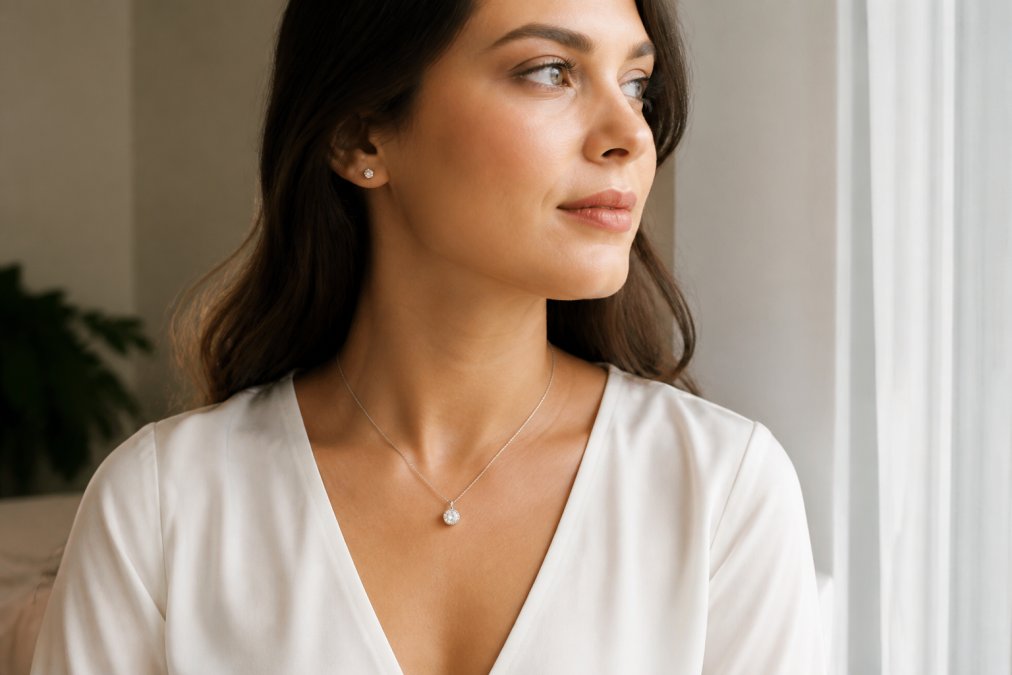
- V-necklines: A pendant that drops into the V, around 45-50cm, follows the line of the fabric and draws the eye downward.
- Crew and high necklines: A shorter 40-42cm chain sits above the fabric edge and keeps the pendant visible.
- Sweetheart and scoop necklines: A slightly longer chain, 50-55cm, sits just below the neckline for a balanced look.
- Strapless or off-shoulder: A choker-length or 40cm chain fills the open space without competing with the dress.
Layering works well when the lengths differ by at least 5cm. Two pendants at the same length will tangle; two at clearly different drops will sit cleanly against each other.
Investment Value, Resale and Ethical Sourcing
Most guides stop at 'buy certified' and 'ask about conflict diamonds'. That advice is correct but incomplete. The two questions that actually determine whether a diamond pendant holds value and whether its origin can be trusted are: what documentation travels with the stone, and what the seller can show you about the chain of custody. Neither is covered in any depth by the retail pages currently ranking for this query, so this section goes further than they do.
What Actually Drives Resale Value
Resale value in fine jewellery depends heavily on the certificate and the provenance of the stone, not on the brand name alone. A certified diamond with documented origin holds its value far better than an uncertified stone of similar appearance, because a buyer can verify exactly what they are getting.
A few mechanics are worth understanding before you buy:
- The setting is not the asset. Metal and labour are largely lost on resale. The stone carries the value, which is why a well-cut certified stone in a simple setting often resells better than a heavily worked piece with a mediocre centre stone.
- Certificates travel with the stone, not the receipt. A grading report from a recognised laboratory, with a number that matches the girdle inscription, is what a future buyer will pay for. Keep the original report and the original packaging.
- Cut grade is the single biggest lever. Two stones of identical carat weight can differ in resale appeal by a wide margin based on cut alone, because cut drives the light performance a buyer can see in the hand.
- Brand premium rarely survives resale. A designer name may add to the original price but is not reliably recovered on the secondary market. Buy the stone and the design, not the label.
- Fashion-led designs date faster than classic ones. A trend-driven motif may be harder to resell than a solitaire or a simple halo, because the pool of buyers is narrower.
If resale matters to you, ask the jeweller what documentation they provide at purchase and whether they offer a buy-back or trade-in policy. A written policy is worth more than a verbal assurance.
What Ethical Sourcing Verification Actually Looks Like
Ethical sourcing is the other half of that equation. Ask any jeweller for written confirmation of where their diamonds originate and whether they comply with the Kimberley Process, the international certification scheme designed to prevent conflict diamonds from entering the legitimate trade. A seller who cannot answer that question clearly is a seller worth avoiding.
But the Kimberley Process is a minimum standard, not a full provenance guarantee. It addresses conflict diamonds at the rough stage; it does not, on its own, tell you the mine, the cutting centre, or the working conditions along the way. Buyers who want more than the minimum should look for:
- A written provenance statement naming the country of origin, not just 'conflict-free'.
- Laboratory-grown diamond disclosure. Lab-grown stones are chemically and optically identical to mined ones but have a very different value profile. A reputable seller will state clearly which type a stone is, and the certificate will say so.
- Chain-of-custody schemes such as those operated by responsible-jewellery bodies, which audit members on sourcing and human rights. Membership is not a guarantee, but it is a verifiable signal.
- A named cutting and polishing location. This is the step most sellers cannot answer, and the one that separates a marketing claim from a documented supply chain.
A practical test: ask the seller to put their sourcing answer in writing on the invoice. Sellers who can, will. Sellers who cannot, have told you something useful.
Conclusion
The gap between a forgettable pendant and one you reach for every day comes down to cut, setting, and knowing exactly what you are buying. Diamonds by daisy handpicks its gemstones and precious metals, builds each design around timeless rather than trend-led lines, and backs every purchase with a 30-day satisfaction guarantee so you can be certain before you commit.
Frequently Asked Questions
What is the best diamond pendant design for everyday wear?
A solitaire pendant on a fine chain suits daily wear because it sits flat against the skin and rarely catches on clothing. Choose a bezel setting if you want extra protection for the diamond, or a simple prong setting for maximum light return. A 0.25 to 0.50 carat stone in 18k gold or platinum is substantial enough to feel special yet light enough to forget you're wearing it.
How do I choose a unique diamond pendant that reflects my personal style?
Start with the necklines you wear most. V-necks and scoop necks suit a drop pendant, while high necks work well with a shorter, centred stone. Next, pick a diamond shape that appeals to you: round brilliant for classic sparkle, oval or pear-shaped for a softer look, or a cluster for bold presence. Finally, select the metal tone that flatters your skin and existing jewellery.
Are bespoke diamond pendants more expensive than off-the-shelf designs?
Bespoke diamond necklace design often carries a higher price than ready-made pieces because you're paying for individual craftsmanship, design time and sometimes a one-of-a-kind setting. However, you control the budget by choosing the carat weight, clarity grade and metal. For a meaningful piece, many buyers find the extra cost worthwhile. Request a quote from Diamonds by Daisy to see options for your budget.
What metal types are best for long-lasting diamond pendants?
Platinum is the most durable choice for everyday wear because it is dense and resistant to scratches, though it costs more. 18k gold offers a warm, rich colour and good strength for pendants that won't face heavy knocks. White gold and rose gold are popular for their modern look. Whatever metal you choose, look for a hallmark that confirms its purity.
How can I ensure the quality of a diamond pendant before purchasing?
Ask for a grading report from a recognised laboratory, which details the diamond's carat weight, clarity grade, colour grade and cut. Check that the metal is hallmarked. For responsibly sourced diamonds, request confirmation under the Kimberley Process. A 30-day satisfaction guarantee, like the one from Diamonds by Daisy, also gives you peace of mind to inspect the piece at home.
Finding a pendant that feels genuinely yours takes more than browsing a display case. Diamonds by daisy offers meticulously handpicked gemstones and precious metals across luxurious, timeless designs, with a 30-day satisfaction guarantee for complete peace of mind. Explore the collection and add to cart with confidence.