

6 Quiet Luxury Jewelry Pieces Curators Recommend Buying First
Quiet luxury jewelry means exceptional materials and craftsmanship instead of visible logos or oversized stones. Look for 18K gold or platinum, well-cut modest-carat gems, proper hallmarks, and restrained design rather than statement pieces. A short list to build from: solitaire studs or a pendant, a fine chain, and a pair of pearl studs. Each piece should reward a close look, not a glance from across the room.
TL;DR:
- Opt for solid gold or platinum pieces, as lower-karat gold and plated jewelry quickly show signs of wear within a year.
- Prioritize well-certified, precisely cut gemstones rather than focusing on size or carat weight alone for more value and visual impact.
- Verify hallmarking, construction quality, and certification before purchase, especially when buying online or unseen, to avoid hollow or poorly made pieces.
- Build a versatile collection starting with a fine chain, solitaire studs or pendant, and pearl earrings, avoiding larger or showier versions of basic pieces at lower quality.
- Material honesty and craftsmanship, including hallmarks and accurate certificates, matter more than brand names or big stones when assessing long-term value.
Table of Contents
- What Quiet Luxury Jewelry Looks Like
- Signature Materials and Craftsmanship to Prioritize
- Core Quiet-Luxury Pieces to Build First
- How to Evaluate and Buy: Practical Checks and Red Flags
- How to Wear and Style Quiet Luxury Jewelry Every Day
- Why a Curated Approach to Buying Matters
- History and Cultural Significance of Quiet Luxury Jewelry
- Leading Brands and Designers Specializing in Quiet Luxury Jewelry
- Sustainability and Ethical Considerations in Quiet Luxury Jewelry
- Price Ranges and Investment Value of Quiet Luxury Pieces
- The Case Against Chasing Trends in This Category
- Start Building Your Quiet Luxury Collection
- Sources
What Quiet Luxury Jewelry Looks Like
The philosophy is simple: build a piece to last decades, not a season, and let quality speak for itself. This is the aesthetic behind terms like “stealth wealth” and “old money” style. It rewards the wearer’s own presence rather than a brand name stamped into metal, which is why experts describe quiet luxury as letting the wearer stay the visual focus rather than the piece doing the talking.
A few visible cues separate the real thing from a trend imitation:
- No visible logos or branding, even on clasps and closures
- Balanced proportions, where nothing looks scaled up for attention
- Restrained stone size, chosen for cut quality rather than sheer carat weight
- Clean, simple lines with minimal ornamentation
Quiet luxury also differs from the “barely there” minimalism trend of a few years ago. That look prized thinness and near invisibility. Quiet luxury still values substance. A ring band has real weight to it. A chain has enough heft that it doesn’t tangle or disappear against skin. The broader shift away from flashy branding toward material quality has been building since around 2022, and it shows no signs of reversing.
Signature Materials and Craftsmanship to Prioritize
Metal choice is where quiet luxury starts. 18K gold and platinum hold up to decades of daily wear, resist tarnish, and develop a soft patina rather than a worn-out look. Lower-karat gold and plated pieces can look identical on day one, then reveal their limits within a year.
Gemstones matter more for cut than size. A smaller, precisely cut stone often reads as more valuable than a larger one with poor proportions, because cut quality and provenance outperform carat weight in how a stone actually looks on the hand. For diamonds and colored stones alike, a GIA or SSEF certificate confirms what you’re paying for.
Construction details separate a well-made piece from a hollow one:
- A clear hallmark stamped in the expected spot (inside a band, on a clasp)
- Full casting rather than hollow construction, which affects both weight and durability
- A clean, finished reverse side with no visible glue, sharp edges, or exposed solder points
- Prongs and settings finished smoothly, not left rough from the mold
Pro Tip: Ask any online seller for a close-up photo or video of the piece’s back and underside. A well-made piece looks just as intentional from behind as it does from the front.
Finish choice tells its own story. A matte finish on a wideband can look modern and deliberate; the same finish on a thin, flimsy piece often signals corner-cutting rather than a design choice.
Core Quiet-Luxury Pieces to Build First
Building a quiet-luxury collection works best in a specific order, starting with pieces that work everywhere and building outward from there.
- A fine chain, roughly 40 to 45 centimeters. This length sits at the collarbone on most people and layers well later. Solid gold or platinum, not gold-filled, is worth the extra cost here since it’s the piece you’ll wear daily.
- Solitaire studs or a pendant. A single well-cut stone, modest in carat weight, does more for the face than a larger stone with visible inclusions or poor symmetry.
- Pearl studs. Freshwater or Akoya pearls in a clean round shape read as effortless and pair with almost anything, from a blazer to a cashmere sweater.
- A slim wedding band or signet ring. Simplicity here is the point. A signet with a family crest or monogram carries meaning without shouting.
- A closed gold bangle or a delicate tennis bracelet. Choose one, not both, at this stage. A closed bangle in solid gold outlasts almost anything in a jewelry box.
- A simple dress watch. Leather or metal strap, clean dial, no oversized branding on the face.
The compromise to avoid across all six: don’t buy a bigger, showier version of any of these pieces at a lower price point using thinner metal or lower-grade stones. That trade never ages well. Start with one to three pieces you’ll wear constantly, rather than a full set bought at once. Quality over quantity isn’t just an old money guideline. It’s the reason certain pieces still look intentional after ten years, while others start to look tired after two.
How to Evaluate and Buy: Practical Checks and Red Flags
A few minutes of scrutiny before checkout saves a lot of disappointment later. Whether you’re shopping online or in person, run through the same basic checklist:
- Confirm the hallmark: a metal karat or platinum mark stamped somewhere on the piece
- Ask for a GIA or SSEF certificate on any center stone
- Request a written return policy and warranty terms before you pay
- Look for high-resolution photos or a short video, especially of the reverse side
- Get a clear weight description, since heavier solid pieces usually indicate solid construction rather than a hollow shell
Certain practical checks matter more than others when you’re buying sight unseen: hallmarks, certificates, and a return window that gives you room to inspect the piece in hand.
Watch for these red flags: no hallmark anywhere on the piece, vague answers about where a stone was certified, heavy gold plating described only as “gold” with no karat listed, or a certificate that can’t be verified through the issuing lab’s own website. A seller who hesitates when you ask “is this solid 18K or gold-filled?” has told you something important.
| What to check | Good answer | Warning sign |
|---|---|---|
| Metal | Stamped karat or platinum mark, disclosed clearly | No hallmark, vague “gold-tone” language |
| Stone certification | GIA or SSEF certificate, lab verifiable | No certificate, or one that can’t be checked |
| Construction | Full casting, clean reverse, smooth prongs | Hollow feel, rough edges, visible glue |
| Policy | Written return and warranty terms | No return policy, final-sale only |
For anything above a few hundred dollars, an independent appraisal is worth the cost. A basic appraisal should confirm metal purity, stone weight and grade, and give you a replacement value. If the appraisal number comes in far below what you paid, that’s useful information for future purchases, not just this one.
How to Wear and Style Quiet Luxury Jewelry Every Day
The styling rule that matters most: pick one focal piece per outfit. A statement pendant and large stud earrings competing for attention undoes the entire point of the aesthetic.
- Choose one piece to be the focus; let everything else recede
- Vary chain weights only slightly when layering, so nothing overpowers the rest
- Keep stone sizes complementary across pieces you wear together, not competing in scale
Fabric and color pairing matters more than people expect. Warm-toned gold sits beautifully against cashmere and camel tones, while platinum and white gold read cleaner against crisp white shirts and cooler neutrals. This is where quiet luxury overlaps with minimalist styling principles, though quiet luxury keeps more visual weight and presence than true minimalism does.
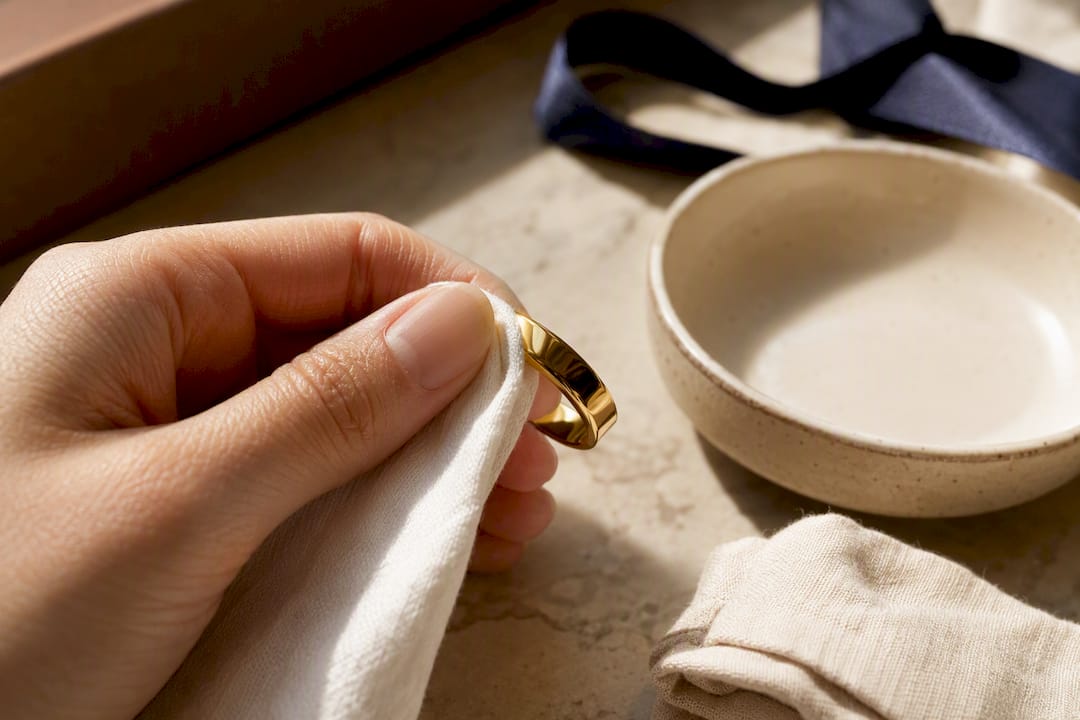
Care habits protect the look over time. Store pieces separately to avoid scratching, wipe down gold and platinum after wear to remove oils, and have prongs checked every year or two if you wear stone pieces daily. A light re-polish restores shine without removing metal the way aggressive cleaning can.
Why a Curated Approach to Buying Matters
Sorting real quiet-luxury quality from convincing imitations takes time most people don’t have. That’s the gap Diamondsbydaisy exists to close: curating pieces for everyday wear and gifting, with each selection checked against the same standards covered above before it ever reaches a collection page.
The curation process starts with material verification. Every piece gets checked for proper hallmarking, honest metal disclosure, and construction that holds up under close inspection, not just under store lighting.
Customers consistently point to the craftsmanship and the quality of the pieces themselves as the reason they come back, rather than any single design or trend.
That kind of repeat trust doesn’t come from marketing. It comes from pieces that still look right a year after purchase, which is the entire premise quiet luxury is built on.
History and Cultural Significance of Quiet Luxury Jewelry
Restraint in jewelry isn’t new. It’s a return. Old money families across Europe and the American East Coast have worn understated pieces for generations, favoring signet rings, simple pearl strands, and family heirlooms over anything flashy. The logic was social rather than financial: wealth that needs to announce itself isn’t as secure as wealth that doesn’t need to.
The 1980s and 1990s pushed against that instinct hard, with logo-heavy jewelry and visible branding becoming a status symbol in their own right. Quiet luxury’s current wave is a correction to that period, not an entirely new invention. What’s changed is who’s buying into it. It’s no longer limited to families with inherited pieces passed down for generations. It’s now a deliberate style choice for people building their first serious jewelry collection.
Search interest for phrases like “quiet luxury jewelry” and “understated engagement ring” has climbed noticeably since 2022, tracking with a broader cultural shift toward restraint after years of maximalist fashion dominating social media. Television and film have played a role too, with period dramas and shows depicting old money aesthetics putting a visual vocabulary to a style that previously existed mostly as an unspoken code among people who already had access to it.
What hasn’t changed is the underlying signal. Quiet luxury has always communicated to a narrow audience, the people who recognize good craftsmanship, rather than broadcasting to everyone at once.
Leading Brands and Designers Specializing in Quiet Luxury Jewelry
The maisons most associated with quiet luxury jewelry share a pattern: understated design language, exceptional material sourcing, and a reputation built over decades rather than seasons. Houses like Cartier and Van Cleef & Arpels built entire design vocabularies around this restraint long before “quiet luxury” became a marketing term, with signature pieces that use clean lines and superior stone quality rather than scale to signal value.
Independent and smaller ateliers have also carved out space in this category, often focusing on a narrower range of designs executed extremely well rather than broad collections chasing every trend. This is where a curated retail approach adds real value: instead of navigating dozens of designer catalogs and price points, a buyer can work with a source that has already filtered for material quality and design restraint.
Contemporary style guides increasingly frame quiet luxury as a long-term aesthetic rather than a passing trend, pointing to specific categories like fine chains, subtle colored gemstones, and simple gold hoops as the pieces most likely to stay relevant for years rather than cycling out with a season. Diamondsbydaisy’s own everyday gold collection reflects that same principle: pieces chosen for longevity rather than a moment on a trend calendar.
Sustainability and Ethical Considerations in Quiet Luxury Jewelry
Quiet luxury’s emphasis on longevity has a sustainability angle that often gets overlooked. A piece built to last twenty years, rather than replaced every few seasons, has a smaller lifetime footprint than a string of cheaper pieces bought and discarded repeatedly. Buying less, but buying better, is functionally a sustainability strategy even when that’s not the primary motivation.
Provenance matters on the ethical side too. Buyers increasingly favor documented provenance and investment-grade materials over unverified sourcing, which pushes sellers toward more transparent supply chains for both metals and stones. Recycled gold and lab-grown or traceable natural stones have both gained ground as buyers ask more pointed questions about where materials come from.
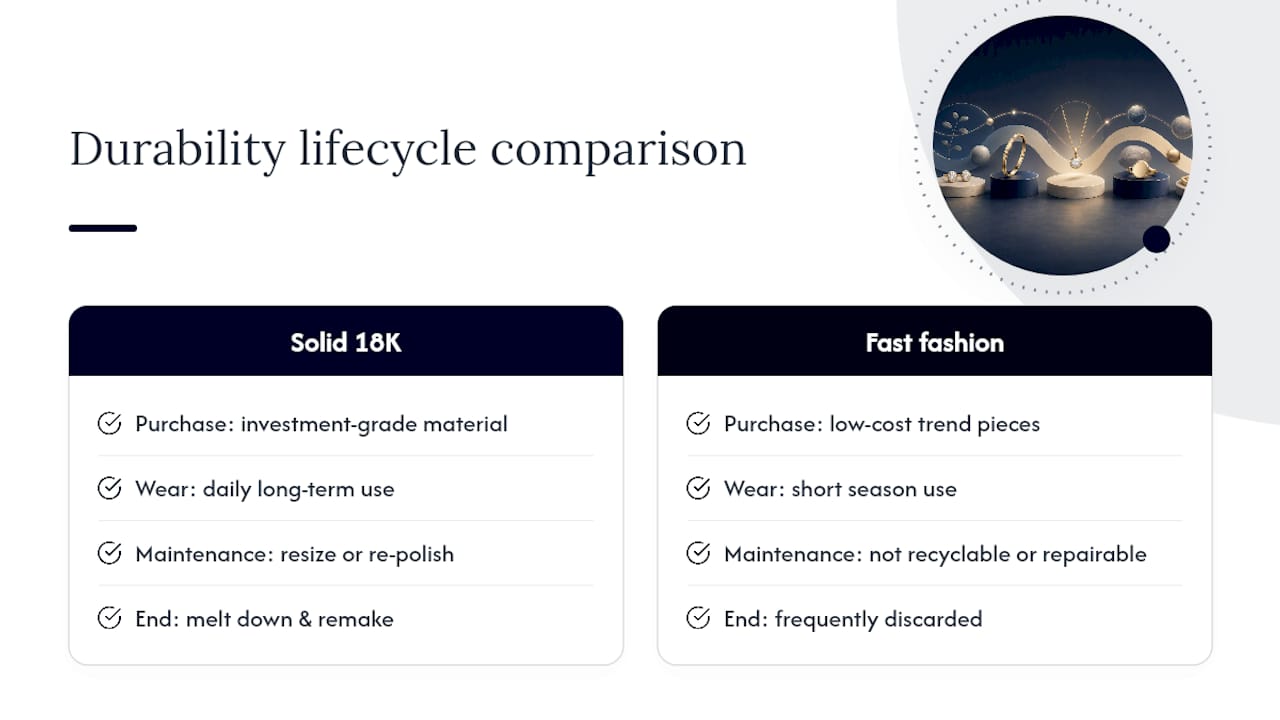
This is also where quiet luxury and fast fashion jewelry diverge completely. Fast fashion pieces are often designed for a short wear cycle, using materials that can’t be reasonably recycled or repaired. A solid 18K piece, by contrast, can be resized, re-polished, or even melted down and remade decades later without losing its material value. That durability is arguably the single biggest sustainability advantage quiet luxury jewelry has over nearly every other jewelry category, built into the material choice itself rather than added as a marketing claim afterward.
Price Ranges and Investment Value of Quiet Luxury Pieces
Quiet luxury pieces span a wide range, and the price differences usually map directly to metal purity and stone quality rather than brand markup alone. A solid 18K gold chain or simple stud pair typically sits at a meaningfully higher price than a gold-filled or vermeil equivalent, and that gap reflects real material cost, not just positioning.
Solitaire pieces vary the most, since cut quality, clarity, and certification all move the price independently of carat size. A smaller, exceptionally cut stone with a verified GIA certificate can cost more than a larger stone with visible flaws, and it will almost always look better on the hand.
Investment value in jewelry isn’t about speculation. It’s about material retention. Gold and platinum both hold intrinsic value tied to metal markets, meaning a solid piece retains meaningful worth even decades later, unlike costume jewelry that has essentially no resale value once purchased. Certified stones carry documentation that supports resale or insurance appraisal, which plated or uncertified pieces simply can’t offer. For readers weighing a first serious purchase, understanding how material quality and provenance affect long-term value is worth doing before comparing prices across retailers, since the cheapest option upfront is rarely the best value over a decade of wear.
The Case Against Chasing Trends in This Category
Most quiet luxury advice online treats it as a look to copy: buy gold, skip logos, done. That misses the actual point. The research behind this style consistently points to one thing that matters more than any specific piece: material honesty. A hallmark you can verify. A certificate that checks out. A reverse side that’s finished as carefully as the front.
Where conventional advice falls short is in treating carat size and brand name as shortcuts for quality. They’re not. A well-cut half-carat stone with a real certificate beats a larger, poorly cut stone from a recognizable name every time it’s compared side by side, and most buyers never make that comparison before paying.
If there’s one thing to prioritize first, it’s this: learn to check a hallmark and read a certificate before you learn anything else about style. The aesthetic knowledge is easy to pick up. The material literacy is what actually protects your money, and it’s the part almost every style guide skips.
— Georgia
Start Building Your Quiet Luxury Collection
This retailer curates jewelry and accessories built around the principles this article covers: solid metals, honest construction, and designs that hold up to years of daily wear instead of a single season of attention. Pieces are selected with gifting and everyday wear in mind, so customers can have confidence about quality beyond just how a piece looks in photos.
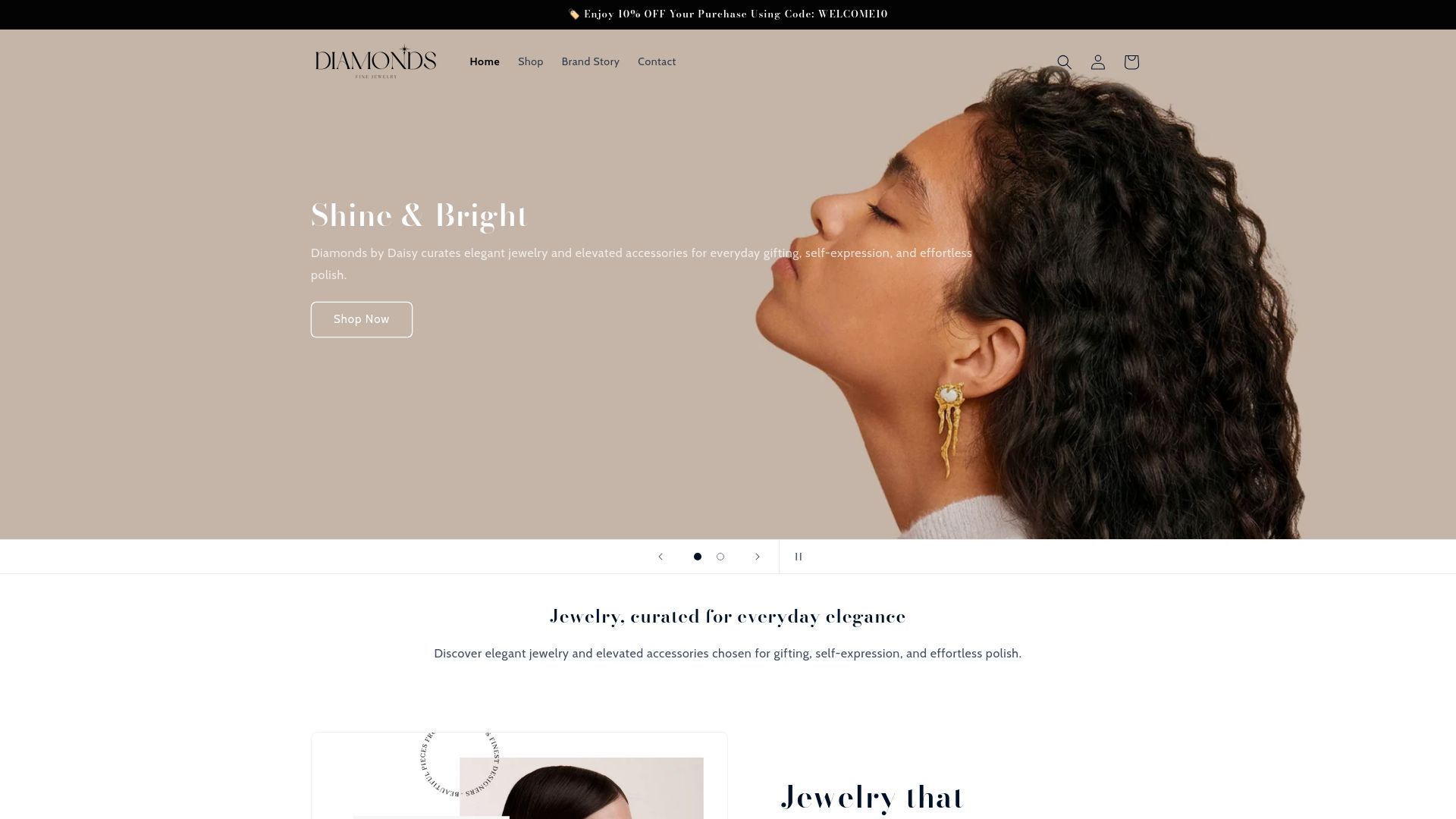
Using a curated source can simplify shopping by filtering pieces for material and craftsmanship standards, removing much of the guesswork compared to browsing individual designer sites or unverified marketplace listings. This offers access to pieces filtered for material and craftsmanship standards, from fine chains to solitaire studs to signet rings, without requiring expertise in hallmarks and certificates.
Start with the everyday gold collection if you’re building your first core pieces, or browse the sterling silver and diamond collection for a solitaire stud or pendant to anchor your collection. Either page is a solid place to start narrowing down your first purchase today.
Sources
- Why Quiet Luxury Jewelry Is Replacing Flashy Luxury | Timeless Elegance Guide – JewelryRich
- Quiet Luxury of Exceptional Jewelry ⋆ Beverly Hills Magazine
- Quiet Luxury Jewelry: Why Stealth Wealth Pieces Are Trending in 2025 - Al Romaizan
- Identify High-Quality Demi-Fine Jewelry — Urbalenti™ NYC