

Investment Quality Diamond Jewelry for Anniversaries
Table of Contents
- What Makes Investment-Quality Diamond Jewelry Worth the Cost
- How to Choose a High-Quality Diamond: The 4 Cs Explained
- GIA Certified Diamond Jewellery: Why Certification Matters
- Diamond Resale Value Factors: What Preserves Your Investment
- Natural vs Lab-Grown Diamonds: Investment Implications
- Anniversary Diamond Jewelry Styles That Hold Value
- Long-Term Care and Insurance for Investment Pieces
- Conclusion
Last Updated: August 14, 2026
What Makes Investment-Quality Diamond Jewelry Worth the Cost
Investment-quality diamond jewelry for anniversaries isn't just about size or sparkle, it's about the combination of factors that preserve and potentially increase value over time. At Diamonds by daisy, we work with clients who understand that a well-chosen piece becomes a financial asset as much as a sentimental one. The gemstones we select are handpicked for their quality, and every piece is crafted to last generations.
The real cost reflects three things: the intrinsic value of the materials, the certification that proves that value, and the craftsmanship that ensures longevity. A diamond certified by the Gemological Institute of America (GIA) costs more than an uncertified stone of similar appearance, but that premium buys you proof. You have documentation that independent gemologists have verified the stone's quality.
Investment-grade pieces are chosen with resale in mind from the start. That changes which stones you select, which metals you pair them with, and which styles you favour. It's the difference between buying jewellery you hope will last and buying jewellery engineered to appreciate.
How to Choose a High-Quality Diamond: The 4 Cs Explained
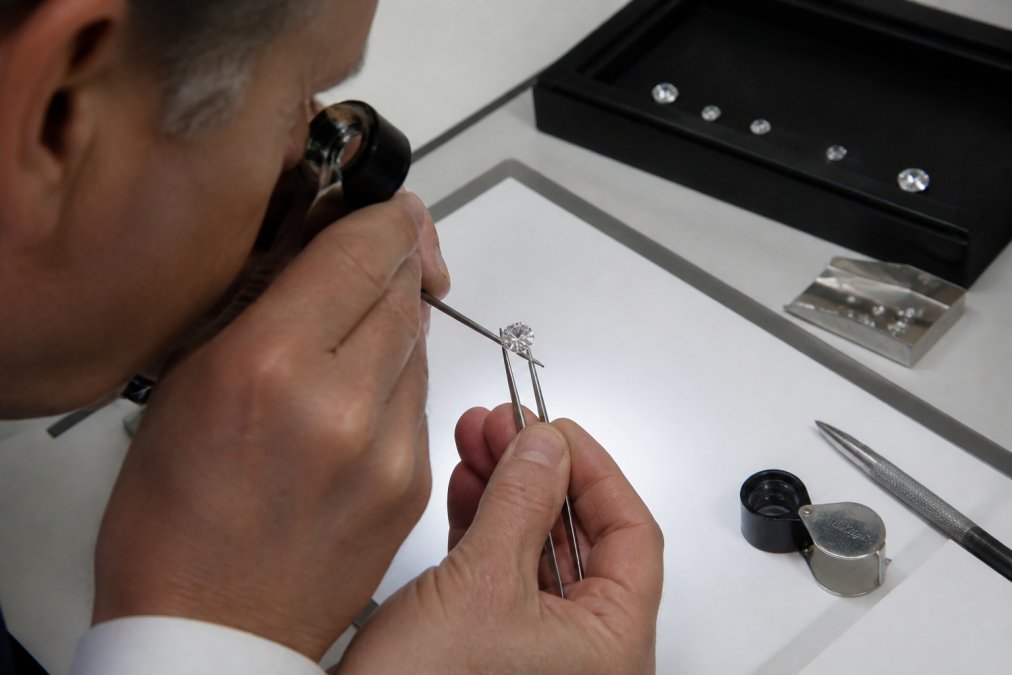
The four Cs, carat, clarity, colour, and cut, form the foundation of diamond grading. Understanding them is essential if you want to make an informed investment. Each C affects both the beauty of the stone and its market value.
Carat Weight and Its Impact on Value
Carat weight measures the physical mass of a diamond, with one carat equalling 200 milligrams. The relationship between carat weight and price isn't linear, a two-carat diamond costs significantly more than twice the price of a one-carat stone of equivalent quality because larger diamonds are rarer.
For anniversary jewellery, carat weight matters less than most people assume. A well-cut 0.9-carat diamond often looks larger and more brilliant than a poorly cut 1.2-carat stone. What matters for investment value is that the carat weight is documented and verifiable through GIA certification. The sweet spot for investment-quality diamond jewellery sits between 0.7 and 1.5 carats for solitaire rings, offering strong resale potential without extreme price premiums.
Clarity, Colour, and Cut Precision
Clarity grades measure the presence of inclusions inside the diamond. For investment-quality pieces, aim for at least VS1 clarity. Anything lower, and inclusions may become visible to the naked eye, affecting both beauty and resale value.
Colour grading runs from D (colourless) through Z (light colour). For investment purposes, aim for H colour or better. Stones graded I or lower show visible yellow or brown tints that reduce appeal and resale potential.
Cut precision determines how much brilliance and fire the stone displays. Investment-grade diamonds should be cut to "Excellent" or "Very Good" standards. A poorly cut diamond wastes light and appears dull even if colour and clarity are excellent.
GIA Certified Diamond Jewellery: Why Certification Matters
A GIA certified diamond comes with an independent assessment of its quality. The Gemological Institute of America is the world's most respected diamond grading authority, and their certification is universally recognised in the jewellery trade.
Without certification, you're relying entirely on the seller's representation. That uncertainty kills resale value because buyers won't pay premium prices for uncertified stones. GIA certification protects you by giving you confidence in your purchase and by protecting your investment when you eventually sell. The certification report includes a unique identifying number laser-inscribed on the diamond's girdle, tying the report to the specific diamond and preventing any possibility of substitution or fraud.
Diamond Resale Value Factors: What Preserves Your Investment
Not all diamonds hold their value equally. Understanding these factors before you buy means you can choose pieces that will be easier to sell if circumstances change.
The four Cs determine resale prices. A D colour, VS1 clarity, Excellent cut diamond will always be easier to sell than an I colour, SI2 clarity, Good cut stone, even if both are the same carat weight.
Round brilliant diamonds are the most liquid because they're the most popular shape. Fancy shapes like cushions, ovals, and pear cuts have smaller buyer pools.
The setting metal affects resale value significantly. Platinum commands the strongest resale prices because it's durable and rare. Rose gold has a narrower market than classic metals.
Condition matters. A diamond doesn't scratch or fade, but the setting can. Professional cleaning and inspection before sale can restore appearance, but significant damage reduces value.
Natural vs Lab-Grown Diamonds: Investment Implications
Lab-grown diamonds are chemically identical to mined diamonds and graded using the same four Cs system. Yet their investment profiles are entirely different.
Natural diamonds have held value for decades because of their rarity and established demand. Lab-grown diamonds have been commercially available for only a few years, and their long-term resale value is unknown. Lab-grown diamonds are cheaper to produce, which means prices will likely continue declining as production scales up. A lab-grown diamond you buy today for £2,000 might be worth £1,200 in five years.
For anniversary jewellery where investment potential matters, natural diamonds are the safer choice. They've proven their ability to hold value over generations. Lab-grown diamonds make sense if your priority is affordability and sustainability, but understand that you're trading investment potential for a lower initial cost.
Anniversary Diamond Jewelry Styles That Hold Value
Not every diamond jewellery style holds value equally. Some designs are timeless and will always have buyers.
Solitaire and Trilogy Rings
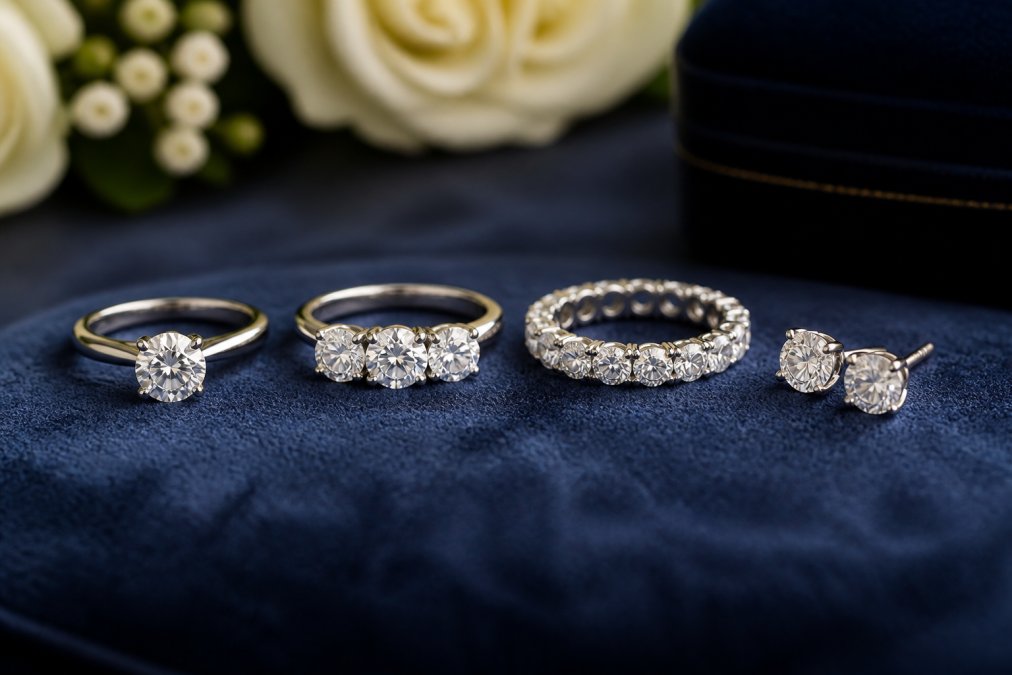
A solitaire ring, a single diamond on a simple band, is the most liquid jewellery style. Nearly every buyer recognises it, and it works with any outfit or occasion. Trilogy rings feature three diamonds, typically with the centre stone larger than the two flanking stones. They're more distinctive than solitaires but still classic. The symbolism of past, present, future makes them popular for anniversaries.
The metal and setting quality matter as much as the diamonds themselves. Choose settings from established jewellers with proven craftsmanship. Our solitaire and trilogy pieces are handcrafted with precious metals selected for durability and resale appeal.
Eternity Rings and Statement Pieces
An eternity ring features diamonds all the way around the band, creating continuous sparkle. However, eternity rings are less liquid than solitaires because fewer buyers want a fully diamond-set band.
Statement pieces are beautiful but risky from an investment perspective. A unique design that appeals to you might not appeal to the next buyer. For anniversary jewellery where you want both beauty and investment potential, stick with solitaires and trilogy rings.
Diamond Stud Earrings and Bracelets
Diamond stud earrings are among the most wearable and versatile pieces of diamond jewellery. A pair of well-matched diamond studs holds value remarkably well because demand is consistent and high. The key is matching, the two diamonds should be as identical as possible in colour, clarity, and cut.
Diamond bracelets are less liquid than rings or earrings. They're beautiful but require a specific preference from buyers. Resale will be more challenging than other styles.
Long-Term Care and Insurance for Investment Pieces
Professional cleaning should happen annually. Everyday wear exposes diamonds to oils, dust, and residue that dulls their sparkle. A professional jeweller can clean your piece without damaging the setting.
Inspection is equally important. A jeweller should examine your piece annually to check that the diamond is secure in its setting and that the metal shows no signs of wear or damage.
Insurance protects your investment against loss, theft, or damage. You'll need a jewellery insurance policy separate from your home insurance, covering the full replacement value of your piece.
Keep your GIA certification in a safe place, ideally a safety deposit box. Keep photographs of your piece. This documentation helps with insurance claims and proves ownership.
Avoid exposing your diamond to extreme temperature changes or harsh chemicals. Don't wear your piece while exercising, gardening, or doing housework. Remove your ring before bed and store it safely.
A well-maintained diamond piece can last generations. The stone itself is virtually indestructible, but the setting requires care. Treat your investment piece as the valuable asset it is, and it will retain its worth for decades.
Marking an anniversary with investment-quality diamond jewellery means choosing a piece that will be as meaningful in twenty years as it is today. The diamonds you select should be certified, the metals should be precious, and the craftsmanship should be evident in every detail. Diamonds by daisy specialises in handpicked gemstones and meticulously crafted settings designed to hold their value while elevating your personal style. Every piece comes with a 30-day satisfaction guarantee, ensuring you can buy with confidence. Explore our collection of investment-quality anniversary pieces and find the diamond jewellery that will mark your milestone and preserve its worth for generations to come.
Frequently Asked Questions
What defines investment-quality diamond jewellery?
Investment-quality diamond jewellery combines exceptional craftsmanship with diamonds graded at the highest standards. Look for GIA certified stones with D-H colour grades and VVS1-VS2 clarity, carat weights above 0.5ct, and precise cuts that maximise brilliance. Precious metal settings (platinum, 18k gold) and timeless designs ensure longevity. Ethical sourcing and conflict-free certification add value and appeal to future buyers.
Do lab-grown diamonds hold their value for investment purposes?
Lab-grown diamonds typically hold less resale value than natural diamonds of comparable quality, though they cost 20-40% less upfront. Their market is newer and smaller, affecting liquidity. However, they remain durable, beautiful alternatives for those prioritising sustainability. For pure investment potential, natural diamonds with strong colour and clarity grades remain the preferred choice among collectors and resellers.
Why is GIA certification essential for investment diamond jewellery?
GIA certification provides independent, globally recognised verification of a diamond's characteristics: carat weight, colour, clarity, and cut quality. This documentation protects your investment by establishing authenticity and value. When you eventually resell or insure the piece, buyers and appraisers trust GIA grading implicitly. Without certification, you lose credibility and face difficulty proving quality to future purchasers.
What factors most affect diamond resale value?
The 4 Cs determine resale value: larger carat weights command premium prices, D-H colour grades are more desirable, VVS-VS clarity is preferred, and excellent cut precision maximises brilliance. Natural diamonds hold value better than lab-grown. Metal quality (platinum and 18k gold retain value better than lower karats), condition, and timeless design also matter. Pieces with documentation and certification sell faster and at higher prices.
This article was written using GrandRanker