

Short Hair Earrings: 2.25 inch Test, 15–30mm Hoops, Lightweight Picks
For most short haircuts, small-to-medium hoops, tasteful studs, and short drops offer the most reliable balance. The right scale depends on how much of your ear and neck show once your hair is cut, so match earring size to visible skin and keep the pieces lightweight. Face shape and the specific cut (pixie, crop, or bob) fine-tune the choice, covered below.
TL;DR:
- Small to medium hoops, studs, and short drops are most suitable for short hair, with size tailored to how much of the ear and neck are exposed.
- Earrings should contrast with face shape and haircut, with softer shapes for angular cuts and sharper edges for blunt bobs or textured styles.
- Nickel is the most common allergen, so opting for titanium, solid gold, or platinum earrings reduces the risk of irritation for sensitive skin.
- Earrings longer than 2 inches tend to look disproportionate on bobs and can get lost behind fuller short hairstyles.
- Choosing lightweight, hypoallergenic jewelry improves comfort, especially when styling products build up or heat styling is frequent.
Table of Contents
- 1. Earring styles that work with short hair
- 2. How to choose earrings for your face shape and haircut
- 3. Size and proportion rules you can measure
- 4. Materials and allergy safety for earrings
- 5. Styling recipes for everyday, work, and evening looks
- 6. Keeping earrings and short hair tangle-free
- 7. Why Diamonds by Daisy curates pieces for short hair
- 8. Where to start shopping for short-hair earrings
- Sources
- FAQ
1. Earring styles that work with short hair
Short hair puts your ears and jawline on full display, so every earring reads as a deliberate choice rather than background detail. That makes it easier to get dressing right, but it also means sloppy proportions show just as clearly.
Studs are the safest starting point because they sit close to the skin and never compete with a haircut’s lines. A small cluster or a single solitaire both work, though a solitaire under 6 millimeters can look lost on a fully exposed ear, so size up slightly compared to what you wore with long hair.
Hoops add movement without the bulk of a dangle. Small hoops (around 15 millimeters) suit a pixie’s clean angles, while medium hoops (up to 30 millimeters) balance the fuller silhouette of a bob. Thin wire hoops read as quiet and everyday, thick tube hoops as more done up.
Short drops, including teardrops, bar styles, and short chain links, add a bit of swing just below the lobe without the weight of a full chandelier. They work especially well with asymmetrical cuts, where the extra motion complements the uneven lines.

Ear cuffs and climbers create architectural interest along the upper ear, which is often left bare by shorter styles. Positioned near the top curve of the ear, they give a cut like a crop or pixie a second focal point.
Statement pieces are not off-limits with short hair. In fact, a fully exposed ear is one of the few places a bold earring has room to be seen without fighting against hair. Keep the rest of the look pared back when you choose one.
- Studs: closest to the skin, lowest risk, best for daily wear.
- Small to medium hoops: add motion, scale to haircut fullness.
- Short drops: teardrop, bar, or chain styles for subtle swing.
- Ear cuffs and climbers: fill the bare upper ear with detail.
- Statement earrings: one bold piece, kept simple everywhere else.
2. How to choose earrings for your face shape and haircut
Face shape changes which earring outline looks most balanced. Oval faces have the most flexibility and can wear almost any shape. Round faces benefit from elongating shapes like drops or angular geometric studs, which add visual length. Square faces soften with curved hoops or rounded drops that counter strong jaw angles. Heart-shaped faces balance a narrower chin with wider earrings at the top, such as chandelier studs or small hoops with volume near the lobe.
The haircut itself matters as much as face shape. A pixie’s short, angular lines pair well with soft, rounded earrings that offset the cut’s sharpness. A textured, wispy crop looks sharper when paired with geometric or angular earrings that contrast the loose texture. A blunt bob, with its clean horizontal line, suits earrings with definite edges, like bar drops or structured hoops, rather than soft, shapeless pieces.
A quick way to test your own proportions is the 2.25-inch rule, a trick popularized by hairstylist Giles Robinson for judging whether short hair suits your face: hold a pencil under your chin and a ruler against your earlobe, and if the distance between them is less than 2.25 inches, shorter hair (and by extension, more exposed-ear earring styles) tends to be flattering. Use the same logic in reverse: the less distance there is, the more your ears and jaw are doing the visual work, so earring shape matters more.
- Check your face shape against the pairings above before shopping.
- Note whether your cut is angular (pixie), wispy (crop), or blunt (bob).
- Run the 2.25-inch rule to gauge how exposed your face and ears really are.
- Pick a shape that contrasts, not matches, your haircut’s dominant lines.
Pro Tip: Snap a photo straight on before buying anything new. Earrings that look balanced in a mirror can look oversized or tiny in photos, which is closer to how others actually see them.
Before checkout, run through a short list: size relative to your ear, weight, backing type, hypoallergenic labeling, and the seller’s return policy in case the scale is off once it’s on.
3. Size and proportion rules you can measure
“Visible-ear” is simply how much lobe, cartilage, and neck your haircut leaves uncovered. A buzzed pixie exposes nearly the whole ear and the earring takes center stage. A chin-length bob covers more of the upper ear, so a smaller earring can still register.
- Hoops: 15 to 30 millimeters covers small to medium, with thin wire hoops for a pixie and slightly thicker tube hoops for a bob’s fuller shape.
- Drops: aim for 1 to 1.5 inches (roughly 2.5 to 4 centimeters) on a pixie, and up to 2 inches on a bob, where more hair can visually absorb extra length.
- Anything longer than 2 inches tends to disappear behind a bob’s hairline or look disproportionate on a pixie’s bare neck.
- Favor hollow or openwork designs over solid metal. Without hair to cushion the weight, a heavy solid earring pulls on the lobe over a full day.
4. Materials and allergy safety for earrings
Nickel is the most common culprit behind itchy, red, or swollen ears, and short hair means exposed lobes get noticed if a reaction shows. A systematic review and meta-analysis found that having pierced ears significantly raises the odds of developing a nickel allergy, and that a significant proportion of sampled North American earrings released nickel above the threshold used in spot testing. A separate clinical overview notes nickel remains the most common contact allergen, and that regulation in the United States lags behind the stricter release limits used in the European Union.
Nickel exposure from everyday earrings is common enough to plan around, not just react to.
- Titanium, implant-grade stainless steel, niobium, platinum, and solid gold are the safest bets for sensitive ears.
- Gold-filled or plated pieces can still expose skin to a nickel base once the coating wears thin, so check the karat and construction if you react easily.
- A DMG spot test or a dermatologist visit can confirm a suspected allergy if earrings keep irritating the same spot.
- Clip-ons and ear cuffs skip direct puncture contact entirely and are worth trying if studs consistently cause problems, with secure earring backs as a comfort fix for pierced ears.
5. Styling recipes for everyday, work, and evening looks
Everyday looks call for minimalist studs or small hoops paired with simple makeup, so the earring reads as polish rather than effort. This is the lowest-maintenance combination and the easiest to repeat daily.
Work calls for a bit more intention. Studs pair cleanly with a blazer collar, while a short drop earring works well against a V-neck top where there’s room for a little movement without brushing against fabric. Stick to polished metals like gold or silver rather than mixed finishes for a put-together look.
Evening and formal looks work best with one focal point. Choose either a bold earring or a statement necklace, never both, and let your neckline decide: a strapless or boat neck gives earrings room to stand out, while a high neckline competes with anything too large near the ear.
- Everyday: small studs or thin hoops, minimal makeup.
- Work: polished studs or short drops, collar-aware sizing.
- Evening: one statement piece, kept clear of a busy neckline.
Pro Tip: If a statement earring feels too heavy for short hair to anchor visually, a tiny hidden braid pinned near the ear, or a silicone pad under the lobe, can steady it and reduce lobe pull, a trick stylists use when repurposing heavier clip-ons as hair accents too.
6. Keeping earrings and short hair tangle-free
Short hair and earrings compete for the same small patch of skin, so snags happen more often than with longer styles that keep hair away from the ear. Open hook earrings and textured hoops are the most common offenders, catching on baby hairs around the nape or sideburns.
Smooth, closed-back studs and hoops with a soldered or hinged closure catch less than open French hooks, so they’re a better daily choice if you’re prone to snagging. When wearing a dangle or drop, check that the earring hangs clear of any wispy pieces before you leave the house, especially with a textured crop where shorter layers fall forward.
Product buildup matters too. Hairspray and dry shampoo residue near the ear can stick to earring posts and backs, making them harder to clean and more likely to irritate skin over time. Wipe earring posts with a soft cloth after wearing them on days you’ve used heavy styling product, and give hoops and cuffs an occasional clean with mild soap and water to keep metal from dulling against the oils styling products leave behind.

If you color-treat or heat-style your hair often, as is common with the current wave of short cuts, remove dangly earrings before blow-drying or curling near the ear. Heat tools can warp lighter metals and, more practically, a hot flat iron too close to a dangling earring is an easy way to end up with a burn or a bent piece.
7. Why Diamonds by Daisy curates pieces for short hair
Diamonds by Daisy builds its curated jewelry selection around pieces that work for everyday wear, not just special occasions, which suits the lightweight, close-to-the-skin scale short hair calls for. Customer feedback consistently points to the craftsmanship and quality behind each piece, the same standard this guide’s styling rules assume you’re shopping with.
— Georgia
8. Where to start shopping for short-hair earrings
Short hair gives you more room to experiment than most people expect, and a handful of well-chosen pieces cover nearly every scenario in this guide. 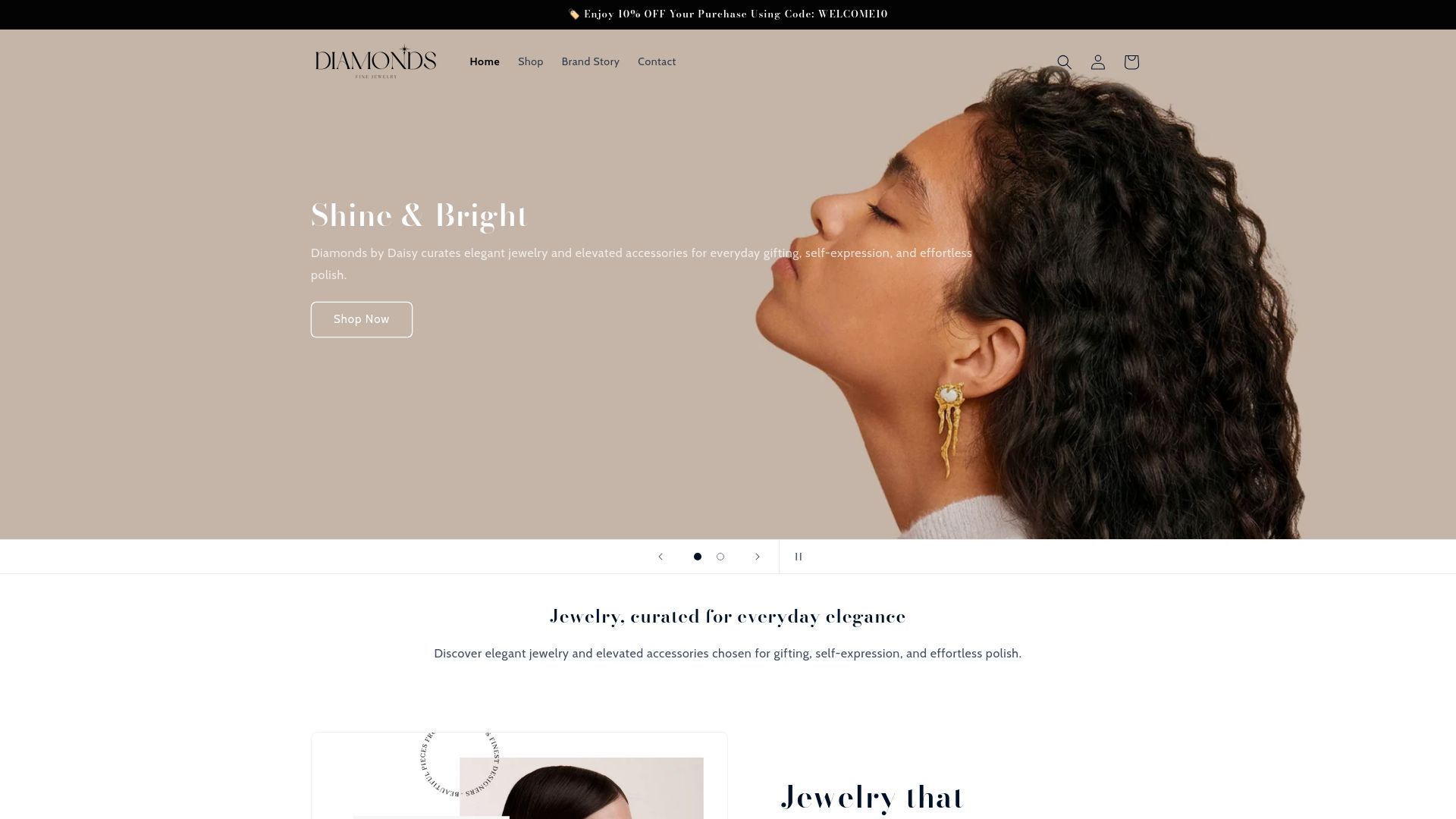
Diamonds by Daisy’s Everyday Jewelry collection and Everyday Gold Jewellery category are good starting points for lightweight studs and small hoops sized for a fully visible ear. Filter for lightweight and hypoallergenic options if sensitive skin has been an issue, and stick to the small-to-medium diameter range covered above.
- Browse the full Jewelry & Elevated Accessories collection for studs, hoops, and short drops in one place.
- Check Everyday Gold Jewellery for lightweight hoop options sized for short styles.
- Look for pieces labeled hypoallergenic or made from solid metal if you have sensitive ears.
Sources
- Would You Look Good With Short Hair? Try This Simple Trick | Allure
- Nickel Allergy and Piercings: A Systematic Review and Meta‐Analysis
- Contact Allergy to Nickel: Still #1 After All These Years | MDedge
FAQ
What earrings go best with short hair?
Small to medium hoops, studs, and short drop earrings tend to work best because they match the scale of a fully visible ear without adding excess weight. The right pick ultimately depends on your face shape and the specific cut, whether that’s a pixie, crop, or bob.
What is the 2.25-inch rule for short hair?
The 2.25-inch rule is a quick test where you hold a pencil under your chin and a ruler against your earlobe. If the distance between them is less than 2.25 inches, short hair (and the more exposed-ear earring styles that come with it) is typically flattering.
What earrings look good with a pixie haircut?
Small hoops, soft rounded studs, and short drops tend to complement a pixie’s sharp, angular lines by softening the overall look. Ear cuffs and climbers also work well since a pixie leaves the upper ear fully exposed.
Which earring materials are safest for sensitive ears?
Titanium, implant-grade stainless steel, niobium, platinum, and solid gold are the safest choices because they carry a lower risk of triggering a nickel reaction than plated metals. A systematic review found piercings are linked to higher nickel allergy risk, so choosing solid metals matters more once ears are fully visible.