

Affordable Alternatives to High Clarity Diamonds
Table of Contents
- Quick Comparison: Affordable Alternatives to High Clarity Diamonds
- Moissanite vs Lab Grown Diamond: Which Sparkles Brighter?
- White Sapphire Durability for Engagement Rings
- How to Identify High Quality Diamond Simulants
- Budget-Friendly Alternatives: Cubic Zirconia, White Topaz, and More
- Why Moissanite and Lab-Grown Diamonds Are the Best Affordable Alternatives to High Clarity Diamonds
- Frequently Asked Questions
Last Updated: September 16, 2026
Quick Comparison: Affordable Alternatives to High Clarity Diamonds
Finding affordable alternatives to high clarity diamonds starts with understanding what each stone actually offers. This guide breaks down the realistic options, from lab-grown stones to natural gemstones, so you can choose with confidence rather than guesswork.
The three strongest contenders are moissanite, lab-grown diamonds, and white sapphire. Each delivers a distinct balance of brilliance, durability, and cost. Cubic zirconia and white topaz cover the budget end, while morganite and zircon suit buyers who want something less conventional.
| Stone | Hardness (Mohs) | Sparkle Level | Best For |
|---|---|---|---|
| Moissanite | 9.25 | Exceptional | Maximum brilliance, daily wear |
| Lab-grown diamond | 10 | Identical to mined | Traditional diamond look |
| White sapphire | 9 | Subtle, elegant | Natural stone lovers |
| Cubic zirconia | 8-8.5 | Bright but softer | Fashion jewellery, tight budgets |
| White topaz | 8 | Moderate | Natural stones on a budget |
| Morganite | 7.5-8 | Soft, coloured | Romantic, non-traditional rings |
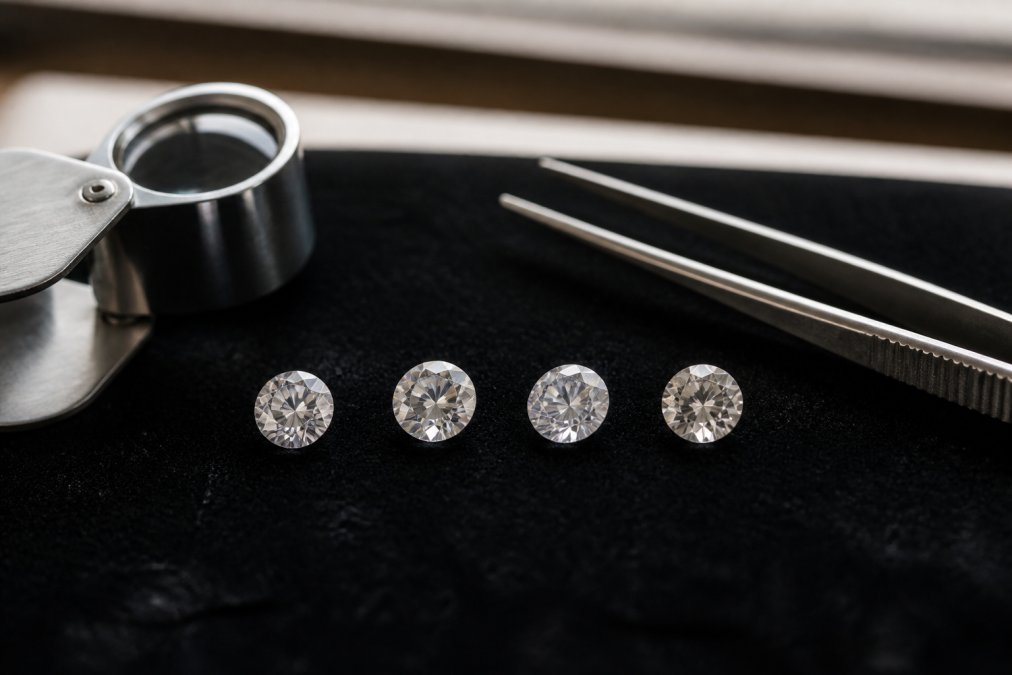
Moissanite vs Lab Grown Diamond: Which Sparkles Brighter?
Moissanite sparkles brighter than lab-grown diamond in most lighting conditions. Its higher refractive index produces more fire and dispersion, which many buyers notice immediately in daylight.
Lab-grown diamonds, by contrast, are chemically and optically identical to mined diamonds. They carry the same hardness rating of 10 on the Mohs scale and are graded by the same standards.
So which should you choose? It depends on what you value:
- Choose moissanite if maximum sparkle and lower cost matter most. Expect roughly 90% savings compared with a comparable mined diamond.
- Choose lab-grown if you want the exact look and properties of a diamond. These typically cost around 50% less than mined equivalents.
A common mistake is assuming moissanite looks "fake." In practice, most people cannot tell the difference without a loupe. The one honest drawback: moissanite can show a slight rainbow effect in direct sunlight, which some buyers love and others don't.
White Sapphire Durability for Engagement Rings
White sapphire durability for engagement rings is genuinely strong. At 9 on the Mohs scale, it resists scratching far better than cubic zirconia or white topaz, making it a practical choice for everyday wear.
What it lacks is sparkle. White sapphire offers a softer, more understated brilliance than moissanite or diamond, which appeals to buyers who prefer subtlety over flash.
Two caveats worth knowing. First, white sapphire requires frequent cleaning because it shows dirt and oils more readily than harder stones. Second, it is a natural gemstone, so colour and clarity vary between pieces. If consistency matters to you, inspect each stone individually rather than ordering blind.
How to Identify High Quality Diamond Simulants
Knowing how to identify high quality diamond simulants protects you from overpaying for a stone that will cloud or chip. A few simple checks separate a well-cut simulant from a cheap imitation.
Start with these questions:
- Does it have a certificate? Reputable sellers provide grading or authentication documentation. Ask before you buy.
- What is the hardness? Anything below 8 on the Mohs scale will scratch with regular wear.
- How does it handle light? A quality simulant reflects light sharply. Cloudiness or a dull surface signals poor material.
- Is the cut precise? Look at the edges under bright light. Uneven facets mean lower craftsmanship.
Many buyers find that the biggest giveaway is weight and temperature. Cubic zirconia feels heavier than diamond and warms quickly in the hand. Moissanite holds a sharper, more colourful sparkle.
Budget-Friendly Alternatives: Cubic Zirconia, White Topaz, and More
Cubic zirconia remains the most affordable option available, often under £50 for a finished piece. It is colourless, consistently clear, and available in every common shape. The trade-off is durability: at 8-8.5 on the Mohs scale, it scratches over time and can turn cloudy with age.
White topaz offers a natural alternative at a similar price point. It appeals to buyers who prefer genuine stones over synthetics, though its lower hardness of 8 makes it less suited to daily engagement ring wear.
Beyond those two, several options deserve a look:
- Morganite brings a soft pink tone and good durability at 7.5-8 Mohs. It suits romantic, non-traditional designs, though it needs regular cleaning.
- Zircon is a natural mineral with a high refractive index and real fire. It is brittle, so it chips more easily than sapphire or moissanite.
- Swarovski crystals deliver precision-cut sparkle for fashion pieces. They are not built for long-term daily wear in an engagement ring.
The pattern here is consistent: the softer the stone, the lower the price, and the shorter its working life in a ring worn every day.
Why Moissanite and Lab-Grown Diamonds Are the Best Affordable Alternatives to High Clarity Diamonds
Moissanite and lab-grown diamonds win on the two factors that matter most: durability and appearance. Both hold up to daily wear, and both deliver the brilliance buyers expect from a high clarity stone.
GIA guidance on diamond grading and simulant identification confirms that lab-grown diamonds are graded using the same criteria as mined stones, which means you can compare them directly. Moissanite sits just behind diamond at 9.25 on the Mohs scale, comfortably ahead of sapphire, topaz, and zirconia.
Where does Diamonds by daisy fit into this? The brand's curated collection pairs handpicked gemstones with precious metals. Each piece comes with a 30-day satisfaction guarantee, which removes much of the risk from buying fine jewellery online.
Choosing between these stones comes down to one honest question: do you want the exact properties of a diamond, or the most sparkle for your money? Moissanite and lab-grown diamonds answer both without the mined price tag, and neither asks you to sacrifice durability for affordability.
At Diamonds by daisy, every piece is built around meticulously handpicked gemstones and precious metals, with timeless designs made to be worn for decades rather than seasons. The 30-day satisfaction guarantee means you can order with confidence and decide once you see it in person. Browse the collection and add to cart when the right piece finds you.
Frequently Asked Questions
What is the best diamond alternative that looks real?
Moissanite and lab-grown diamonds are the closest visual matches. Lab-grown diamonds are chemically identical to natural diamonds, while moissanite offers even more brilliance and fire. Both are durable and indistinguishable to the naked eye. For a natural option, white sapphire provides a subtle, elegant look. Ultimately, the best choice depends on your budget and preference for synthetic versus natural stones.
Is moissanite a good alternative to a high-clarity diamond?
Yes, moissanite is an excellent alternative. It has a hardness of 9.25 on the Mohs scale, making it highly durable for daily wear. Its refractive index is higher than diamond, so it sparkles more, though it can show a slight rainbow effect in direct sunlight. Moissanite is also significantly more affordable, often costing about 90% less than comparable diamonds.
Do lab-grown diamonds offer better value than natural diamonds?
Lab-grown diamonds typically cost around 50% less than natural diamonds of similar quality. They are chemically, physically, and optically identical, and they are graded using the same standards. For buyers seeking the look and properties of a diamond without the mined price tag, lab-grown diamonds offer strong value and ethical sourcing.
What are the pros and cons of white sapphire vs. diamond?
White sapphire is a natural, durable gemstone (9 on the Mohs scale) that offers a more understated brilliance than diamond. It is more affordable but requires frequent cleaning to maintain clarity. Diamond is harder (10 on the Mohs) and retains its sparkle better over time, but comes at a much higher cost. White sapphire suits those who prefer a subtle, natural look.
Are diamond alternatives durable enough for daily wear?
Moissanite and lab-grown diamonds are durable enough for daily wear, with Mohs ratings of 9.25 and 10, respectively. White sapphire (9 Mohs) is also suitable but may need more frequent cleaning. Cubic zirconia (8-8.5 Mohs) and white topaz (8 Mohs) are softer and prone to scratching, making them better for occasional wear rather than everyday engagement rings.