

Ethical Material Sourcing for Handmade Jewellery
Table of Contents
- What Ethical Material Sourcing Means for Handmade Jewellery
- Ethically Sourced Gemstones: What to Look For and How to Verify Them
- Responsibly Sourced Precious Metals for Small Makers
- Building an Ethical Jewellery Supply Chain: A Step-by-Step Approach
- Spotting Greenwashing in the Jewellery Industry
- End-of-Life Circularity and Regional Sourcing: Two Angles Most Guides Miss
- Conclusion: Sourcing with Confidence
- Frequently Asked Questions
Last Updated: October 6, 2026
What Ethical Material Sourcing Means for Handmade Jewellery
Ethical material sourcing means tracing every gemstone and precious metal back to its origin, confirming it was extracted, traded and refined without harming people or the environment.
At Diamonds by daisy, we built our collection around this idea: every stone and metal we use is handpicked, and every piece comes with a 30-day satisfaction guarantee.
Below, we break down how to source ethically, verify claims properly, and avoid the marketing tricks that make some jewellery look greener than it is.
Ethically Sourced Gemstones: What to Look For and How to Verify Them
Ethically sourced gemstones have a documented origin, no link to conflict or forced labour, and a paper trail that survives scrutiny. Look for mine-to-market traceability, not just a certificate on the finished piece.
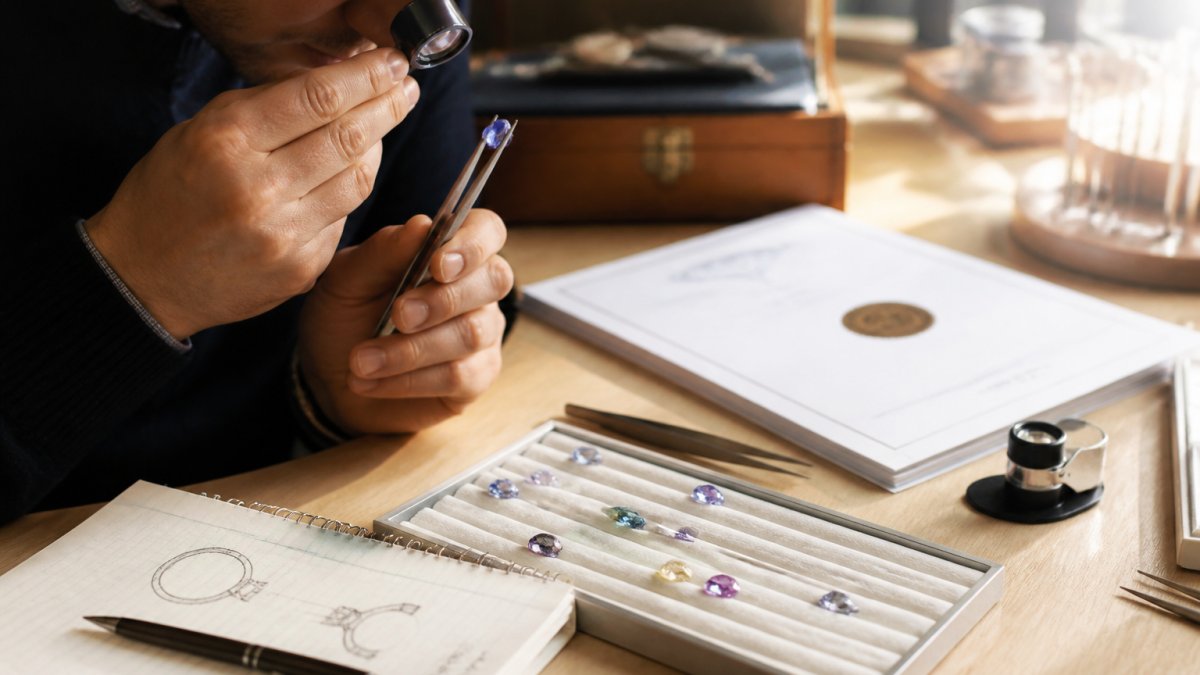
Verification is where most buyers slip up. A supplier's word is not proof. Ask for the chain of custody: who mined it, who cut it, who traded it, and who can confirm each step.
Conflict-Free Diamonds vs. Lab-Grown Gemstones
Conflict-free diamonds come from mines meeting international human rights standards, verified through the Kimberley Process. Lab-grown gemstones are created in a lab and carry no mining risk.
Both can be ethical choices. The difference is your priority:
- Conflict-free natural stones suit buyers who value rarity and heritage
- Lab-grown stones suit buyers focused on lower environmental footprint
- Reclaimed vintage stones suit buyers who want zero new mining
What most guides miss is that "conflict-free" only covers conflict, not labour conditions or environmental damage. Ask about those separately.
How to Actually Verify a Supplier's Gemstone Claims
A certificate is not the same as verification. Here is a practical process a small maker can run.
**1.
**2.
3. Match the paperwork to the parcel. Batch numbers on the invoice should match those on the audit report.
4. Ask who audited, and when. A self-declaration is not an audit.
5. Test the answer under pressure. Ask the same question twice, weeks apart, through different channels.
Questions to Ask Your Gemstone Supplier
A good supplier answers these without hesitation. A vague one stalls, deflects or sends a generic PDF.
- Where was this stone mined, and who mined it?
- Can you name the cutting and polishing facility?
- Do you hold third-party auditing reports for this batch?
- How do you handle stones from artisanal mining operations?
- What happens if a batch fails your ethical standards?
If a supplier cannot answer question one, walk away.
Responsibly Sourced Precious Metals for Small Makers
Responsibly sourced precious metals are gold, silver and platinum extracted with fair wages, safe conditions and minimal environmental harm, or recovered from existing sources. For small makers, recycled metal is usually the simplest ethical starting point.
Recycled and Reclaimed Metals
Recycled precious metals come from old jewellery, industrial scrap and electronic waste, refined back to full purity. Reclaimed materials work the same way but often carry a story, like a melted-down heirloom.
The upside is clear: no new mining, no new extraction emissions, and identical quality. Refined recycled gold is chemically the same as newly mined gold, buyers cannot tell the difference, and neither can a jeweller.
Fairmined Gold and Fairtrade Certification
Fairmined gold and Fairtrade certification both verify that small-scale miners receive fair pay and work in safer conditions. Fairtrade focuses on trade terms and community development. Fairmined adds environmental and social requirements on top.
For a small maker, the practical step is simple: ask your refiner whether their gold carries either certification, and request the certificate number. You can check certification claims through Fairtrade International's standards pages before you commit to a supplier.
Building an Ethical Jewellery Supply Chain: A Step-by-Step Approach
An ethical jewellery supply chain is a documented map of every supplier, refiner and cutter between raw material and finished piece. Build it in four steps.
- List every supplier, from your metal refiner to your stone dealer to your packaging provider.
- Map each tier back to the mine or recycling source, even if that means asking three suppliers deep.
- Request documentation for each tier: certificates, audit reports, invoices with batch numbers.
- Review annually, because suppliers change hands, sources shift and old paperwork expires.
Supply Chain Mapping and Third-Party Auditing
Supply chain mapping means writing down who touches your materials and where. Third-party auditing means an outside body checks whether those suppliers meet ethical standards, rather than the supplier grading itself.
A common mistake is treating a supplier's self-assessment as an audit. It is not. Independent checks catch what self-reporting hides.
What an Audit Actually Involves
An audit is a structured inspection against a published standard. For a small maker, the question is not "do they have an audit?" but "against what standard, by whom, and covering what?"
A useful distinction is between certification (the site meets the standard and holds a certificate) and verification (an auditor has checked a specific claim, such as a parcel's origin).
When you receive an audit report, read the non-conformances first.
UK Regulatory Context for Jewellery Makers
If you sell in the UK, several rules sit behind your sourcing claims whether you invoke them or not.
- Hallmarking. Under the Hallmarking Act 1973, most gold, silver, platinum and palladium items above the exemption weight must be hallmarked by an assay office before sale (Hallmarking: practical guidance - summary). This is separate from ethical sourcing, but it means your metal already passes through a regulated checkpoint you can point to.
- Consumer protection. The Consumer Protection from Unfair Trading Regulations 2008 prohibit misleading commercial practices, including environmental claims that cannot be substantiated. A vague "eco-friendly" claim you cannot back up is a legal risk, not just a marketing one.
- Competition and Markets Authority (CMA) guidance. The CMA has published guidance on environmental claims in marketing, including the Green Claims Code (Making green claims: Getting it right, across the supply chain). It expects claims to be truthful, clear, substantiated and complete. If you say "recycled gold," you should be able to show the refiner's certification.
None of these replace an ethical sourcing standard. They set the floor for what you can legally claim.
Certifications and Standards Worth Knowing
A short list of schemes you will encounter when vetting suppliers:
- Fairmined, certification for artisanal and small-scale mining, covering social, environmental and labour requirements, with a premium paid back to the mining community.
- Fairtrade Gold, focuses on trade terms, a minimum price and a premium for community development.
- Responsible Jewellery Council (RJC), a membership and certification scheme covering the jewellery supply chain, including responsible sourcing, human rights and environmental practices.
A supplier may hold one, several or none. What matters is that the certificate is current, names the site, and matches the material you are buying.
A Practical Annual Review Routine
Set a recurring date, the same month each year works well, and run through this:
- Re-confirm each supplier's certificate numbers and expiry dates.
- Ask whether any mine, refinery or cutting facility has changed since last year.
- Request the latest audit report and read the non-conformances.
- Update your supplier file and note the date you checked.
- Flag any supplier who cannot provide a current document within thirty days.
The Cost Reality for Small Makers
Ethical sourcing is often framed as a luxury line item. In practice, the cost depends on which lever you pull.
- Recycled metal is usually the cheapest ethical switch, because refined recycled gold and silver trade close to the mined equivalents and require no new certification beyond the refiner's own.
- Certified Fairmined or Fairtrade gold carries a premium, because the premium is built into the price and paid back to the mining community. Expect to pay more per gram, and to be able to explain why.
- Documented coloured stones cost more in time than money. The stone may be similar in price; the admin of chasing paperwork is the real expense.
- Auditing your own suppliers costs nothing but hours. A one-page file per supplier, updated annually, is the lowest-cost credibility you can buy.
The trade-off is straightforward: compete on price with undocumented materials, or on trust with documented ones. Most small makers find the second position easier to defend and easier to market.
Spotting Greenwashing in the Jewellery Industry
Greenwashing in the jewellery industry is when a brand uses vague eco-language, like "conscious" or "responsibly made," without evidence. The tell is always the same: big claims, no names, no numbers, no certificates.
Here is how to separate real claims from marketing:
- Vague terms like "eco-friendly" mean nothing without a named standard
- Real claims name the certification, the certifying body and the date
- Missing specifics on origin, refinery or mine are a red flag
- Stock phrases reused across a whole catalogue suggest copy, not practice
If a brand cannot tell you where its gold came from, it does not know. That is the honest answer behind most green marketing.
End-of-Life Circularity and Regional Sourcing: Two Angles Most Guides Miss
End-of-life circularity means planning what happens to a piece after its owner stops wearing it: buy-back schemes, repair services, metal recovery and stone resetting.
Both angles get ignored because they sit outside the "buy green" conversation. They matter anyway.
Circularity turns old pieces into new raw material, lowering your environmental footprint without lowering quality.
For small makers, local refiners and regional stone dealers often cost less to audit and respond faster when something goes wrong.
Conclusion: Sourcing with Confidence
Sourcing ethically takes work, and most of it happens before a single piece is made. The payoff is a business you can defend, and jewellery your customers can trust.
If you would rather skip the guesswork, Diamonds by daisy handpicks every gemstone and precious metal in our collection, so the traceability question is already answered. Each piece is crafted to last, backed by our 30-day satisfaction guarantee.
Add to cart and wear something you can trace.
Frequently Asked Questions
What does ethical material sourcing mean for handmade jewellery?
It means tracing every gemstone, metal and finding back to its origin and confirming it was extracted, processed and traded without harming people or the environment. For handmade makers, this covers raw material sourcing, chain of custody records, fair wages for artisanal mining communities, and knowing your supplier's own sourcing standards. It is not a single certificate; it is an ongoing practice of asking questions, verifying claims and choosing suppliers who can show evidence rather than just say the right words.
How can I check whether gemstones are ethically sourced?
Ask your supplier for documentation: Kimberley Process certificates for rough diamonds, Fairmined or Fairtrade certification for gold and gemstones, and third-party auditing reports where available. Cross-check the mine or country of origin against known risk areas. Request chain of custody records that follow the stone from extraction through cutting to your bench. If a supplier cannot produce paperwork, treat the claim as unverified. Independent gemmological testing can confirm a stone's identity but not its ethical provenance, so supplier transparency remains essential.
Which metals are considered more responsibly sourced for jewellery?
Recycled precious metals, including reclaimed gold, silver and platinum from electronic waste or old jewellery, carry a lower environmental footprint than newly mined metal. Fairmined gold and Fairtrade-certified gold guarantee fair wages and safer conditions for artisanal miners. Look for refiners that hold third-party auditing accreditation and can provide chain of custody documentation. Responsibly sourced precious metals should come with traceability records showing the refinery, the mine or recycling source, and the standards the metal was verified against.
How can I avoid greenwashing when buying or making jewellery?
Greenwashing in the jewellery industry often appears as vague terms like "eco-friendly" or "sustainable" without evidence. Look for specific certifications (Fairmined, Fairtrade, Kimberley Process), named refineries and mines, and published supply chain transparency reports. Ask what percentage of materials is recycled, where gemstones originate, and whether claims are verified by an independent third party. If a brand cannot answer these questions clearly, treat the sustainability claim as marketing rather than fact. Genuine ethical standards come with documentation, not slogans.